“In most sciences, one generation tears down what another has built, and what one has established another undoes. In mathematics alone, each generation adds a new story to the old structure.”
—Hermann Hankel
In my old snail-mail Mathematical Adventures newsletter, I used to squeeze bits and snippets into the margins. Quotations, historical tidbits, and small puzzles tangentially related to the main story.
These marginal notes were not simply decoration. Rather, they served the same purpose as the small bumps on a Lego brick, connections on which to build a greater understanding of the world of math.
Thinking about how other people have explored the world of mathematics in the past can offer us new ways of looking at, the things we’re learning today.
Besides, math history is just plain interesting. After all, it’s the story of people just like us, people who wondered, fought, loved, grieved, and lived rich lives—and who played around with math puzzles that we can still enjoy today.
The internet flows like water, however, adjusting content to fit your screen size, which means it doesn’t really have margins to fill. But that’s fine, because it lets me expand the tidbits into a post of their own and include links for further research. You can enjoy my bits and bobs, and then click through to explore on your own.
So let’s turn the clock back a couple thousand years and see what we can find…
About the Names
Everyone in Alexandria Jones’s family takes his or her name from someone (or in Alex’s case, something) important in the history of mathematics.
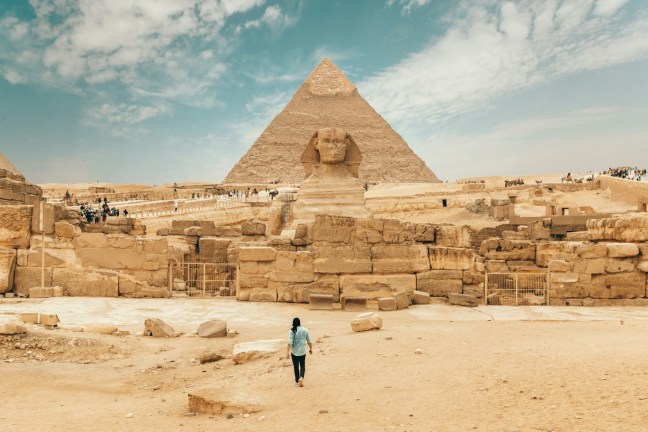
Alexandria Jones is named after the Egyptian city of Alexandria, founded in 332 BC by Alexander III of Macedon, commonly called “the Great.” As his army marched out from Macedonia and rampaged across the world, Alexander founded many cities, and he named most of them after himself.
(But he did name at least one city in honor of his horse, Bucephalus.)
The Egyptian Alexandria, near the mouth of the Nile River, became a great center of learning. Among the scholars of Alexandria were…
Euclid
Euclid of Alexandria, the most famous mathematician of antiquity, lived around 300 BC, and little is known of his life. That he was an influential teacher seems clear, for he put together a treatise he called The Elements, which became the best-selling math textbook of all time.
The Elements consists of thirteen books, covering plane (flat) geometry, number theory, and three-dimensional geometry. Euclid’s work is admired for the clarity with which the theorems are stated and proved, setting a standard of rigor for later mathematicians to follow.
For further study:
- Play the interactive introduction to Euclidean geometry at sciencevsmagic.net. Start by connecting the two points to draw a line.
- Read The Elements online.
“There is no royal road to geometry.”
—Euclid of Alexandria
Eratostenes
In the late 200’s BC, Eratosthenes of Cyrene served as librarian at a temple of the Muses called the Mouseion. This famous library in Alexandria may have contained hundreds of thousands of papyrus and vellum scrolls.
But Eratosthenes was also a scholar in his own right, known for his work in mathematics, philosophy, astronomy, geography, poetry, and music. He worked on challenge of doubling a cube, developed a system for identifying prime numbers, and is best remembered for his accurate measurement of the Earth’s circumference.
For further study:
- Play with the Sieve of Eratosthenes to identify prime numbers. Why does it work?
- Try my printable activity to Measure the Earth (a mathematical experiment for the spring or autumn equinox).
“Eratosthenes was, indeed, recognised by his contemporaries as a man of great distinction in all branches of knowledge, though in each subject he just fell short of the highest place. On the latter ground he was called Beta, and another nickname applied to him, Pentathlos, has the same implication, representing as it does an all-round athlete who was not the first runner or wrestler but took the second prize in these contests as well as others.”
—Thomas Little Heath
Ptolemy
The most influential astronomer of ancient Greece, Claudius Ptolemy lived in the early AD 100’s and invented an Earth-centered mathematical theory of the solar system that scientists relied on for more than a thousand years.
He compiled the results of his research in a thirteen -book treatise now called The Almagest, summarizing everything the Greeks know about how the sun, moon, and planets moved around the Earth. This second-most-famous math textbook was studied up through the late Renaissance, but was finally replaced by Copernicus’s sun-centric theory.
Ptolemy also wrote works about geography, optics, and the mathematics of musical harmony.
For further study:
- Read about Ptolemy’s model of the solar system.
- See Ptolemy’s epicycles and equants in action, to scale.
- Find out how mistakes in Ptolemy’s Almagest led to Christopher Columbus’s famous journey.
“Well do I know that I am mortal, a creature of one day.
But if my mind follows the winding paths of the stars
Then my feet no longer rest on earth, but standing by
Zeus himself I take my fill of ambrosia, the divine dish.”—Claudius Ptolemy
Fibonacci
Leonardo of Pisa, nicknamed Fibonacci (from whom Alexandria Jones’s father takes his name), didn’t live in ancient Greece, but he traveled all around the Mediterranean world while working for his merchant father, so he almost certainly visited the famous Egyptian port city of Alexandria. Though by that time, the Mouseion and its wonderful library were long gone.
When he returned to his hometown of Pisa, Italy, in AD 1200, he brought back “new” ideas about math. He rediscovered concepts that had been lost (to the Europeans) since the fall of Rome.
Even more important, Fibonacci brought to Europe the Hindu-Arabic numbering system—including the notion of zero. This efficient way of dealing with numbers led to revolutions in banking and in science.
But most people know him because of a story problem about breeding rabbits
For further study:
- Read about Fibonacci’s life and mathematics.
- Discover how the Fibonacci numbers appear in nature.
- But don’t fall for a Golden Sales Pitch.
“When I had been introduced to the art of the Indians’ nine symbols through remarkable teaching, knowledge of the art very soon pleased me above all else.”
—Leonardo Pisano Fibonacci
* * *
“The Pharaoh’s Treasure: Historical Tidbits” copyright © 2026 by Denise Gaskins. Image at the top of the blog copyright © Spencer Davis / Unsplash.
Are you looking for more creative ways to play math with your kids? Check out all my books, printable activities, and cool mathy merch at Denise Gaskins’ Playful Math Store. Or join my email newsletter.
This blog is reader-supported. If you’d like to help fund the blog on an ongoing basis, then please join me on Patreon (or choose the paid level on Substack) for mathy inspiration, tips, and an ever-growing archive of printable activities.

