Playful Math 182: The Storytelling Carnival

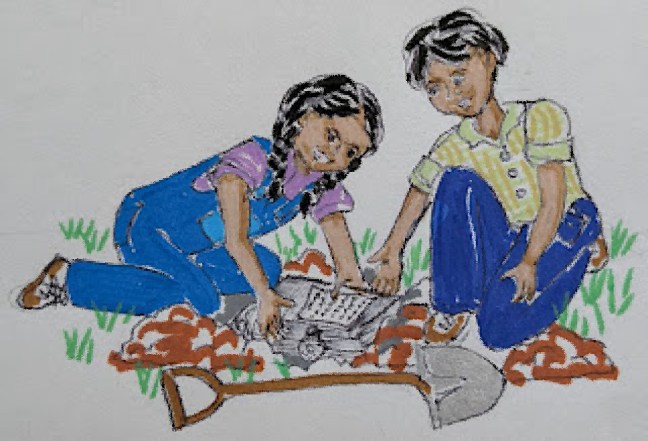
two children digging in the yard

Would you like some great ideas for reading and playing math with your kids?

Sue VanHattum put together a delightful collection of mathematical fiction in honor of Math Storytelling Day:

What are you waiting for? Come join the fun!

Click Here to Read the Carnival Blog

Help Us Keep the Carnival Going

The Playful Math Blog Carnival wants you! We’re transitioning to a seasonal carnival, to make it easier on our volunteer hosts who collect links and write the carnival.

Every carnival brings you a great new collection of puzzles, math conversations, teaching tips, and all sorts of mathy fun. It’s like a free online magazine of mathematical adventures, helpful and inspiring no matter when you read them.
Putting together a blog carnival can be a lot of work, but it’s a great opportunity to share the work of bloggers you admire and to discover new math-friends online. I love that part of being a host!

Classroom teachers, homeschoolers, college professors, unschoolers, or anyone who likes to play around with math — if you would like to take a turn hosting the carnival, please let me know!

CREDITS: Feature photo (top) copyright © 2025 Sue VanHattum.

Playful Math 181: The Symmetry Carnival

Playful Math Carnival 181

If you’re looking for entertainment to while away the winter (or summer, for those of us up north!) — or if you’re just curious about how learning math could possibly be fun — you’ll definitely want to check out the latest edition of the Playful Math Carnival.

It’s a collection of awesome blog posts curated by Johanna Buijs and published on the Nature Study Australia website:

The whole point of the carnival is to show that math doesn’t have to be tedious or repetitive. Through a bunch of fun and engaging posts, we celebrate math that’s playful, creative, and totally relevant to everyday life.

Because what could be more relevant than having fun while we learn?

Continue reading Playful Math 181: The Symmetry Carnival

Playful Math Carnival 180 via Math Hombre

carnival party banner

If you’re into math education — or just curious about how learning math could possibly be fun — you’ll definitely want to check out the latest edition of the Playful Math Carnival.

It’s a collection of awesome blog posts curated by John Golden and published on the Math Hombre website:

The whole point of the carnival is to show that math doesn’t have to be tedious or repetitive. Through a bunch of fun and engaging posts, we celebrate math that’s playful, creative, and totally relevant to everyday life.

Because what could be more relevant than having fun while we learn?

In this edition, you’ll find everything from math puzzles and games to humor and much more — even an interesting math art game.

So if you want to mix up your math teaching and make it more enjoyable for your students (and for yourself), definitely check out the Playful Math Carnival. Happy reading!

Go Visit the Carnival

Continue reading Playful Math Carnival 180 via Math Hombre

Playful Math 179: Our Sweet Sixteen Carnival

Welcome to the sweet-16 birthday edition of the Playful Math Carnival. Originally called Math Teachers at Play, our first carnival was published in February 2009.

Each Playful Math Carnival offers a smorgasbord of delectable tidbits of mathy fun. It’s like a free online magazine devoted to learning, teaching, and playing around with math from preschool to high school.

There’s so much playful math to enjoy!

By tradition, we start the carnival with a math activity in honor of our 179th edition. But if you’d rather jump straight to our featured blog posts, click here to see the Table of Contents.

NOTE: Our wonderful volunteer hosts have kept the Playful Math Carnival going when so many other blog carnivals died off. If you’d like to sign up to host the carnival for a month, email Denise for information.

Try These Prime Puzzles

Did you know there are 179 even-numbered days this year?

  • How many even-numbered days will there be in a leap year?
  • But there are 365 days in a standard year and 366 in a leap year. Shouldn’t there be half that many even-numbered days?

179 is a prime number, and it’s also a knockout prime. You can knock out any of the digits, and what’s left is still prime: 17, 19, or 79.

  • Can you find another knockout prime number?

179 is a twin prime. That means that one of its odd-numbered neighbors is also prime.

  • Is the other twin 177 or 181? Can you tell without looking it up?
  • Why are twin primes limited to the odd numbers? That doesn’t seem fair!

179 is also an emirp. That’s a special kind of prime that forms a different prime number when you write it backwards: 971 is also prime.

  • How many emirps can you find?

“A palindrome is a word that when written in reverse results in the same word. for example, ‘racecar’ reversed is still ‘racecar’. Related to palindromes are semordnilaps. These are words that when written in reverse result in a distinct valid word. For example, ‘stressed’ written in reverse is ‘desserts’. Not all words are palindromes or semordnilaps.

    “While certainly not all numbers are palindromes, all non-palindromic numbers when written in reverse will form semordnilaps.

      “Narrowing to primes brings back the same trichotomy as with words: some numbers are emirps, some numbers are palindromic primes, but some are neither.”

      The On-Line Encyclopedia of Integer Sequences A006567

      Click here for all the mathy goodness!
      Playful Math 178: Nicomachus’s Carnival

      Playful Math Blog Carnival 178

      Welcome to the 178th edition of the Playful Math Education Blog Carnival — a smorgasbord of delectable tidbits of mathy fun. It’s like a free online magazine devoted to learning, teaching, and playing around with math from preschool to high school.

      Bookmark this post, so you can take your time browsing.

      There’s so much playful math to enjoy!

      By tradition, we start the carnival with a puzzle/activity in honor of our 178th edition. But if you’d rather jump straight to our featured blog posts, click here to see the Table of Contents.

      Activity: Nicomachus’s Theorem

      Welcome to 2025, a perfectly square year — and the only one this century!

      2025 = (20 + 25)2

      • When is the next time we’ll have a perfect-square year?
      • Can you find the only perfect square less than 2025 that works by this pattern? When you split the number’s digits into two smaller numbers and square their sum, you get back to that number.

      2025 = the sum of all the numbers in the multiplication table, from 1×1 to 9×9

      2025 = the sum of the first 9 perfect cubes

      • When is the next time this will happen, that the year is the sum of the first n perfect cubes?

      And by Nicomachus’s theorem:

      2025 = 13 + 23 + 33 + 43 + 53 + 63 + 73 + 83 + 93
      so it must also = (1 + 2 + 3 + 4 + 5 + 6 + 7 + 8 + 9)2

      Try it for yourself with small numbers: Get some blocks, and build the first few perfect cubes. Then see if you can rearrange the block to form the sum of those numbers squared.

      Can you show that…

      • 13 = 12
      • 13 + 23 = (1 + 2)2
      • 13 + 23 + 33 = (1 + 2 + 3)2
      • 13 + 23 + 33 + 43 = (1 + 2 + 3 + 4)2
      • 13 + 23 + 33 + 43 + 53 = (1 + 2 + 3 + 4 + 5)2

      Nicomachus theorem 3D

      Older Students: Can you see that the pattern would continue as long as you want? How might you prove that?

      Here’s the formula for triangular numbers, to get you started:

      (1 + 2 + 3 + … + n) = n(n + 1)/2

      Click here for all the mathy goodness!
      Start the New Year Right: Playful Math Carnival 177 via Math Hombre

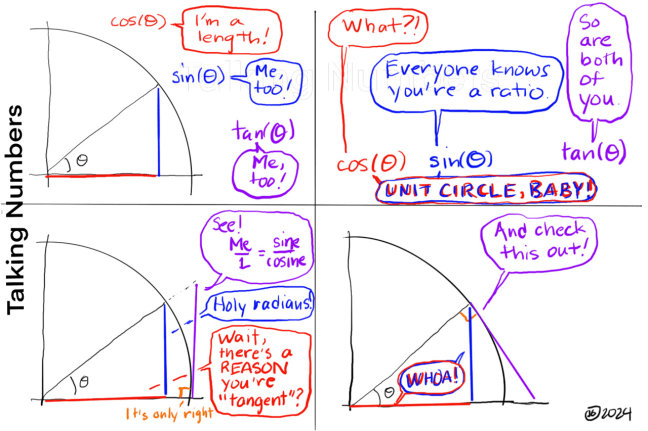
      Talking Numbers from Playful Math Carnival 177

      If you’re looking for an entertaining way to weather the coming storm — or just curious about how learning math could possibly be fun — you’ll definitely want to check out the latest edition of the Playful Math Carnival.

      It’s a collection of awesome blog posts curated by John Golden and published on the Math Hombre website:

      The whole point of the carnival is to show that math doesn’t have to be tedious or repetitive. Through a bunch of fun and engaging posts, we celebrate math that’s playful, creative, and totally relevant to everyday life.

      Because what could be more relevant than having fun while we learn?

      Continue reading Start the New Year Right: Playful Math Carnival 177 via Math Hombre

      Celebrate Fibonacci Day with Playful Math Carnival 176

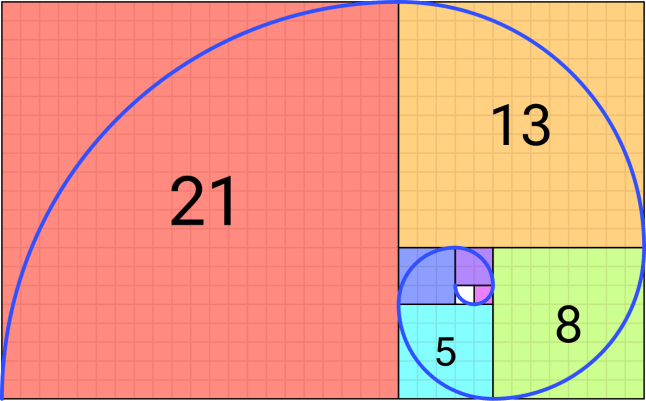
      Fibonacci Spiral

      Fibonacci Day is November 23rd (11/23 in the American date style), and this year it falls on a Saturday.

      But that’s no excuse not to celebrate!

      We can do math on the weekend, you know. Or we can just play in advance of the day itself. In fact, we could take a whole Fibonacci Week and not run out of interesting math to play with.

      Sonya Post has our back with lots of great ideas:

      One Way to Play: Fib Poetry

      Long-time readers know I like to get students thinking creatively about math, and I’ve written before about the value of math poetry.

      So when Sonya included the Fib in her carnival post, I couldn’t help myself…

      Fib:
      A strange
      Way to count,
      Adding syllables
      Until the words breed like rabbits.

      For the rules of Fib poetry, and lots of other mathy fun, don’t miss this carnival!

      Go to the Fibonacci Carnival post –>

      And Here’s My Monthly Bleg

      The Playful Math Blog Carnival wants you!

      The carnival is a joint effort. We depend on our volunteer hosts to collect blog posts and write the carnival each month.

      Classroom teachers, homeschoolers, college professors, unschoolers, or anyone who likes to play around with math — if you would like to take a turn hosting the carnival, please speak up!

      Email Denise to Volunteer

       
      * * *

      Image at the top of the post copyright © Romain (CC BY-SA 4.0) via Wikimedia Commons.

      Don’t Miss Playful Math Carnival 175 via The Beauty of Play

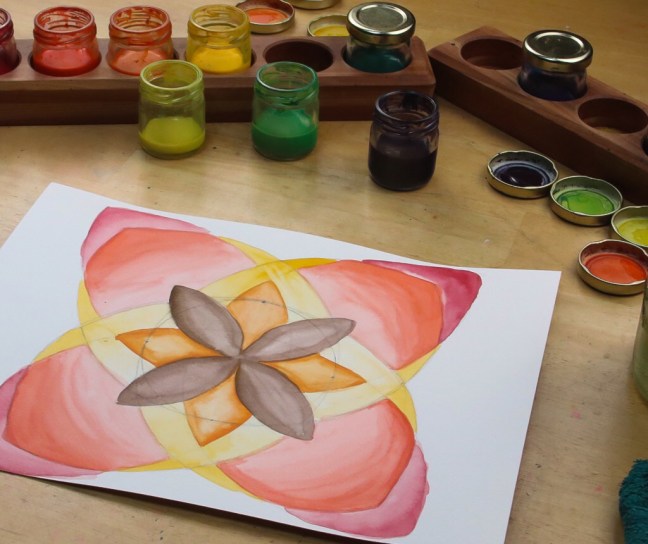
      photo of math art painting

      Della Parker hosted the Playful Math Carnival with a delicious spread of math delicacies. Check out all the mathy inspiration, games, and hands-on activity ideas:

      The blog carnival is like a free online extravaganza of mathematical play, a virtual map to articles by teachers and bloggers all around the world.

      I love how there’s always something new to learn. 💖

      [By the way, we still need carnival hosts for 2025. If you have a blog or website and would like to volunteer for a month, read the details at the carnival’s home page.]

      Go Visit Playful Math Carnival 175

       
      * * *

      Image at the top of the post copyright © Della Parker / The Beauty of Play blog.

      Get a Taste of Playful Math with Two Carnivals

      Carnival food court

      Here is SOOOOO MUCH GREAT MATH!

      Each monthly carnival brings you a new collection of ideas for playing math from preschool to high school. It’s like a free online magazine of mathematical adventures, helpful and inspiring no matter when you read them.

      Explore with your kids or on your own:

      173rd Playful Math Carnival

      Johanna Buijs found a delightful assortment of knots, meanders, mazes and labyrinths, plus other math tidbits from around the world. Love it!

      Visit Carnival 173

      Playful Math Carnival 174

      Sue VanHattum focused on the perplexing topics of fractions and division (and division of fractions) with puzzles, games, fractals, and delightful stories.

      Visit Carnival 174

      Help Us Keep the Carnival Going

      The Playful Math Blog Carnival wants you!

      The carnival is a joint effort. We depend on our volunteer hosts to collect blog posts and write the carnival each month.

      Putting together a blog carnival can be a lot of work, but it’s a great opportunity to share the work of bloggers you admire and to discover new math-friends online. I love that part of being a host!

      Classroom teachers, homeschoolers, college professors, unschoolers, or anyone who likes to play around with math — if you would like to take a turn hosting the carnival, please speak up!

      Email Denise

       
      * * *

      “Get a Taste of Playful Math with Two Carnivals” copyright © 2024 by Denise Gaskins. Image at the top of the post copyright © dbvirago / Depositphotos.

      Celebrating Spring with Playful Math Carnival 172

      Playful Math Carnival 172

      Welcome to the 172nd edition of the Playful Math Blog Carnival, a buffet of delectable tidbits of mathy fun. It’s like a free online magazine devoted to learning, teaching, and playing around with math from preschool to high school.

      The carnival went on hiatus for a couple of months due to unexpected life issues facing our volunteer hosts. But we’re back now, and ready to celebrate!

      By tradition, we start the carnival with a puzzle in honor of our 172nd edition. But if you’d rather jump straight to our featured blog posts, click here for the Table of Contents.

      Try This: Lazy Caterers and Clock-Binary Numbers

      172 is a lazy caterer number: Imaging a caterer who brought a single large pie to serve the whole party. He needs to cut it into as many pieces as he can, using the fewest (straight) cuts he can get away with.

      • If each guest gets one piece of pie, what sizes of parties (numbers of people) can the lazy caterer serve?
      • Can you find a pattern in the lazy caterer sequence?

      But for those of you who have followed the carnival for years, you may remember we played with the lazy caterer back in Playful Math 106. (That time, the caterer was serving pizza.) So here’s a bonus activity we’ve never done before…

      The first several stages of a pattern are as follows:

      Clock Binary pattern image

      • What do you notice about this pattern of shapes?
      • What is the next shape in the sequence?
      • Can you figure out how the shape below fits into the pattern?

      Clock Binary puzzle image

      This pattern sequence was named clock binary by its creator, noelements-setempty.

      • What questions can you ask about this sequence?
      • How are these shapes like the binary numbers?
      • How are they different?

      Click here for all the mathy goodness!