Geometric Math Art, Recovered

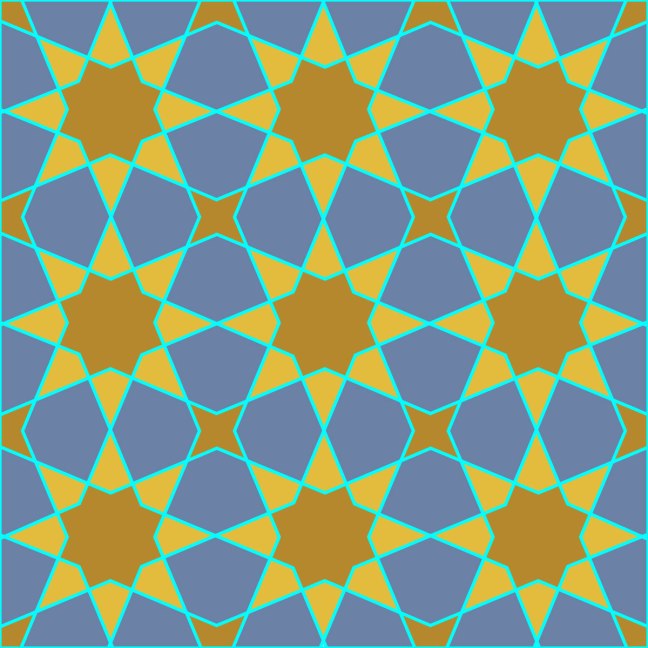
Geometric pattern by Denise Gaskins

I’ve been updating my old book files to a new publishing program, and in the process discovering anew how often websites change and disappear. So frustrating!

Thankfully, the Internet Archive keeps some things that we can look back at. It doesn’t always work, but today it came to the rescue and let me recover the wonderful workbook from the Metropolitan Museum of Art, Islamic Art And Geometric Design, plus some of the pattern pages at the old School of Islamic Geometric Design.

I reference these pages in my Geometric Coloring Designs series (available at my Playful Math Store), so I was glad to find they weren’t lost forever.

Math Art = a great way to spark energy when your students hit the mathematical doldrums.

If you’d like to play around with math art patterns, each image below links to Eric Broug’s step-by-step instructions for creating the design. Also, Broug made printable pages to get students started, which you can download here. No compass construction required!

Pattern 1

Geometric design pattern by Eric Broug

Pattern 2

Geometric design pattern by Eric Broug

Pattern 3

Geometric design pattern by Eric Broug

There are two more patterns on the old SIGD site, but I can’t get those instructions to load. That might be my antique rural internet connection, however, so feel free to do some exploring on your own.

And have fun drawing math with your kids!

 
* * *

Are you looking for more creative ways to play math with your kids? Check out all my books, printable activities, and cool mathy merch at Denise Gaskins’ Playful Math Store. Or join my email newsletter.

This blog is reader-supported. If you’d like to help fund the blog on an on-going basis, then please join me on Patreon for mathy inspiration, tips, and an ever-growing archive of printable activities.

“Geometric Math Art, Recovered” copyright © 2025 by Denise Gaskins. Image at the top of the post copyright © Denise Gaskins.
New! Your Student Can Be a Math Maker

When children create their own math, they build a deep understanding of mathematical concepts and relationships.

And it’s fun!

So take a break from your normal math program to play with creative math. Students can:

Check Out the Gallery

We have a few entries already in the Student Math Makers Gallery.

Click Here To Visit the Gallery

Join the Student Math Makers

We’d love to add your students’ math to our collection and share it with viewers all around the world!

To submit a math creation, download a Math Makers Invitation and Submission Form below:

 
* * *

This blog is reader-supported.

If you’d like to help fund the blog on an on-going basis, then please head to my Patreon page.

If you liked this post, and want to show your one-time appreciation, the place to do that is PayPal: paypal.me/DeniseGaskinsMath. If you go that route, please include your email address in the notes section, so I can say thank you.

Which I am going to say right now. Thank you!

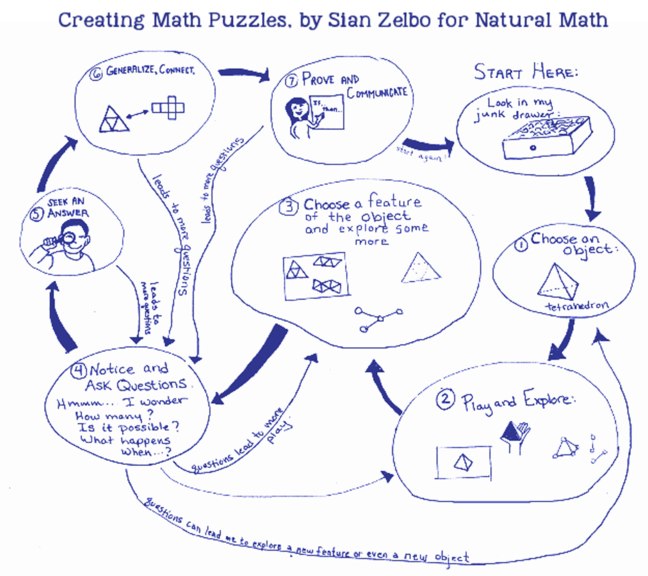
“New! Your Student Can Be a Math Maker” copyright © 2021 by Denise Gaskins. “Creating Math Puzzles by Sian Zelbo, the author of Camp Logic, via NaturalMath.com.

Parallel and Perpendicular Art

I love this easy-but-beautiful math art project!

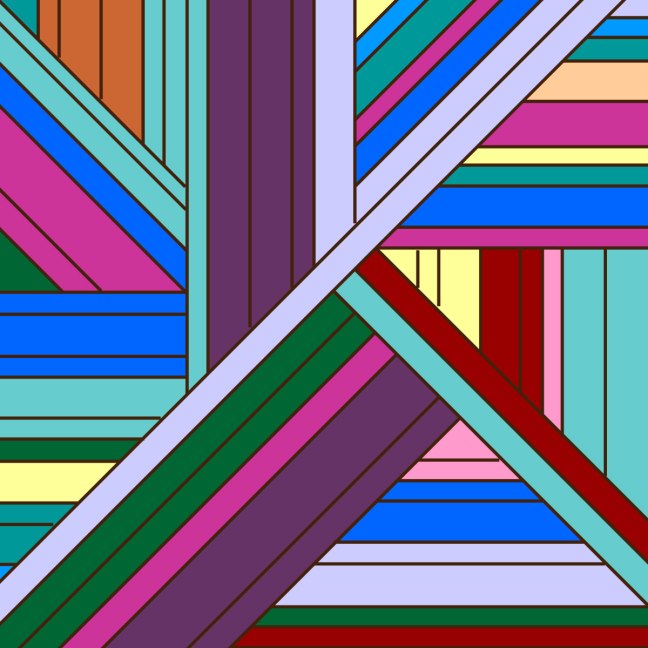
1. Print a page of dotty or lined graph paper for each student. You’ll also need a ruler and a large assortment of markers or colored pencils.

2. Students draw a line across the page, lining up their ruler with the grid points. The first line can be vertical, horizontal, or diagonal.

3. Keep drawing lines, but NEVER cross a line you’ve already drawn. Following the grid will create many lines parallel or perpendicular to each other. What angles can you identify?

4. Color as desired. For a stained-glass effect, outline the colored areas with a black Sharpie marker.

Look for more math art ideas in my new book Geometric Coloring Designs 2: Create Your Own Art.

CREDITS: I saw this project at Cindy’s Love2Learn2Day blog. She got the idea from Zachary‘s MathActivities site.

Prime Factor Art on a Hundred Chart

The best way to practice math is to play with it — to use the patterns and connections between math concepts in your pursuit of something fun or beautiful.

So this art project is a great way to practice multiplication. Use the prime factors of numbers from one to one hundred to create a colorful design.

Start with a Hundred Chart

First, download this printable file of hundred charts in non-photo blue (or light gray, if you’re printing in grayscale). The file includes:

  • Line-by-line traditional chart, counting from top to bottom.
  • Line-by-line bottom’s-up chart, counting from bottom to top.
  • Ulam’s Spiral chart, spiraling out from the center.
  • Blank grids for making your own patterns.

Download the Printable Charts

Continue reading Prime Factor Art on a Hundred Chart

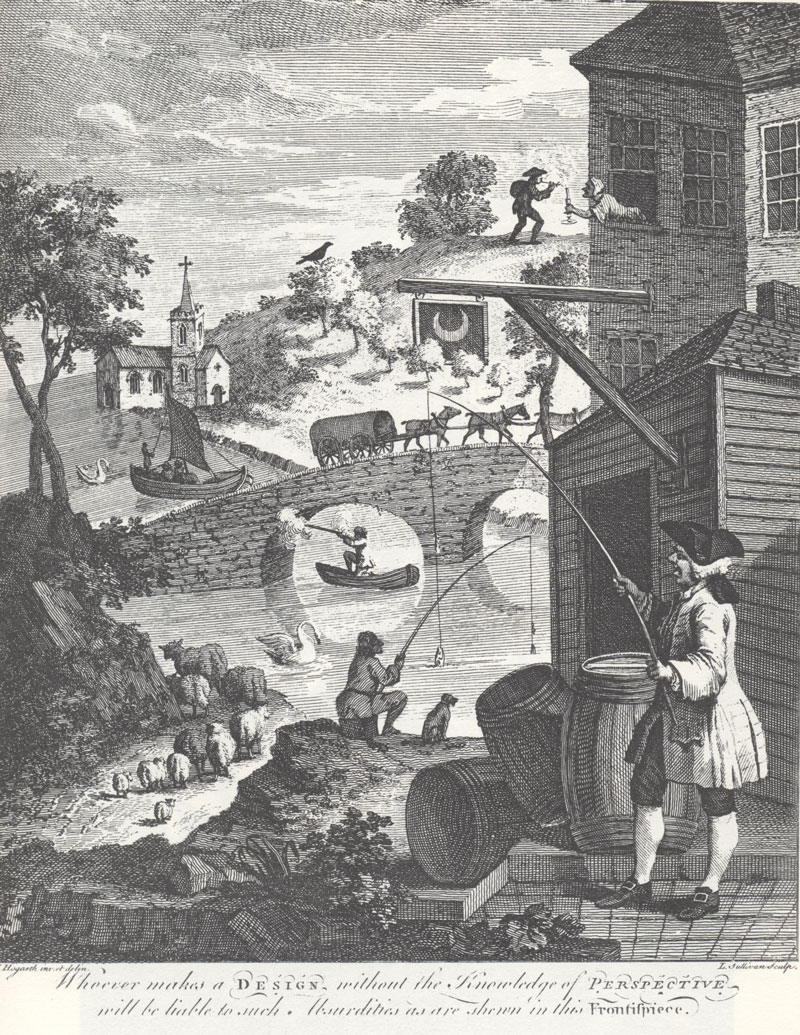
Math Conversation Starter

(Click for larger image.)

What do you see?

Does it make you wonder?

How is perspective art similar to the isometric drawing in yesterday’s post? How is it different?

You may also enjoy:

CREDITS: William Hogarth – “The importance of knowing perspective” (Absurd perspectives), Engraving on paper. From Wikimedia Commons.

How to Draw Minecraft Blocks

Running out of time on my Math You Can Play Kickstarter, so I better get to work on that Kickstarter Special Edition math-art book I promised to all the backers as a bonus reward.

Today I’m working on the Isometric Drawing and Impossible Figures section, because my co-op math classes had so much fun learning how to draw those.

Here’s a starter image on how to draw Minecraft blocks. At first I called them “isometric blocks” — but changing the name to “Minecraft” made the students really excited to learn. I’m not sure whether I like the pencil sketch, or if I should remake the illustrations on the computer…

Key steps:

  1. Make a Y.
  2. Turn it into an M.
  3. Slant down for the bottom.
  4. Slant up for the top.
Student drawings from my co-op classes.

The most common problem for beginners is that they try to make the base straight. They know a block can sit on a table, so the bottom has to be flat, right? But once students get a feel for how it goes, they can really take off and have fun.

UPDATE: The Kickstarter deals have ended, but my playful math books are still available through your favorite online store or by special order at your local bookshop. (Except for the Prealgebra & Geometry Games book, scheduled for publication in early 2021. Sign up for my email list to get the latest news.)

Homeschooling Tip #1: Start with Play

For children, learning always begins with play. This is how they wrap their minds around new ideas and make them their own.

“There should be no element of slavery in learning. Enforced exercise does no harm to the body, but enforced learning will not stay in the mind. So avoid compulsion, and let your children’s lessons take the form of play.”

—Plato, The Republic

If we want our children to enjoy learning math, our first job is to establish an attitude of playfulness.

This is especially important for anyone working with a discouraged child or a child who is afraid of math. The best way to help a discouraged child is to put away the workbook. Try something different, fun, and challenging.

Continue reading Homeschooling Tip #1: Start with Play