
Writing to Learn Math: When students learn to visualize shapes, designs, and patterns, it makes them better at math.
Do you want your children to develop the ability to reason creatively and figure out things on their own?
Help kids practice slowing down and taking the time to fully comprehend a math topic or problem-solving situation with these classic tools of learning: Notice. Wonder. Create.
Notice: Look carefully at the details of the numbers, shapes, or patterns you see. What are their attributes? How do they relate to each other? Also notice the details of your own mathematical thinking. How do you respond to a tough problem? Which responses are most helpful? Where did you get confused, or what makes you feel discouraged?
Wonder: Ask the journalist’s questions: who, what, where, when, why, and how? Who might need to know about this topic? Where might we see it in the real world? When would things happen this way? What other way might they happen? Why? What if we changed the situation? How might we change it? What would happen then? How might we figure it out?
Create: Create a description, summary, or explanation of what you learned. Make your own related math puzzle, problem, art, poetry, story, game, etc. Or create something totally unrelated, whatever idea may have sparked in your mind.
Math journaling may seem to focus on this third tool, creation. But even with artistic design prompts, we need the first two tools because they lay a solid groundwork to support the child’s imagination.
How To Use a Math Art Prompt
When students learn to visualize shapes, designs, and patterns, it makes them better at math. Even topics like algebra can be surprisingly visual.
Art lets children experiment with geometric shapes and symmetries. They can feel their way into math ideas through informal play. As they draw, students explore a wide range of mathematical structures and relationships.
Math doodles allow a student’s mind to relax, wander, and come back to its work refreshed. And though it goes against intuition, doodling helps people remember more of what they learn.
And art is one of the most replayable of all types of journal prompts. Have you noticed how professional artists love to tinker with their creations? Even a slight change produces delightful new variations. Come back to each math art prompt and enjoy the adventure of exploring possibilities.
Journaling Prompt 221: Make a Maze
Use dotty graph paper. Connect the dots on your page to draw a maze or labyrinth with horizontal and vertical passages. Include a few diagonal passages, too, if you like.
Make your design as complex as you like, but be careful to leave at least one path through your maze.
* * *
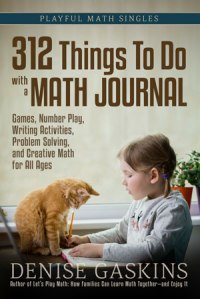 This is an excerpt from 312 Things To Do with a Math Journal. Discover more of my books, printable activities, and cool mathy merchandise at Denise Gaskins’ Playful Math Store.
Special Offer: Would you like to access a growing archive of Thinking Thursday prompts and other activity ideas as convenient printable pdf downloads, ready to print and play with your kids? Join me on Patreon or choose the paid subscription on Substack for mathy inspiration, tips, printable activities, and more.
“Thinking Thursday: Make a Maze” copyright © 2026 by Denise Gaskins. Image at the top of the post copyright © 4masik / Depositphotos.

