“Puzzles are made of the things that the mathematician, no less than the child, plays with, and dreams and wonders about, for they are made of things and circumstances of the world he [or she] lives in.”
—Edward Kasner
Long ages ago, one of the greatest mathematicians of all time played with a children’s puzzle.
The puzzle was called “The Ivory Challenge”—or something like that, translations vary. Ostomachion in Greek. Fourteen ivory polygons (flat shapes with straight sides) were supposed to fit into a square box.
Archimedes solved that puzzle. But like any good mathematician, he didn’t stop there. The solution to any puzzle is only the beginning, a doorway to further adventures.
So Archimedes asked himself one of the big questions of mathematics: “How many ways?”
The Ostomachion is a rather complex puzzle, and our students may struggle to figure out where to start. One of the classic tools in any mathematician’s toolbox is to make it simpler. So let’s begin our own investigation with a simpler challenge:
- How many ways can you bisect a square?
Divide the Square
Twelve is a wonderful number for mathematical play because of its abundant factors. There are so many ways to split twelve up into equal pieces.
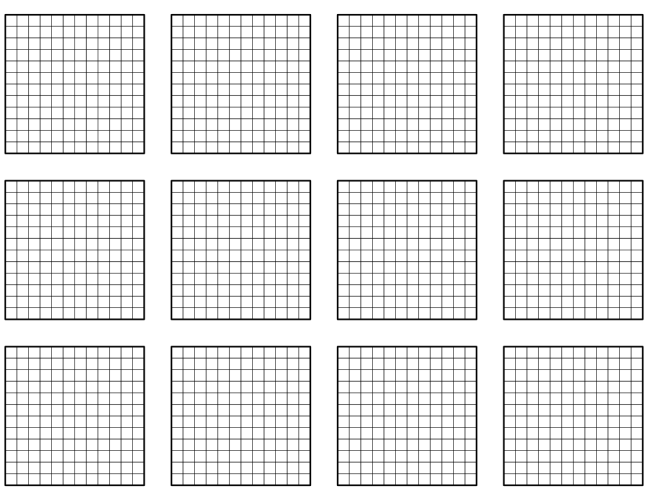
And when we want to divide a square, a 12×12 grid offers plenty of options.
How can you divide it into halves? Quarters? Thirds? Can you make pieces of equal area that are not the same shape?
What designs can you make? What math do you notice in your designs.
This download includes twelve 12×12 squares for your investigation.
Ostomachion
The puzzle Archimedes played with had 14 pieces: 11 triangles, 2 scalene quadrilaterals, and one pentagon. E) so that the area of each piece is a rational fraction of the area of the square.
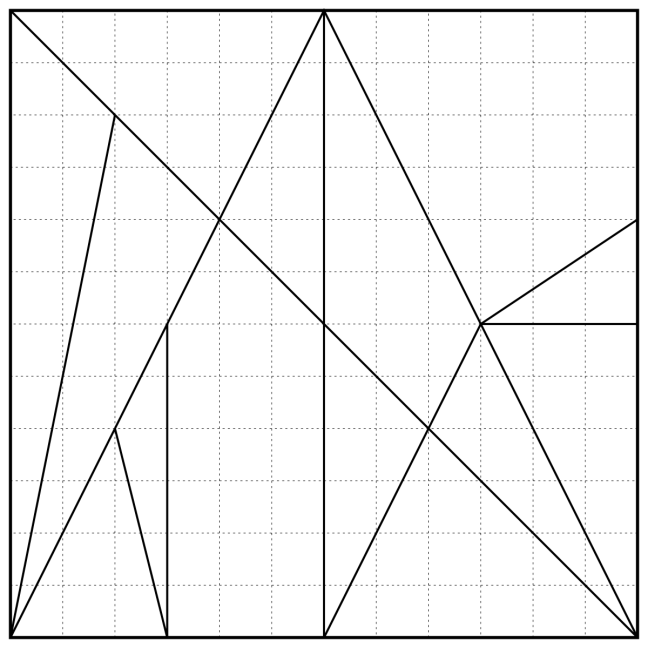
Download a PDF version. Print the ostomachion on cardstock and cut out the pieces.
- Can you fit the square back together?
(There are 536 ways to make an ostomachion square.)
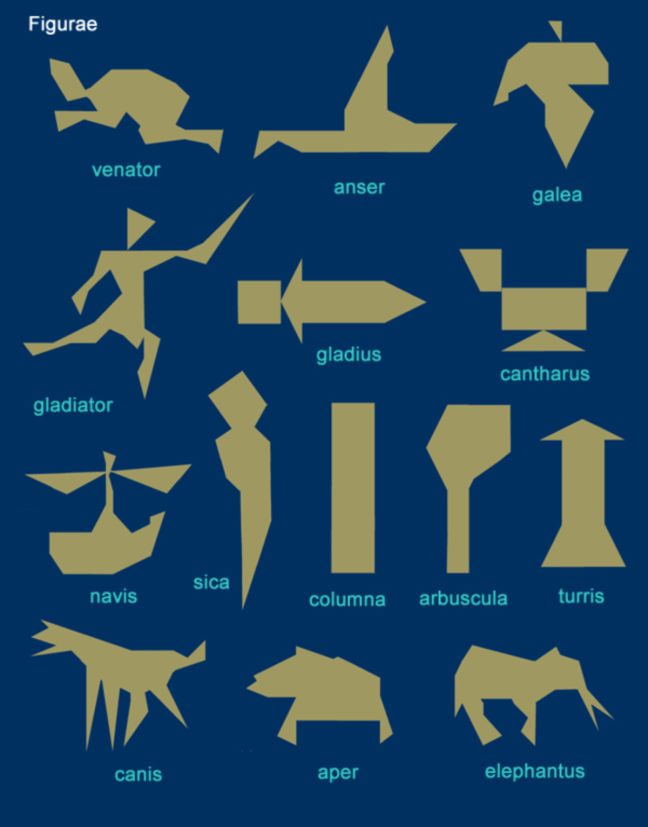
- What other shapes can you make?
* * *
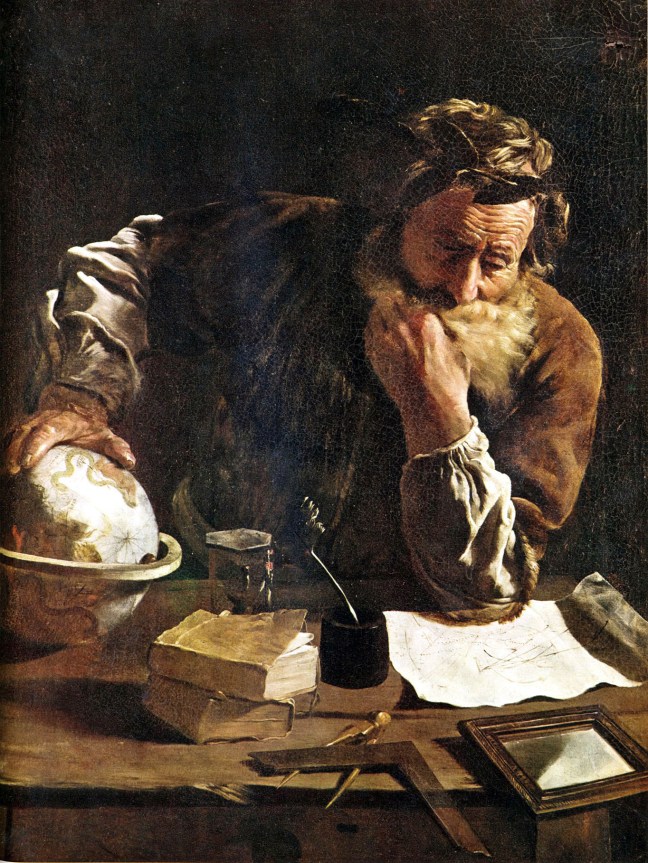
“Ostomachion: Divide the Square” copyright © 2026 by Denise Gaskins. Image at the top of the blog: “Archimedes Thoughtful” (also known as “Portrait of a Scholar”) by Domenico Fetti, oil on canvas, 1620.
Are you looking for more creative ways to play math with your kids? Check out all my books, printable activities, and cool mathy merch at Denise Gaskins’ Playful Math Store. Or join my email newsletter.
This blog is reader-supported. If you’d like to help fund the blog on an ongoing basis, then please join me on Patreon (or choose the paid level on Substack) for mathy inspiration, tips, and an ever-growing archive of printable activities.

