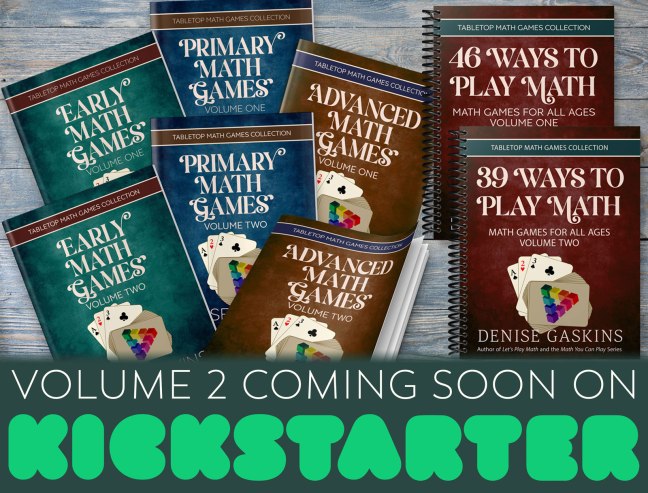
I’m finishing up my plans for the new Tabletop Math Games Collection Kickstarter project and pledge levels, which launches in just under two weeks. Where did the time go?!
But I need help.
Could you please take a few minutes to look over the project page and give me some feedback?
Preview & Comments Page
(NO account required to see the preview, but you may need to log in if you want to leave a comment.)
It’s so hard to edit myself because my mind knows what the text is supposed to say, so I miss too many mistakes. Having new eyes on the page would be a great help in catching typos and making sure the descriptions make sense and are as clear as possible.
(Yes, if you missed last year’s Kickstarter, you’ll also be able to get Volume One.)
Test Out Four Free Sample Games
Math games build mental flexibility and strategic reasoning in players of all ages. And even people who hated math in school can enjoy the friendly challenge of a game.
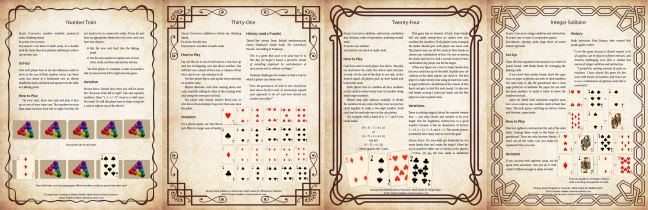
I’ve put together a free printable sampler file, with four ready-to-play card games you can enjoy today.
Welcome to the 171st edition of the Playful Math Education Blog Carnival — a smorgasbord of delectable tidbits of mathy fun. It’s like a free online magazine devoted to learning, teaching, and playing around with math from preschool to high school.
Bookmark this post, so you can take your time browsing over the next week or so.
There’s so much playful math to enjoy!
By tradition, we start the carnival with a puzzle/activity in honor of our 171st edition. But if you’d rather jump straight to our featured blog posts, click here to see the Table of Contents.
Try This Puzzle/Activity
171 is a triangular number, the sum of all the numbers from 1 to 18:
1 + 2 + 3 + … + 17 + 18 = 171.
Can you think why a number like this is called “triangular”?
What other triangular numbers can you find?
Also, 171 is a palindrome number, with the same digits forward and backward. It’s also a palindrome of powers:
171 = 52 + 112 + 52
171 = 23 + 43 + 33 + 43 + 23
So in honor of our 171st Playful Math Carnival, here is a palindrome puzzle that leads to an unsolved question in math:
Does every number turn into a palindrome eventually?
Kitten (my daughter) and I sat on the couch sharing a whiteboard, passing it back and forth as we took turns working through our prealgebra book together.
The chapter on number theory began with some puzzles about multiples and divisibility rules.
Games are fun, building a positive attitude toward math. They give students a refreshing break from textbook work and make kids willing to practice their math. Games make math practice enjoyable, something children want to do. We can happily work through many more calculations during a game than anyone would ever want to do on a homework page.
Benefits of Math Games
But more important than the fun, math games push children to think about what numbers mean and how they work. The numbers in a math game are not just meaningless abstractions, but tools that players can use to gain an advantage over their opponent.
A good math game reinforces the idea that math is about reasoning, using the things you know to figure out what you need. Math is not just about getting the right answer. It’s about what goes on in your head on the way to that answer. The answer itself is merely a side-effect. of what really matters, your thinking.
A good math game helps students develop flexibility, the ability to adapt, applying what they have learned to new situations, finding a way to work out the things they haven’t mastered yet. All these add up to a more robust type of mathematical fluency than what many people imagine possible.
Having knowledge in long-term memory can be very helpful in solving problems.
But master problem-solver Sherlock Holmes was concerned that if he had too much knowledge in his mind, new facts would crowd out the old and cause him to forget something important:
Welcome to the 170th edition of the Playful Math Education Carnival — a smorgasbord of delectable tidbits of mathy fun. It’s like a free online magazine devoted to learning, teaching, and playing around with math from preschool to high school.
Bookmark this post, so you can take your time browsing.
There’s so much playful math to enjoy!
By tradition, we start the carnival with a puzzle/activity in honor of our 170th edition. But if you’d rather jump straight to our featured blog posts, click here to see the Table of Contents.
Puzzle: Prime Permutations
According to Tanya Khovanova’s Number Gossip, 170 is the smallest composite number where exactly four permutations of its digits make prime numbers.
To find permutations, think of all the different ways you can arrange the digits 1, 7, 0 into three-digit numbers. (When the zero comes first, those permutations actually make two-digit numbers, which DO also count.)
Can you figure out which permutations make prime numbers?
Hint: The permutation that makes the number “170” is not prime, but it is the product of three prime numbers. Which ones?
For Younger Children: The 170 Square
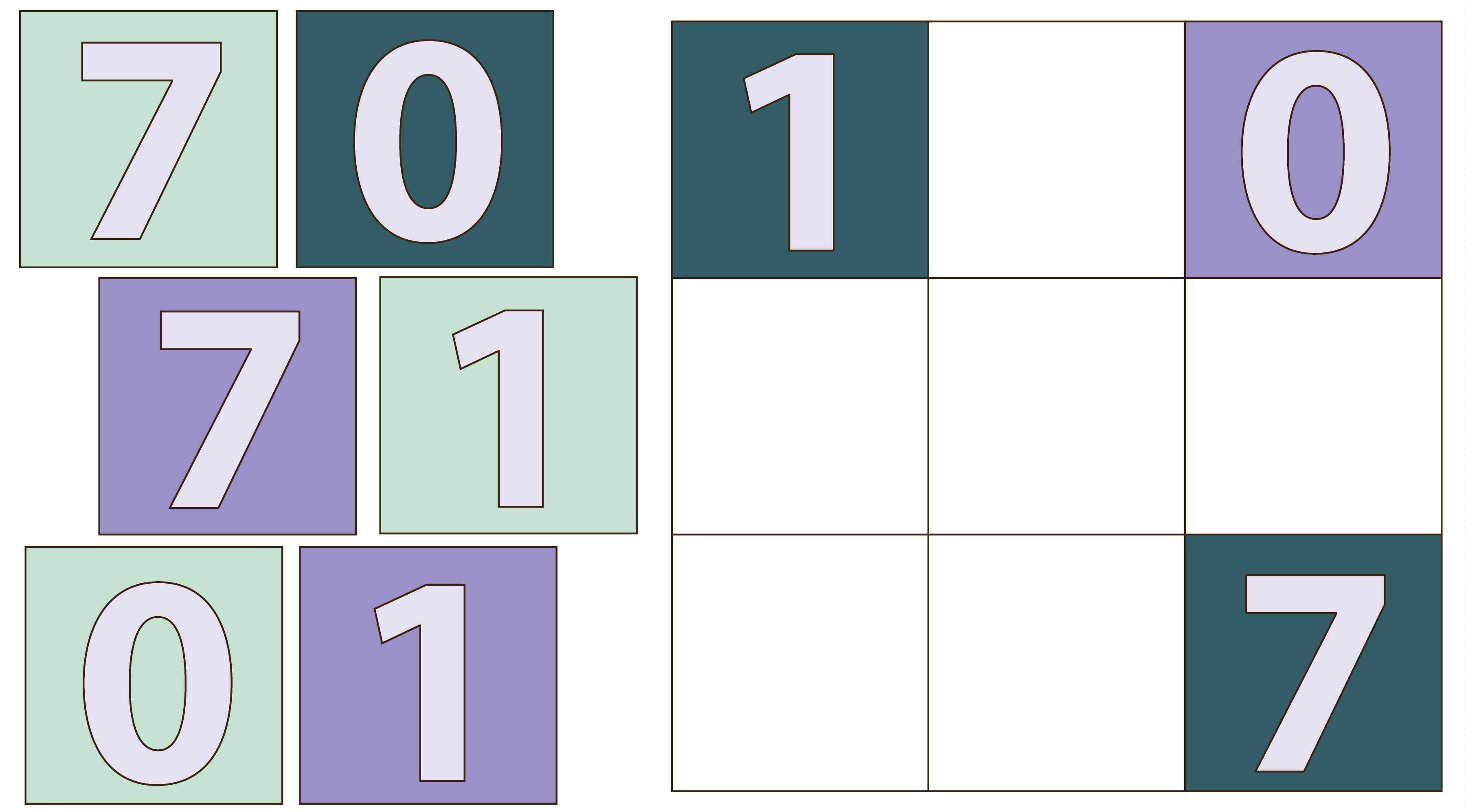
A Latin square is a grid filled with permutations: letters, numbers, or other symbols so that no row or column contains more than one of any character. You’ve probably seen the popular Latin-square puzzle called Sudoku. A Graeco-Latin square (also called an Euler square) is two independent Latin squares overlapping each other.
Can you complete this Euler square made by overlapping permutations of the digits of 170 with winter colors? Don’t repeat the same color OR the same number in any row or column.
Click the picture to get a larger image you can print.
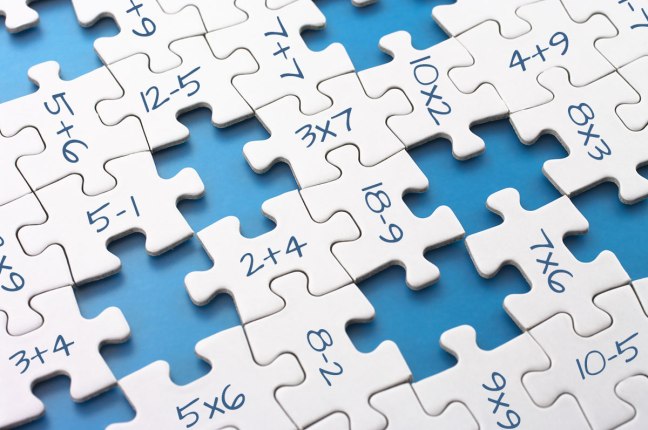
Ah, math facts — the topic that just won’t stop giving grief to students and anxiety to their parents. So it happened that I got another question, but this one leaned in a more philosophical direction…
“I enjoyed your podcast interview on Cultivating Math Curiosity and Reasoning in Kids. I love the idea that we don’t have to make our children memorize everything in math. We can give them freedom to make mental connections for themselves.
“But on the other hand, we don’t have unlimited time for them to figure things out on their own, do we? What about children who can’t make these connections for themselves?
“For example, what about the math facts? If my kids aren’t picking them up, don’t they just have to memorize them?”
It came up again this week, one of the most frequently asked questions about homeschooling math:
“I believe it’s important for children to memorize the math facts, but my kids are struggling with mental math. How can I help them master these important number relationships?”
We all want our children to own the math facts, those basic relationships between small numbers that form the foundation of all arithmetic.
But I don’t think emphasizing memorization will develop the sort of fluency your children need.
The human brain remembers what it thinks about, so we want children using their brains and thinking as deeply as possible about number relationships from as many different perspectives as we can get, noticing patterns, finding connections, making sense of the math.








 Denise Gaskins' Let's Play Math