Cultivate Mathematical Curiosity

“Cultivating thinking skills is the main reason for teaching math. It is the mind’s perfect playground for shaping up.

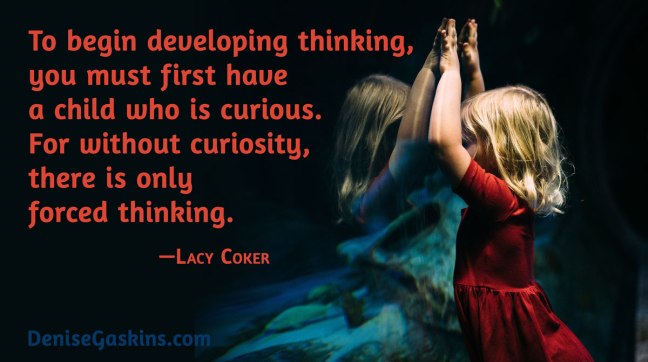
To begin developing thinking, you must first have a child who is curious. For without curiosity, there is only forced thinking.

The problem with traditional math is it jumps to the punchline.

Absolutely no mystery or suspense is developed in traditional math books. Why? Apparently, someone thought math was without mystery. That math is a definitive subject of rules and algorithms that all have been discovered.

We must persuade children that math is a worthy pursuit through interesting stories, examining quirky math properties, and asking good questions.”

— Lacy Coker
5 Tips to Cultivate Math Curiosity

The Mind’s Perfect Playground

My K-2nd-grade homeschool co-op math class will be following many of the tips in Lacy’s article.

Our topic is “Math Storytime,” so we’ll be starting with picture books, exploring the ideas they bring up, and finding things to notice and wonder about.

I’m looking forward to it.

But picture books aren’t just for little kids. They can be great discussion-starters at any age. Have you enjoyed math books with your students?

I’d love to hear your suggestions!

CREDITS: Background photo courtesy of Bekah Russom on Unsplash.

Learning Math Requires Imagination

“Teach mathematics the way we learn any other subject: Make it visual, make it concrete, not dependent on meaningless, abstract symbols, employ all the senses!

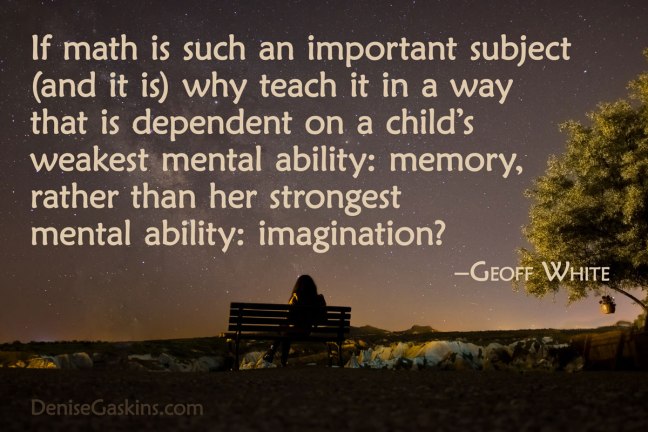
If math is such an important subject (and it is) why teach it in a way that is dependent on a child’s weakest mental ability: memory, rather than her strongest mental ability: imagination?”

— Geoff White
The Grade 10 Math Crunch, or Hitting the Wall at Grade 10

Mathematics and Imagination

How can we stir up our students’ imagination?

Teachers have struggled with this question for years — perhaps since the beginning of the profession.

Consider these comments by W. W. Sawyer in Mathematician’s Delight:

“Earlier we considered the argument, ‘Twice two must be four, because we cannot imagine it otherwise.’ This argument brings out clearly the connexion between reason and imagination: reason is in fact neither more nor less than an experiment carried out in the imagination.

“People often make mistakes when they reason about things they have never seen. Imagination does not always give us the correct answer. We can only argue correctly about things of which we have experience or which are reasonably like the things we know well. If our reasoning leads us to an untrue conclusion, we must revise the picture in our minds, and learn to imagine things as they are.

“When we find ourselves unable to reason (as one often does when presented with, say, a problem in algebra) it is because our imagination is not touched. One can begin to reason only when a clear picture has been formed in the imagination.

“Bad teaching is teaching which presents an endless procession of meaningless signs, words and rules, and fails to arouse the imagination.”

CREDITS: Background photo by Mehmet Kürşat Değer on Unsplash.

Holiday Math and More: Playful Math Education Carnival 114

Do you enjoy math? I hope so! If not, the links in this post just may change your mind.

Welcome to the 114th edition of the Math Teachers At Play math education blog carnival — a smorgasbord of articles by bloggers all around the internet who have great ideas for learning, teaching, and playing around with math from preschool to pre-college.

If you would like to jump straight to our featured blog posts, click here to see the Table of Contents.

By the way, I found a cool, semi-self-referential trivia tidbit about our carnival number: 27 − 14 = 114. And if you put 114 dots into a 1←7 Exploding Dots machine, you’ll get the code 222. Pretty neat!

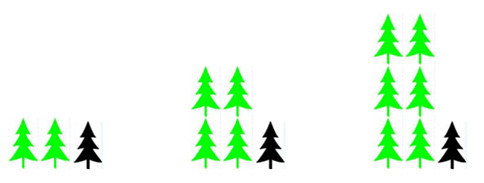
As you scroll through the links below, you find several puzzle graphics from the wonderful Visual Patterns website. Use them as conversation-starters with your kids: What do you notice? How does each pattern grow? For older students: Can you write a formula to describe how each pattern? What will it look at stage 43?

Pattern #7, Trees

A BIT OF FUN

Setting the mood: Enjoy this bit of seasonal fidgeting from Vi Hart (@vihartvihart).

If you don’t understand some of the references, that’s normal! Pick a phrase, Google it, and enjoy the fun of learning something new.


TABLE OF CONTENTS

And now, on to the main attraction: the blog posts. Some articles were submitted by their authors; others were drawn from the immense backlog in my rss reader. If you’d like to skip directly to your area of interest, click one of these links.

Let the mathematical fun begin!

Continue reading Holiday Math and More: Playful Math Education Carnival 114

Playful Math Education Carnival 106 with Math Art

Do you enjoy math? I hope so! If not, browsing this post just may change your mind.
Welcome to the 106th edition of the Math Teachers At Play math education blog carnival — a smorgasbord of links to bloggers all around the internet who have great ideas for learning, teaching, and playing around with math from preschool to pre-college. Let the mathematical fun begin!

By tradition, we start the carnival with a puzzle in honor of our 106th edition. But if you would like to jump straight to our featured blog posts, click here to see the Table of Contents.

Try This Puzzle

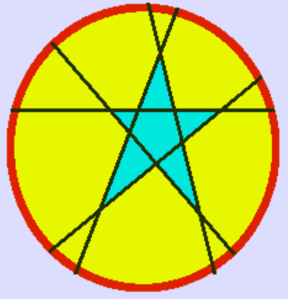
If you slice a pizza with a lightsaber, you’ll make straight cuts all the way across. Slice it once, and you get two pieces.
If you slice it five times, you’ll get a maximum of sixteen pieces. (And if you’re lucky you might get a star!)

  • How many times would you have to slice the pizza to get 106 pieces?

Click here for all the mathy goodness!

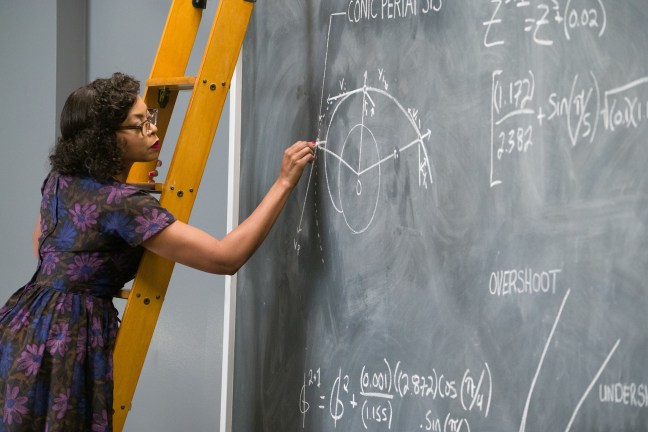
Hidden Figures Teaching Resources

Are you taking your kids to see the movie Hidden Figures? Check out Raymond Johnson’s blog post for references and teaching ideas:

If you know of any other resources, please share in the comments below. And as I find new goodies, I’ll add them to the list below.

Teachers and Students in Action

Lesson Plan Resources

Background Information

Before computers were machines, computers were people who computed things. This complicated task often fell to women because it was considered basically clerical. That’s right: computing triple integrals all day long qualified as clerical.

— Samantha Schumacher
Hidden Figures Movie Review

The Value of Math Games

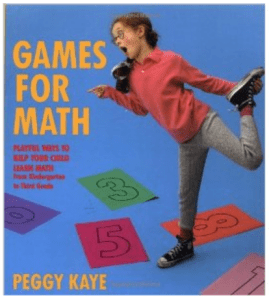
From Peggy Kaye’s classic book Games for Math:

Kaye-Games4Math

“Games put children in exactly the right frame of mind for learning difficult things.

“Children relax when they play — and they concentrate. They don’t mind repeating certain facts or procedures over and over, if repetition is part of the game.

“Children throw themselves into playing games the way they never throw themselves into filling out workbook pages.

“The games solidify the achievements of children who are already good at math, and they shore up children who need shoring up. They teach or reinforce many of the skills that a formal curriculum teaches, plus one skill that formal teaching sometimes leaves out — the skill of having fun with math, of thinking hard and enjoying it.

“If you play these games and your child learns only that hard mental effort can be fun, you will have taught something invaluable.”

Peggy Kaye
Games for Math

Sample Peggy’s Games for Math

 
* * *

This blog is reader-supported.

If you’d like to help fund the blog on an on-going basis, then please join me on Patreon for mathy inspiration, tips, and an ever-growing archive of printable activities.

If you liked this post, and want to show your one-time appreciation, the place to do that is PayPal: paypal.me/DeniseGaskinsMath. If you go that route, please include your email address in the notes section, so I can say thank you.

Which I am going to say right now. Thank you!

“The Value of Math Games” copyright © 2016 by Denise Gaskins.

Making Sense of Arithmetic

Homeschoolers have an advantage in teaching math: As our students grow, our own understanding of math grows with them because we see how the ideas build on each other.

This is especially true for those of us with large families. We pass through the progression of concepts with each student, and every pass lays down another layer in our own minds.

If you’d like to short-cut that process, check out Graham Fletcher’s Making Sense of Elementary Math video series. He’ll walk you through the topics, showing how manipulatives help build early concepts and gradually give way to abstract calculations.

“Understanding the vertical progression of mathematics is really important in the conceptual development of everyone’s understanding. This whole Making Sense Series has truly forced me to be a better teacher.”

— Graham Fletcher

Continue reading Making Sense of Arithmetic

Playful Math Education Carnival 97

Did you know 97 is an emirp?
Did you know 97 is an emirp? It’s prime both forward and backward! What other emirps can you find?

Welcome to the 97th edition of the Math Teachers At Play math education blog carnival: a monthly smorgasbord of links to bloggers all around the internet who have great ideas for learning, teaching, and playing around with math from preschool to pre-college.

A few articles were submitted by their authors, but most were drawn from the immense backlog in my rss reader. If you’d like to see your blog post featured next month, be sure to send it in yourself. Our hosts are busy parents and teachers who have limited time to scour the Internet for goodies.

To add a bit of color, I’ve thrown in several favorites from my newly updated Math with Living Books pages. Some (affiliate) links go to Amazon.com, where you can read descriptions and reviews — but there’s no need to buy. Most of these books should be available through your local library.

Table of Contents

If you’d like to skip directly to your area of interest, click here:

Please: If you enjoy the carnival, would you consider volunteering to host sometime this year? Classroom teachers, homeschoolers, unschoolers, or anyone who likes to play around with math (even if the only person you “teach” is yourself) — if you would like to take a turn, please speak up!

And now, let the mathematical fun begin!


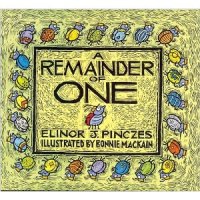
Pinczes-A Remainder of One

When the queen of her bugs demands that her army march in even lines, Private Joe divides the marchers into more and more lines so that he will not be left out of the parade.

Talking Math with Kids

  • Crystal Wagner (@Tri_Learning) shares several Math Games to Play in the Car: “Or maybe you are waiting in line at the grocery store or doctor’s appointment. Turn these times of waiting into learning opportunities.”
  • Christopher Danielson (@Trianglemancsd) shows how The sequence machine can launch math conversations with older students: “Now you can generate number sequences, without being distracted by the multiplication facts.”

richman-bykids

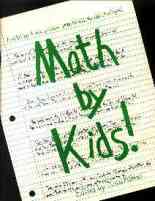
Help inspire your kids to try writing their own unique problems. Includes a wide range of math topics and concepts: money and time, fractions, percentages, geometry, logic, and multi-step problem solving.

[Back to top.]
[Back to Table of Contents.]

Continue reading Playful Math Education Carnival 97

Quotable: On Teaching

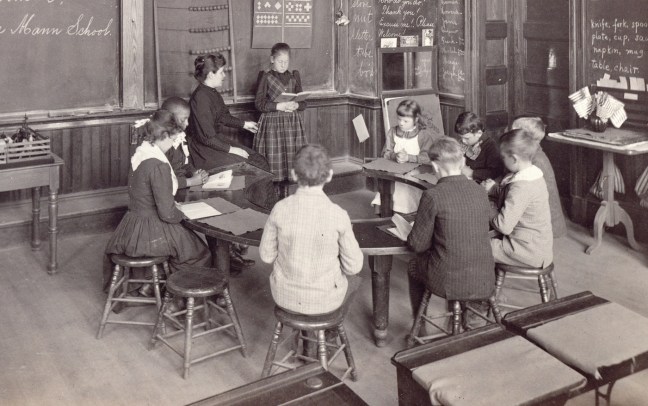
classroom scene

[Photo by City of Boston Archives via Flickr (CC BY 2.0).]

I’ve started collecting quotes about teaching math for the chapter pages in my next Math You Can Play book. Here are a couple snippets that don’t fit the theme of “Multiplication & Fractions,” but they struck my fancy anyway:

If teachers would only encourage guessing. I remember so many of my math teachers telling me that if you guess, it shows that you don’t know. But in fact there is no way to really proceed in mathematics without guessing. You have to guess! You have to have intuitive judgment as to the way it might go. But then you must be willing to check your guess. You have to know that simply thinking it may be right doesn’t make it right.

teaching

[Photo by Nathan Russell via Flickr (CC BY 2.0).]

One of the big misapprehensions about mathematics that we perpetrate in our classrooms is that the teacher always seems to know the answer to any problem that is discussed. This gives students the idea that there is a book somewhere with all the right answers to all of the interesting questions, and that teachers know those answers. And if one could get hold of the book, one would have everything settled. That’s so unlike the true nature of mathematics.

Leon Henkin
from “Round and Round at the Round Table”
Teaching Teachers, Teaching Students: Reflections on Mathematical Education

What Are Your Favorite Quotes?

Do you have some favorite quotes on math and teaching? I’d love to hear them! Please share in the Comments section below.

Understanding Math: Is There Really a Difference?

Math-DifferenceClick to read the earlier posts: Understanding Math, Part 1: A Cultural Problem; Understanding Math, Part 2: What Is Your Worldview?

From the outside, it’s impossible to tell how a person is thinking. A boy with the instrumental perspective and a girl who reasons relationally may both get the same answers on a test. Yet under the surface, in their thoughts and how they view the world, they could not be more different.

“Mathematical thinking is more than being able to do arithmetic or solve algebra problems,” says Stanford University mathematician and popular author Keith Devlin. “Mathematical thinking is a whole way of looking at things, of stripping them down to their numerical, structural, or logical essentials, and of analyzing the underlying patterns.”

And our own mathematical worldview will influence the way we present math topics to our kids. Consider, for example, the following three rules that most of us learned in middle school.

  • Area of a rectangle = length × width.
  • To multiply fractions, multiply the tops (numerators) to make the top of your answer, and multiply the bottoms (denominators) to make the bottom of your answer.

fraction-rule

  • When you need to multiply algebra expressions, remember to FOIL: multiply the First terms in each parenthesis, and then the Outer, Inner, and Last pairs, and finally add all those answers together.

FOIL

While the times symbol or the word multiply is used in each of these situations, the procedures are completely different. How can we help our children understand and remember these rules?

Over the next three posts in this series, we’ll dig deeper into each of these math rules as we examine what it means to develop relational understanding.

Many people misunderstand the distinction between Instrumental and Relational Understanding as having to do with surface-level, visible differences in instructional approach, but it’s not that at all. It has nothing to do with our parenting or teaching style, or whether our kids are learning with a traditional textbook or through hands-on projects. It’s not about using “real world” problems, except to the degree that the world around us feeds our imagination and gives us the ability to think about math concepts.

This dichotomy is all about the vision we have for our children — what we imagine mathematical success to look like. That vision may sit below the level of conscious thought, yet it shapes everything we do with math. And our children’s vision for themselves shapes what they pay attention to, care about, and remember.

Click to continue reading Understanding Math, Part 4: Area of a Rectangle.

CREDITS: “Math Workshop Portland” photo (top) by US Department of Education via Flicker (CC BY 2.0, text added). LPM-ebook-300This is the third post in my Understanding Math series, adapted from my book Let’s Play Math: How Families Can Learn Math Together—and Enjoy It, available at your favorite online book dealer.