Check out the new playful math education carnival at eat play math blog. Math art, tessellations, review games, problem-solving challenges, and all sorts of mathy fun. Not to mention, Raspberry Tiramisu!
Welcome to the Math Teachers at Play #99 Blog Carnival, a monthly smorgasbord of links to bloggers all around the internet who have great ideas for learning, teaching, and playing around with math… Click here to go read the carnival blog!
Check out the new playful math education carnival at Math Misery? blog. Multiplication, fractions, humor, problem-solving challenges, and all sorts of mathy fun:
So this is Math Teacher’s at Play … the 98th edition! You know what’s really interesting about 98? It’s 47×2. No, that’s clearly false. 49×2=98. That’s much better. Ok, so here’s a question, are there more facts about 98 than there are non-facts (aka lies) about 98 or the other way around or are they equal in cardinality?
. . .
Make sure to give a the articles linked here a visit!
Did you know 97 is an emirp? It’s prime both forward and backward! What other emirps can you find?
Welcome to the 97th edition of the Math Teachers At Play math education blog carnival: a monthly smorgasbord of links to bloggers all around the internet who have great ideas for learning, teaching, and playing around with math from preschool to pre-college.
A few articles were submitted by their authors, but most were drawn from the immense backlog in my rss reader. If you’d like to see your blog post featured next month, be sure to send it in yourself. Our hosts are busy parents and teachers who have limited time to scour the Internet for goodies.
To add a bit of color, I’ve thrown in several favorites from my newly updated Math with Living Books pages. Some (affiliate) links go to Amazon.com, where you can read descriptions and reviews — but there’s no need to buy. Most of these books should be available through your local library.
Table of Contents
If you’d like to skip directly to your area of interest, click here:
Please: If you enjoy the carnival, would you consider volunteering to host sometime this year? Classroom teachers, homeschoolers, unschoolers, or anyone who likes to play around with math (even if the only person you “teach” is yourself) — if you would like to take a turn, please speak up!
And now, let the mathematical fun begin!
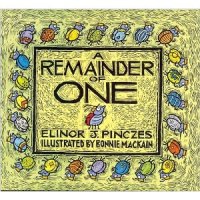
When the queen of her bugs demands that her army march in even lines, Private Joe divides the marchers into more and more lines so that he will not be left out of the parade.
David Wees (@DavidWees) and his son explore Inductive Reasoning: “You know, Dad. There are an infinite number of solutions…”
Joshua Greene (@JoshuaGreene19) writes Ode to a bead string (a non-poem poem): “One of the cool things about open play with math manipulatives is that it provides a lot of easy entry points into short math chats.”
Crystal Wagner (@Tri_Learning) shares several Math Games to Play in the Car: “Or maybe you are waiting in line at the grocery store or doctor’s appointment. Turn these times of waiting into learning opportunities.”
Christopher Danielson (@Trianglemancsd) shows how The sequence machine can launch math conversations with older students: “Now you can generate number sequences, without being distracted by the multiplication facts.”
Help inspire your kids to try writing their own unique problems. Includes a wide range of math topics and concepts: money and time, fractions, percentages, geometry, logic, and multi-step problem solving.
I am delighted to be hosting March’s MTaP Carnival! It’s late because I had the flu for 10 days – sorry for the delay, I know that we all look forward to reading the contributors’ posts each month. Without further delay, then, here are the great reads you won’t want to miss….
Check out the new playful math education carnival at Life Through A Mathematician’s Eyes. Parabolas, fractions, numbers square puzzles, edible math manipulatives, and all sorts of mathy fun:
Excitement!! The MTaP Math Educational Blog Carnival is at its 95 issue and I am extremely excited to host it. Moreover, February is one of my favorite months so I am extra excited for the opportunity.
First thing, let us think a little about the interesting properties of the number 95…
If you enjoy this carnival, why not send in a blog post of your own for next month? We love posts on playful ways to explore and learn math from preschool discoveries through high school calculus.
The carnival is short this month, but full of treats. Enjoy!
“So here we are on December 23, 2015, the 93rd edition of Math Teachers At Play! As per tradition, what’s so fascinating about the number 93?
“First, it’s a prime number! No. Wait, that’s clearly false. So 93 is not a prime number. But that’s not very fascinating. Aha! But 93 is a semi-prime! since 93=31×3. Even more interesting is that 94 and 95 are semi-primes. So a question is, is there another triplet of positive integers that are also semi-primes? It’s a good question to ask your students! …”
Welcome to the 92nd edition of the Math Teachers At Play math education blog carnival—a monthly smorgasbord of links to bloggers all around the internet who have great ideas for learning, teaching, and playing around with math from preschool to pre-college.
Let the mathematical fun begin!
By tradition, we start the carnival with a couple of puzzles in honor of our 92nd edition…
Puzzle #1
92 is a pentagonal number, so I was delighted when Lisa Winer‘s (@Lisaqt314) carnival submission came in. Her class spent some time playing around with figurate number puzzles—including pentagonal numbers—and collaborated on a blog post about their discoveries.
What is the maximum number of queens that can be placed on an chessboard such that no two attack one another?
Spoiler: Don’t peek! But the answer is here—and the cool thing is that there are 92 different ways to do it.
Table Of Contents
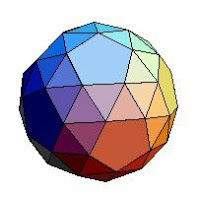
The snub dodecahedron is an Archimedean solid with 92 faces.
And now, on to the main attraction: the blog posts. Many articles were submitted by their authors; others were drawn from the immense backlog in my rss reader. If you’d like to skip directly to your area of interest, click one of these links.
Kids can enjoy making up math problems, but sometimes they can get a bit carried away. Just ask A. O. Fradkin (@aofradkin) about her daughter’s Gruesome Math.
Sarah Dees (@FrugalFun4Boys) comes up with a way to do Sorting, Counting, and Graphing for Preschoolers. “We were able to get in lots of counting practice and conversations about more and less and which group was the greatest. And, it kept him busy for quite awhile, which is always a good thing.”
Nancy Smith (@nancyqsmith) notices her students struggling with the equal sign in Equality. Strong opinions, and even a few tears. It will be interesting to hear what tomorrow brings…
Joshua Greene (@JoshuaGreene19) offers some great ways to tweak an already-wonderful multiplication game in Times square variations. “It was really interesting to see the different strategies that the students took to determining what would go on their boards.”
How often have you found that students are taught “tricks” to remember math rules—but they still make mistakes, because the rules don’t make sense? Ellie Nix (Bloglovin’)explains Why I’m Not Teaching Decimal Operations “Rules”.
Tina Cardone (@crstn85) experiments with Bar Models in Algebra to help her students think about linear equations. “I did not require students to draw a model, but I refused to discuss an incorrect equation with them until they had a model. Kids would tell me ‘I don’t know how to do fractions or percents’ but when I told them to draw a bar, and then draw 4/5, they could do that without assistance…”
Pradeep Mutalik challenges readers to “infer the simple rule behind a number sequence that spikes up and down like the beating of a heart” in Be Still My Pulsating Sequence.
How can we get a peek at how our children are thinking? Kristin Gray (@mathminds) starts with a typical set of 1st Grade Story Problems and tweaks them into a lively Notice/Wonder Lesson. “When I told them they would get to choose how many students were at each stop, they were so excited! I gave them a paper with the sentence at the top, let them choose a partner and sent them on their way…”
Tracy Zager (@tracyzager) talks about her own mathematical journey in The Steep Part of the Learning Curve: “The more math I learn, the better math teacher I am. I keep growing as a learner; I know more about where my kids are headed; and I understand more about what building is going on top of the foundation we construct in elementary school.”
And finally, you may be interested in my new blog post series exploring what it means to understand math. Check out the first post Understanding Math: A Cultural Problem. More to come soon…
And that rounds up this edition of the Math Teachers at Play carnival. I hope you enjoyed the ride.
The December 2015 installment of our carnival will open sometime during the week of December 21-25 at Math Misery? blog. If you would like to contribute, please use this handy submission form. Posts must be relevant to students or teachers of preK-12 mathematics. Old posts are welcome, as long as they haven’t been published in past editions of this carnival.
We need more volunteers. Classroom teachers, homeschoolers, unschoolers, or anyone who likes to play around with math (even if the only person you “teach” is yourself)—if you would like to take a turn hosting the Math Teachers at Play blog carnival, please speak up!
If you enjoy this carnival, why not send in a blog post of your own for next month? We love posts on playful ways to explore and learn math from preschool discoveries through high school calculus.
Welcome to the 90th edition of Math Teachers at Play (MTaP) Blog Carnival! I am so excited to host this carnival again. MTaP is a monthly blog carnival with a collection of tips, games, and activities for teachers and students. It is always great fun to participate in anyway to this Carnival ^_^ …
 Check out the new playful math education carnival at eat play math blog. Math art, tessellations, review games, problem-solving challenges, and all sorts of mathy fun. Not to mention, Raspberry Tiramisu!


 Denise Gaskins' Let's Play Math