Playful Math Education Carnival 115—Women of Mathematics

Welcome to the 115th edition of the Playful Math Education Blog Carnival — a smorgasbord of links to bloggers all around the internet who have great ideas for learning, teaching, and playing around with math from preschool to pre-college.

In honor of Women’s History Month, this carnival features quotes from fifteen women mathematicians.

If you would like to jump straight to our featured blog posts, click here to see the Table of Contents.

Let the mathematical fun begin!

The Women of Mathematics

They came from many countries and followed a variety of interests.

They conquered new topics in mathematics and expanded the world’s understanding of old ones.

They wrestled with theorems, raised children, published articles, won awards, faced discrimination, led professional organizations, and kept going through both success and failure.

Some gained international renown, but most enjoyed quiet lives.

They studied, learned, and lived (and some still live) as most of us do — loving their families and friends, joking with colleagues, hoping to influence students.

I think you’ll find their words inspiring.

“What I really am is a mathematician. Rather than being remembered as the first woman this or that, I would prefer to be remembered, as a mathematician should, simply for the theorems I have proved and the problems I have solved.”
Julia Robinson (1919–1985)


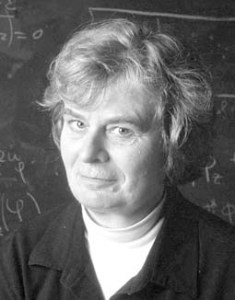
“All in all, I have found great delight and pleasure in the pursuit of mathematics. Along the way I have made great friends and worked with a number of creative and interesting people. I have been saved from boredom, dourness, and self-absorption. One cannot ask for more.”
Karen Uhlenbeck (b. 1942)

Continue reading Playful Math Education Carnival 115—Women of Mathematics

Cultivate Mathematical Curiosity

“Cultivating thinking skills is the main reason for teaching math. It is the mind’s perfect playground for shaping up.

To begin developing thinking, you must first have a child who is curious. For without curiosity, there is only forced thinking.

The problem with traditional math is it jumps to the punchline.

Absolutely no mystery or suspense is developed in traditional math books. Why? Apparently, someone thought math was without mystery. That math is a definitive subject of rules and algorithms that all have been discovered.

We must persuade children that math is a worthy pursuit through interesting stories, examining quirky math properties, and asking good questions.”

— Lacy Coker
5 Tips to Cultivate Math Curiosity

The Mind’s Perfect Playground

My K-2nd-grade homeschool co-op math class will be following many of the tips in Lacy’s article.

Our topic is “Math Storytime,” so we’ll be starting with picture books, exploring the ideas they bring up, and finding things to notice and wonder about.

I’m looking forward to it.

But picture books aren’t just for little kids. They can be great discussion-starters at any age. Have you enjoyed math books with your students?

I’d love to hear your suggestions!

CREDITS: Background photo courtesy of Bekah Russom on Unsplash.

Learning Mathematics Is a Deep Mystery

Of all the myths about mathematics, the one I find most blatantly wrong is the idea that some people are just born knowing the answers. In my experience, when you confront a genuine puzzle, you start out not knowing, no matter who you are.

Moreover, “knowing” the answers can be a trap; learning mathematics is about looking at what you thought you understood and seeing that there’s deeper mystery there than you realised.

— Dan Finkel
A Mathematician at Play Puzzle #1

Puzzles for Learning Mathematics

If you’d like to practice learning mathematics by confronting genuine puzzles, Dan’s “A Mathematician at Play” series looks like a wonderful place to start.

Some of these puzzles are classics, others are original. All of them involve some kind of thinking or insight that strikes me as pretty, or surprising, or delightful.

— Dan Finkel
A Mathematician at Play Puzzle #1

Dan plans to post new puzzles on the Math 4 Love blog every Monday for the next few months. And sharing spoilers on each following Friday, if you want to verify your answers.

Check it out!

CREDITS: Background photo courtesy of Amy on Unsplash.

Learning Math Requires Imagination

“Teach mathematics the way we learn any other subject: Make it visual, make it concrete, not dependent on meaningless, abstract symbols, employ all the senses!

If math is such an important subject (and it is) why teach it in a way that is dependent on a child’s weakest mental ability: memory, rather than her strongest mental ability: imagination?”

— Geoff White
The Grade 10 Math Crunch, or Hitting the Wall at Grade 10

Mathematics and Imagination

How can we stir up our students’ imagination?

Teachers have struggled with this question for years — perhaps since the beginning of the profession.

Consider these comments by W. W. Sawyer in Mathematician’s Delight:

“Earlier we considered the argument, ‘Twice two must be four, because we cannot imagine it otherwise.’ This argument brings out clearly the connexion between reason and imagination: reason is in fact neither more nor less than an experiment carried out in the imagination.

“People often make mistakes when they reason about things they have never seen. Imagination does not always give us the correct answer. We can only argue correctly about things of which we have experience or which are reasonably like the things we know well. If our reasoning leads us to an untrue conclusion, we must revise the picture in our minds, and learn to imagine things as they are.

“When we find ourselves unable to reason (as one often does when presented with, say, a problem in algebra) it is because our imagination is not touched. One can begin to reason only when a clear picture has been formed in the imagination.

“Bad teaching is teaching which presents an endless procession of meaningless signs, words and rules, and fails to arouse the imagination.”

CREDITS: Background photo by Mehmet Kürşat Değer on Unsplash.

Mindset for Learning Math

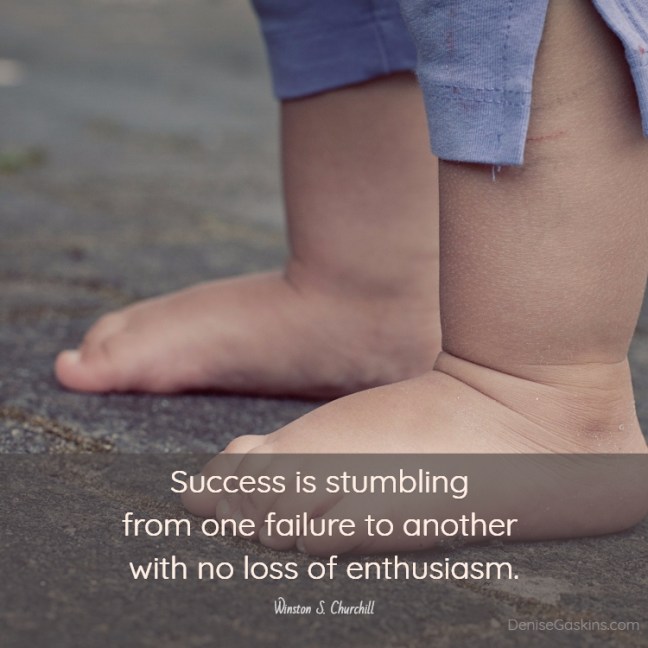
Playing with a new image editor, I came across this Winston Churchill quote. What a great description of how it feels to learn math!

If you have a student who struggles with math or is suffering from a loss of enthusiasm, check out Jo Boaler’s free online course on developing a mathematical mindset:

Or explore some of the playful activity ideas for all ages in her Week of Inspirational Math.

https://youtu.be/bxrPy1fjVU4&rel=0

Math Humor and Copywork

Homeschool Memories…

The more years we spent homeschooling, the more I appreciated Charlotte Mason’s work and tried to incorporate her ideas into our laid-back, eclectic, not-quite-unschooling program.

We never fit the typical Charlotte Mason mold. Mosquitos and natural laziness limited our nature walks, and our version of narration was much too informal.

But those are just techniques, methods.

What really interests me in Mason’s writing is the philosophy behind the methods. Two points resonated: That we must respect our children as persons in their own right. And that we must provide a generous, wide-ranging feast to their minds.

Striving to live out those principles had a profound influence on our day-to-day homeschooling.

Continue reading Math Humor and Copywork

Quotable: Then and Now

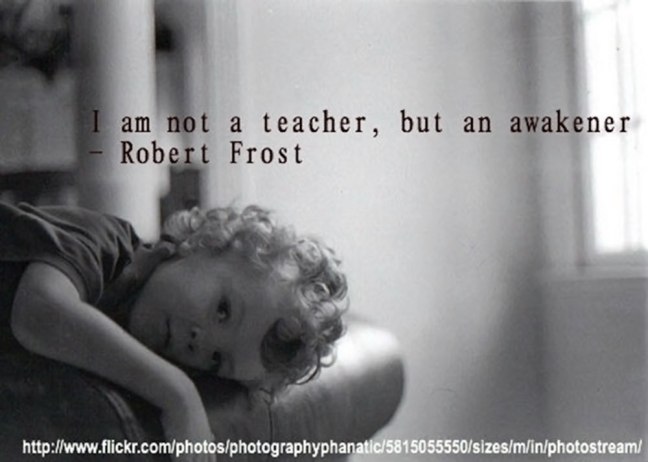
“I used to think my job was to teach students to see what I see. I no longer believe this. My job is to teach students to see; and to recognize that no matter what the problem is, we don’t all see things the same way. But when we examine our different ways of seeing, and look for the relationships involved, everyone sees more clearly; everyone understands more deeply.”

Joe Schwartz
Then and Now

CREDITS: Feature photo (above) by jenn.davis via Flickr (CC BY 2.0).

Math Inspirations: Why Study Mathematics?

why-study-math

What teacher hasn’t heard a student complain, “When am I ever going to have to use this?” Didn’t most of us ask it ourselves, once upon a time?

And unless we choose a math-intensive career like engineering, the truth is that after we leave school, most of us will never again use most of the math we learned.

But if math beyond arithmetic isn’t all that useful, then what’s the point?

If you or your student is singing the “Higher Math Blues,” here are some quotations that may cheer you up — or at least give you the strength of vision to keep on slogging.

We Study Mathematics…

To Understand Creation

I don’t want to convince you that mathematics is useful. It is, but utility is not the only criterion for value to humanity. Above all, I want to convince you that mathematics is beautiful, surprising, enjoyable, and interesting. In fact, mathematics is the closest that we humans get to true magic. How else to describe the patterns in our heads that — by some mysterious agency — capture patterns of the universe around us? Mathematics connects ideas that otherwise seem totally unrelated, revealing deep similarities that subsequently show up in nature.

— Ian Stewart
The Magical Maze

That vast book which stands forever open before our eyes, the universe, cannot be read until we have learnt the language in which it is written. It is written in mathematical language, and the letters are triangles, circles, and other geometrical figures, without which means it is humanly impossible to comprehend a single word.

— Galileo Galilei
quoted by Clifford Pickover, A Passion for Mathematics

To Train Our Minds

The investigation of mathematical truths accustoms the mind to method and correctness in reasoning, and is an employment peculiarly worthy of rational beings.

— George Washington
quoted by William Dunham, The Mathematical Universe

I told myself, “Lincoln, you can never make a lawyer if you do not understand what demonstrate means.” So I left my situation in Springfield, went home to my father’s house, and stayed there till I could give any proposition in the six books of Euclid at sight. I then found out what “demonstrate” means, and went back to my law studies.

— Abraham Lincoln
quoted by William Dunham, The Mathematical Universe

To Understand History

In most sciences, one generation tears down what another has built, and what one has established another undoes. In mathematics alone, each generation adds a new story to the old structure.

— Herman Henkel
quoted by Noah benShea, Great Quotes to Inspire Great Teachers

Biographical history, as taught in our public schools, is still largely a history of boneheads: ridiculous kings and queens, paranoid political leaders, compulsive voyagers, ignorant generals — the flotsam and jetsam of historical currents. The men who radically altered history, the great scientists and mathematicians, are seldom mentioned, if at all.

— Martin Gardner
quoted by G. Simmons, Calculus Gems

I will not go so far as to say that constructing a history of thought without profound study of mathematical ideas is like omitting Hamlet from the play named after him. But it is certainly analogous to cutting out the part of Ophelia. For Ophelia is quite essential to the play, she is very charming. . . and a little mad.

— Alfred North Whitehead
quoted in The Viking Book of Aphorisms

To Appreciate the Beauty

The mathematician does not study pure mathematics because it is useful, he studies it because he delights in it, and he delights in it because it is beautiful.

— Henri Poincaré
quoted by Theoni Pappas, More Joy of Mathematics

A mathematician, like a painter or poet, is a maker of patterns. If his patterns are more permanent than theirs, it is because they are made with ideas. The mathematician’s patterns, like the painter’s or the poet’s, must be beautiful. The ideas, like the colors or the words, must fit together in a harmonious way. Beauty is the first test: there is no permanent place in this world for ugly mathematics.

— Godfrey H. Hardy
A Mathematician’s Apology

And Most of All, to Play

Mathematics is a world created by the mind of men, and mathematicians are people who devote their lives to what seems to me a wonderful kind of play!

Constance Reid

At age eleven, I began Euclid, with my brother as tutor. This was one of the great events of my life, as dazzling as first love. I had not imagined there was anything so delicious in the world.

— Bertrand Russell
The Autobiography of Bertrand Russell

I love mathematics … principally because it is beautiful, because man has breathed his spirit of play into it, and because it has given him his greatest game — the encompassing of the infinite.

Rózsa Péter
quoted by Rosemary Schmalz, Out of the Mouths of Mathematicians

Did you enjoy these? You can find plenty more on my Math & Education Quotations page.

  • I would LOVE to hear YOUR favorite mathematics, education, or inspirational quote. Please share in the Comments section below!

CREDITS: Never Ending Math Problem photo (above) by Danny (blog post title added) via Flickr (CC BY 2.0).

What Do We Mean by ‘Understanding’?

“You understand something if you have the ability to view it from different perspectives.

“Changing your perspective makes your mind more flexible, it makes you open to new things, and it makes you able to understand things.”

— Roger Antonsen
Math is the hidden secret to understanding the world

Check out the speaker’s footnotes for links and interesting tidbits about the images in the video.

Prof. Triangleman’s Abbreviated List of Standards for Mathematical Practice

How can we help children learn to think mathematically? Live by these four principles.

PTALSMP 1: Ask questions.

Ask why. Ask how. Ask whether your answer is right. Ask whether it makes sense. Ask what assumptions you have made, and whether an alternate set of assumptions might be warranted. Ask what if. Ask what if not.

PTALSMP 2: Play.

See what happens if you carry out the computation you have in mind, even if you are not sure it’s the right one. See what happens if you do it the other way around. Try to think like someone else would think. Tweak and see what happens.

PTALSMP 3: Argue.

Say why you think you are right. Say why you might be wrong. Try to understand how someone else sees things, and say why you think their perspective may be valid. Do not accept what others say is so, but listen carefully to it so that you can decide whether it is.

PTALSMP 4: Connect.

Ask how this thing is like other things. Try your ideas out on a new problem. Ask whether and how these ideas apply to other situations. Look for similarities and differences. Seek out the boundaries and limitations of your techniques.

— Christopher Danielson

And a Puzzle

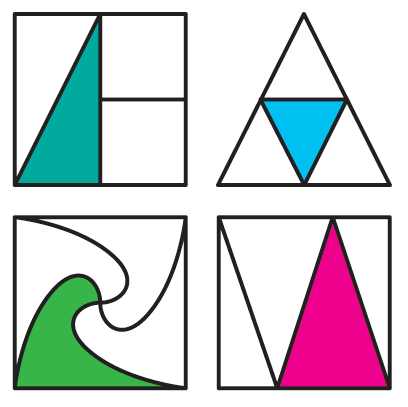
Practice applying Professor Triangleman’s Standards to the puzzle below. Which one doesn’t belong? Can you say why someone else might pick a different one?

wodb

multfrac-300CREDITS: An expanded version of the standards originally posted in Ginger ale (also abbreviated list of Standards for Mathematical Practice). Feature photo by Alexander Mueller via Flicker (CC-BY 2.0, text added). This post is an excerpt from my book Multiplication & Fractions: Math Games for Tough Topics, available now at your favorite online book dealer.