Charlotte Mason Math: Reason and Proof

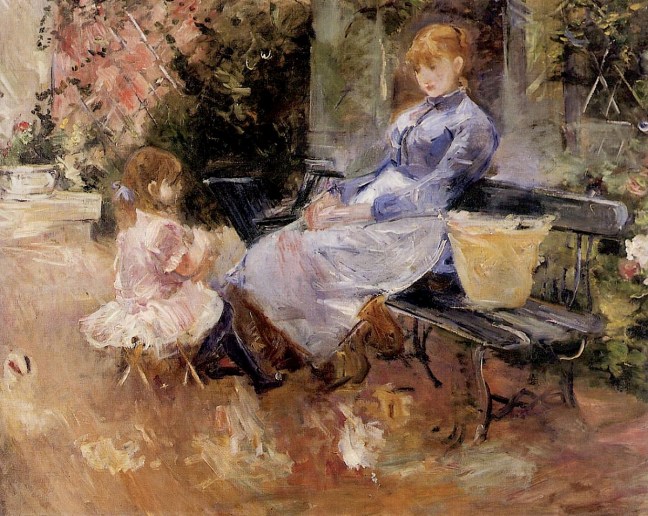
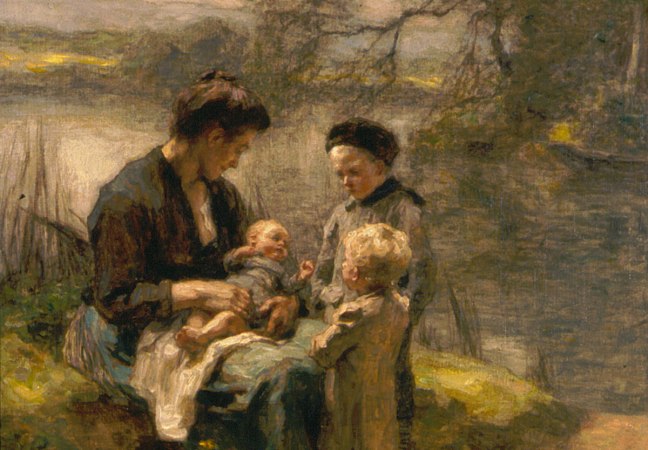
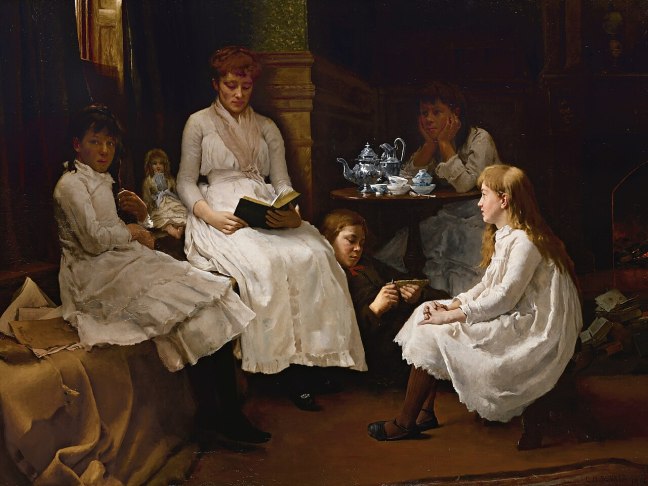
“Woman with Child and Two Children,” Léon Augustin Lhermitte, public domain

The two ideas that Mason considered important in math — rightness and reason — are connected. It is our reasoning that convinces us an answer is right or wrong. How do we know we got a sum correct? We can take the numbers apart and add them another way, to see if we get the same answer. Or we can subtract one of the numbers from the sum and see if we get the other number. Or … well, how would you prove it?

More than anything else, Mason wanted her students to discover in math a sense of immutable truth, a truth that stands on its own, apart from anything we say or do, a truth we can explore and reason about but can never change.

This sense of rightness, of solid, unalterable truth, inspires a feeling of wonder and awe — she calls it “Sursum corda,” a call to worship — that delights our minds. It’s that “Aha!” feeling we get when something we’ve been struggling with suddenly fits together and makes sense.

From the very beginning, children should be doing this sort of informal proof, explaining how they figured things out. Don’t wait until high school geometry to let your children wrestle with ideas.

Continue reading Charlotte Mason Math: Reason and Proof

Introduction to Charlotte Mason Math

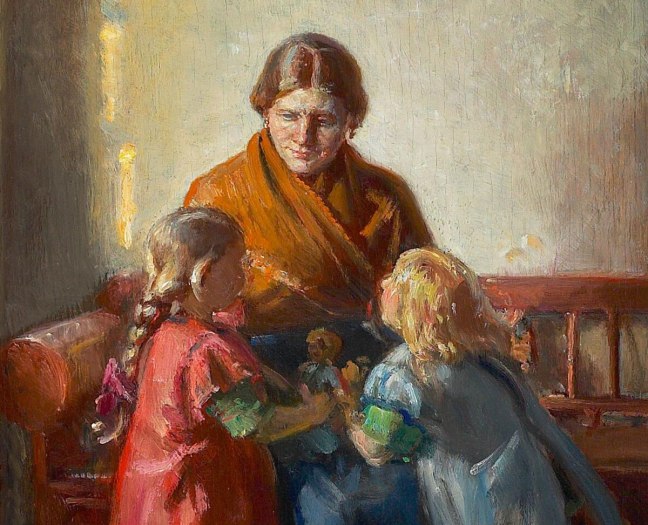
Woman with children, painting by Michael Ancher

“The Principality of Mathematics is a mountainous land, but the air is very fine and health-giving. People who seek their work or play in this principality find themselves braced by effort and satisfied with truth.”

— Charlotte Mason, Ourselves

Charlotte Mason (1842-1923) was a British school reformer at the turn of the twentieth century, a contemporary of William James and John Dewey. She advocated strongly for poor children, arguing they were equally capable of learning a wide and liberal curriculum as were the children of privilege.

Mason believed that all children from the time they are born share a natural curiosity and hunger for learning, and the adult’s role is to spread a “wide and generous feast” of inspiring ideas.

She was also a homeschooling pioneer, and the homeschooling revival of the late twentieth century rediscovered and popularized her books. Many found her principles a refreshing balance to the dominant educational paradigm of pragmatism.

Continue reading Introduction to Charlotte Mason Math

The Rhythm of Math Games

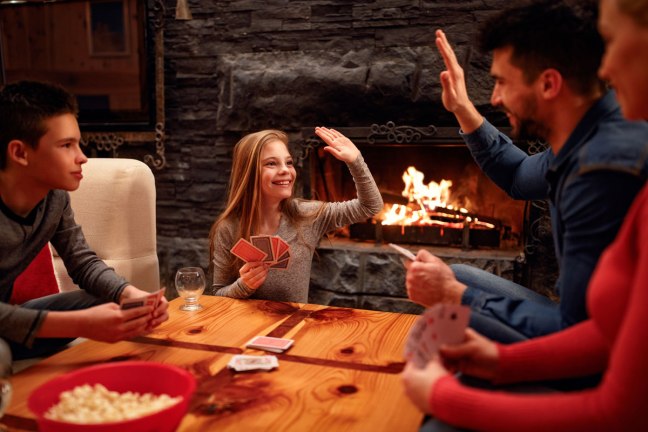
Family math game night

The art of homeschooling math begins with the rhythm of puzzle play. It continues with games, which are social puzzles.

Games are fun, building a positive attitude toward math. They give students a refreshing break from textbook work and make kids willing to practice their math.

But more important than the fun, math games push children to think about what numbers mean and how they work. A good math game reinforces the idea that math is about reasoning, using the things you know to figure out what you need.

For more about homeschooling with math games, check out my post Gameschooling Math.

Continue reading The Rhythm of Math Games

Limited Time: A New Set of History Strategy Games

Wiki Histories strategy game

There’s just one short week left to go on Gordon Hamilton’s new Kickstarter project, Wiki Histories: Snapshots of world history in mini-games.

Sign up now so you don’t miss out!

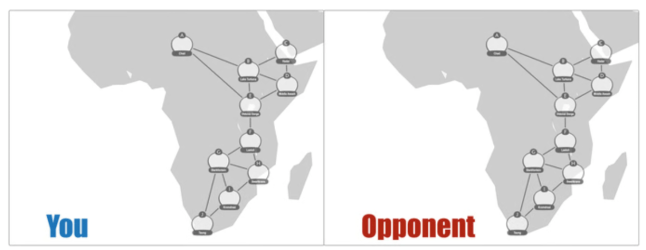
Wiki Histories are two-player snapshots of world history and prehistory. They are pencil-and-paper games. Each has a pair of maps, a simple set of standard rules, some unique rules, and a historical paragraph.

    Time: 15 minutes. Age: 9+.

    Back the Kickstarter Now

    The Rhythm of Math Puzzles

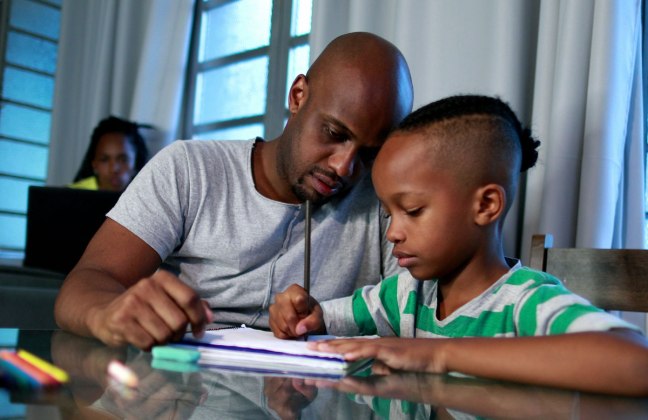
    Father and son homeschooling math

    Homeschooling families naturally build patterns and routines that help us keep our sanity as we go through our homeschooling day.

    No matter what resources we choose or which curriculum packages we buy, we never end up following the book exactly as it is written. So don’t worry if you find yourself wandering away from the lesson plan. You’re not getting behind; you’re just discovering your family’s natural learning style.

    If you and your children have fallen into the rut of traditional math lessons, have patience. Give yourself time to adjust to a more relaxed mindset about math.

    And when you find the rhythm that fits your family, you’ll discover that math lessons flow so much more smoothly.

    Continue reading The Rhythm of Math Puzzles

    Learning Math with Puzzles

    Mother and daughter homeschooling math

    Learning mathematics begins with puzzles. As stories are to history or science, puzzles are to math.

    In ancient times, math began with puzzles like:

    • How can we keep track of our herds, or predict the cycles of the moon, or figure out how much to pay for taxes?

    • How can we draw perfect right angles, or make beautifully symmetric designs?

    • What are the ratios of harp strings that create the most beautiful sounds?

    Math puzzles touch every area of life. Puzzles inspire curiosity and solving them brings joy.

    And we can enrich any homeschool math program with puzzles that invite children to think about mathematical concepts.

    Even those monster topics that often bring homeschooling families to tears, such as fractions.

    Continue reading Learning Math with Puzzles

    New Math Game Books and a Back-to-School Sale

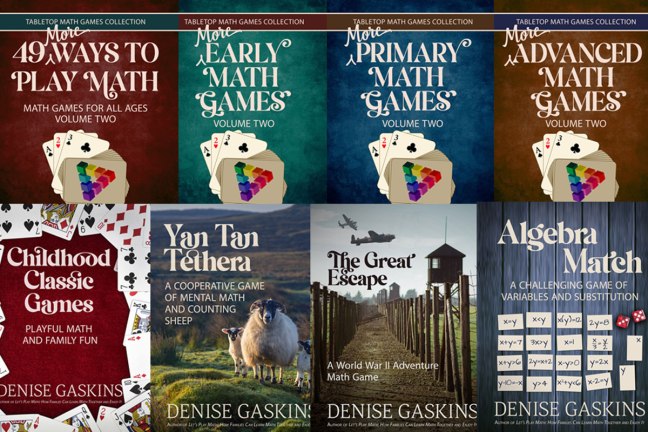
    Tabletop Math Games Collection books by Denise Gaskins

    After wrestling with some technical issues to connect my book printer to the store, I’m pleased to announce that the new Tabletop Math Games Collection, Volume Two books are now available in digital and print formats on my Playful Math Store.

    Visit the New Products page to find everything in the image above:

    Or check out the Tabletop Math Games Collection page to see the Volume One books also:

    I’m working on getting the paperback and hardcover editions of these books into all the regular online bookstores, but that’s been a slower process than normal. You can purchase ALL versions through my store now, and I’ll let you know whenever I find out the other bookstores have them available…

    Back-to-School Sale

    Would you like to add a playful challenge to your homeschool or classroom planning?

    For many years, I led math enrichment classes through our local homeschool co-ops. In recent years, family health issues have kept me from teaching and from doing library meet-ups.

    But even if you’ve never done one of my classes — or even if you live far from my hometown — you can still give your children a taste of creative math through my books and activity guides at Denise Gaskins’ Playful Math Store.

    Back to School Sale: Save 20% off problem-solving ebooks and printable activities through September 30th.

    Because thinking hard can be downright fun!
    Homeschooling: The Rhythm of a Math Lesson

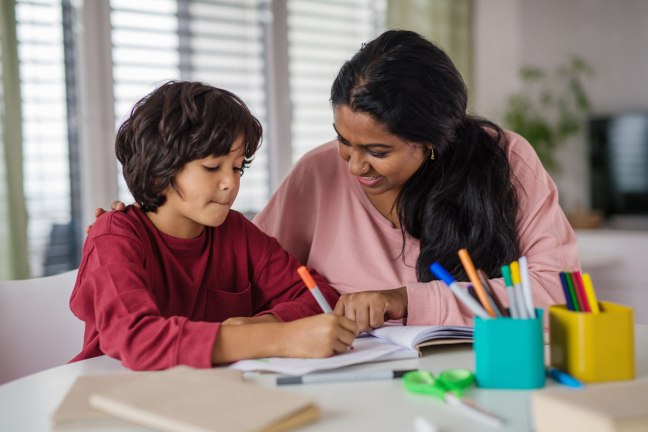
    Mother and son homeschooling math

    If there’s one thing common to all new homeschoolers, it’s a feeling of being overwhelmed. One solution is to develop a basic homeschooling rhythm, a daily routine of what you do first, and then next, and then next.

    Most new home schoolers try to adopt the rhythm they remember from their own school days, their own classroom experience. But our home is not a classroom, and that pattern can lead to burn-out.

    The secret to successful homeschooling is to find a natural rhythm that fits your family. Even in math.

    Continue reading Homeschooling: The Rhythm of a Math Lesson

    Memories: Improper Fractions

    notebooking math with fraction pieces - photo

    Homeschool Memories…

    My eight-year-old daughter’s first encounter with improper fractions was a bit more intense than she knew how to handle. And I hadn’t learned yet how to use the Notice-Wonder-Create cycle to help kids think about tough problems.

    Sometimes I wonder how our children survive their parents’ learning curve. It’s a good thing God made them resilient enough to thrive despite our mistakes!

    Continue reading Memories: Improper Fractions

    Podcast: From Right Answers to Adventure

    Notice and Wonder podcast logo with quote by Denise Gaskins

    If you find a free hour this week, you may enjoy listening to my latest Notice & Wonder podcast discussion with Sonya and Della about the power of playful math:

    We share plenty of tips, stories, and practical advice for bringing a sense of curiosity and exploration into your math lessons.

    Plus, the Best Math Game Ever!

    I love this podcast, because it always feels like sitting down to chat over coffee with good friends who love kids and love teaching.

    Taking our focus off answer-getting can be hard for the adult, because that right answer gives us security that we know what we’re doing. It’s hard to give ourselves the freedom of saying, “I’m going to go into this lesson, and I have no idea where it’s going to go. I have this puzzle, I have this problem, but I don’t know where it will lead.’’

      That’s a scary situation to be in as the adult who’s used to being in control of everything.

        But we’re exploring this landscape of math. There are a lot of cool things to discover, and we’ll find something. We may not find the answer, but we’ll find something interesting, if we just explore it.

        — Denise Gaskins,
        “From Right Answers to Adventure”

         
        * * *

        If you enjoy listening to podcasts, check out my other interviews here.

        Are you looking for more creative ways to play math with your kids? Check out all my books, printable activities, and cool mathy merch at Denise Gaskins’ Playful Math Store.

        This blog is reader-supported. If you’d like to help fund the blog on an on-going basis, then please join me on Patreon for mathy inspiration, tips, and an ever-growing archive of printable activities.

        If you liked this post, and want to show your one-time appreciation, the place to do that is PayPal: paypal.me/DeniseGaskinsMath. If you go that route, please include your email address in the notes section, so I can say thank you.

        “Podcast: From Right Answers to Adventure” copyright © 2024 by Denise Gaskins. Podcast logo copyright © 2024 Sonya Post.