Math Musings: Teaching the Big Ideas

Earlier, I wrote that “the big ideas of number relationships are found in algebra, not in arithmetic. If we want to bring our children into direct contact with these ideas, we need to teach with algebra in mind from the very beginning.”

Whether we teach the traditional way, beginning with counting and whole number arithmetic or take the road less traveled and explore algebra first — either way, we need to look at number relationships with an algebraic mindset.

So you might wonder, what are these big ideas of number relationships? How can we recognize them?

Continue reading Math Musings: Teaching the Big Ideas

Homeschool Musings: Math Manipulatives Part 3

We’ve talked about several types of math manipulative that homeschooling parents might use to help their children learn math (see part 1 and part 2), but we never stopped to ask the most basic question:

Why use math manipulatives at all?

Math manipulatives are a tool for solving educational problems, so we should first decide what problem we are trying to solve. That will help us know which tool to use.

Continue reading Homeschool Musings: Math Manipulatives Part 3

Homeschool Musings: Math Manipulatives Part 2

In my previous post, I examined fingers and found items (beans, buttons, leaves, and so on) as tools that can help our children learn math. This time, we move on to the kinds of math manipulatives you’ll find in stores or packaged with your favorite curriculum.

Standard base ten blocks

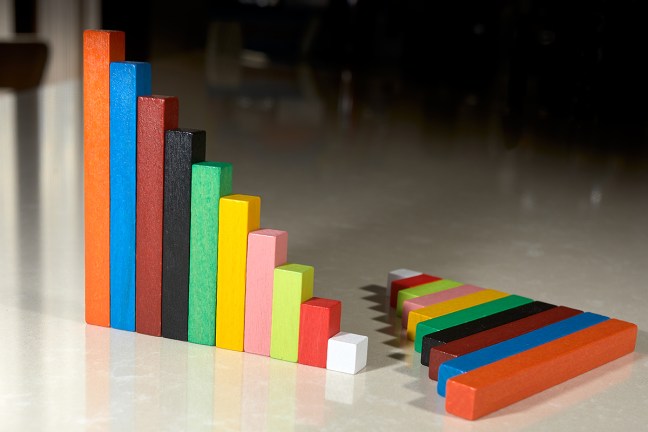
The standard base ten blocks consist of plastic or wooden cubes, a rod with the length of ten cubes, a flat shape the size of ten rods side-by-side, and a large cube equivalent to ten of the flat shapes stacked atop each other.

These are used primarily for modeling place value as a means of developing the standard arithmetic algorithms for addition and subtraction.

They can also be used for modeling decimals as a place value notation, without relying on fraction concepts. And with a bit of imagination (“Pretend the rods are stretchy, so we don’t know how long they really are”) they can model simple algebraic expressions.

Continue reading Homeschool Musings: Math Manipulatives Part 2

Homeschool Musings: Math Manipulatives Part 1

I stumbled across another blogger’s post on the common question, “What are the best math manipulatives for homeschooling?”

My answer to this question has changed over the years, as I’ve grown in my understanding of math and of education. As my current stance is far different from much of what I read from other homeschoolers, I’m going to lay out my reasoning below.

I’d love to hear your thoughts, especially if you disagree, because comparing ideas with one another is a great way to learn.

Continue reading Homeschool Musings: Math Manipulatives Part 1

Living Books for Math

What is a “living book”? English education reformer Charlotte Mason introduced this term for any book that brings the reader directly into contact with the major ideas that have fascinated humans across the ages.

We know that reading aloud helps build our children’s love for books. But did you know it works for math as well?

And that it can transform the parent’s attitude as well as the child’s?

A playful math book fleshes out the bones of abstract math,
brings it alive,
makes it human, relatable,
interesting to readers of all ages,
opening our eyes to the wonderful world of big ideas,
where concepts meet and topics intertwine
in a beautifully intricate dance
of understanding.

We live in an age of abundance, with more new creative math books being published every year, so many that I can’t keep track of them all, not to mention the older classics, some out of print, that can still be found in public libraries.

Here are a few of my favorite books of playful, living math, both old and new:

Continue reading Living Books for Math

Musings: School Math vs. Real Math

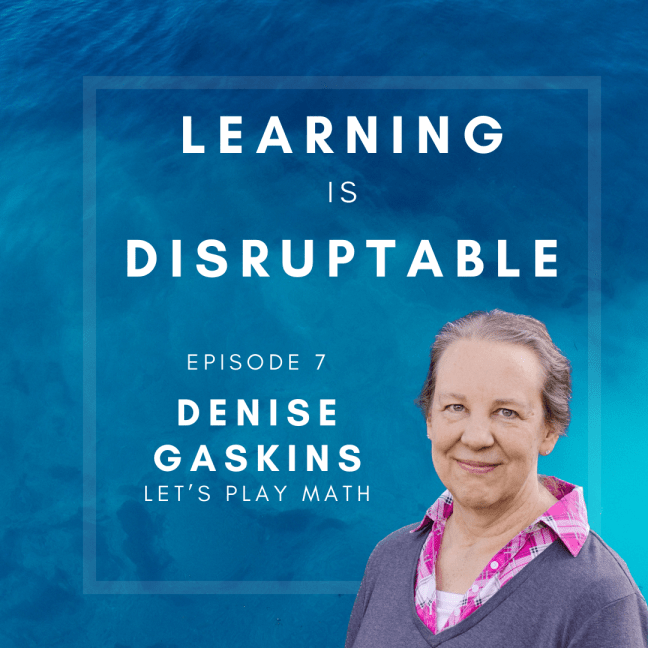
I was asked to do an interview for a new podcast called Learning is Disruptable, and that got me thinking…

Is Math Education Ripe for Disruption?

Math education is not working. Too many people come out of school with math avoidance, math anxiety or even phobia, a profound conviction that math is not for them.

Generally, humans enjoy success, the feeling that things make sense, that they are capable of understanding big ideas. People like subjects that give them this type of success, where they are meeting and making sense of new ideas, growing in mastery.

But they hate subjects that make them feel like a failure, where things don’t make sense and there seems to be no real chance of success.

Therefore, understanding our students’ attitude toward math gives us a solid indication of how well they are learning.

Continue reading Musings: School Math vs. Real Math

A Revolutionary New Approach to Homeschool Math

There’s a great new homeschool math program that can radically transform your children’s experience of math, building understanding through creative exploration.

First, a bit of history…

What Is Algebra Before Arithmetic?

Back when I was still homeschooling, I read a couple of articles by Keith Devlin about the benefits of teaching children algebra, even before they study numbers.

As a homeschooler leaning toward Charlotte Mason-style education, I found the notion of algebra-first math intriguing. What if we could introduce students to the big ideas of math, the foundational concepts that explain how numbers relate, before they get distracted by details like math facts and memorized rules?

Continue reading A Revolutionary New Approach to Homeschool Math

Podcast: Cultivating Math Curiosity and Reasoning in Kids

I have a new podcast interview, and I think you’ll enjoy it!

Check out Learning Is Disruptable on your favorite podcast app, or listen on the website:

Go to the podcast ❱

Here’s an excerpt…

“I think the most important thing that we need to change…we need to radically change what our idea is of what it means to learn math.

    “Our biggest failure, both in the classroom and in homeschool settings, is that we’ve given our children a totally wrong idea of what math is all about.

    Continue reading Podcast: Cultivating Math Curiosity and Reasoning in Kids

    Introducing the Playful Math Subscription Plan

    Do you have good intentions to play math with your children, but never seem to follow through?

    When I was homeschooling, I found it easy to fall into a rut.

    Do the next lesson in our workbook, and then the one after that, day after day.

    Math became just another chore.

    Yes, I knew better! But it’s so easy to just follow what’s in front of you. And searching out new ways to play with math takes time.

    Playful Math Made Easy

    So now I’m offering something new to help you jump out of your math rut, the Playful Math Activities Subscription on Patreon.

    Continue reading Introducing the Playful Math Subscription Plan

    Why I Love Math Games

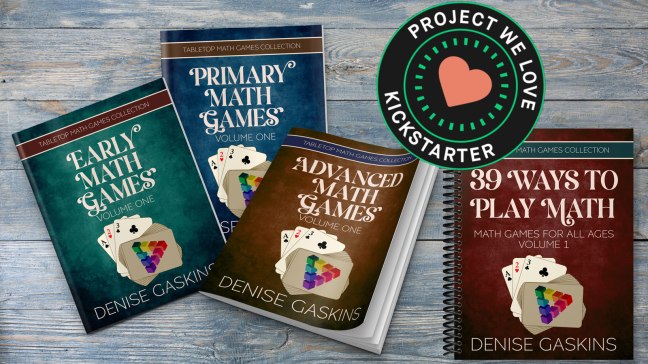
    To everyone who has supported my Tabletop Math Games Collection Kickstarter project: thank you ever so much! We’ve blown past our funding target and the first two Stretch Goals. And the Kickstarter folks awarded us the “Project We Love” tag. 😻

    If you haven’t backed the project yet, check out what you’re missing:

    Visit the Kickstarter ❯

    Why I Love Math Games

    Math games build mental flexibility and strategic reasoning in players of all ages. And even people who hated math in school can enjoy the friendly challenge of a game.

    I love how the challenge of a well-fought math game pushes players of all ages to think more creatively and build fluency.

    Games Promote Mathematical Thinking

    Math games push students to develop a creatively logical approach to solving problems. In the stress-free struggle of a game, players learn to analyze situations and draw conclusions.

    Even more importantly, games help children learn to enjoy the challenge of thinking hard. Their vocabulary grows as they discuss options and strategies with their fellow players. With their attention focused on their next move, they don’t notice how much they are learning.

    And games are good medicine for math anxiety. Everyone knows it takes time to master the fine points of a game, so players can get stuck or make mistakes without losing face.

    What’s Special About These New Books?

    Readers of my Math You Can Play series know the joy of gaming can transform a child’s attitude toward math. But many of you tell me the books get lost on your bookshelves or in your ebook reading device. You’ve begged me to make math gaming more open-and-go.

    So my new Tabletop Math Games Collection is designed to make it easier than ever for busy families and over-stressed teachers to play with math.

    These books are written directly for young gamers and require only common household supplies like cards, dice, and scratch paper. Children can open to any page and start playing right away.

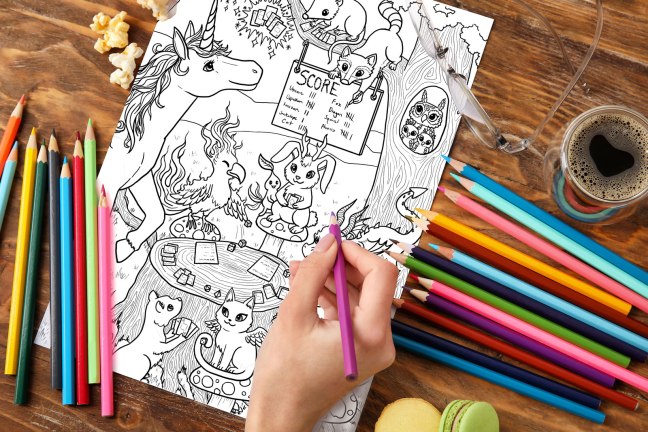
    Not to mention the swag! I’m excited about the items we’ve created to go along with the books. The “Gaming in the Enchanted Forest” coloring page by fantasy artist Tanya Hales is absolutely delightful, and the enamel pins are a fun and colorful way to share your playful math joy.
    Order Your Copy Today

    Whether you’re a busy parent or an overworked teacher, you’ll love the Tabletop Math Games Collection — the natural, no-stress way to build your children’s understanding and confidence.

    These are NOT the typical memory-and-speed-based math games you’ve probably seen online, but true battles of wit and skill (plus a bit of luck). Even the preschool games can be fun for adults, too.

    Most of the games take only seconds to learn and less than 15 minutes to play, making them perfect ice-breakers for family gatherings, classroom warmups, or for launching a group game night.

    So what are you waiting for? Grab some cards, dice, or graph paper, and let’s play some math!

    Visit the Kickstarter ❯

     
    * * *

    This blog is reader-supported.

    If you’d like to help fund the blog on an on-going basis, then please join me on Patreon for mathy inspiration, tips, and an ever-growing archive of printable activities.

    If you liked this post, and want to show your one-time appreciation, the place to do that is PayPal: paypal.me/DeniseGaskinsMath. If you go that route, please include your email address in the notes section, so I can say thank you.

    Which I am going to say right now. Thank you!

    “__________” copyright © __________ by Denise Gaskins. Image at the top of the post copyright © __________ / Depositphotos.