One of my favorite rabbit-trails to explore in middle school math is the science of counting and probability.
It’s a great topic because the calculations are relatively easy, mostly multiplication and division. But there’s a lot of thinking that goes into figuring out just what calculations we need to do.
Counting is not only for little kids! It’s part of discrete mathematics, which means the study of things that are not continuous—things that come in discrete chunks—and it’s important in game design, computer programing, and cryptography.

This post is a section of my Prealgebra & Geometry Games book where my daughter and I explore the fundamental counting principle, the key to solving many counting and probability puzzles.
The Science of Counting
We spent a bit of time counting basic numbers and counting items in sets. Then we moved to the more interesting type of mathematical counting. Combinatorics is the art of counting possibilities: all the choices we can make, the things we may do, the ways we might combine stuff.
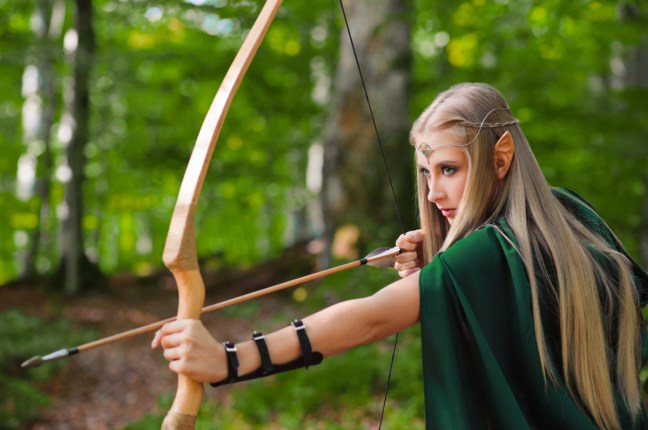
For example, imagine you are choosing your avatar for a new online game. You need to pick an outfit, and you have the following options:
- Leggings: brown or black, tucked into high leather boots.
- Top: green, purple, or blue.
- Cloak or no cloak.
- Head piece: hat, scarf, eye patch, or none.
Focus on the first two choices, the leggings and top. Imagine these choices as paths through a mental landscape, branching off each other to form a tree diagram. Your first option creates two paths: brown leggings, or black leggings. Each of these paths leads to a new question: Which top? At that point, you must choose between three branching paths.
The total number of branches in a tree diagram is the product of the choices at each branch point. In this case, 2 × 3 = 6 possible combinations.

The Fundamental Counting Principle
As we add more choices, the paths continue to branch out. Our tree diagram grows unwieldy, and we desperately need a new counting tool.
The fundamental counting principle comes to our rescue. We can count the possibilities of a situation by multiplying our options.
If you have A options for your first choice, B options for your second choice, C options for your third choice, and so on, then you can find the total number of potential outcomes by multiplying:
A × B × C ×…
To choose our game avatar, we have to make four choices—leggings, top, cloak (or not), and head piece—with two, three, two, and four options respectively. So we calculate the total number of possible outfits:
2 × 3 × 2 × 4 = 48
For More Information
We spent a whole year in middle school playing with the science of counting. Here are two of my favorite resources:
Batterson later published his puzzles in the book Competition Math for Middle School (affiliate link), which includes solutions.
* * *
Are you looking for more creative ways to play math with your kids? Check out all my books, printable activities, and cool mathy merch at Denise Gaskins’ Playful Math Store. Or join my email newsletter.
This blog is reader-supported. If you’d like to help fund the blog on an ongoing basis, then please join me on Patreon (or choose the paid level on Substack) for mathy inspiration, tips, and an ever-growing archive of printable activities.
“Introduction to the Science of Counting” copyright © 2026 by Denise Gaskins. Image at the top of the blog copyright © serhii.bobyk / Depositphotos.

