Thinking Thursday: Perimeter Puzzle 1

Thinking Thursday math journal prompt

Writing to Learn Math: At its heart, geometry is all about seeing connections and relationships.

Do you want your children to develop the ability to reason creatively and figure out things on their own?

Help kids practice slowing down and taking the time to fully comprehend a math topic or problem-solving situation with these classic tools of learning: Notice. Wonder. Create.

Continue reading Thinking Thursday: Perimeter Puzzle 1

FAQ: Remembering What We Learn

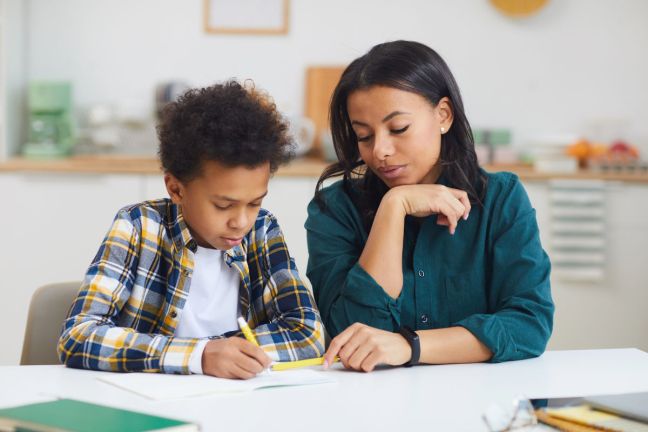
Mother and son working on math homework

“When we do our daily lessons, my son does great. Everything seems to click. But when he sees the same topic later, in a review or on a test, it’s like he’s never heard of it before. How can I help him pull math up from the dregs of lost memory?”

This is a common problem, and there’s no easy answer.

You see, it’s easy for humans to convince ourselves we understand something when someone else explains it. It seems to make sense, but it doesn’t stick in our minds.

If you think of times when you’ve tried to learn something new, you can probably remember the feeling—you thought you had it, but then when you tried to do it yourself, your mind went blank.

So how can we help our kids when they can’t remember what to do?

Explanations Are Easily Forgotten

One thing that can help is to NOT explain the lesson. Just start with a problem, and ask how your son would think about it. What would he try?

For example, if you are working on times-8 strategies, how would he try to figure out 6 × 8? What does he remember that would help him? Where would he start?

Then you can build on his answer.

If he figured it out, then can he think of another way to do it? There is always more than one way to do anything in math. So, if he solved it by counting 8’s, what’s another way? What if he wasn’t allowed to count? Could he figure it out using any math facts he knows?

Talking about how he reasons things through will help it stick in memory.

Posing His Own Problems

Or if he couldn’t figure it out, then let him name a problem he can do.

Perhaps 6 × 8 is beyond him, but he does know 6 × 2. Then work from there. If two 6s are 12, then how much would four 6s be? And if four of them are 24, then how many would double-4 of them be?

And then once he’s got that answer, can he think of another problem that will help to fix it in his mind? Maybe from knowing 6 × 8, can he figure out what 6 × 9 would be?

Or let him pose a problem for you to solve.

Maybe he gives you 16 × 8. How would you think about that? Talk about your reasoning. Perhaps you already know that 8 × 8 = 64, so 16 eights would be twice that much. Or you used some other way of thinking.

Going Deeper

Push the idea of multiplication beyond what the book has in mind.

  • How about fractions? If he knows what 1 × 8 is, can he use that to figure out what 1/2 times 8 would be?
  • Or −1 times 8?
  • Or if he knows what 3 × 8 is, can he use that to figure out 300 × 8? Or something harder, like 33 × 8?

The idea is to start from where he is and push him to think as deeply as he can.

When we ask a student to listen to our explanation and follow our instructions, we are asking them to think our thoughts. But thinking someone else’s thoughts is boring.

What we want is to have kids who think their own thoughts about the topic at hand. Because thinking their own thoughts is fun and leads to more learning.

 
* * *

Find my whole series of FAQ posts here.

Are you looking for more creative ways to play math with your kids? Check out all my books, printable activities, and cool mathy merch at Denise Gaskins’ Playful Math Store. Or join my email newsletter.

This blog is reader-supported. If you’d like to help fund the blog on an on-going basis, then please join me on Patreon for mathy inspiration, tips, and an ever-growing archive of printable activities.

“FAQ: Remembering What We Learn” copyright © 2026 by Denise Gaskins. Image at the top of the post copyright © SeventyFour / Depositphotos.

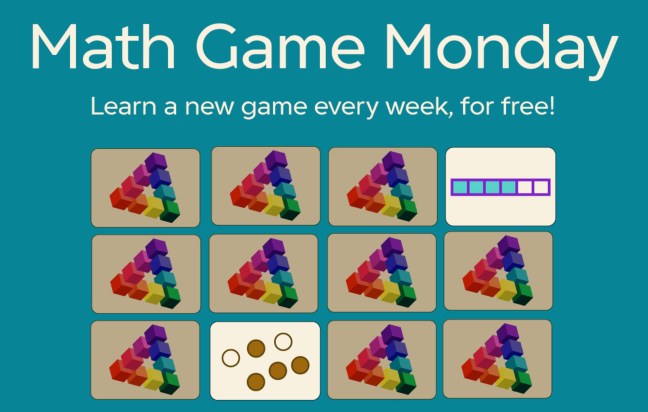
Math Game Monday: Concentration with Math Model Cards

Learn a new math game every week, for free

This game lays a great foundation for your child’s understanding of multiplication and fractions.

Many parents remember struggling to learn math. We hope to provide a better experience for our children. And one of the best ways for children to enjoy learning is through hands-on play.

So what are you waiting for? Let’s play some math!

Concentration with Math Model Cards

Math Concepts: multiplication or fraction models, visual/spatial memory.

Players: any number.

Equipment: one deck of math model cards.

Continue reading Math Game Monday: Concentration with Math Model Cards

Thinking Thursday: Leo Tolstoy

Thinking Thursday math journal prompt

Writing to Learn Math: What did the author mean? Put the thought in your own words. Do you agree or disagree? Why?

Do you want your children to develop the ability to reason creatively and figure out things on their own?

Help kids practice slowing down and taking the time to fully comprehend a math topic or problem-solving situation with these classic tools of learning: Notice. Wonder. Create.

Continue reading Thinking Thursday: Leo Tolstoy

Playful Math 184: Carnival of Living Math

Playful Math Carnival 184

Welcome to the 184th edition of the Playful Math Education Blog Carnival — a smorgasbord of delectable tidbits of mathy fun. It’s like a free online magazine devoted to learning, teaching, and playing around with math from preschool to high school.

With all the links, a blog carnival can feel overwhelming. Bookmark this article, so you can take your time reading the posts.

“Living math” means bringing our children face-to-face with the big ideas of mathematics to help them develop their reasoning skills. When the ideas of math come to life for our children, their minds delight in seeing how numbers and shapes connect to each other and exploring these relationships.

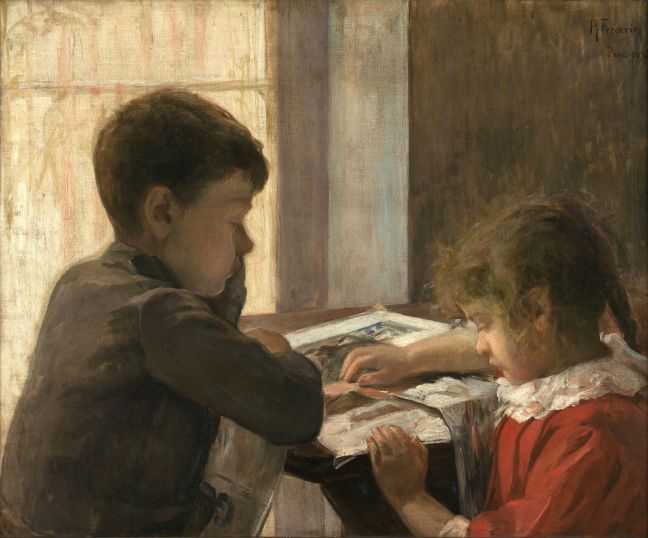
Scattered between the playful math links below, you’ll find quotations from my new book Charlotte Mason’s Living Math, along with several paintings of children playing and learning which I considered for the book but ran out of room.

“The lesson” by Rafael Frederico, 1895.

By tradition, we start the carnival with a puzzle/activity in honor of our 184th edition. But if you’d rather jump straight to our featured blog posts, click here to see the Table of Contents.

Continue reading Playful Math 184: Carnival of Living Math

We’re Counting Down the Hours!

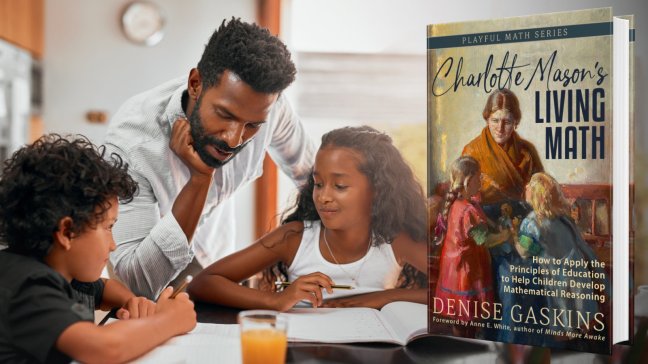
family doing math together

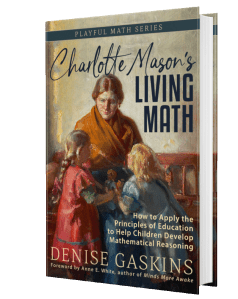
Charlotte Mason's Living Math bookAre you a parent or teacher? Here’s how to:

  • Feed your children’s minds with big ideas.
  • Give them confidence they can learn and make sense of things.
  • Develop intuition and creative thinking about math.

You’ll love how Charlotte Mason’s Living Math transforms your children’s experience of math, awakening their imagination about numbers, shapes, and patterns.

It’s a fun way to enrich any math curriculum, and great for unschoolers, too.

But you have to ACT FAST: The Kickstarter campaign ends Thursday night!

Order Your Copy Today ❯

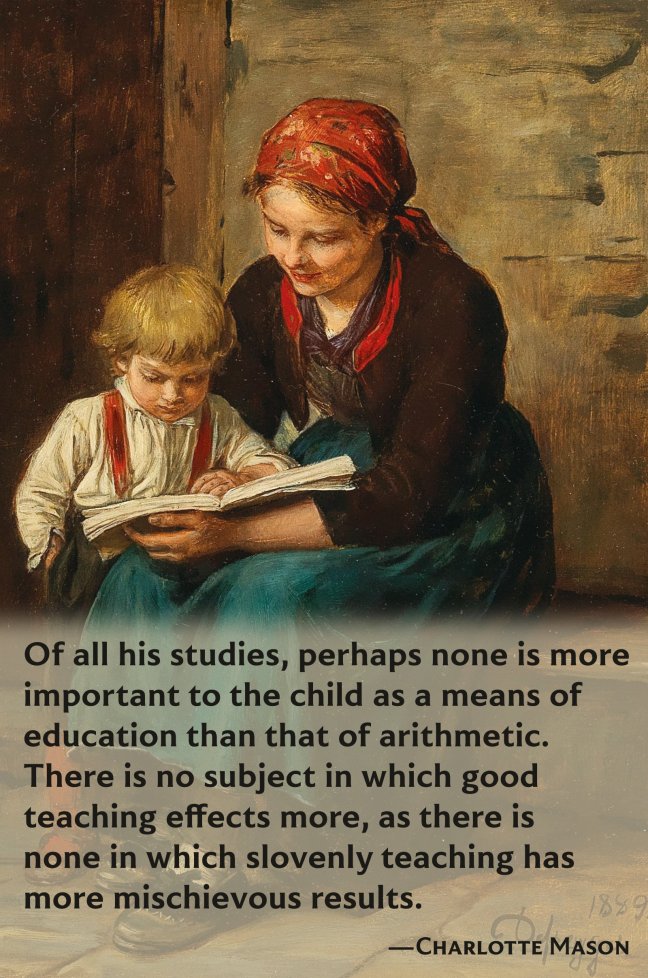
Quotation from Charlotte Mason: Of all his early studies, perhaps none is more important to the child as a means of education than that of arithmetic. There is no one subject in which good teaching effects more, as there is none in which slovenly teaching has more mischievous results.

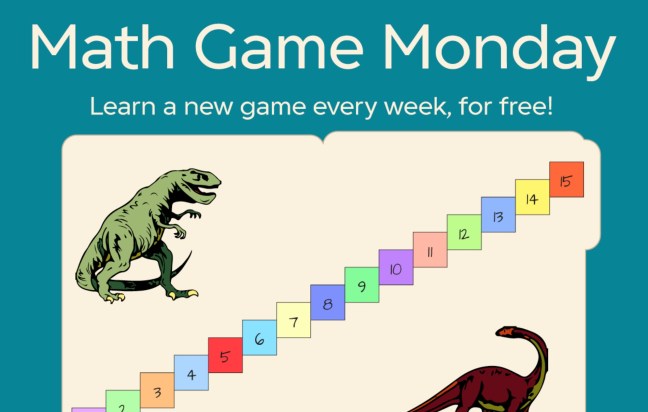
Math Game Monday: Dinosaur Race

Learn a new math game every week, for free

This game helps preschool children develop counting and number sense.

Many parents remember struggling to learn math. We hope to provide a better experience for our children. And one of the best ways for children to enjoy learning is through hands-on play.

So what are you waiting for? Let’s play some math!

Dinosaur Race

Math Concepts: number symbols, counting beyond ten, number line.

Players: any number.

Equipment: subitizing cards, number line racetrack, small plastic dinosaur or other toy for each player.

Continue reading Math Game Monday: Dinosaur Race

Thinking Thursday: Comparison Puzzles

Thinking Thursday math journal prompt

Writing to Learn Math: Measurement is our way of connecting numbers to the things we find in the world, in daily life.

Do you want your children to develop the ability to reason creatively and figure out things on their own?

Help kids practice slowing down and taking the time to fully comprehend a math topic or problem-solving situation with these classic tools of learning: Notice. Wonder. Create.

Continue reading Thinking Thursday: Comparison Puzzles

Math Game Monday: Prism Power

Learn a new math game every week, for free

This game encourages players to reason about the relationships between length dimensions and volume in a 3-D shape.

Many parents remember struggling to learn math. We hope to provide a better experience for our children. And one of the best ways for children to enjoy learning is through hands-on play.

So what are you waiting for? Let’s play some math!

Prism Power

Math Concepts: rectangular volume, cubic units.

Players: two or more.

Equipment: printed gameboard or plain paper, pencils or markers, one six-sided die, 40–50 cubic blocks per player.

Continue reading Math Game Monday: Prism Power