Holiday Math and More: Playful Math Education Carnival 114

Do you enjoy math? I hope so! If not, the links in this post just may change your mind.

Welcome to the 114th edition of the Math Teachers At Play math education blog carnival — a smorgasbord of articles by bloggers all around the internet who have great ideas for learning, teaching, and playing around with math from preschool to pre-college.

If you would like to jump straight to our featured blog posts, click here to see the Table of Contents.

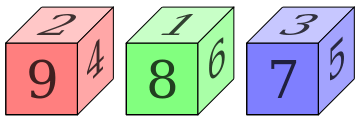
By the way, I found a cool, semi-self-referential trivia tidbit about our carnival number: 27 − 14 = 114. And if you put 114 dots into a 1←7 Exploding Dots machine, you’ll get the code 222. Pretty neat!

As you scroll through the links below, you find several puzzle graphics from the wonderful Visual Patterns website. Use them as conversation-starters with your kids: What do you notice? How does each pattern grow? For older students: Can you write a formula to describe how each pattern? What will it look at stage 43?
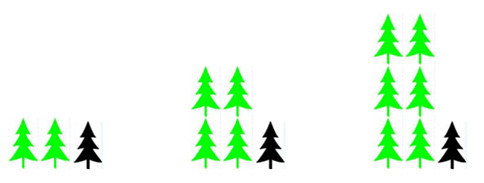
Pattern #7, Trees

A BIT OF FUN

Setting the mood: Enjoy this bit of seasonal fidgeting from Vi Hart (@vihartvihart).

If you don’t understand some of the references, that’s normal! Pick a phrase, Google it, and enjoy the fun of learning something new.


TABLE OF CONTENTS

And now, on to the main attraction: the blog posts. Some articles were submitted by their authors; others were drawn from the immense backlog in my rss reader. If you’d like to skip directly to your area of interest, click one of these links.

Let the mathematical fun begin!

Continue reading Holiday Math and More: Playful Math Education Carnival 114

Check Out These Cool Math Sales

I’ve been following Sonya’s Arithmophobia No More blog for a couple of years, and I love the work she is doing. But this month, she’s teamed up with Lacy at Play, Discover, Learn (another great blog to follow!) to offer a humongous bundle of playful math.

You get math journaling pages, games, creative task cards, thought-provoking worksheets, and video training resources to help you build your child’s understanding of math from arithmetic to early algebra. Wow!

These activities are perfect for homeschooling families or anyone looking to supplement their child’s current math curriculum with effective discovery-based activities. If you’ve ever wondered what to do with those Cuisenaire rods you picked up on sale way back when, this bundle is for you.

I’m so looking forward to using some of these ideas with my elementary homeschool co-op kids next year!

Sale price is $30 from December 2-15.

Cuisenaire Rod Activities Blowout Bundle

But Wait, There’s More

If you’ve been reading my blog for very long, you’ve probably seen how much I love the blog, books, and classes available from the Natural Math folks.

Their newest book is just off the presses — Funville Adventures, a math adventure chapter book.

And until December 20, they’re having a holiday sale. Make your own bundle of any Natural Math books. Playful algebra, calculus for 5-year-olds, inquiry problems and more: Great deal!

Natural Math Book Sale

Stock Up on My Playful Math Books

Finally, if you’ve been wanting to pick up a paperback copy of Let’s Play Math or some of my game books, or maybe a set of dot-grid math journals, I’m currently offering a discount on bulk orders.

Bundle ANY assortment of titles. Stock up on books for your family, friends, or homeschool group.

  • 2–4 books: 15% discount off retail prices
  • 5–9 books: 25% discount
  • 10–19 books: 35% discount
  • 20+ books: 35% discount, and free Continental U.S. standard shipping or the equivalent discount off other shipping options

Bulk Order Playful Math Paperbacks

(US customers only: We’re sorry we can’t offer bulk discounts for our international readers, but the complexities of international duties and tax laws are too much for this very small family business.)

Do You Know of Any Math Deals?

Apollonian greetings from my homeschool co-op kids, and best wishes for a grace-filled holiday season.

If you’ve seen a great deal or holiday price on a math resource you love, please share!

Add your deal to the comment section below, so we can all take advantage of the math joy this season.

Playful Math Education Carnival 113 at Three J’s Learning

Check out the new carnival of playful math for all ages!

Each carnival brings you a great new collection of puzzles, math conversations, crafts, teaching tips, and all sorts of mathy fun.

This month we have whole-body math, notice-and-wonder puzzles, a game to build math vocabulary, intransitive dice, making sense of trig identities, and playing Go on a hundred chart. And plenty more!

Click Here to Read the Carnival Blog

Hey, Blogger, Can You Spare a Time?

We need help!

Do you write an education or family blog? Classroom teacher, math coach, homeschooler, parent, college professor, unschooler — anyone interested in helping kids play around with math?

Please consider volunteering to host the MTaP blog carnival for one month.

We still need a home for the last carnival of 2017.

Or plan ahead: 2018 is wide open.

You choose the month that fits your schedule and decide how much effort you want to put in. Writing the carnival can take a couple of hours for a simple post — or you can spend several days searching out and polishing playful math gems to share.

If you want more information, read the MTaP Math Education Blog Carnival home page.

Then let me know which month you want.

Playful Math Education Carnival 112 at Find the Factors

Check out the new playful math blog carnival at Find the Factors blog. Iva put together a great collection of math games, activities, and teaching tips:

The carnival features comics, literature, talking with kids, favorite numbers, classroom management, a bulletin board that actually gets read, and plenty of math art. Along with several fantastic math puzzles to explore.

Click here to go read the carnival blog

And if you’re a blogger, be sure to submit your blog post for next month’s carnival!

Do You Want More Ways to Play with Math?

Past carnivals are still full of mathy treasure. See them all on Pinterest:

How to Succeed in Math: Answer-Getting vs. Problem-Solving

You want your child to succeed in math because it opens so many doors in the future.

But kids have a short-term perspective. They don’t really care about the future. They care about getting through tonight’s homework and moving on to something more interesting.

So how can you help your child learn math?

When kids face a difficult math problem, their attitude can make all the difference. Not so much their “I hate homework!” attitude, but their mathematical worldview.

Does your child see math as answer-getting? Or as problem-solving?

Answer-getting asks “What is the answer?”, decides whether it is right, and then goes on to the next question.

Problem-solving asks “Why do you say that?” and listens for the explanation.

Problem-solving is not really interested in “right” or “wrong”—it cares more about “makes sense” or “needs justification.”

Homeschool Memories

In our quarter-century-plus of homeschooling, my children and I worked our way through a lot of math problems. But often, we didn’t bother to take the calculation all the way to the end.

Why didn’t I care whether my kids found the answer?

Because the thing that intrigued me about math was the web of interrelated ideas we discovered along the way:

  • How can we recognize this type of problem?
  • What other problems are related to it, and how can they help us understand this one? Or can this problem help us figure out those others?
  • What could we do if we had never seen a problem like this one before? How would we reason it out?
  • Why does the formula work? Where did it come from, and how is it related to basic principles?
  • What is the easiest or most efficient way to manipulative the numbers? Does this help us see more of the patterns and connections within our number system?
  • Is there another way to approach the problem? How many different ways can we think of? Which way do we like best, and why?

What Do You think?

How did you learn math? Did your school experience focus on answer-getting or problem-solving?

How can we help our children learn to think their way through math problems?

I’d love to hear from you! Please share your opinions in the Comments section below.

CREDITS: “Math Phobia” photo by Jimmie (blog post title added) via Flickr (CC BY 2.0). Phil Daro video by SERP Media (the Strategic Education Research Partnership) via Vimeo.

Playful Math Education Carnival 111 at High Heels and No. 2 Pencils

Check out the new carnival of playful math for all ages!

Each carnival brings you a great new collection of puzzles, math conversations, crafts, teaching tips, and all sorts of mathy fun.

This month we have math puzzles for bedtime, number talks for students of all ages, and play tables for high school students. And more!

Click Here to Read the Carnival Blog

Hey, Blogger, Can You Spare a Time?

We need help!

Do you write an education or family blog? Classroom teacher, math coach, homeschooler, parent, college professor, unschooler — anyone interested in helping kids play around with math?

Please consider volunteering to host the MTaP blog carnival for one month.

We still need volunteer hosts for fall semester 2017.

Or plan ahead: 2018 is wide open.

You choose the month that fits your schedule and decide how much effort you want to put in. Writing the carnival can take a couple of hours for a simple post — or you can spend several days searching out and polishing playful math gems to share.

If you want more information, read the MTaP Math Education Blog Carnival home page.

Then let me know which month you want.

Mindset for Learning Math

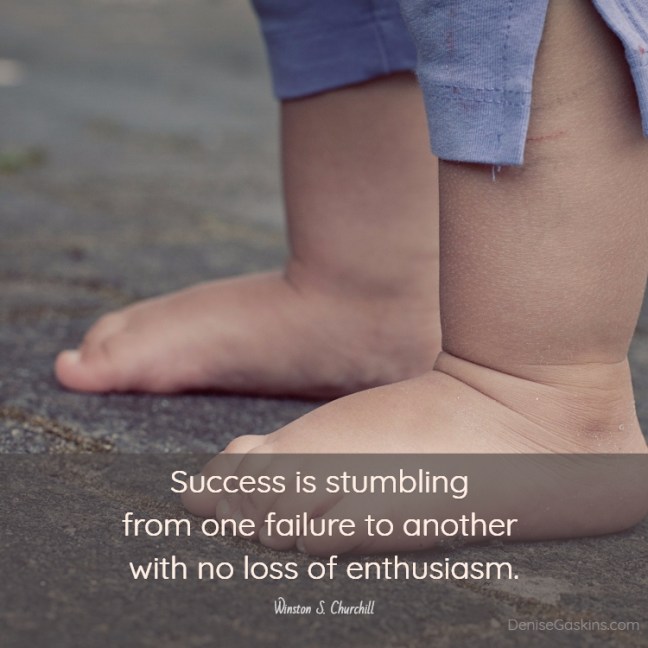
Playing with a new image editor, I came across this Winston Churchill quote. What a great description of how it feels to learn math!

If you have a student who struggles with math or is suffering from a loss of enthusiasm, check out Jo Boaler’s free online course on developing a mathematical mindset:

Or explore some of the playful activity ideas for all ages in her Week of Inspirational Math.

Playful Math Education Carnival 110 at Three J’s Learning

Check out the new playful math blog carnival at Three J’s Learning blog. Joshua has put together a great collection of math games, activities, and teaching tips:

The carnival features shape puzzles, absolute value, prime numbers, pigs in pens, fair sharing, talking with kids, thoughtful essays, and even explosions. Along with a tribute to Maryam Mirzakhani, with mathematical ideas to explore in her honor.

Click here to go read the carnival blog

And if you’re a blogger, be sure to submit your blog post for next month’s carnival!

Do You Want More Ways to Play with Math?

Past carnivals are still full of mathy treasure. See them all on Pinterest:

CREDITS: “Inscribed Polyhedron” photo by thekirbster via Flickr (CC BY 2.0).

How to Talk Math With Your Kids

A friend shared this video, and I loved it! From Kent Haines, a father who happens to also be a math teacher…

“I hope that this video helps parents find new ways of interacting with their kids on math topics.”

Kent Haines

More from Kent Haines

Advice and Examples of Talking Math with Kids

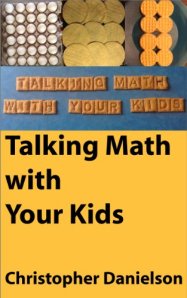
Danielson-Talking Math

If you enjoyed Kent’s video, you’ll love Christopher Danielson’s book and blog.

It’s a short book with plenty of great stories, advice, and conversation-starters. While Danielson writes directly to parents, the book will also interest grandparents, aunts & uncles, teachers, and anyone else who wants to help children notice and think about math in daily life.

“You don’t need special skills to do this. If you can read with your kids, then you can talk math with them. You can support and encourage their developing mathematical minds.
 
“You don’t need to love math. You don’t need to have been particularly successful in school mathematics. You just need to notice when your children are being curious about math, and you need some ideas for turning that curiosity into a conversation.
 
“In nearly all circumstances, our conversations grow organically out of our everyday activity. We have not scheduled “talking math time” in our household. Instead, we talk about these things when it seems natural to do so, when the things we are doing (reading books, making lunch, riding in the car, etc) bump up against important mathematical ideas.
 
“The dialogues in this book are intended to open your eyes to these opportunities in your own family’s life.”

— Christopher Danielson
Talking Math with Your Kids

 
* * *

This blog is reader-supported.

If you’d like to help fund the blog on an on-going basis, then please join me on Patreon for mathy inspiration, tips, and an ever-growing archive of printable activities.

If you liked this post, and want to show your one-time appreciation, the place to do that is PayPal: paypal.me/DeniseGaskinsMath. If you go that route, please include your email address in the notes section, so I can say thank you.

Which I am going to say right now. Thank you!

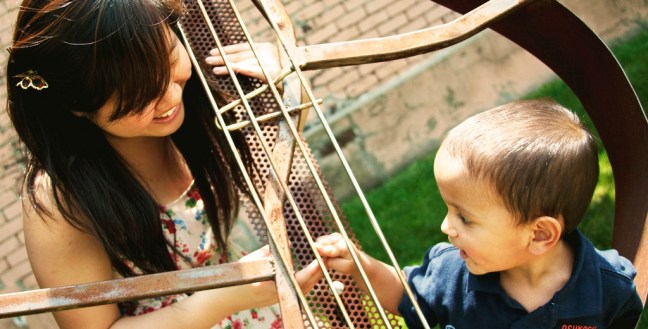
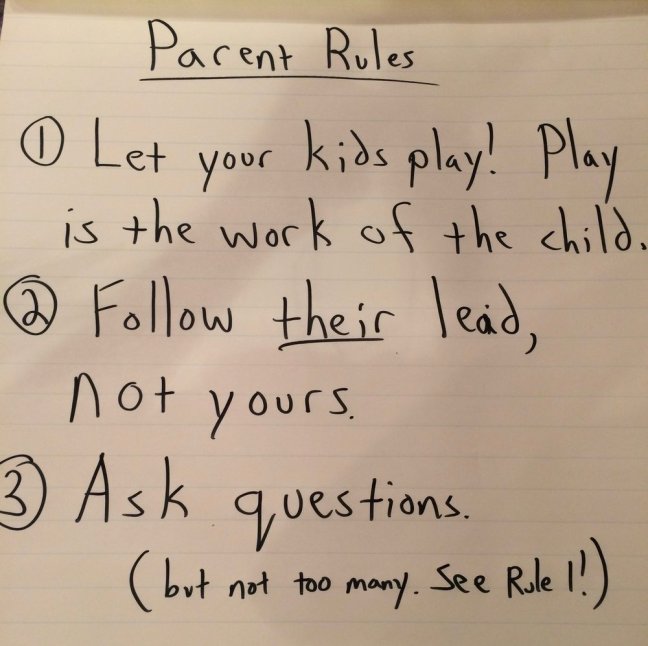
“How to Talk Math With Your Kids” copyright © 2017 by Denise Gaskins. “Kids Talk” photo (top) by Victoria Harjadi via Flickr (CC BY 2.0). “Parent Rules” by Kent Haines.

Playful Math Education Carnival 109 at Math Mama Writes

Check out the new carnival of playful math for all ages at Math Mama Writes blog. Each month’s carnival brings you a great new collection of puzzles, math conversations, crafts, teaching tips, and all sorts of mathy fun.

This month’s post features books, animations, puzzles, and games. Early math, high school math, and writing in math class. Probability, statistics, and teaching tips. And much more!

Click Here to Read the Carnival Blog

Hey, Blogger, Can You Spare a Time?

Do you write an education or family blog? Classroom teacher, math coach, homeschooler, parent, college professor, unschooler — anyone interested in helping kids play around with math? Please consider volunteering to host the MTaP blog carnival for one month.

We still need volunteer hosts for fall semester 2017. Or plan ahead: 2018 is wide open.

You choose the month that fits your schedule and decide how much effort you want to put in. Writing the carnival can take a couple of hours for a simple post — or you can spend several days searching out and polishing playful math gems to share.

If you want more information, read the MTaP Math Education Blog Carnival home page. Then let me know which month you want.

CREDITS: Organ of Notre-Dame de Paris photo by Eric Chan via Wikimedia Commons (CC BY 2.0).