Blog

Mathematics: An Acrostic

What Is Your Child’s Experience of Math?

If your children made an acrostic for the word “Mathematics,” what would they include?

Would they think of adjectives like artistic, mysterious, or sublime?

Or would they focus on words like answers, maddening, and stress?

I love taking a playful approach to mathematics. Puzzles, games and art projects lay down a foundation of wonder and enjoyment. This creates a strong, positive base to support our kids through the inevitable difficulties of learning an abstract subject like math.

There are many rich math resources these days! So different from back when I started homeschooling. If you need ideas to help you transform your child’s experience of math, check out my Free Math on the Internet pages.

Internet Math Resources

In fact, I have a huge folder of even more bookmarks and links that I hope to add to my resource pages, whenever I find the time…

Does your family have a favorite way to play with math?

 
* * *

This blog is reader-supported.

If you’d like to help fund the blog on an on-going basis, then please join me on Patreon for mathy inspiration, tips, and an ever-growing archive of printable activities.

If you liked this post, and want to show your one-time appreciation, the place to do that is PayPal: paypal.me/DeniseGaskinsMath. If you go that route, please include your email address in the notes section, so I can say thank you.

Which I am going to say right now. Thank you!

“Mathematics: An Acrostic” copyright © 2019 by Denise Gaskins. Image at the top of the post copyright © Ishan via Unsplash.
Morning Coffee – 23 September 2019

Morning Coffee image

One of the best ways we can help our children learn mathematics (or anything else) is to always be learning ourselves.

Here are a few stories to read with your Monday morning coffee:

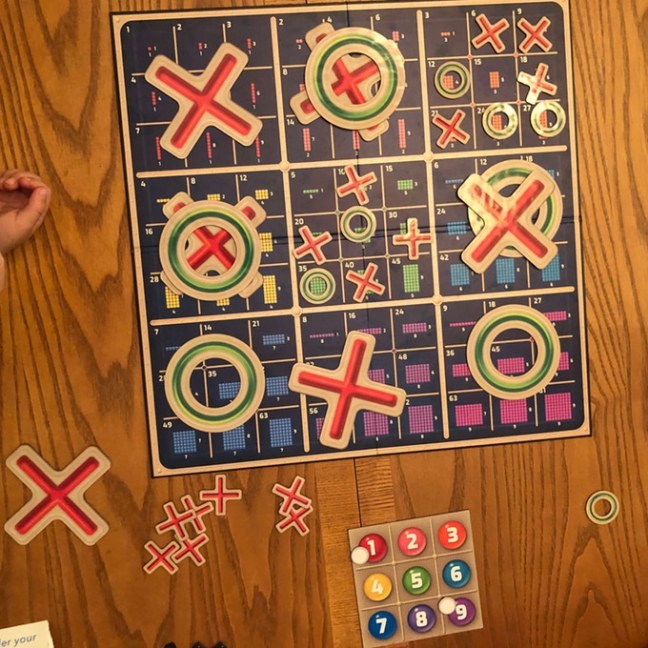
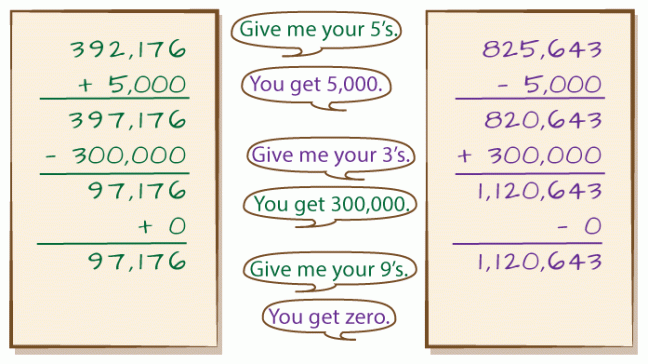
  • David Butler invented a challenging new game that can spark plenty of mathematical thinking: Digit Disguises.
  • If you liked James Tanton’s video on the area model in last week’s post, you may enjoy his in-depth discussion of The Astounding Power of Area.
  • On a lighter note, I’m sure any classroom or homeschool teacher can think of several ways to use Sara VanDerWerf’s collection of Math Fails. Scroll down for links to earlier collections, too.

“I told them that actually what they did was exactly what maths is — reasoning things out using the information you have and being able to be sure of your method and your answer. Just because there’s no symbols, it doesn’t mean it’s not maths.”

—David Butler
The Seven Sticks and what mathematics is


“I am not willing to teach mindless math. It leads to mindless adults. Thinking is not an add-on once they have memorized. Thinking is the basic tool to negotiate the world.”

—Geri Lorway
Teaching division?… Do you know the “basics”?

CREDITS: Feature photo (top) by Kira auf der Heide via Unsplash. “Morning Coffee” post format inspired by Nate Hoffelder at The Digital Reader.

Morning Coffee – 19 September 2019

Morning Coffee image

One of the best ways we can help our children learn math (or anything else) is to always be learning ourselves.

Here are a few stories to read with your Thursday morning coffee:

“Most people think that maths is replete with factual knowledge. But actually, it’s subjects like English, the Humanities, and some sciences that are hefty in factual content. Maths is super-dense with concepts, and processes, but really only very few facts.”

—Kris Boulton
Why Maths Teachers Don’t Like Knowledge Organisers

CREDITS: Feature photo (top) by Kira auf der Heide via Unsplash. “Morning Coffee” post format inspired by Nate Hoffelder at The Digital Reader.

Morning Coffee – 17 September 2019

Morning Coffee image

One of the best ways to help our children learn math (or anything else) is to always be learning ourselves.

Here are a few stories to read with your Tuesday morning coffee:

  • David Wees discusses ways to use visual patterns to introduce and extend students’ understanding of algebra and functions.

“What we should all be shooting for is a world where everyone is mathematically literate, and where fear or anxiety around mathematics doesn’t prevent people from doing the things they dream of doing. Everyone should see some beautiful mathematical ideas and know what it feels like.”

—Dan Finkel
What we mean when we say “Anyone can do math”

CREDITS: Feature photo (top) by Kira auf der Heide via Unsplash. “Morning Coffee” post format inspired by Nate Hoffelder at The Digital Reader.

A Puzzle for Palindromes

If you haven’t seen the meme going around, this is a palindrome week because the dates (written American style and with the year shortened to ’19) are the same when reversed.

Here’s a math puzzle for palindrome week — or any time you want to play with math:

  • Print a 100 chart.
  • Choose a color code.
  • Play!

What do you think: Will all numbers eventually turn into palindromes?

Links

You can find all sorts of hundred charts on my Free Math Printable Files page.

Read about the history of palindromes on Nrich Math’s Palindromes page.

Find out more about the Palindromic Number Conjecture in Mark Chubb’s article An Unsolved Problem your Students Should Attempt.

Or play with Manan Shah’s advanced palindromic number questions.

Math That Is Beautiful

One of the sections in my book Let’s Play Math: How Families Can Learn Math Together — and Enjoy It encourages parents to make beautiful math with their children.

Do you have trouble believing that math can be beautiful?

In “Inspirations,” artist Cristóbal Vila creates a wonderful, imaginary work studio for the amazing M.C. Escher. You’ll want to view it in full-screen mode.

How many mathematical objects could you identify?

Vila offers a brief explanation of the history and significance of each item on his page Inspirations: A short movie inspired on Escher’s works.

Read about the inspirations, and then try making some math of your own.

“I looked into that enormous and inexhaustible source of inspiration that is Escher and tried to imagine how it could be his workplace, what things would surround an artist like him, so deeply interested in science in general and mathematics in particular. I imagined that these things could be his travel souvenirs, gifts from friends, sources of inspiration…”

—Cristóbal Vila
Inspirations: A short movie inspired on Escher’s works

Playful Math Education Carnival 130

Play. Learn. Enjoy!

Welcome to the 130th edition of the Playful Math Education Blog Carnival, a feast of delectable tidbits of mathy fun.

The Playful Math Carnival is like a free online magazine devoted to learning, teaching, and playing around with math. It’s back-to-school time in the U.S., so this month’s edition focuses on establishing a creative math mindset from preschool to high school.

You’re sure to find something that will delight both you and your child.

By tradition, we start the carnival with a puzzle in honor of our 130th edition. But if you would like to jump straight to our featured blog posts, use our handy Table of Contents.

Click here for all the mathy goodness!

Updated Geometric Coloring Designs (Free)

I created these coloring pages for my homeschool co-op math kids, and then collected them into a downloadable 42-page PDF coloring book for your family to enjoy.

The booklet includes several ready-to-color designs, a wide assortment of graph paper, advanced create-your-own tessellation pages, and links to all sorts of online math art resources.

But when I posted the link to Twitter, a friend noticed that several of the resource links were broken. (Thanks, Mark!)

While I was fixing those, I added some new links (to the wonderful School of Islamic Geometric Design pattern templates and classroom resources).

So even if you’ve downloaded the file before, you may want to pick up this new-and-improved edition.

Click to Visit My Free Printables Page

More Ways to Play with Math Art

Get Your Weekly KenKen Puzzles for Kids

KenKen6x6

KenKen arithmetic puzzles build mental math skills, logical reasoning, persistence, and mathematical confidence.

Free via email every Friday during the school year.

What a great way to prepare your children for success in math!

Sign up anytime:

Click Here for KenKen Classroom Newsletter

How to Play

For easy printing, right-click to open the image above in a new tab.

Place the numbers from 1 to 6 into each row and column. None of the numbers may repeat in any row or column. Within the black “cages,” the numbers must add, subtract, multiply, or divide to give the answer shown.

Find the Sweetness in Math

Have you ever tasted the sweetness in math?

Or noticed your child having one of those “Aha” moments?

I’d love to hear your story in the comments!

You can think of puzzles and games as the sugar that helps the medicine to down, and you’re at least a bit healthier in your approach to math. But even better than sugar and nasty medicine is food that’s delicious enough to take away our craving for sugar and nutritious enough to take away any need for medicine. In the same way, good problems can help us fall in love with math and make a delicious meal of it, sinking our teeth into tough problems, tenderized by their intrigue.

Most people like games, so that’s an easy place to begin. At first, the games can be the sweetness that helps the math medicine go down. Over time perhaps you can find the sweetness in the math itself — in a problem that inspires you to work and struggle, until you finally get it, just for your own satisfaction.

Sue VanHattum
“Parents and Kids Together: Learning in Community”
Playing with Math: Stories from Math Circles, Homeschoolers, and Passionate Teachers

CREDITS: “Girl with Bubbles” photo courtesy of Leo Rivas on Unsplash.