Blog

Why I Love Kickstarter

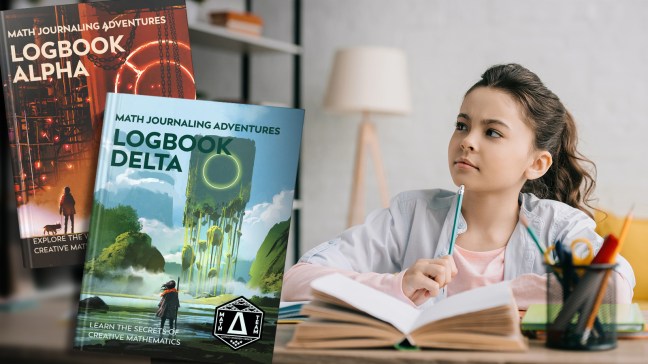
Photo of woman thinking about books

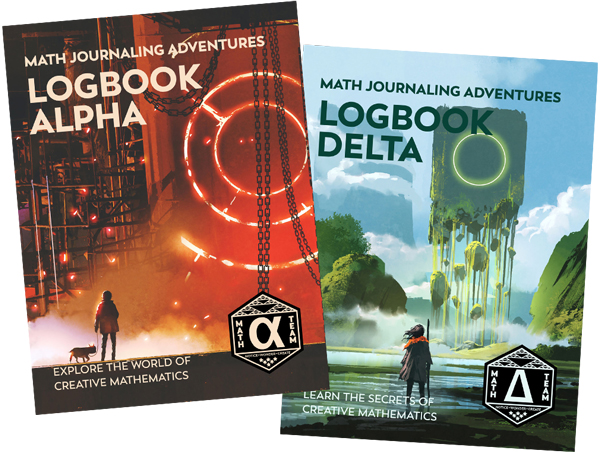
Math Journaling Adventures Kickstarter projectOver the several weeks, you’ll be hearing a lot about Kickstarter and my Math Journaling Adventures project. I’m proud of the books, and I want to spread the news as far and wide as possible.

You’ll appreciate how these books make it easy to weave playful math into your family’s schedule. Just open to any page for a puzzle, activity, game, investigation, or other creative prompt.

But I know there are many readers who don’t know much about crowdfunding. Some people even think that a campaign like this is just online begging.

So I want to share what I totally love about Kickstarter and how much it offers you, the customer:

(1) It’s the “New World” of publishing.

In the old days, traditional publishing companies paid writers in advance to write the books the publisher wanted to see. In this new world, you get to choose and support the writers creating books you want to read.

Continue reading Why I Love Kickstarter

Coming Soon: Math Journaling Adventures

Math Journaling Adventures Kickstarter

Coming Soon! On March 3, I’ll be launching the first installment in my new book series, the Math Journaling Adventures.

You’ll love these books because they make creative math investigations open-and-go for busy parents and teachers.

And the Kickstarter prelaunch page is now live. That means you can sign up to get an email from Kickstarter as soon as the campaign launches:

Visit the Prelaunch Page ❯

If you back the campaign on launch day, you can catch a great deal with the Earlybird discount pledge levels.

Continue reading Coming Soon: Math Journaling Adventures

Morning Coffee: Professional Development for Homeschooling Parents and Other Teachers

Morning Coffee Lifelong Learning for Parents

Lately, I’ve spent most of my writing time thinking about the value of narration—the Charlotte Mason approach to teaching by getting kids to put ideas in their own words.

For students, I’m writing a new series of Math Adventure Journals to get them thinking about math and putting those thoughts into words. If you’re interested, sign up to be notified when the Kickstarter goes live.

But we parents can harness the value of narration in our own learning. After all, one of the best ways we can help our children learn mathematics (or anything else) is to be lifelong learners ourselves.

To that end, I’ve decided to relaunch my “Morning Coffee” series of professional development posts for homeschooling parents.

Here’s How It Works

As I read articles and follow rabbit trails around the internet, I’ll collect the posts that speak to me. Then I’ll share these in a printable format with journaling pages for your response.

Since I’m interested in math education, many of the articles I read will be about math—but the principles of learning apply to every subject we teach.

To kick off the series, let’s start with one of my favorite articles ever…

Morning Coffee # 1: Learning to Ask Good Questions

Download your printable Morning Coffee journal

David Butler’s post Twelve matchsticks: focus or funnel presents an interesting math puzzle. But even better, it opens up a rabbit hole of thought-provoking posts about how to talk with children—or anyone:

    “The approach where you have an idea in your head of how it should be done and you try to get the student to fill in the blanks is called funnelling. It’s actually a rather unpleasant experience as a student to be funnelled by a teacher. You don’t know what the teacher is getting at, and often you feel like there is a key piece of information they are withholding from you, and when it comes, the punchline feels rather flat.”

    The printable file includes links to three more articles as I follow the rabbit around the internet. Enjoy!

     
    * * *

    Are you looking for more creative ways to play math with your kids? Check out all my books, printable activities, and cool mathy merch at Denise Gaskins’ Playful Math Store. Or join my email newsletter.

    This blog is reader-supported. If you’d like to help fund the blog on an on-going basis, then please join me on Patreon for mathy inspiration, tips, and an ever-growing archive of printable activities.

    “Morning Coffee: Professional Development for Homeschooling Parents and Other Teachers” copyright © 2025 by Denise Gaskins. Image at the top of post copyright © Kira auf der Heide / Unsplash.

    Playful Math 178: Nicomachus’s Carnival

    Playful Math Blog Carnival 178

    Welcome to the 178th edition of the Playful Math Education Blog Carnival — a smorgasbord of delectable tidbits of mathy fun. It’s like a free online magazine devoted to learning, teaching, and playing around with math from preschool to high school.

    Bookmark this post, so you can take your time browsing.

    There’s so much playful math to enjoy!

    By tradition, we start the carnival with a puzzle/activity in honor of our 178th edition. But if you’d rather jump straight to our featured blog posts, click here to see the Table of Contents.

    Activity: Nicomachus’s Theorem

    Welcome to 2025, a perfectly square year — and the only one this century!

    2025 = (20 + 25)2

    • When is the next time we’ll have a perfect-square year?
    • Can you find the only perfect square less than 2025 that works by this pattern? When you split the number’s digits into two smaller numbers and square their sum, you get back to that number.

    2025 = the sum of all the numbers in the multiplication table, from 1×1 to 9×9

    2025 = the sum of the first 9 perfect cubes

    • When is the next time this will happen, that the year is the sum of the first n perfect cubes?

    And by Nicomachus’s theorem:

    2025 = 13 + 23 + 33 + 43 + 53 + 63 + 73 + 83 + 93
    so it must also = (1 + 2 + 3 + 4 + 5 + 6 + 7 + 8 + 9)2

    Try it for yourself with small numbers: Get some blocks, and build the first few perfect cubes. Then see if you can rearrange the block to form the sum of those numbers squared.

    Can you show that…

    • 13 = 12
    • 13 + 23 = (1 + 2)2
    • 13 + 23 + 33 = (1 + 2 + 3)2
    • 13 + 23 + 33 + 43 = (1 + 2 + 3 + 4)2
    • 13 + 23 + 33 + 43 + 53 = (1 + 2 + 3 + 4 + 5)2

    Nicomachus theorem 3D

    Older Students: Can you see that the pattern would continue as long as you want? How might you prove that?

    Here’s the formula for triangular numbers, to get you started:

    (1 + 2 + 3 + … + n) = n(n + 1)/2

    Click here for all the mathy goodness!

    FAQ: Can I Use Your Books as a Math Curriculum?

    Father helping girl with math homework

    I recently listened to you on Cindy Rollins’ podcast, and I was captivated by your perspective on math. It was exciting, freeing, and wonder-filled. I would absolutely love to be able to teach in the ways you described.

      We use early-elementary Saxon Math right now, which is thorough, but has SO MUCH to do that I’ve always struggled to do it all. Then I feel like I’m missing things, and I never know quite what is important. And yet, the actual lessons move so slowly that my kids get bored with the repetition.

        I use a published curriculum because I have no idea of an appropriate scope and sequence, or similar flow of learning. With your playful approach to math, how do I know where to start, and what to do each day?

          Do you have a suggested order to approach your books to have a full math approach? A sort of curriculum, per se, using your books.

          [For those who missed my chat with Cindy Rollins about a Charlotte Mason approach to math, you can listen to it here.]

          Continue reading FAQ: Can I Use Your Books as a Math Curriculum?

          FAQ: Real Math for Early Learners

          photo of family hiking a rocky trail

          “I love your image of math as a nature walk. My children are ready to start their homeschooling journey, and I want to put them on the right track from the beginning. How can I help them think about math and problem-solving without using a textbook?”

          The most difficult part of teaching our children real math is to change our own way of thinking about the subject you’ve already taken that step, so it looks like your family’s learning journey is off to a great start.

          [For readers who are wondering what I mean by math as a nature walk, check out this post. You may also enjoy my article on natural learning: Math with Young Children.]

          Continue reading FAQ: Real Math for Early Learners

          Memories: The Oral Story Problem Game

          photo of sheep in a field

          Homeschool Memories…

          Perhaps you’ve heard me mention the oral story problem game. It was one of my favorite ways to get my children thinking about math, back in our early days of homeschooling. We played in the car on the way to soccer practice, or while we washed dishes, or sitting in the lobby waiting for a doctor’s appointment.

          The rules are simple: I’ll make up a math problem for you to solve. And then you make up one for me.

          The kids always loved trying to stump me.

          This problem from Henry Ernest Dudeney’s Amusements in Mathematics reminded me of those days. This is exactly the way my eldest loved to torture me…

          Continue reading Memories: The Oral Story Problem Game

          Start the New Year Right: Playful Math Carnival 177 via Math Hombre

          Talking Numbers from Playful Math Carnival 177

          If you’re looking for an entertaining way to weather the coming storm — or just curious about how learning math could possibly be fun — you’ll definitely want to check out the latest edition of the Playful Math Carnival.

          It’s a collection of awesome blog posts curated by John Golden and published on the Math Hombre website:

          The whole point of the carnival is to show that math doesn’t have to be tedious or repetitive. Through a bunch of fun and engaging posts, we celebrate math that’s playful, creative, and totally relevant to everyday life.

          Because what could be more relevant than having fun while we learn?

          Continue reading Start the New Year Right: Playful Math Carnival 177 via Math Hombre

          Puzzle: Henry Dudeney’s Pebble Game

          photo of girl playing with pebbles on the beach

          English mathematician and puzzle-meister Henry Ernest Dudeney once wrote:

          “It may be said generally that a game is a contest of skill for two or more persons, into which we enter either for amusement or to win a prize. A puzzle is something to be done or solved by the individual.

            “The example that I give here is apparently a game, but, as in every case one player may win if he only play correctly, it is in reality a puzzle. The interest, therefore, lies in attempting to discover the leading method of play.”

            Below is the puzzle game as Dudeney explained it.

            Play it for fun at first, then see if you can solve the puzzle.

            Continue reading Puzzle: Henry Dudeney’s Pebble Game

            Holiday Countdown Craft

            photo of calendar and hourglass timer

            Marking time is hard for children (and often for us adults, as well).

            I don’t mean telling time, which has its own difficulties. But waiting, marking time until the Big Day or Important Event arrives.

            Whether you’re counting down the days to Christmas, or the hours until New Year’s Day, or waiting for a birthday or visit to Grandma — it’s never easy to sit idly during the interim.

            Holiday Countdown

            Holiday Countdown craft bookHere’s a fun little craft that can make the waiting easier, or at least make it easier to keep track of how much longer until the time is right.

            It’s a spinning time-piece for kids to decorate and put together (with a bit of adult help wielding a craft knife).

            Holiday Countdown is a 28-page printable file includes illustrated instructions, along with countdown timers for birthday, Christmas, and New Year’s Eve celebrations, plus blank timers you can adapt to any occasion.

            Buy Now

            Mandala Version, with Video Instructions

            The ever-creative Manja designed a mandala-coloring version of the countdown timer for New Year’s Eve. Read all about it (and find the download links) on her Hattifant blog.

             
            * * *

            Are you looking for more creative ways to play math with your kids? Check out all my books, printable activities, and cool mathy merch at Denise Gaskins’ Playful Math Store. Or join my email newsletter.

            This blog is reader-supported. If you’d like to help fund the blog on an on-going basis, then please join me on Patreon for mathy inspiration, tips, and an ever-growing archive of printable activities.

            “Holiday Countdown Craft” copyright © 2024 by Denise Gaskins. Image at the top of the post copyright © BrianAJackson / Depositphotos.