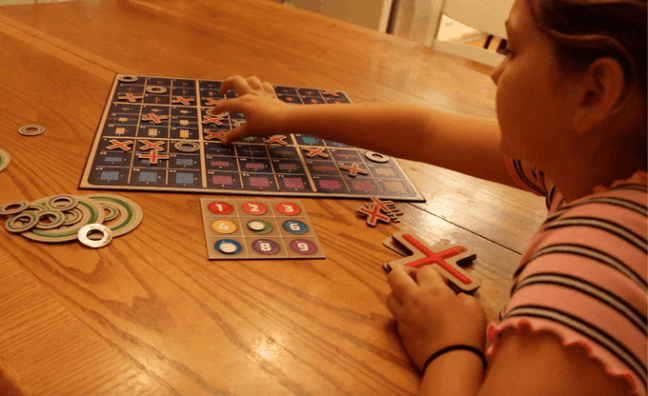
New Math Board Game: MULTI on Kickstarter

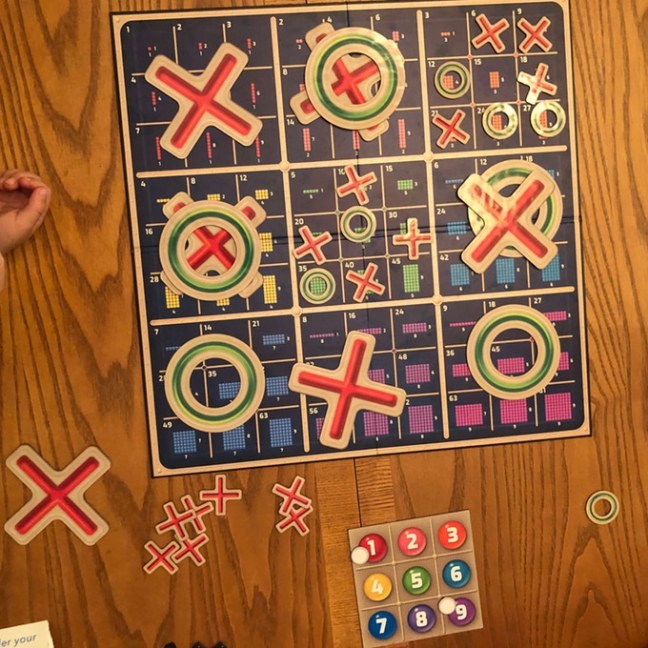
If the math classic The Product Game got together with Ultimate Tic-Tac-Toe, this game would be their child.

According to game creator Federico Chialvo, “MULTI is a fantastic 2-player math game designed with the joy of mathematics in mind. This game is so fun your kids won’t want to stop playing, and neither will you!”

Originally designed for students in 2nd-5th grade, MULTI helps children develop fluency with multiplication facts and the relationship between multiples and factors. Even better, the rich strategy and gameplay can be enjoyed by people of all ages.

If you want to play math with an elementary-age child, check out the Kickstarter:

Click Here for the MULTI Game on Kickstarter

“Mathematics is a polarizing topic! For some, it is a fountain of wonder, beauty, and intrigue. For others, it is a cold dark thing, something to be avoided or even feared. Yet, my experience has shown that everyone can find joy in mathematics when it is presented in the right way.”

—Federico Chialvo
MULTI – Math Board Game – Fun For All Ages!

Math Game: Place Value Fish

Math Concepts: addition, subtraction, place value to six or seven digits.
Players: two or more.
Equipment: pencil and paper.

Set-Up

Each player needs a sheet of blank or lined paper, and a pencil.

At the top of your page, write a 6-digit number. All the digits must be different, and none of them can be zero.

How to Play

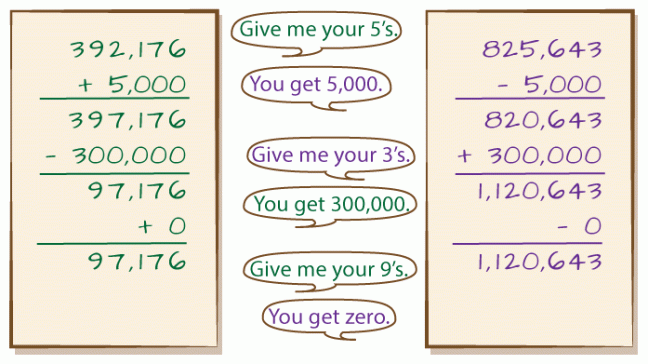
On your turn, you go fishing for points. Ask one other player, “Give me your _____’s.” The blank is for the single-digit number of your choice.

The other player answers, “You get _____.” This blank is for the value of that digit in the other player’s number.

For example, suppose you asked for 5’s. If the other player has a 5 in the tens place of his number, you get 50 points. But if 5 was in the ten-thousands place, you would get 50,000. And if there is no 5 at all, you get zero.

You add those points to your number. The other player subtracts the points from his number.

Then it’s the next player’s turn to go fishing.

Notice These Rules

Your number may change with each turn (except when you get zero). Always use your most recent number to add or subtract the fishing points.

If you have more than one of the digit asked for (like the player on the left above, who has two 7’s), you may choose which one to give away. That is, you can give the other player 70 points and not even mention the 7,000.

Endgame

Keep taking turns until every player gets five chances to fish for points. After five rounds, whoever has the highest score wins the game.

UNLESS the winner made an arithmetic error.

Be sure to check each other’s math, because any player who makes a mistake automatically loses the game.

Share the Fun

If you try this math game with your kids, I’d love to hear how it goes. Please drop a comment below.

And tell us about your favorite math game, so we can all play that, too. 😀

 
* * *

This game comes from Michael Schiro’s book Mega-Fun Math Games: 70 Quick-and-Easy Games to Build Math Skills.

This blog is reader-supported.

If you’d like to help fund the blog on an on-going basis, then please join me on Patreon for mathy inspiration, tips, and an ever-growing archive of printable activities.

If you liked this post, and want to show your one-time appreciation, the place to do that is PayPal: paypal.me/DeniseGaskinsMath. If you go that route, please include your email address in the notes section, so I can say thank you.

Which I am going to say right now. Thank you!

“Math Game: Place Value Fish” copyright © 2019 by Denise Gaskins. Image at the top of the post copyright © Ruben Ortega via Unsplash.

A Puzzle for Palindromes

If you haven’t seen the meme going around, this is a palindrome week because the dates (written American style and with the year shortened to ’19) are the same when reversed.

Here’s a math puzzle for palindrome week — or any time you want to play with math:

  • Print a 100 chart.
  • Choose a color code.
  • Play!

What do you think: Will all numbers eventually turn into palindromes?

Links

You can find all sorts of hundred charts on my Free Math Printable Files page.

Read about the history of palindromes on Nrich Math’s Palindromes page.

Find out more about the Palindromic Number Conjecture in Mark Chubb’s article An Unsolved Problem your Students Should Attempt.

Or play with Manan Shah’s advanced palindromic number questions.

Updated Geometric Coloring Designs (Free)

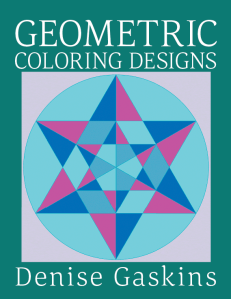
I created these coloring pages for my homeschool co-op math kids, and then collected them into a downloadable 42-page PDF coloring book for your family to enjoy.

The booklet includes several ready-to-color designs, a wide assortment of graph paper, advanced create-your-own tessellation pages, and links to all sorts of online math art resources.

But when I posted the link to Twitter, a friend noticed that several of the resource links were broken. (Thanks, Mark!)

While I was fixing those, I added some new links (to the wonderful School of Islamic Geometric Design pattern templates and classroom resources).

So even if you’ve downloaded the file before, you may want to pick up this new-and-improved edition.

Click to Visit My Free Printables Page

More Ways to Play with Math Art

Get Your Weekly KenKen Puzzles for Kids

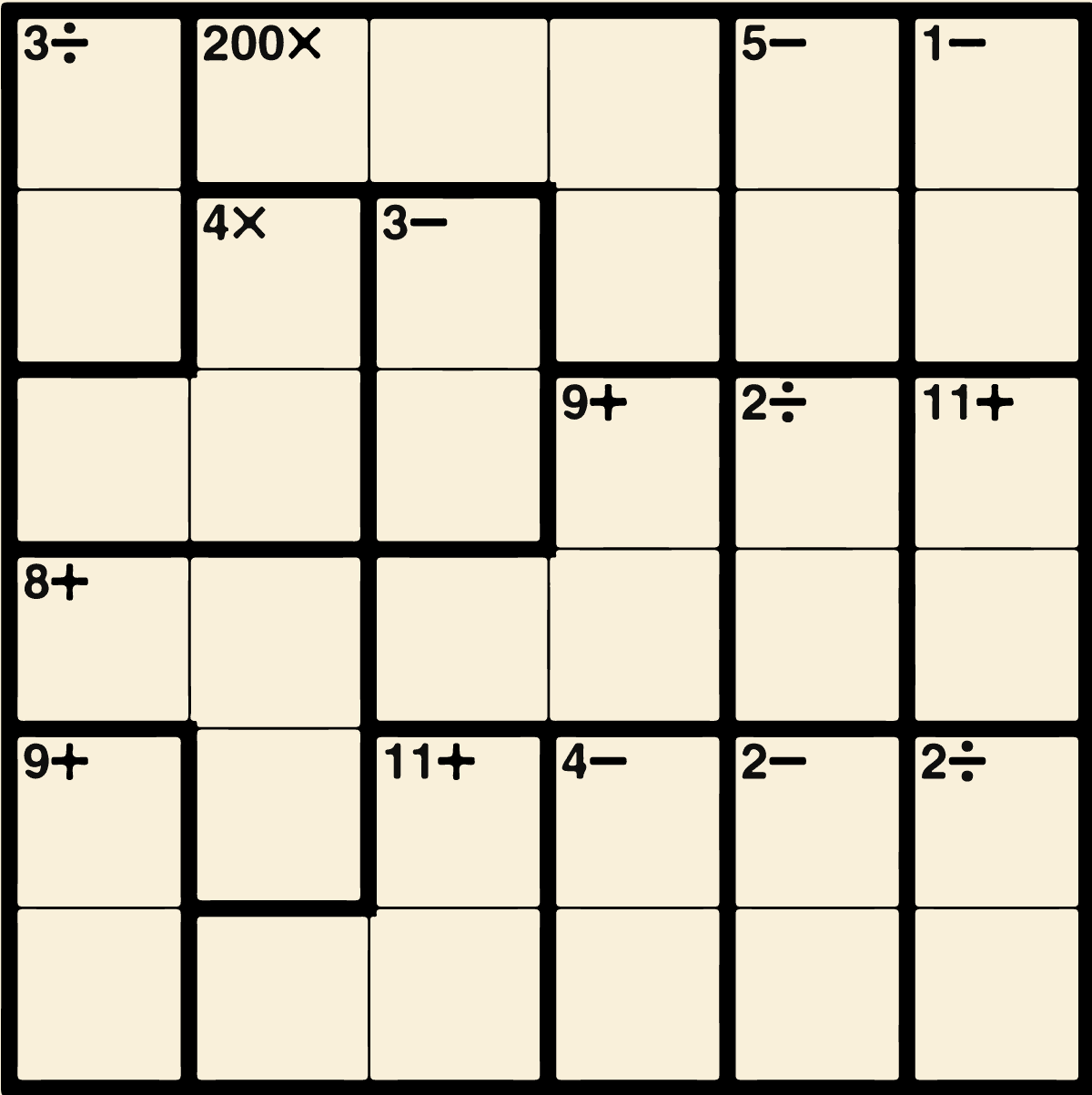
KenKen6x6

KenKen arithmetic puzzles build mental math skills, logical reasoning, persistence, and mathematical confidence.

Free via email every Friday during the school year.

What a great way to prepare your children for success in math!

Sign up anytime:

Click Here for KenKen Classroom Newsletter

How to Play

For easy printing, right-click to open the image above in a new tab.

Place the numbers from 1 to 6 into each row and column. None of the numbers may repeat in any row or column. Within the black “cages,” the numbers must add, subtract, multiply, or divide to give the answer shown.

Giveaway: Let’s Play Math Sampler

Want to help your children learn math?
Teach them to play.

My new Let’s Play Math Sampler: 10 Family-Favorite Games for Learning Math Through Play contains short excerpts from my most popular titles, including a preview of two games from my work-in-progress Prealgebra & Geometry Games.

It’s a great way to get started with playful math!

This week, my publisher Tabletop Academy Press is offering a free copy of the Sampler to TWO lucky winners.
[Winners with a U.S. mailing address will receive both paperback (by U.S. Media Mail) and ebook (by online download) versions of the book. International winners will receive ebooks only.]

How to Enter the Giveaway

The giveaway is over, but I’d still love to hear your “math memory” comments.

  • Share a math memory! Scroll down to leave a comment with something from your school days, a cute thing your child has said, or anything else about learning or playing with math.

Congratulations to our winners: Michael and Caroline. Check your email for details on how to claim your Let’s Play Math Sampler books.

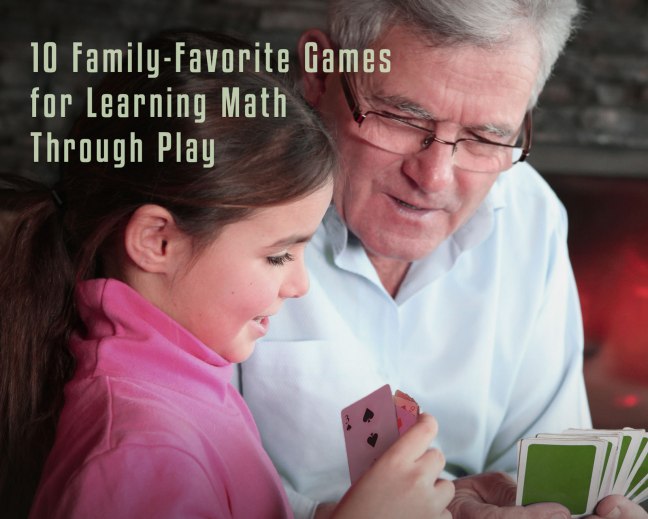
10 Family-Favorite Games for Learning Math Through Play

Oops! I can’t believe I forgot to post these links when my latest book came out way back in March. Indie author fail…

Do you want your children to enjoy learning math?

Teach them how to play!

In excerpts from five of my most popular books, the Let’s Play Math Sampler features ten kid-tested games covering math concepts from counting to prealgebra.

Pick up a copy of the Let’s Play Math Sampler today, and make math a playful family adventure.

8 Weeks of Playful Math for Families

Yes, your kids CAN learn to love math. Keep your children’s math skills fresh with my 8-week email series of math games and activities.

No purchase necessary! Just sign up for my email newsletter, and every week for the next two months you’ll automatically receive one of my favorite math club activities or an excerpt from my series of math game books.

And I’ll send you occasional news updates with playful math tips, resource links, and book sales or other promotions.

Click Here To Sign Up
Continue reading 8 Weeks of Playful Math for Families

Math Activity: Polite Numbers

Did you know that numbers can be polite? In math, a polite number is any number we can write as the sum of two or more consecutive positive whole numbers.

(Consecutive means numbers that come one right after another in the counting sequence.)

For example, five is a polite number, because we can write it as the sum of two consecutive numbers:
5 = 2 + 3

Nine is a doubly polite number, because we can write it two ways:
9 = 4 + 5
9 = 2 + 3 + 4

And fifteen is an amazingly polite number. We can write fifteen as the sum of consecutive numbers in three ways:
15 = 7 + 8
15 = 4 + 5 + 6
15 = 1 + 2 + 3 + 4 + 5

How many other polite numbers can you find?

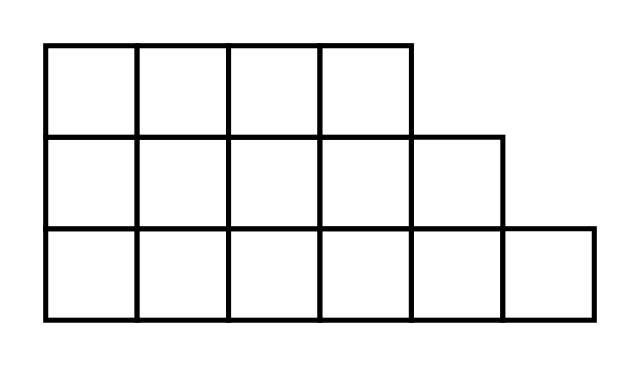
You can build polite numbers (like fifteen) with a staircase of blocks.

What Do You Notice?

Are all numbers polite?

Or can you find an impolite number?

Can you make a collection of polite and impolite numbers? Find as many as you can.

How many different ways can you write each polite number as a sum of consecutive numbers?

What do you notice about your collection of polite and impolite numbers?

Can you think of a way to organize your collection so you can look for patterns?

What Do You Wonder?

Make a conjecture about polite or impolite numbers. A conjecture is a statement that you think might be true.

For example, you might make a conjecture that “All odd numbers are…” — How would you finish that sentence?

Make another conjecture.

And another.

Can you make at least five conjectures about polite and impolite numbers?

What is your favorite conjecture? Does thinking about it make you wonder about numbers?

Can you think of any way to test your conjectures, to know whether they will always be true or not?

Real Life Math Is Social

This is how mathematics works. Mathematicians play with numbers, shapes, or ideas and explore how those relate to other ideas.

After collecting a set of interesting things, they think about ways to organize them, so they can look for patterns and connections. They make conjectures and try to imagine ways to test them.

And mathematicians compare their ideas with each other. In real life, math is a very social game.

So play with polite and impolite numbers. Compare your conjectures with a friend.

Share your ideas in the comments section below.

And check out the list of student conjectures at the Ramblings of a Math Mom blog.

CREDITS: Numbers photo (top) by James Cridland via Flickr (CC BY 2.0). I first saw this activity at Dave Marain’s Math Notations blog, and it’s also available as a cute printable Nrich poster. For a detailed analysis, check out Wai Yan Pong’s “Sums of Consecutive Integers” article.

Math Game: Six Hundred

Today I’m working on the next book in my Math You Can Play series, culling the games that don’t fit. Six Hundred is a fine game, but I can’t figure out how it landed in the prealgebra manuscript…

Math Concepts: addition, multiplication, parity (odd or even).
Players: any number.
Equipment: six regular 6-sided dice (my math club kids love this set), free printable score sheet, pen or pencil.

Click Here for the Score Sheet

Set-Up

A full game consists of eighteen rounds of play. Players may share the dice and score sheet, taking turns around the table. But for a large group you may want to have extras, so that two or more people can be rolling their dice at the same time.

How to Play

On your turn, roll all six dice up to three times. After each roll, you may set aside one or more dice to keep for scoring, if you wish. Once a die has been set aside, you may not change your mind and roll it again.

After the third roll, choose an unused category on your score sheet. Count the dice according to the rules for that section, and write down your score. If your dice do not fit anywhere, then you must take a zero in the category of your choice.

When all players have filled their score sheet and recorded any appropriate bonuses (or penalties), whoever has the highest score wins.

Scoring

Dice are scored in eighteen categories, in four sections, as follows. The maximum possible score is 600 points.

Numbers

Record the sum of only the dice showing that number. For example, if you rolled 1, 1, 3, 4, 4, 4, you could score 2 in the Ones category. Or you could score 12 in the Fours category, or zero in the Fives.

Bonus: If the combined Numbers score is 80 or more, add 35 points to your total.

Rungs (1–4)

Score the total of all six dice. Like a ladder, the score in each rung must be greater than the one before it. Rung 1 gets the lowest number, and Rung 4 the highest.

You may fill in the rungs in any order. But if you write 18 in Rung 2, then the score in Rung 1 must be 17 or less, and the score in Rung 3 must be at least 19.

Penalty: If the Rung scores don’t fit the ascending value rule, this category is worth zero.

Clusters

Score the total of all six dice, if they fit the rules for that category.

  • Four of a Kind: at least four dice show the same number.
  • Five of a Kind: at least five dice show the same number.
  • Odds: all six dice show odd numbers.
  • Evens: all six dice show even numbers.
Patterns

Score the amount shown for each pattern.

  • Series: 30 points you roll 1, 2, 3, 4, 5, 6.
  • Pairs: 30 points if you roll three pairs of matching numbers. Four dice showing the same number may be counted as two pairs.
  • Triplets: 30 points if you roll two sets of three dice with the same numbers, such as three 2s and three 5s.
  • Sextet: 36 points when all six dice show the same number.
Game Bonus

If you score at least one point in all eighteen categories, or if the only zero you take is for the sextet, then award yourself an additional 36 points.

History

Players around the world have played poker-style dice games for ages. I grew up with Yahtzee, but you may know the game by Yatzy, Yacht, Generala, or another name.

Reiner Knizia included this mathematical version in his book Dice Games Properly Explained. And I found it online at Michael Ayers’s Stick Insect blog.

John Golden posted a simpler “Mathzee” game played with five dice on his Math Hombre blog — and while you’re there, be sure to check out his amazing Math Games page.

 
* * *

This blog is reader-supported.

If you’d like to help fund the blog on an on-going basis, then please join me on Patreon for mathy inspiration, tips, and an ever-growing archive of printable activities.

If you liked this post, and want to show your one-time appreciation, the place to do that is PayPal: paypal.me/DeniseGaskinsMath. If you go that route, please include your email address in the notes section, so I can say thank you.

Which I am going to say right now. Thank you!

“Math Game: Six Hundred” copyright © 2019 by Denise Gaskins. Image at the top of the post copyright © rekre89 via Flickr (CC BY 2.0).