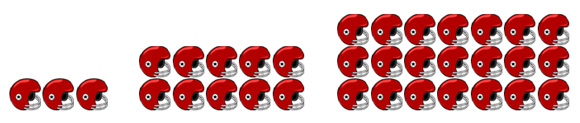
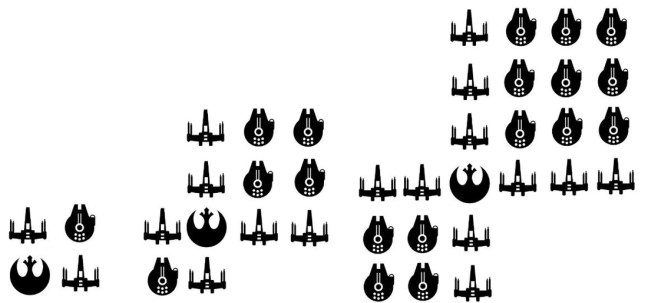
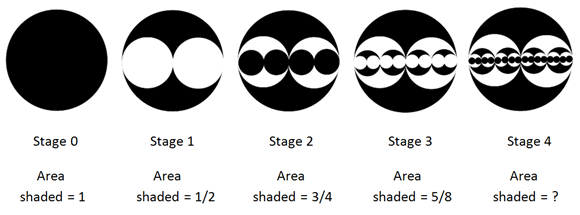
Playful Math Education Carnival 123: Hundred Chart Edition

Do you enjoy math? I hope so!

If not, browsing this post just may change your mind.

Welcome to the 123rd edition of the Playful Math Education Blog Carnival — a smorgasbord of delectable tidbits of mathy fun.

The Playful Math Carnival is like a free online magazine devoted to learning, teaching, and playing around with math from preschool to high school. This month’s edition features \left ( 1 + 2 + 3 \right )^{2} = 36 \: articles from bloggers all across the internet.

You’re sure to find something that will delight both you and your child.

By tradition, we start the carnival with a puzzle in honor of our 123rd edition. But if you would like to jump straight to our featured blog posts, click here to see the Table of Contents.

Or more, depending on how you count. And on whether I keep finding things to squeeze in under the looming deadline. But if there are more, then there are certainly 36. Right?

Continue reading Playful Math Education Carnival 123: Hundred Chart Edition

70+ Things To Do with a Hundred Chart

Do the holidays mess with your schedule? They sure do mine!

Every year, we get busy. Distracted. Just can’t focus on lessons.

I love easy activities that require minimal preparation so I can pull something out and play when we’re having one of those no-energy days.

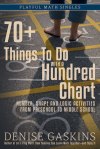
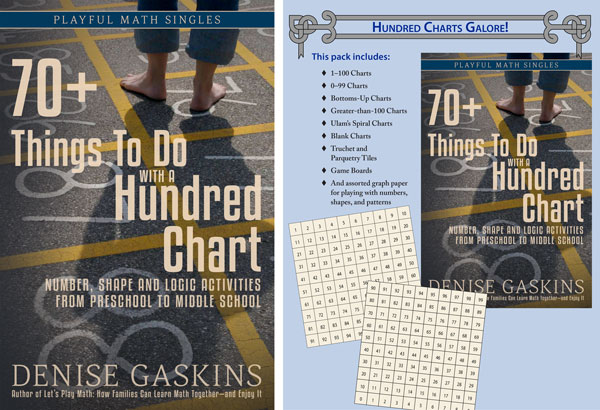
If that sounds good to you, too, then you’ll want to check out my new ebook 70+ Things To Do with a Hundred Chart: Number, Shape, and Logic Activities from Preschool to Middle School.

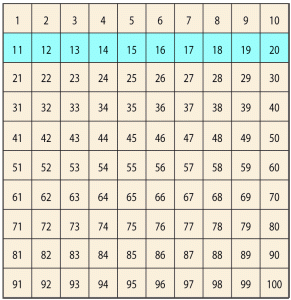
Long years ago, when I did workshops at homeschooling conferences, I used to share a list of seven ways to play with a hundred chart. The all-time most visited post on my blog offers 34 playful activities. Now I’ve more than doubled that total for this book.

So many ways to play! One of them is sure to be perfect for you and your children.

Take your child on a mathematical adventure with these playful, practical activities.

Who knew math could be so much fun?

Get your copy today!

“It is exactly the kind of math exploration that I want to undertake with my kids.

“After reading through the book, I noticed myself making more room to trust my kids’ ability to make connections and not try to dominate by telling them how math ‘should’ work.

“An excellent way for me to move outside my math and teaching comfort zones and explore math more deeply with my kids.”

— Olisia Barron, author of ThimbleberryHome.wordpress.com

P.S.: If you have a blog and would like to host a giveaway for 70+ Things To Do with a Hundred Chart (or any of my other books), I’d be glad to provide the prize. Leave a comment below or use the contact form on my “About” page, and we’ll set up all the details.

Playing Complex Fractions with Your Kids

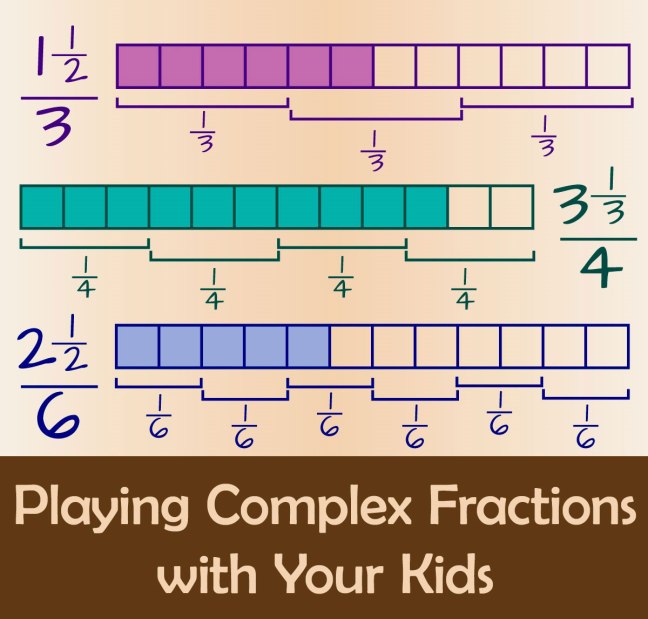
This week, I’m working on graphics for my upcoming book 70+ Things to Do with a Hundred Chart. I had fun with this complex fraction image.

It looks a bit cluttered. Possible tweak: Remove the brackets and instead use a thicker dividing line to show the thirds.

While I’m thinking about that, would you like a sneak peek at an activity from the book?

Make Your Own Math

You don’t need a set of worksheets or lesson plans to learn math. All you need is an inquiring mind and something interesting to think about.

Play. Discuss. Notice. Wonder.

Enjoy.

Here’s how you can play complex fractions with your kids…

Start with Fraction Strips
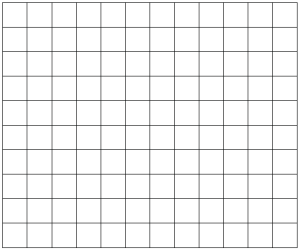
Print a few blank 120 charts and turn them sideways, so each chart has ten rows with twelve squares in each row.

Cut out the rows to make fraction strips with twelve squares on each strip.

Color a different set of squares on each strip. On some strips, arrange the colored squares all together at one end. On other strips, mix them around.

If we count each strip as one whole thing, what fraction of its squares are colored?

Match the strips that represent the same fraction.

On some of the strips, there will be more than one way to name the fraction. For example, if six squares are colored, we can call that 6/12 or 2/4 or 1/2 of the strip. These alternate names are easiest to see when the colored squares are all at one end of the strip, because you can fold the strip to show the halves or fourths.

How many different fraction names can you find for each set of colored squares?

Look for Complex Fractions

We could also call the strip with six colored squares “1 1/2 thirds” of the whole strip. Can you show by folding why that name makes sense?

Or we could call the strip with five colored squares “2 1/2 sixths.”

When we have a fraction within a fraction like this, we call it a complex fraction, because it is more complicated than a common (or simple) fraction.

Another way to say it: Complex fractions have other fractions inside them.

A complex fraction is like a puzzle, challenging us to find its secret identity — the common fraction that names the same amount of stuff.

For example, how much is 3 1/3 fourths? One fourth would be three of the twelve squares on a fraction strip. So three fourths would be three sets of those three squares, or nine squares. Then we need to add one-third of the final fourth, which is one of the remaining three squares. So 3 1/3 fourths must be ten squares in all.

3 1/3 fourths = 10/12 = 5/6

How many complex fractions can you find in your set of fraction strips?
Challenge Puzzles

Can you figure out how much a one-and-a-halfth would be?

That is one piece, of such a size that it takes one and one-half pieces to make a complete fraction strip.

A one-and-a-halfth is a very useful fraction and was a favorite of the ancient Egyptian scribes, who used it to solve all sorts of practical math problems.

How about a one-and-a-thirdth? How many of those pieces make a whole strip? What common fraction names the same amount of stuff?

Or how much would a two-thirdth be? In that case, it only takes two-thirds of a piece to make a complete strip. So the whole piece must be greater than one. A two-thirdth’s secret identity is a mixed number. Can you unmask it?

Make up some challenge fraction mysteries of your own.

Complex2

Update…

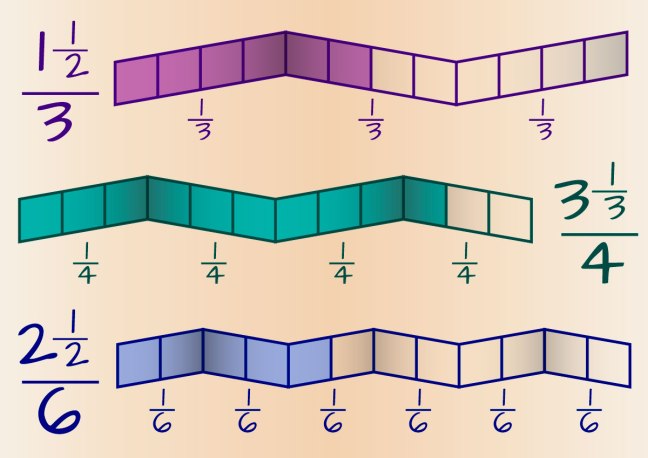
I’m still working on the graphics for my hundred chart book. Here’s the latest version of the complex fraction strips.

I like this one much better.

What do you think?
CREDITS: The slogan “Make Math Your Own” comes from Maria Droujkova, founder and director of the Natural Math website. Maria likes to say: “Make math your own, to make your own math!”

70+ Things to Do with a Hundred Chart is now available from Tabletop Academy Press.
Math Journals for Elementary and Middle School

This fall, my homeschool co-op math class will play with math journaling.

But my earlier dot-grid notebooks were designed for adults. Too thick, too many pages. And the half-cm dot grid made lines too narrow for young writers.

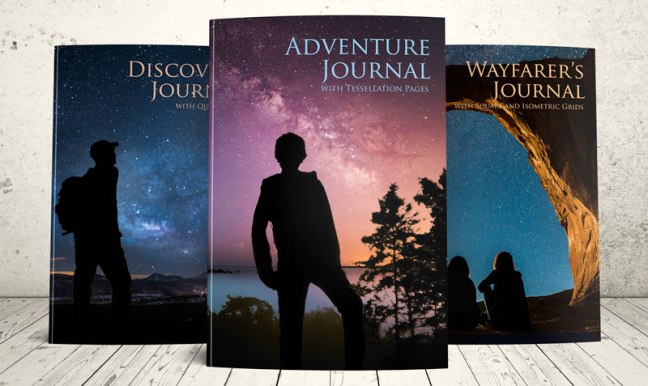
So I created a new series of paperback dot-grid journals for my elementary and middle school students.

I hope you enjoy them, too!

Click here for more information

Math Journaling Prompts

So, what can your kids do with a math journal?

Here are a few ideas: 

I’m sure we’ll use several of these activities in my homeschool co-op math class this fall.

Noticing and Wondering

Learning math requires more than mastering number facts and memorizing rules. At its heart, math is a way of thinking.

So more than anything else, we need to teach our kids to think mathematically — to make sense of math problems and persevere in figuring them out.

Help your children learn to see with mathematical eyes, noticing and wondering about math problems.

Whenever your children need to learn a new idea in math, or whenever they get stuck on a tough homework problem, that’s a good time to step back and make sense of the math.

Kids can write their noticings and wonderings in the math journal. Or you can act as the scribe, writing down (without comment) everything child says.

For more tips on teaching students to brainstorm about math, check out these online resources from The Math Forum:

Problem-solving is a habit of mind that you and your children can learn and grow in. Help your kids practice slowing down and taking the time to fully understand a problem situation.

Puzzles Are Math Experiments

Almost anything your child notices or wonders can lead to a math experiment.

For example, one day my daughter played an online math game…

a math experiment
Click the image to read about my daughter’s math experiment.

A math journal can be like a science lab book. Not the pre-digested, fill-in-the-blank lab books that some curricula provide. But the real lab books that scientists write to keep track of their data, and what they’ve tried so far, and what went wrong, and what finally worked.

Here are a few open-ended math experiments you might try:

Explore Shapes
  • Pick out a 3×3 set of dots. How many different shapes can you make by connecting those dots? Which shapes have symmetry? Which ones do you like the best?
  • What if you make shapes on isometric grid paper? How many different ways can you connect those dots?
  • Limit your investigation to a specific type of shape. How many different triangles can you make on a 3×3 set of dots? How many different quadrilaterals? What if you used a bigger set of dots?
Explore Angles

  • On your grid paper, let one dot “hold hands” with two others. How many different angles can you make? Can you figure out their degree without measuring?
  • Are there any angles you can’t make on your dot grid? If your paper extended forever, would there be any angles you couldn’t make?
  • Does it make a difference whether you try the angle experiments on square or isometric grid paper?
Explore Squares
  • How many different squares can you draw on your grid paper? (Don’t forget the squares that sit on a slant!) How can you be sure that they are perfectly square?
  • Number the rows and columns of dots. Can you find a pattern in the corner positions for your squares? If someone drew a secret square, what’s the minimum information you would need to duplicate it?
  • Does it make a difference whether you try the square experiments on square or isometric grid paper?

Or Try Some Math Doodles

Create math art. Check out my math doodling collection on Pinterest and my Dot Grid Doodling blog post. Can you draw an impossible shape?

How Would YOU Use a Math Journal?

I’d love to hear your favorite math explorations or journaling tips!

Please share in the comments section below.

 
* * *

P.S.: Do you have a blog? If you’d like to feature a math journal review and giveaway, I’ll provide the prize. Send a message through my contact form or leave a comment below, and we’ll work out the details.

This blog is reader-supported.

If you’d like to help fund the blog on an on-going basis, then please head to my Patreon page.

If you liked this post, and want to show your one-time appreciation, the place to do that is PayPal: paypal.me/DeniseGaskinsMath. If you go that route, please include your email address in the notes section, so I can say thank you.

Which I am going to say right now. Thank you!

“Math Journals for Elementary and Middle School” copyright © 2018 by Denise Gaskins. Photos of children © original artists / Pixabay.

FAQ: Struggling with Arithmetic

My son can’t stand long division or fractions. We had a lesson on geometry, and he enjoyed that — especially the 3-D shapes. If we can just get past the basics, then we’ll have time for the things he finds interesting. But one workbook page takes so long, and I’m sick of the drama. Should we keep pushing through?

Those upper-elementary arithmetic topics are important. Foundational concepts. Your son needs to master them.

Eventually.

But the daily slog through page after page of workbook arithmetic can wear anyone down.

Many children find it easier to focus on math when it’s built into a game.

Take a look at Colleen King’s Math Playground website. Or try one of the ideas on John Golden’s Math Hombre Games blog page.

Or sometimes a story helps, like my Cookie Factory Guide to Long Division.

Continue reading FAQ: Struggling with Arithmetic

Math Debate: Adding Fractions

Cover image by Thor/ geishaboy500 via Flickr (CC BY 2.0)

I’ve been working on my next Playful Math Singles book, based on the popular Things to Do with a Hundred Chart post.

My hundred chart list began many years ago as seven ideas for playing with numbers. Over the years, it grew to its current 30+ activities.

Now, in preparing the new book, my list has become a monster. I’ve collected almost 70 ways to play with numbers, shapes, and logic from preschool to middle school. Just yesterday I added activities for fraction and decimal multiplication, and also tips for naming complex fractions. Wow!

Gonna have to edit that cover file…

In the “Advanced Patterns” chapter, I have a section on math debates. The point of a math debate isn’t that one answer is “right” while the other is “wrong.” You can choose either side of the question — the important thing is how well you support your argument.

Here’s activity #69 in the current book draft.

Have a Math Debate: Adding Fractions

When you add fractions, you face a problem that most people never consider. Namely, you have to decide exactly what you are talking about.

For instance, what is one-tenth plus one-tenth?

1/10 of 100

Well, you might say that:

\frac{1}{10}  of one hundred chart
+ \frac{1}{10}  of the same chart
= \frac{2}{10}  of that hundred chart

But, you might also say that:

\frac{1}{10}  of one chart
+ \frac{1}{10}  of another chart
= \frac{2}{20}  of the pair of charts

That is, you started off counting on two independent charts. But when you put them together, you ended up with a double chart. Two hundred squares in all. Which made each row in the final set worth \frac{1}{20}  of the whole pair of charts.

So what happens if you see this question on a math test:

\frac{1}{10}  + \frac{1}{10}  = ?

If you write the answer “\frac{2}{20}”, you know the teacher will mark it wrong.

Is that fair? Why, or why not?

CREDITS: Feature photo (above) by Thor/geishaboy500 via Flickr (CC BY 2.0). “One is one … or is it?” video by Christopher Danielson via TED-Ed. This math debate was suggested by Marilyn Burns’s blog post Can 1/3 + 1/3 = 2/6? It seemed so!

Playful Math Education Carnival 115—Women of Mathematics

Welcome to the 115th edition of the Playful Math Education Blog Carnival — a smorgasbord of links to bloggers all around the internet who have great ideas for learning, teaching, and playing around with math from preschool to pre-college.

In honor of Women’s History Month, this carnival features quotes from fifteen women mathematicians.

If you would like to jump straight to our featured blog posts, click here to see the Table of Contents.

Let the mathematical fun begin!

The Women of Mathematics

They came from many countries and followed a variety of interests.

They conquered new topics in mathematics and expanded the world’s understanding of old ones.

They wrestled with theorems, raised children, published articles, won awards, faced discrimination, led professional organizations, and kept going through both success and failure.

Some gained international renown, but most enjoyed quiet lives.

They studied, learned, and lived (and some still live) as most of us do — loving their families and friends, joking with colleagues, hoping to influence students.

I think you’ll find their words inspiring.

“What I really am is a mathematician. Rather than being remembered as the first woman this or that, I would prefer to be remembered, as a mathematician should, simply for the theorems I have proved and the problems I have solved.”
Julia Robinson (1919–1985)


“All in all, I have found great delight and pleasure in the pursuit of mathematics. Along the way I have made great friends and worked with a number of creative and interesting people. I have been saved from boredom, dourness, and self-absorption. One cannot ask for more.”
Karen Uhlenbeck (b. 1942)

Continue reading Playful Math Education Carnival 115—Women of Mathematics

Cultivate Mathematical Curiosity

“Cultivating thinking skills is the main reason for teaching math. It is the mind’s perfect playground for shaping up.

To begin developing thinking, you must first have a child who is curious. For without curiosity, there is only forced thinking.

The problem with traditional math is it jumps to the punchline.

Absolutely no mystery or suspense is developed in traditional math books. Why? Apparently, someone thought math was without mystery. That math is a definitive subject of rules and algorithms that all have been discovered.

We must persuade children that math is a worthy pursuit through interesting stories, examining quirky math properties, and asking good questions.”

— Lacy Coker
5 Tips to Cultivate Math Curiosity

The Mind’s Perfect Playground

My K-2nd-grade homeschool co-op math class will be following many of the tips in Lacy’s article.

Our topic is “Math Storytime,” so we’ll be starting with picture books, exploring the ideas they bring up, and finding things to notice and wonder about.

I’m looking forward to it.

But picture books aren’t just for little kids. They can be great discussion-starters at any age. Have you enjoyed math books with your students?

I’d love to hear your suggestions!

CREDITS: Background photo courtesy of Bekah Russom on Unsplash.

Learning Math Requires Imagination

“Teach mathematics the way we learn any other subject: Make it visual, make it concrete, not dependent on meaningless, abstract symbols, employ all the senses!

If math is such an important subject (and it is) why teach it in a way that is dependent on a child’s weakest mental ability: memory, rather than her strongest mental ability: imagination?”

— Geoff White
The Grade 10 Math Crunch, or Hitting the Wall at Grade 10

Mathematics and Imagination

How can we stir up our students’ imagination?

Teachers have struggled with this question for years — perhaps since the beginning of the profession.

Consider these comments by W. W. Sawyer in Mathematician’s Delight:

“Earlier we considered the argument, ‘Twice two must be four, because we cannot imagine it otherwise.’ This argument brings out clearly the connexion between reason and imagination: reason is in fact neither more nor less than an experiment carried out in the imagination.

“People often make mistakes when they reason about things they have never seen. Imagination does not always give us the correct answer. We can only argue correctly about things of which we have experience or which are reasonably like the things we know well. If our reasoning leads us to an untrue conclusion, we must revise the picture in our minds, and learn to imagine things as they are.

“When we find ourselves unable to reason (as one often does when presented with, say, a problem in algebra) it is because our imagination is not touched. One can begin to reason only when a clear picture has been formed in the imagination.

“Bad teaching is teaching which presents an endless procession of meaningless signs, words and rules, and fails to arouse the imagination.”

CREDITS: Background photo by Mehmet Kürşat Değer on Unsplash.

Holiday Math and More: Playful Math Education Carnival 114

Do you enjoy math? I hope so! If not, the links in this post just may change your mind.

Welcome to the 114th edition of the Math Teachers At Play math education blog carnival — a smorgasbord of articles by bloggers all around the internet who have great ideas for learning, teaching, and playing around with math from preschool to pre-college.

If you would like to jump straight to our featured blog posts, click here to see the Table of Contents.

By the way, I found a cool, semi-self-referential trivia tidbit about our carnival number: 27 − 14 = 114. And if you put 114 dots into a 1←7 Exploding Dots machine, you’ll get the code 222. Pretty neat!

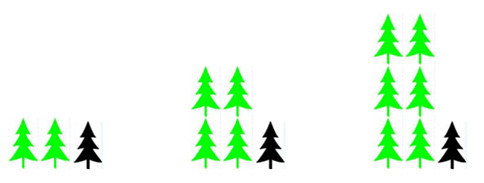
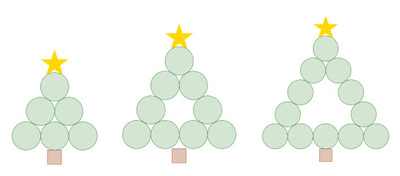
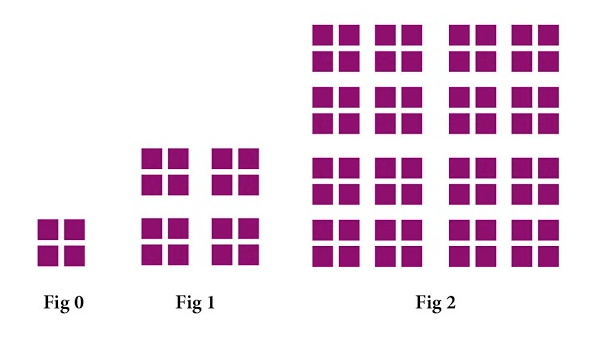
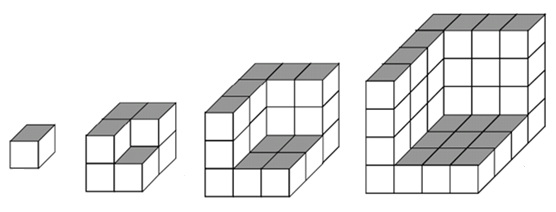
As you scroll through the links below, you find several puzzle graphics from the wonderful Visual Patterns website. Use them as conversation-starters with your kids: What do you notice? How does each pattern grow? For older students: Can you write a formula to describe how each pattern? What will it look at stage 43?

Pattern #7, Trees

A BIT OF FUN

Setting the mood: Enjoy this bit of seasonal fidgeting from Vi Hart (@vihartvihart).

If you don’t understand some of the references, that’s normal! Pick a phrase, Google it, and enjoy the fun of learning something new.


TABLE OF CONTENTS

And now, on to the main attraction: the blog posts. Some articles were submitted by their authors; others were drawn from the immense backlog in my rss reader. If you’d like to skip directly to your area of interest, click one of these links.

Let the mathematical fun begin!

Continue reading Holiday Math and More: Playful Math Education Carnival 114