Math History on the Internet

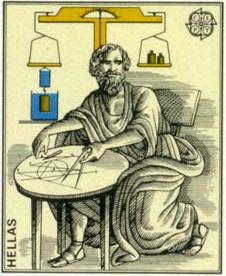
[Image from the MacTutor Archive.]

The story of mathematics is the story of interesting people. What a shame it is that our children see only the dry remains of these people’s passion. By learning math history, our students will see how men and women wrestled with concepts, made mistakes, argued with each other, and gradually developed the knowledge we today take for granted.

In a previous article, I recommended books that you may find at your local library or be able to order through inter-library loan. Now, let me introduce you to the wealth of math history resources on the Internet.

Continue reading Math History on the Internet

Hooray for (Math) History

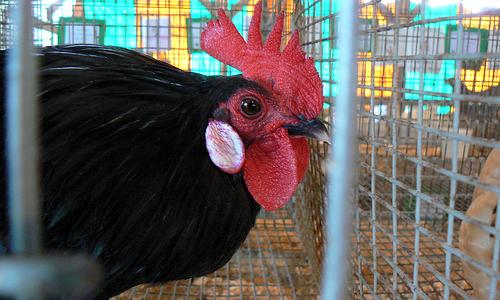
Photo by Benimoto.

John Napier foiled a thief with the aid of logic and a black rooster. For this and other acts of creative problem solving, his servants and neighbors suspected him of witchcraft.

What does this have to do with mathematics?

Math was Napier’s favorite hobby. He invented logarithms to help people handle large numbers easily, and he even created a calculator out of a chessboard. [See how it works: addition, subtraction, multiplication.]

Continue reading Hooray for (Math) History

Diagnosis: Math Workbook Syndrome

Photo by otisarchives3.

I discovered a case of MWS (Math Workbook Syndrome) one afternoon, as I was playing Multiplication War with a pair of 4th grade boys. They did fine with the small numbers and knew many of the math facts by heart, but they consistently tried to count out the times-9 problems on their fingers. Most of the time, they lost track of what they were counting and gave wildly wrong answers.

Continue reading Diagnosis: Math Workbook Syndrome

Subtracting Mixed Numbers: A Cry for Help

Photo by powerbooktrance.

Paraphrased from a homeschool math discussion forum:

“Help me teach fractions! My son can do long subtraction problems that involve borrowing, and he can handle basic fraction math, but problems like 9  -  5 \frac{2}{5} give him a brain freeze. To me, this is an easy problem, but he can’t grasp the concept of borrowing from the whole number. It is even worse when the math book moves on to 10 \frac{1}{4}  -  2 \frac{3}{7} .”

Several homeschooling parents replied to this question, offering advice about various fraction manipulatives that might be used to demonstrate the concept. I am not sure that manipulatives are needed or helpful in this case. The boy seems to have the basic concept of subtraction down, but he gets flustered and is unsure of what to do in the more complicated mixed-number problems.

The mother says, “To me, this is an easy problem” — and that itself is one source of trouble. Too often, we adults (homeschoolers and classroom teachers alike) don’t appreciate how very complicated an operation we are asking our students to perform. A mixed-number calculation like this is an intricate dance that can seem overwhelming to a beginner.

I will go through the calculation one bite at a time, so you can see just how much a student must remember. As you read through the steps, pay attention to your own emotional reaction. Are you starting to feel a bit of brain freeze, too?

Afterward, we’ll discuss how to make the problem simpler…

Continue reading Subtracting Mixed Numbers: A Cry for Help

How Should We Teach Arithmetic?

Dave Marain of MathNotations is running a poll about how to teach multiplication, but the question has broader application:

How should we teach the arithmetic algorithms
— or should we teach them at all?

Algorithms are step-by-step methods for doing something. In arithmetic, we have standard algorithms for addition, subtraction, multiplication, and long division. Once the student masters the steps for any particular algorithm, he can follow the steps to a correct answer without ever thinking about what the numbers mean.

Continue reading How Should We Teach Arithmetic?

Quotations XIX: How Do We Learn Math?

He doesn’t learn algebra
in the algebra course;
he learns it in calculus.

I have been catching up on my Bloglines reading [procrastinating blogger at work — I should be going over the MathCounts lesson for Friday’s homeschool co-op class], and found the following quotation at Mathematics under the Microscope [old blog posts are no longer archived].

Continue reading Quotations XIX: How Do We Learn Math?

Word Problems in Russia and America

Andrei Toom calls this an “extended version” of a talk he gave a few years ago at the Swedish Mathematical Society. At 159 pages [2010 updated version is 98 pages], I would call it a book. Whatever you call it, it’s a must-read for math teachers:

Main Thesis: Word problems are very valuable in teaching mathematics not only to master mathematics, but also for general development. Especially valuable are word problems solved with minimal scolarship, without algebra, even sometimes without arithmetics, just by plain common sense. The more naive and ingenuous is solution, the more it provides the child’s contact with abstract reality and independence from authority, the more independent and creative thinker the child becomes.

Continue reading Word Problems in Russia and America

Fraction Models, and a Card Game

Fraction cards

Models give us a way to form and manipulate a mental image of an abstract concept, such as a fraction. There are three basic ways we can imagine a fraction: as partially-filled area or volume, as linear measurement, or as some part of a given set. Teach all three to give your students a well-rounded understanding.

When teaching young students, we use physical models — actual food or cut-up pieces of construction paper. Older students and adults can firm up the foundation of their understanding by drawing many, many pictures. As we move into abstract, numbers-only work, these pictures remain in our minds, an always-ready tool to help us think our way through fraction problems.

Continue reading Fraction Models, and a Card Game

In the News: Teaching Math

Here are a couple of interesting articles about teaching math:

Good Stories, Good Math

Math Trek (Nov. 10, 2007) — Spinning a good yarn may seem to have little to do with mathematics, but a new study suggests otherwise. Preschoolers who tell stories that include many different perspectives do better in math two years later than those who stick to one simple perspective. The researchers believe that the study may highlight a deep connection between mathematical ability and narrative skills… [Hat tip: Wild About Math!]

Gesturing Helps Grade School Children Solve Math Problems

ScienceDaily (Nov. 5, 2007) — Are math problems bugging your kids? Tell them to talk back — using their hands. Psychologists at the University of Chicago report that gesturing can help kids add new and correct problem-solving strategies to their mathematical repertoires. What’s more, when given later instruction, kids who are told to gesture are more likely to succeed on math problems…

Continue reading In the News: Teaching Math