Learning Math with Puzzles

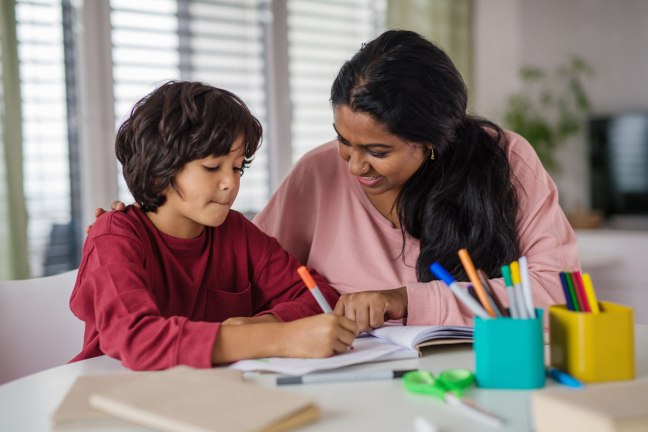
Mother and daughter homeschooling math

Learning mathematics begins with puzzles. As stories are to history or science, puzzles are to math.

In ancient times, math began with puzzles like:

• How can we keep track of our herds, or predict the cycles of the moon, or figure out how much to pay for taxes?

• How can we draw perfect right angles, or make beautifully symmetric designs?

• What are the ratios of harp strings that create the most beautiful sounds?

Math puzzles touch every area of life. Puzzles inspire curiosity and solving them brings joy.

And we can enrich any homeschool math program with puzzles that invite children to think about mathematical concepts.

Even those monster topics that often bring homeschooling families to tears, such as fractions.
Continue reading Learning Math with Puzzles

Homeschooling: The Rhythm of a Math Lesson

Mother and son homeschooling math

If there’s one thing common to all new homeschoolers, it’s a feeling of being overwhelmed. One solution is to develop a basic homeschooling rhythm, a daily routine of what you do first, and then next, and then next.

Most new home schoolers try to adopt the rhythm they remember from their own school days, their own classroom experience. But our home is not a classroom, and that pattern can lead to burn-out.

The secret to successful homeschooling is to find a natural rhythm that fits your family. Even in math.

Continue reading Homeschooling: The Rhythm of a Math Lesson

New Book: Farzanah and the 17 Camels

illustration from Farzanah and the 17 Camels

Now’s your chance to promote creative math for kids, with Sue Looney’s new book on Kickstarter: Farzanah and the 17 Camels.

You can order the book in digital or paperback format, get multiple copies for a classroom or book club, or just donate to support the project.

Visit the Kickstarter

Farzanah and the 17 Camels celebrates the excitement and the rewards of solving a challenging and intriguing math problem. Set against the backdrop of the ancient Silk Road, with bustling markets, stunning carpets, fun characters, and camels, the story draws readers into the magic of Farzanah’s surroundings. 

Continue reading New Book: Farzanah and the 17 Camels

Memories: Improper Fractions

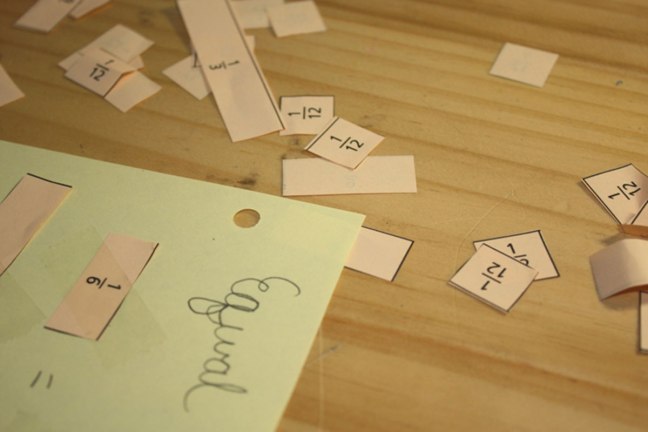
notebooking math with fraction pieces - photo

Homeschool Memories…

My eight-year-old daughter’s first encounter with improper fractions was a bit more intense than she knew how to handle. And I hadn’t learned yet how to use the Notice-Wonder-Create cycle to help kids think about tough problems.

Sometimes I wonder how our children survive their parents’ learning curve. It’s a good thing God made them resilient enough to thrive despite our mistakes!

Continue reading Memories: Improper Fractions

Podcast: From Right Answers to Adventure

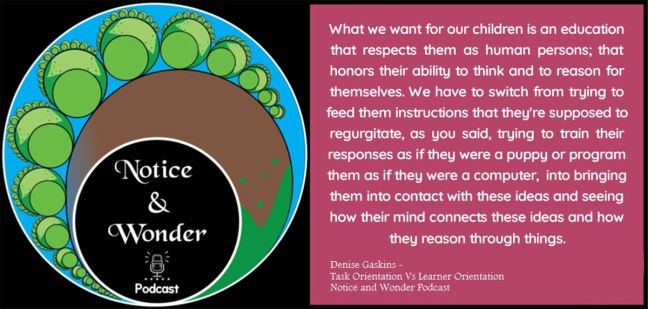
Notice and Wonder podcast logo with quote by Denise Gaskins

If you find a free hour this week, you may enjoy listening to my latest Notice & Wonder podcast discussion with Sonya and Della about the power of playful math:

We share plenty of tips, stories, and practical advice for bringing a sense of curiosity and exploration into your math lessons.

Plus, the Best Math Game Ever!

I love this podcast, because it always feels like sitting down to chat over coffee with good friends who love kids and love teaching.

Continue reading Podcast: From Right Answers to Adventure

Memories: Percent Problems

Homeschool math - photo

Homeschool Memories…

Can your students solve this problem?

There are 20% more girls than boys in the senior class. What percent of the seniors are girls?

This is from an old discussion of the semantics of percent problems and why students have trouble with them, going on over at MathNotations. (Follow-up post here.)

Our homeschool co-op prealgebra class had just finished a chapter on percents, so I thought my son might have a chance at this one. Nope! He leapt without thought to the conclusion that 60% of the class must be girls.

After I explained the significance of the word “than”, he solved the follow-up problem just fine.

Continue reading Memories: Percent Problems

New Podcast: Notice and Wonder

Quotation from Notice and Wonder podcast

When I was a novice homeschooler, our local Moms’ Night Out provided mentoring and kept me sane. We’d leave the children home with their dads and meet up at a local restaurant for a cup of coffee, a slice of pecan pie, and a robust discussion of educational philosophy.

This spring, my friend Sonya Post launched a new podcast called “Notice & Wonder” — and it captures that same feeling perfectly.

Sonya explains: “What is Notice, Wonder, Discover? It’s the development of cognitive skills, without which you have never learned anything in your life. We are developing the underlying skills that will make anyone more proficient at learning anything.”

I’ve had the privilege to join Sonya for three episodes of the podcast so far, and I’ve thoroughly enjoyed our conversations.

Here’s a taste…

Continue reading New Podcast: Notice and Wonder

If Not Methods: Fraction Multiplication

Father and son doing math homework together

This is the last post (for now, at least) in our If Not Methods series about how to help children figure out tough calculations.

By the time students reach the topic of multiplying fractions, they have become well-practiced at following rules. After some of the complex procedures they’ve learned, a simple rule like “tops times tops, and bottoms times bottoms” comes as a relief.

But we know that relying on rules like that weakens understanding, just as relying on crutches weakens physical muscles.

If we want our students to think, to make sense of math, to figure things out, what can we do with a problem like 5/6 × 21 ?

Continue reading If Not Methods: Fraction Multiplication

If Not Methods: Mixed Numbers

A family doing math homework together

Continuing our series on teaching the tough topics of arithmetic…

Our own school math experiences led many of us to think that math is all about memorizing and following specific procedures to get right answers. But that kind of math is obsolete in our modern world.

The math that matters today is our ability to recognize and reason about numbers, shapes, and patterns, and to use the relationships we know to figure out something new.

But what if our children get stumped on a mixed-number calculation like 2 5/12 + 1 3/4?

Continue reading If Not Methods: Mixed Numbers

If Not Methods – Subtracting Fractions

Father and daughter doing math homework

We’re continuing our series of posts on how to build robust thinking skills instead of forcing our children to walk with crutches.

When we say, “Use this method, follow these steps,” we teach kids to be mathematical cripples.

If your student’s reasoning is, “I followed the teacher’s or textbook’s steps and out popped this answer,” then they’re not doing real math. Real mathematical thinking says, “I know this and that are both true, and when I put them together, I can figure out the answer.”

But what if our kids get stumped on a fraction calculation like 7/8 − 1/6?

Continue reading If Not Methods – Subtracting Fractions