Charlotte Mason Math: How Shall We Teach?

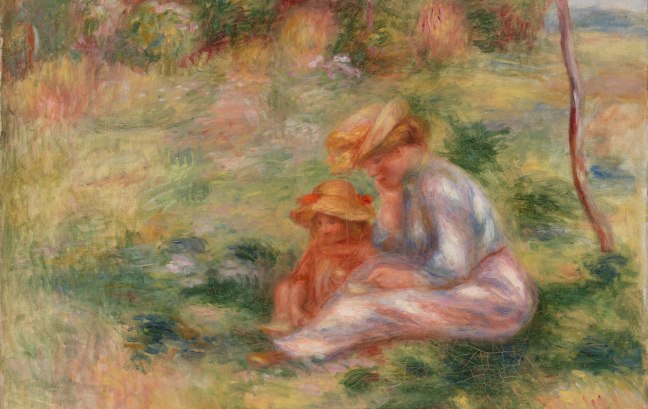
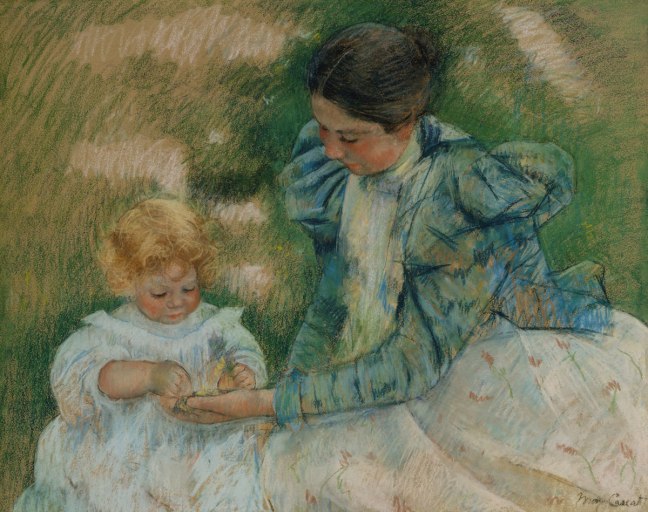
Woman withchildren painting by Dorothy Kate Richmond, public domain

Even in Mason’s day, testing drove much of educational policy, but we must not allow ourselves to fall into the trap of teaching for a test. Just as we do not study history in order to win a trivia contest, so we do not study math merely to produce answers on an exam.

“Arithmetic, Mathematics, are exceedingly easy to examine upon and so long as education is regulated by examinations so long shall we have teaching, directed not to awaken a sense of awe in contemplating a self-existing science, but rather to secure exactness and ingenuity in the treatment of problems.”

 — Charlotte Mason, Towards a Philosophy of Education

Remember Mason’s twin goals of rightness and reason. Even if you use a math book that focuses on memorizing rules and cranking out answers, you and your child can look for the ideas behind the rules: “Why does this work? How can we know for sure?”

Not just because the book says so, but because you search out and discover the innate sense of it. That is the essence of mathematics.

Continue reading Charlotte Mason Math: How Shall We Teach?

Charlotte Mason Math: Our Educational Tools

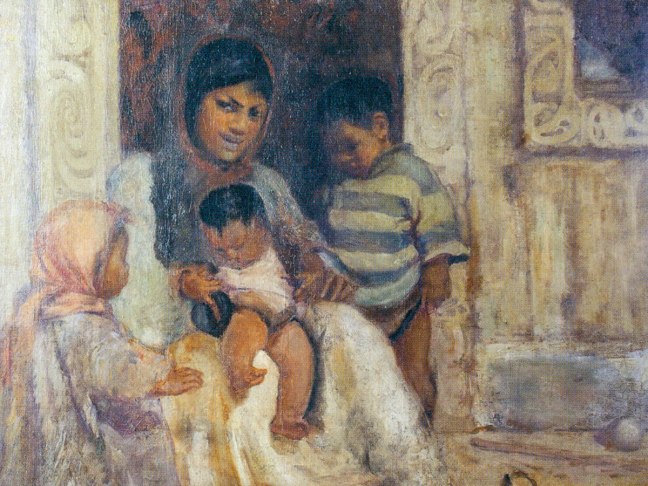
"Woman and Children" painting by Elizabeth Boott Duveneck, public domain

“Therefore, we are limited to three educational instruments––the atmosphere of environment, the discipline of habit, and the presentation of living ideas. The P.N.E.U.* Motto is: Education is an atmosphere, a discipline, and a life.”

— Charlotte Mason, Principle 5

This principle is the key to a Charlotte Mason education. Most of her books consist of drawing out the meaning and implications of this motto.

When we think about applying Mason’s educational principles to math, we must focus on providing the right atmosphere, developing appropriate habits, and presenting living ideas.

What is the mathematical atmosphere of our home or classroom? Is math a natural and welcome part of life? Or does it exist only in schoolbooks and in some nebulous “future” for which our children must prepare?

What about the people in our children’s lives? Do we adults enjoy and use math, or do we dread and avoid it? Is our mathematical worldview positive, eager to learn and grow, or negative, seeing math as a chore to endure?

Continue reading Charlotte Mason Math: Our Educational Tools

Podcast: The Beauty of Math in the Charlotte Mason Paradigm

painting by Dennis Miller Bunker, public domain

I have a new podcast interview, and I think you’ll enjoy it!

Check out Cindy Rollins’s The New Mason Jar (Season 7, Episode 93) on your favorite podcast app, or listen on the website:

Go to the podcast ❱

Here’s a couple of excerpts…

Continue reading Podcast: The Beauty of Math in the Charlotte Mason Paradigm

Charlotte Mason Math: Practice Your Principles

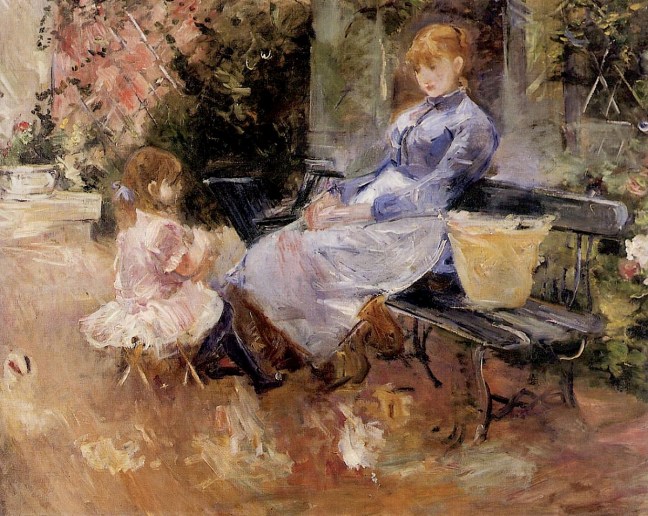
La Fable, painting by Berthe Morisot

In our search for a Charlotte Mason math education, we must take into consideration Mason’s approach to all learning, not just the things she said about math. We must be guided by the core principles of her philosophy, even in math

“We hold that the child’s mind is no mere sac to hold ideas; but is rather, if the figure may be allowed, a spiritual organism, with an appetite for all knowledge. This is its proper diet, with which it is prepared to deal; and which it can digest and assimilate as the body does foodstuffs.”

 — Charlotte Mason, Principle 9

For instance, we must offer our students living ideas (not mere facts) in math, just as we do in literature and history.

Masons “20 Principles” outline the essentials of her educational philosophy. If we truly apply these principles to math, it can radically transform how we teach the subject.

Let’s examine a few of her principles in more detail…

Continue reading Charlotte Mason Math: Practice Your Principles

Charlotte Mason Math: Reason and Proof

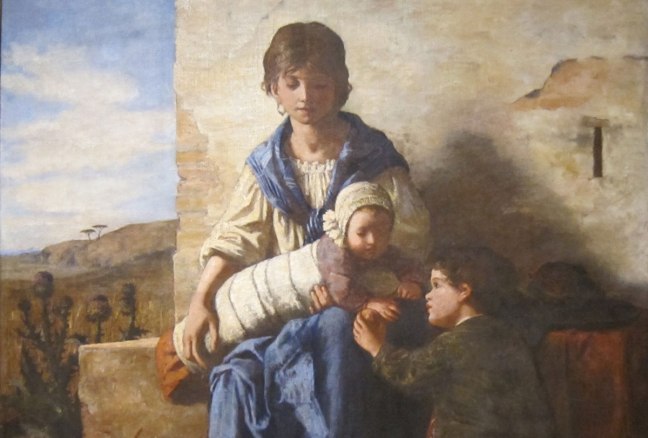
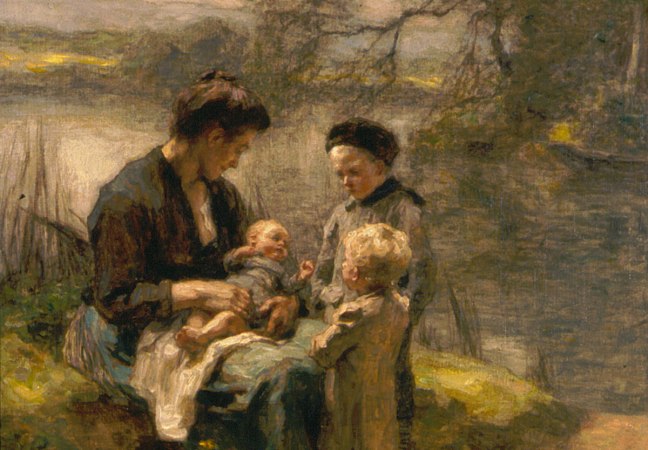
“Woman with Child and Two Children,” Léon Augustin Lhermitte, public domain

The two ideas that Mason considered important in math — rightness and reason — are connected. It is our reasoning that convinces us an answer is right or wrong. How do we know we got a sum correct? We can take the numbers apart and add them another way, to see if we get the same answer. Or we can subtract one of the numbers from the sum and see if we get the other number. Or … well, how would you prove it?

More than anything else, Mason wanted her students to discover in math a sense of immutable truth, a truth that stands on its own, apart from anything we say or do, a truth we can explore and reason about but can never change.

This sense of rightness, of solid, unalterable truth, inspires a feeling of wonder and awe — she calls it “Sursum corda,” a call to worship — that delights our minds. It’s that “Aha!” feeling we get when something we’ve been struggling with suddenly fits together and makes sense.

From the very beginning, children should be doing this sort of informal proof, explaining how they figured things out. Don’t wait until high school geometry to let your children wrestle with ideas.

Continue reading Charlotte Mason Math: Reason and Proof

Introduction to Charlotte Mason Math

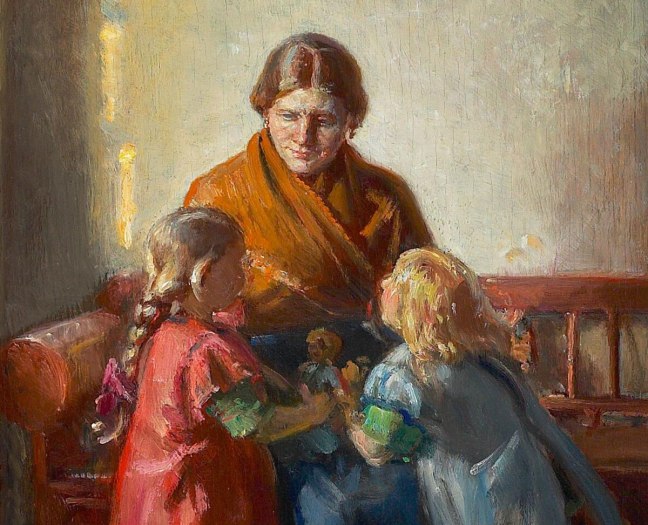
Woman with children, painting by Michael Ancher

“The Principality of Mathematics is a mountainous land, but the air is very fine and health-giving. People who seek their work or play in this principality find themselves braced by effort and satisfied with truth.”

— Charlotte Mason, Ourselves

Charlotte Mason (1842-1923) was a British school reformer at the turn of the twentieth century, a contemporary of William James and John Dewey. She advocated strongly for poor children, arguing they were equally capable of learning a wide and liberal curriculum as were the children of privilege.

Mason believed that all children from the time they are born share a natural curiosity and hunger for learning, and the adult’s role is to spread a “wide and generous feast” of inspiring ideas.

She was also a homeschooling pioneer, and the homeschooling revival of the late twentieth century rediscovered and popularized her books. Many found her principles a refreshing balance to the dominant educational paradigm of pragmatism.

Continue reading Introduction to Charlotte Mason Math

The Rhythm of Math Games

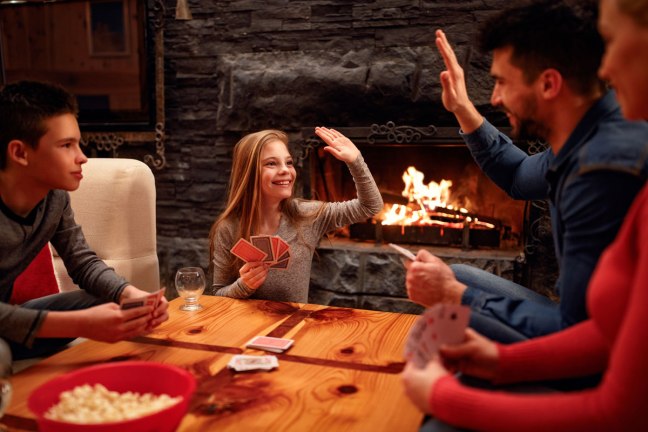
Family math game night

The art of homeschooling math begins with the rhythm of puzzle play. It continues with games, which are social puzzles.

Games are fun, building a positive attitude toward math. They give students a refreshing break from textbook work and make kids willing to practice their math.

But more important than the fun, math games push children to think about what numbers mean and how they work. A good math game reinforces the idea that math is about reasoning, using the things you know to figure out what you need.

For more about homeschooling with math games, check out my post Gameschooling Math.

Continue reading The Rhythm of Math Games

The Rhythm of Math Puzzles

Father and son homeschooling math

Homeschooling families naturally build patterns and routines that help us keep our sanity as we go through our homeschooling day.

No matter what resources we choose or which curriculum packages we buy, we never end up following the book exactly as it is written. So don’t worry if you find yourself wandering away from the lesson plan. You’re not getting behind; you’re just discovering your family’s natural learning style.

If you and your children have fallen into the rut of traditional math lessons, have patience. Give yourself time to adjust to a more relaxed mindset about math.

And when you find the rhythm that fits your family, you’ll discover that math lessons flow so much more smoothly.

Continue reading The Rhythm of Math Puzzles

Learning Math with Puzzles

Mother and daughter homeschooling math

Learning mathematics begins with puzzles. As stories are to history or science, puzzles are to math.

In ancient times, math began with puzzles like:

• How can we keep track of our herds, or predict the cycles of the moon, or figure out how much to pay for taxes?

• How can we draw perfect right angles, or make beautifully symmetric designs?

• What are the ratios of harp strings that create the most beautiful sounds?

Math puzzles touch every area of life. Puzzles inspire curiosity and solving them brings joy.

And we can enrich any homeschool math program with puzzles that invite children to think about mathematical concepts.

Even those monster topics that often bring homeschooling families to tears, such as fractions.

Continue reading Learning Math with Puzzles

Homeschooling: The Rhythm of a Math Lesson

Mother and son homeschooling math

If there’s one thing common to all new homeschoolers, it’s a feeling of being overwhelmed. One solution is to develop a basic homeschooling rhythm, a daily routine of what you do first, and then next, and then next.

Most new home schoolers try to adopt the rhythm they remember from their own school days, their own classroom experience. But our home is not a classroom, and that pattern can lead to burn-out.

The secret to successful homeschooling is to find a natural rhythm that fits your family. Even in math.

Continue reading Homeschooling: The Rhythm of a Math Lesson