One of the best ways we can help our children learn mathematics (or anything else) is to be lifelong learners ourselves.
Here are a few stories to read as you sip your morning brew:
- Download your printable Morning Coffee journal.

One of the best ways we can help our children learn mathematics (or anything else) is to be lifelong learners ourselves.
Here are a few stories to read as you sip your morning brew:
 There’s still time to check out my Math Journaling Adventures project and discover how playful writing activities will help your students learn mathematics. Preorder your books today!
Meanwhile, here’s a math puzzle to share with your kids…
Write down any whole number. It can be a single-digit number, or as big as you like. For example:
64,861,287,124,425,928
Now, count up the number of even digits (including zeros), the number of odd digits, and the total number of digits your number contains. Write those counted numbers down in order, like this:
64,861,287,124,425,928
even 12, odd 5, total 17
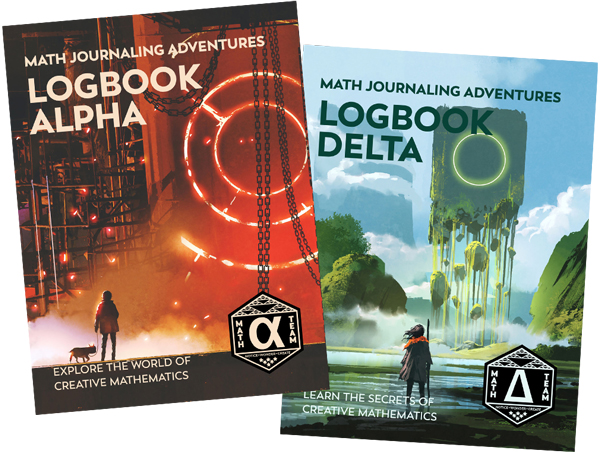
Then you’ll love the Math Journaling Adventures series because these logbooks guide your children to explore mathematics at a deeper level, building a strong foundation to support future learning.
It’s a fun way to enrich any math curriculum, and great for unschoolers, too.
But you have to ACT FAST: The Kickstarter campaign ends in 2 days!
Continue reading Only Two Days Left for Math Journaling Adventures
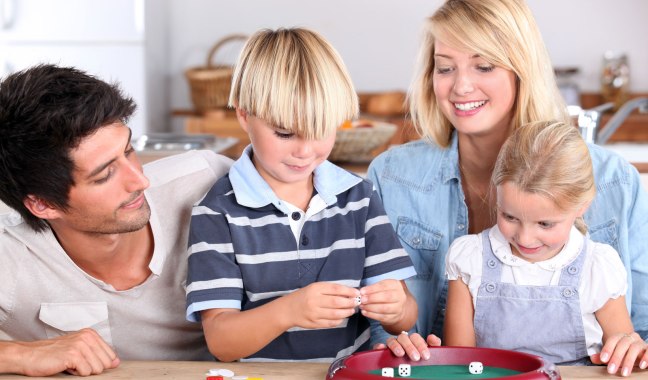
 Here are three quick math games you can fit in whenever you have a few minutes’ free time. Have fun playing math with your kids!
And if you enjoy these games, check out my Math Journaling Adventures project to discover how similar playful writing activities can help your students learn mathematics. Preorder your books today!

Mary Everest Boole, wife of English mathematician George Boole, once described algebra as “thinking logically about the fact of our own ignorance.”
This definition made me chuckle. Like any human being, I am ignorant on many things, but I usually avoid thinking about that.
So I wondered what would happen if I took Mrs. Boole’s advice and tried thinking logically about my ignorance.
How far could I go?
Perhaps you’d like to try this experiment with your children. All you need is a pen and paper or a whiteboard and markers and a bit of curiosity.
And if you enjoy this exploration, check out my Math Journaling Adventures project to discover how playful writing activities can help your students learn mathematics. Preorder your books today!
Continue reading Math Journal: Playing with My Own Ignorance
One of the best ways we can help our children learn mathematics (or anything else) is to be lifelong learners ourselves.
Here are a few stories to read as you sip your morning brew. . .
Download your printable Morning Coffee journal
Continue reading Morning Coffee: When Math Makes You Feel Stupid
My Math Journaling Adventures Series is now available on Kickstarter.
I love these books!
Writing is one of the best ways to learn math deeply, because wrestling our thoughts into words forces us to figure out what we really believe.
It’s the natural, no-stress way to build our children’s understanding and confidence.
Hit the button to visit the campaign and order your books:
Math Journaling Adventures Kickstarter ❯
Continue reading Why I Love the Math Journaling Adventures Series
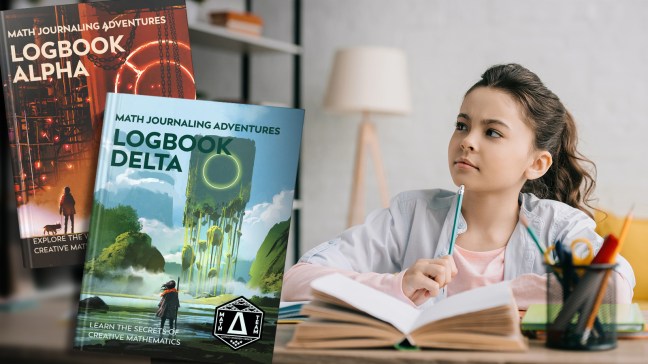
And so it begins: the Math Journaling Adventures is LIVE on Kickstarter!
⭐ Don’t delay! First-day backers get the best deals. Choose one of the Earlybird rewards:
To have a successful campaign, we need plenty of people to back the project early. The more supporters we get in these early days, the more likely the Kickstarter platform folks will help spread the news for us.
Continue reading Math Journaling Adventures Launched: Order Your Copy Today
I have a new podcast interview, and I think you’ll enjoy it!
Check out Pam Barnhill’s Homeschool Better Together on your favorite podcast app, or listen on the website:
Here’s an excerpt…
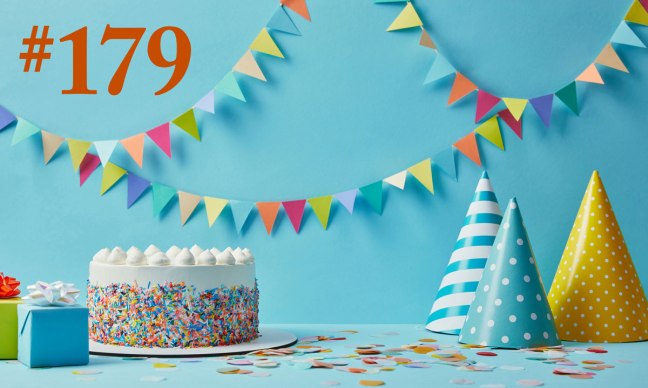
Welcome to the sweet-16 birthday edition of the Playful Math Carnival. Originally called Math Teachers at Play, our first carnival was published in February 2009.
Each Playful Math Carnival offers a smorgasbord of delectable tidbits of mathy fun. It’s like a free online magazine devoted to learning, teaching, and playing around with math from preschool to high school.
There’s so much playful math to enjoy!
By tradition, we start the carnival with a math activity in honor of our 179th edition. But if you’d rather jump straight to our featured blog posts, click here to see the Table of Contents.
Continue reading Playful Math 179: Our Sweet Sixteen Carnival

