FAQ: Forgetting What They Learned

“As we go through each lesson, it seems like my daughter has a good handle on the concepts, but when we get to the test she forgets everything. When I ask her about it, she shrugs and says, ‘I don’t know.’ What do you do when your child completely loses what she has learned?”

Forgetting is the human brain’s natural defense mechanism. It keeps us from being overwhelmed by the abundance of sensory data that bombards us each moment of every day.

Our children’s minds will never work like a computer that can store a program and recall it flawlessly months later.

Sometimes, for my children, a gentle reminder is enough to drag the forgotten concept back out of the dust-bunnies of memory.

Other times, I find that they answer “I don’t know” out of habit, because it’s easier than thinking about the question. And because they’d prefer to be doing something else.


Continue reading FAQ: Forgetting What They Learned

FAQ: Homeschool Burnout

“Spring cleaning has made my desk look worse than before. Nobody feels like studying. The kids would rather be outside, and their mom would rather take a nap. If I line everyone up on the curb in the morning, do you think the yellow bus will take them?”

Homeschool burnout — it’s a perennial problem. If you’re suffering from lethargy and can’t face another day of school work, here are some ideas that kept me going long enough to graduate almost-five kids (my “baby” finishes homeschooling this spring!):

(1) Re-read the homeschooling books on your shelves, or get some new ones from the library. Write down your favorite quotes as you read. Try to read about one a month, to help get your enthusiasm back. And then read at least one new homeschooling book per year to help you stay inspired.

Continue reading FAQ: Homeschool Burnout

FAQ: Trouble Finding the Right Math Program

“I can’t find a home school math program my son likes. We’ve tried Singapore Math, Right Start, Saxon, and Math Mammoth. We subscribed to a month of IXL Math to keep him in practice, but he hates that, too. I know I shouldn’t have changed so many times, but this was our first year of homeschooling, and I was trying to please him. But I’m running out of things to try. Do you think Life of Fred might work?”

Rock-Surfing

You’ve tried all those math programs in one year? Many people recommend that new homeschoolers take a few months off to “detox” from the classroom setting, to relax and enjoy the freedom of making their own choices. But your son might want a few months to detox from his homeschool experience.

I suggest you set aside all those books and focus on games and informal math. Try to avoid schoolish lessons until your son starts to enjoy learning for its own sake.

Continue reading FAQ: Trouble Finding the Right Math Program

FAQ: He Won’t Stop Finger-Counting

“My oldest son has somehow developed the horrid habit of counting on his fingers. We worked on the math facts all summer. He knows the answers in simple form, such as 9 + 4, but if it’s in a bigger problem like 249 + 54, he counts up to add or counts down to subtract, all using fingers. My younger children have no problem with mental math, but he can’t seem to get it. Are there any tips or tricks to stop this?”

New Crutches

Counting on fingers is not a horrid habit, it is a crutch. Please think for a moment about the purpose of crutches. The blasted things are an uncomfortable nuisance, but there are times when you can’t get anywhere without them. And if you need them, it does you no good for a friend to insist you should crawl along on your own.

That is how your son feels right now about his fingers. He is struggling with something his younger siblings find easy, and he can tell that you are frustrated. His confidence is broken, in a cast, and needs time for healing. So he falls back on what he knows he can do, counting up the answer.

Think positive: this means he still believes that math ought to make sense — that to understand what he is doing is more important than to guess at an answer. You want him to value sense-making, because otherwise he will try to memorize his way through middle school and high school math. That is the road to disaster.

Continue reading FAQ: He Won’t Stop Finger-Counting

FAQ: Trouble with Worksheets

“Worksheet problems make my daughter’s brain freeze. Even simple things such as “2 + ___ = 2″ confuse her. What can I do?”

Can your daughter do math if you put away the worksheet and ask her a real-life problem: “I have a lunch sack. I put two cookies into the sack, and then I give it to you. When you look into the sack, you see two cookies there. Can you tell me what was in the sack at the beginning, before I put my cookies in?”

Or can she solve problems when the answer isn’t zero? Could she figure out how many you started with if she saw four cookies when she looked in the sack?

The idea of having a number for “nothing” can seem strange to young children.

Continue reading FAQ: Trouble with Worksheets

FAQ: Lifelong Learning for Parents

“I’m so tired of being ignorant about math. I can memorize rules and do calculations, but if I miss a step the numbers make no sense at all, and I can’t spot what went wrong. Another struggle I have is keeping everything organized in my mind. When I learn a new concept or strategy, I easily forget it. My son is only a toddler now, but as he grows up, I don’t want to burden him with my own failures. Where should I start?”

As a first step, convince yourself that math is interesting enough to learn on its own merits, because parental guilt will only carry you so far. Start with Steven Strogatz’s “Elements of Math” series from The New York Times, or pick up his book The Joy of x.

Continue reading FAQ: Lifelong Learning for Parents

Let’s Play Math FAQs: Introduction

I’ll let you in on a secret about teaching: there is no place in the world where it rolls along smoothly without problems. Only in articles and books can that happen.

—Dr. Ruth Beechick
You Can Teach Your Child Successfully

Learning math is an adventure into the unknown. The ideas we adults take for granted are a wild, unexplored country to our children. Like any traveler in a strange land, they will stumble over rocky places and meet with unexpected detours.

Whenever I visit a parenting forum, I feel compassion for the families who are struggling with math. No other school subject elicits such depths of frustration and despair.

Continue reading Let’s Play Math FAQs: Introduction

Roadmap to Mathematics: 3rd Grade

roadmap3

A frequently-asked question on homeschooling forums is, “Are my children working at grade level? What do they need to know?”

The Council of the Great City Schools has published a handy 6-page pdf summary of third grade math concepts, with suggestions for how parents can support their children’s learning:

Whether you are a radical unschooler or passionately devoted to your textbook — or, like me, somewhere in between — you can help your children toward these grade-level goals by encouraging them to view mathematics as mental play. Don’t think of the standards as a “to do” list, but as your guide to an adventure of exploration. The key to learning math is to see it the mathematician’s way, as a game of playing with ideas.

The following are excerpts from the roadmap document (along with a few extra tips) and links to related posts from the past eight years of playing with math on this blog…

Continue reading Roadmap to Mathematics: 3rd Grade

Roadmap to Mathematics: 2nd Grade

roadmap2

A frequently-asked question on homeschooling forums is, “Are my children working at grade level? What do they need to know?”

The Council of the Great City Schools has published a handy 6-page pdf summary of second grade math concepts, with suggestions for how parents can support their children’s learning:

Whether you are a radical unschooler or passionately devoted to your textbook — or, like me, somewhere in between — you can help your children toward these grade-level goals by encouraging them to view mathematics as mental play. Don’t think of the standards as a “to do” list, but as your guide to an adventure of exploration. The key to learning math is to see it the mathematician’s way, as a game of playing with ideas.

The following are excerpts from the roadmap document (along with a couple of extra tips) and links to related posts from the past eight years of playing with math on this blog…

Continue reading Roadmap to Mathematics: 2nd Grade

Roadmap to Mathematics: 1st Grade

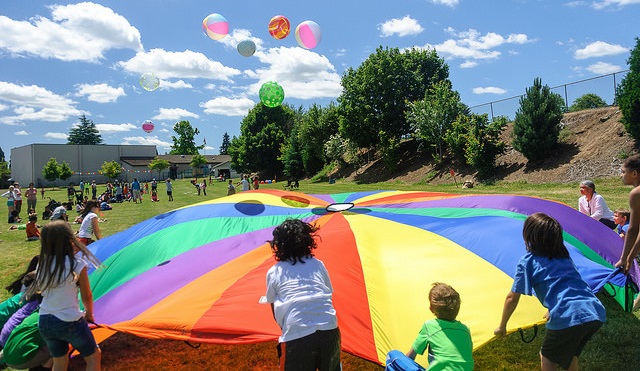
[Feature photo (above) by woodleywonderworks. (CC BY 2.0 via Flickr)]

roadmap1

A frequently-asked question on homeschooling forums is, “Are my children working at grade level? What do they need to know?”

The Council of the Great City Schools has published a handy 6-page pdf summary of first grade math concepts, with suggestions for how parents can support their children’s learning:

Whether you are a radical unschooler or passionately devoted to your textbook — or, like me, somewhere in between — you can help your children toward these grade-level goals by encouraging them to view mathematics as mental play. Don’t think of the standards as a “to do” list, but as your guide to an adventure of exploration. The key to learning math is to see it the mathematician’s way, as a game of playing with ideas.

The following are excerpts from the roadmap document, along with links to related posts from the past eight years of playing with math on this blog…

Continue reading Roadmap to Mathematics: 1st Grade