This game challenges students to plan ahead and think strategically.
Many parents remember struggling to learn math. We hope to provide a better experience for our children. And one of the best ways for children to enjoy learning is through hands-on play.
So what are you waiting for? Let’s play some math!
This game lays a great foundation for your child’s understanding of multiplication and fractions.
Many parents remember struggling to learn math. We hope to provide a better experience for our children. And one of the best ways for children to enjoy learning is through hands-on play.
So what are you waiting for? Let’s play some math!
Concentration with Math Model Cards
Math Concepts: multiplication or fraction models, visual/spatial memory.
Welcome to the 184th edition of the Playful Math Education Blog Carnival — a smorgasbord of delectable tidbits of mathy fun. It’s like a free online magazine devoted to learning, teaching, and playing around with math from preschool to high school.
With all the links, a blog carnival can feel overwhelming. Bookmark this article, so you can take your time reading the posts.
“Living math” means bringing our children face-to-face with the big ideas of mathematics to help them develop their reasoning skills. When the ideas of math come to life for our children, their minds delight in seeing how numbers and shapes connect to each other and exploring these relationships.
Scattered between the playful math links below, you’ll find quotations from my new book Charlotte Mason’s Living Math, along with several paintings of children playing and learning which I considered for the book but ran out of room.
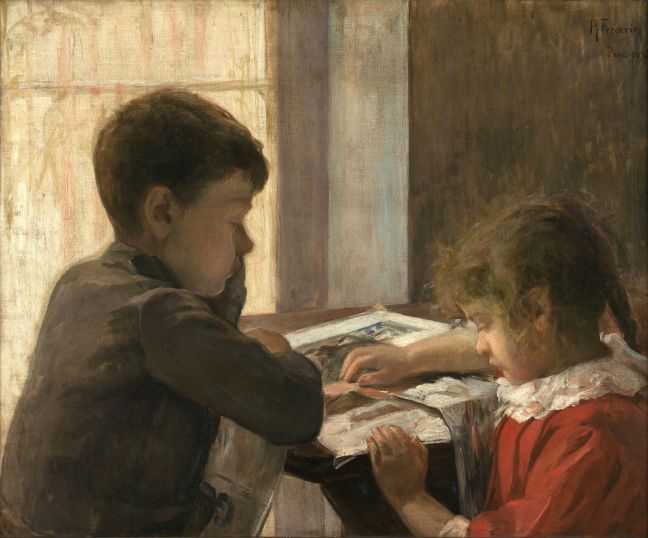
“The lesson” by Rafael Frederico, 1895.
By tradition, we start the carnival with a puzzle/activity in honor of our 184th edition. But if you’d rather jump straight to our featured blog posts, click here to see the Table of Contents.
This game helps preschool children develop counting and number sense.
Many parents remember struggling to learn math. We hope to provide a better experience for our children. And one of the best ways for children to enjoy learning is through hands-on play.
So what are you waiting for? Let’s play some math!
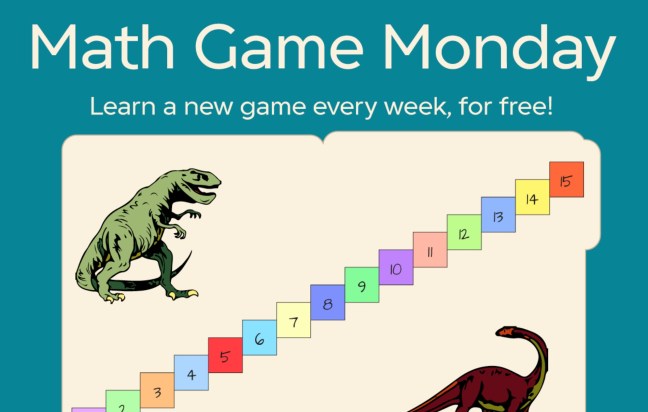
Dinosaur Race
Math Concepts: number symbols, counting beyond ten, number line.
Players: any number.
Equipment: subitizing cards, number line racetrack, small plastic dinosaur or other toy for each player.
This game encourages players to reason about the relationships between length dimensions and volume in a 3-D shape.
Many parents remember struggling to learn math. We hope to provide a better experience for our children. And one of the best ways for children to enjoy learning is through hands-on play.
So what are you waiting for? Let’s play some math!
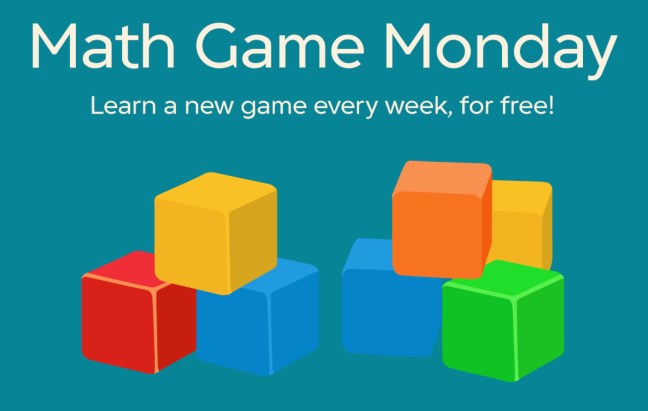
Prism Power
Math Concepts: rectangular volume, cubic units.
Players: two or more.
Equipment: printed gameboard or plain paper, pencils or markers, one six-sided die, 40–50 cubic blocks per player.
This simple strategy game challenges players to think ahead and visualize what their opponent might do.
Many parents remember struggling to learn math. We hope to provide a better experience for our children. And one of the best ways for children to enjoy learning is through hands-on play.
So what are you waiting for? Let’s play some math!
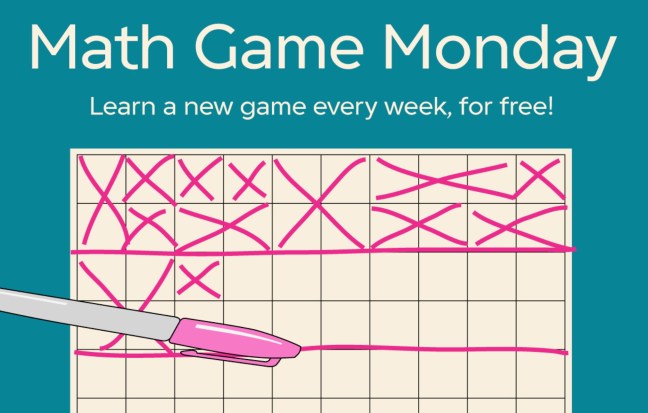
Square Nim
Math Concepts: logic and strategy.
Players: only two.
Equipment: printed blank hundred chart or draw a 10×10 grid, pencil or pen.
This game blends strategy and factoring practice, challenging players to think several steps ahead.
Many parents remember struggling to learn math. We hope to provide a better experience for our children. And one of the best ways for children to enjoy learning is through hands-on play.
So what are you waiting for? Let’s play some math!
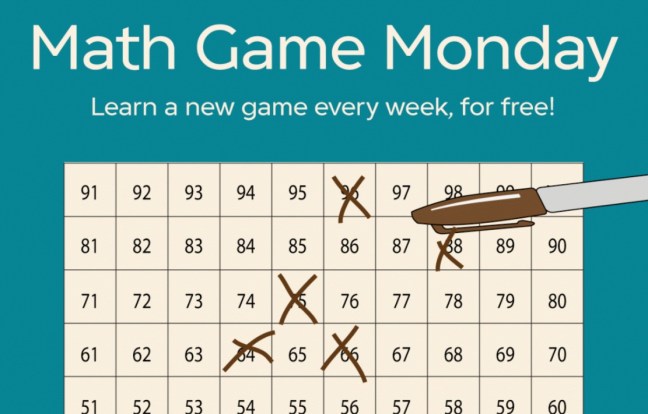
Factors and Multiples
Math Concepts: multiplication, division, factors and multiples.
Players: two to four.
Equipment: printed hundred chart, pencils or markers. Calculator optional.
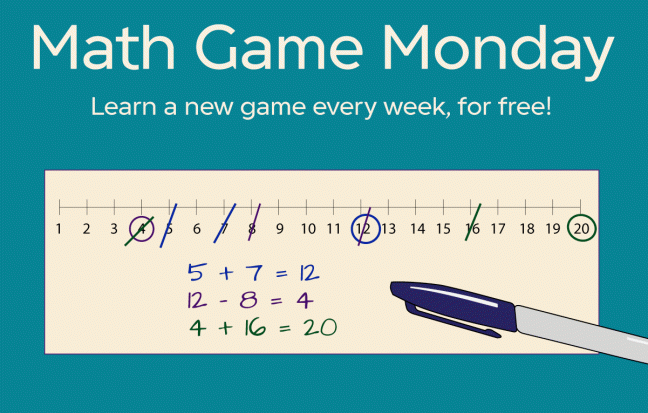
This game features addition and subtraction on a number line, along with strategic thinking.
Many parents remember struggling to learn math. We hope to provide a better experience for our children. And one of the best ways for children to enjoy learning is through hands-on play.
So what are you waiting for? Let’s play some math!
Strike It Out
Math Concepts: addition, subtraction, thinking ahead.
 Denise Gaskins' Let's Play Math