Vi Hart repents with an update to her last video: “Take that, mathematics!”
Happy Birthday, Einstein (Part 4)
Albert Einstein’s birthday was a couple of weeks ago, but today we have a belated celebration. MinutePhysics has finally finished its series on Einstein’s “wonder year” discoveries of 1905. In the last video, we began learning about the Special Theory of Relativity. This time, we find out how that theory leads to the most famous equation in the world…
0.999… = 1 via Vi Hart
And For Balance
Mind Blown Yet?
Happy Birthday, Einstein (Part 3)
In 1905, when he was 26 years old, Albert Einstein rocked the scientific world with a series of papers that changed our understanding of the nature of the universe. At MinutePhysics, the celebration continues:
More Einstein Videos
Do the Digits of Pi Encode Shakespeare’s Plays?
Happy Pi Day, from Vi Hart:
Happy Birthday, Einstein (Part 2)
Today would be Albert Einstein’s 133rd birthday. At MinutePhysics, the celebration continues:
More Einstein Videos
Happy Birthday, Einstein!
March 14th is Pi Day, and it’s also Albert Einstein’s birthday. In honor of Einstein, MinutePhysics is posting a series of videos on his “wonder year” of 1905, when he published several papers that eventually earned him the Nobel Prize.
More Einstein Videos
What I’m Reading: Fermat’s Enigma
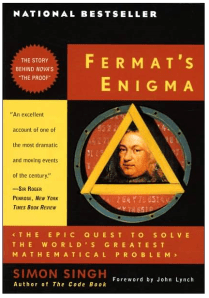
Homeschooling is much more than just doing school at home — it’s a lifelong lifestyle of learning. And thanks to the modern miracle of inter-library loan, even those of us who live in the middle of nowhere can get just about any book sent directly to our tiny home-town libraries.
As I mentioned in Math Teachers at Play 46, I’m trying to add more living books about math to our homeschool schedule, including my own self-education reading. So, a copy of Fermat’s Enigma: The Epic Quest to Solve the World’s Greatest Mathematical Problem finally showed up at my library, and I am thoroughly enjoying it.
Leap Years and the Number 29
Astronomer Dr Meghan Gray explains how messed up our calendar is. The mis-match between the length of a day and the time it takes the earth to travel around the sun makes a leap year necessary. From Numberphile.
Fibonacci Numbers and Plants
Have you ever wondered why so many plants grow in Fibonacci Numbers? Vi Hart offers a great explanation (with hands-on activities) in these three videos — and she introduces a new species called the slugcat, which my daughter thinks is adorable.
 Denise Gaskins' Let's Play Math