FAQ: The Necessity of Math Facts

Ah, math facts — the topic that just won’t stop giving grief to students and anxiety to their parents. So it happened that I got another question, but this one leaned in a more philosophical direction…

“I enjoyed your podcast interview on Cultivating Math Curiosity and Reasoning in Kids. I love the idea that we don’t have to make our children memorize everything in math. We can give them freedom to make mental connections for themselves.

    “But on the other hand, we don’t have unlimited time for them to figure things out on their own, do we? What about children who can’t make these connections for themselves?

      “For example, what about the math facts? If my kids aren’t picking them up, don’t they just have to memorize them?”

      Continue reading FAQ: The Necessity of Math Facts

      FAQ: Memorizing the Math Facts

      It came up again this week, one of the most frequently asked questions about homeschooling math:

      “I believe it’s important for children to memorize the math facts, but my kids are struggling with mental math. How can I help them master these important number relationships?”

      We all want our children to own the math facts, those basic relationships between small numbers that form the foundation of all arithmetic.

      But I don’t think emphasizing memorization will develop the sort of fluency your children need.

      The human brain remembers what it thinks about, so we want children using their brains and thinking as deeply as possible about number relationships from as many different perspectives as we can get, noticing patterns, finding connections, making sense of the math.

      Continue reading FAQ: Memorizing the Math Facts

      Playful Math Carnival 169 via Math Hombre

      If you’re into math education — or just curious about how learning math could possibly be fun — you’ll definitely want to check out the latest edition of the Playful Math Carnival.

      It’s a collection of awesome blog posts curated by John Golden and published on the Math Hombre website:

      The whole point of the carnival is to show that math doesn’t have to be tedious or repetitive. Through a bunch of fun and engaging posts, we celebrate math that’s playful, creative, and totally relevant to everyday life.

      Because what could be more relevant that having fun while we learn?

      In this edition, you’ll find everything from math puzzles and games to humor and much more — even a spooky monster escape room!

      So if you want to mix up your math teaching and make it more enjoyable for your students (and for you!), definitely check out the Playful Math Carnival. Happy reading!

      Go Visit the Carnival

      Wanted: Hosts for 2024

      The Playful Math Carnival is a joint effort. We depend on our volunteer hosts to collect blog posts and write the carnival each month.

      Putting together a blog carnival can be a lot of work, but it’s a great opportunity to share the work of bloggers you admire and to discover new math-friends online. I love that part of being a host!

      Classroom teachers, homeschoolers, college professors, unschoolers, or anyone who likes to play around with math — if you would like to take a turn hosting the carnival, please speak up.

      Check the details on the carnival’s home page, and then leave a comment here or email me directly to let me know which month fits your schedule.

      Playful Math Carnival Instructions

       
      * * *

      “Playful Math Carnival 169 via Math Hombre” copyright © 2023 by Denise Gaskins. Image at the top of the post copyright © Devon Rogers on Unsplash.

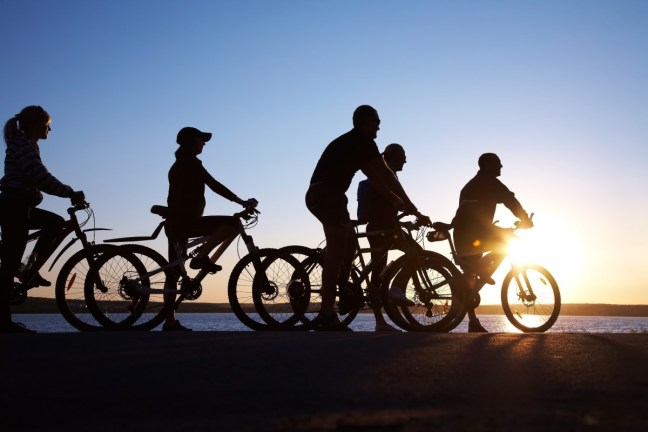
      Can You Solve It? The Cyclists’ Feast

      English mathematician Henry Ernest Dudeney wrote logic puzzles and mathematical games for several newspapers and magazines, later collected into books. This poem is from Amusements in Mathematics, published by Thomas Nelson and Sons, 1917.

      The numbers are simple enough that younger students can solve it by the guess-and-check method. Older students or adults may want to set up a quadratic equation.

      Historical Note: In the British currency of the time, there were 12 pennies to a shilling and 20 shillings to a pound (which was also called a sovereign).

      The Cyclists’ Feast

      ’Twas last Bank Holiday, so I’ve been told,
      Some cyclists rode abroad in glorious weather.
      Resting at noon within a tavern old,
      They all agreed to have a feast together.

      “Put it all in one bill, mine host,” they said,
      “For everyone an equal share will pay.”
      The bill was promptly on the table laid,
      And four pounds was the reckoning that day.

      But, sad to state, when they prepared to square,
      ’Twas found that two had sneaked outside and fled.
      So, for two shillings more than his due share
      Each honest friend who had remained was bled.

      They settled later with those rogues, no doubt.
      How many were they when they first set out?

      Did You Solve It?

      One fun thing about math is that you really don’t need the answer book. You can always check the math for yourself: Does your answer make sense? Does it fit the story?

      Would you like to write a math poem puzzle of your own? I’d love to hear it!

       
      * * *

      For more ideas on writing math poetry, check out Math Makers: Write a Poem.

      This blog is reader-supported.

      If you’d like to help fund the blog on an on-going basis, then please join me on Patreon for mathy inspiration, tips, and an ever-growing archive of printable activities.

      If you liked this post, and want to show your one-time appreciation, the place to do that is PayPal: paypal.me/DeniseGaskinsMath. If you go that route, please include your email address in the notes section, so I can say thank you.

      Which I am going to say right now. Thank you!

      “Can You Solve It? The Cyclists’ Feast” copyright © 2023 by Denise Gaskins. Image at the top of the post copyright © yanlev / Depositphotos.

      Homeschooling Math: Start Where You Are

      There’s a well-known quote attributed to tennis champion Arthur Ashe (and to President Theodore Roosevelt, and probably others):

      “Start where you are, use what you have, do what you can.”

      How does this apply to learning math?

      Many homeschoolers fear that their students have fallen behind grade level in math and worry about how to catch up.

      We have an educational myth that math is a steady progression of topics arranged by ever-increasing complexity with regular signposts like mile markers that identify what students must learn at each stage along the way.

      For example, first-grade students can add one-or two-digit numbers, but three-digit numbers are beyond them. Second-grade students can add three- or four-digit numbers, but never wander off into millions and billions. And so forth.

      That is one valid path to learning math.

      Continue reading Homeschooling Math: Start Where You Are

      5 Tips for Better Homeschool Math

      Many homeschoolers hate or even fear math. It’s the topic most likely to bring our children to tears.

      In my last several posts, I’ve indulged my theoretical muse letting my thoughts wander over topics that may seem esoteric to parents in the midst of a daily struggle to help their child learn.

      So today, let’s put away the theory and get practical:

      • What can you do today to make learning stick?
      • How can you transform tears of frustration into the satisfaction of “Aha! I get it”?

      You don’t have to invest in a new curriculum to revolutionize your child’s experience of math. Just change how you use the math program you have.

      Here are five tips that will help you and your child work together to build mathematical understanding.

      Continue reading 5 Tips for Better Homeschool Math