Blog

Playful Math Education Carnival 118 at Math Mama Writes

Check out the latest carnival of playful math for all ages:
Each monthly carnival brings you a great new collection of puzzles, math conversations, crafts, teaching tips, and all sorts of mathy fun. It’s like a free online magazine of mathematical adventures. What fun!

Sue VanHattum put together this carnival of evergreen links — helpful and inspiring no matter when you read them.

This carnival offers summer math resources, a four-4s puzzle, set theory for kids, magic math books, fresh insight into the Math War game, counting challenges, and the Fundamental Theorem of calculus. And more!

Click Here to Read the Carnival Blog

Want to Join in the Fun?

Do you have a favorite blog post about math activities, games, lessons, or hands-on fun? The Playful Math Blog Carnival would love to feature your article!

We welcome math topics from preschool through the first year of calculus. Old posts are welcome, as long as they haven’t been published in past editions of this carnival.

To submit a blog article for consideration, fill out this form:

Yes! Please Share My Post

Have you noticed a new math blogger on your block that you’d like to introduce to the rest of us? Feel free to submit another blogger’s post in addition to your own. Beginning bloggers are often shy about sharing, but like all of us, they love finding new readers.

FAQ: Forgetting What They Learned

“As we go through each lesson, it seems like my daughter has a good handle on the concepts, but when we get to the test she forgets everything. When I ask her about it, she shrugs and says, ‘I don’t know.’ What do you do when your child completely loses what she has learned?”

Forgetting is the human brain’s natural defense mechanism. It keeps us from being overwhelmed by the abundance of sensory data that bombards us each moment of every day.

Our children’s minds will never work like a computer that can store a program and recall it flawlessly months later.

Sometimes, for my children, a gentle reminder is enough to drag the forgotten concept back out of the dust-bunnies of memory.

Other times, I find that they answer “I don’t know” out of habit, because it’s easier than thinking about the question. And because they’d prefer to be doing something else.

Continue reading FAQ: Forgetting What They Learned

Playful Math Education Carnival 117 at Math Hombre

Check out the new playful math blog carnival at Math Hombre blog. John put together a great collection of 30+ math games, activities, and teaching tips:

The carnival features hands-on papercrafts, open-ended projects, challenging puzzles, inspiring tips, and thoughtful essays. And comics, too.

Click here to go read the carnival blog

And if you’re a blogger, be sure to submit your blog post for next month’s carnival!

Do You Want More Ways to Play with Math?

Past carnivals are still full of mathy treasure. See them all on Pinterest:

Playful Math Education Carnival 116 at Following Learning

Check out the latest carnival of playful math for all ages:

Each monthly carnival brings you a great new collection of puzzles, math conversations, crafts, teaching tips, and all sorts of mathy fun. It’s like a free online magazine of mathematical adventures. What fun!

Simon Gregg put this carnival together a few weeks ago, and I should have posted a link before now, but it’s been a hard few months here, and too many things got shoved aside. Still the posts are evergreen — helpful and inspiring no matter when you read them.

This carnival offers summer camp activities, dancing geometric patterns, new books to enjoy, pattern blocks, the math of peg solitaire, Q-bitz fraction talks, and a taste of some great math conversations on Twitter. And plenty more!

Click Here to Read the Carnival Blog

Want to Join in the Fun?

Do you have a favorite blog post about math activities, games, lessons, or hands-on fun? The Playful Math Blog Carnival would love to feature your article!

We welcome math topics from preschool through the first year of calculus. Old posts are welcome, as long as they haven’t been published in past editions of this carnival.

To submit a blog article for consideration, fill out this form:

Yes! Please Share My Post

Don’t procrastinate: The deadline for entries is this Friday, May 25. The carnival will be posted next week at Math Hombre blog.

Have you noticed a new math blogger on your block that you’d like to introduce to the rest of us? Feel free to submit another blogger’s post in addition to your own. Beginning bloggers are often shy about sharing, but like all of us, they love finding new readers.
Math Debate: Adding Fractions

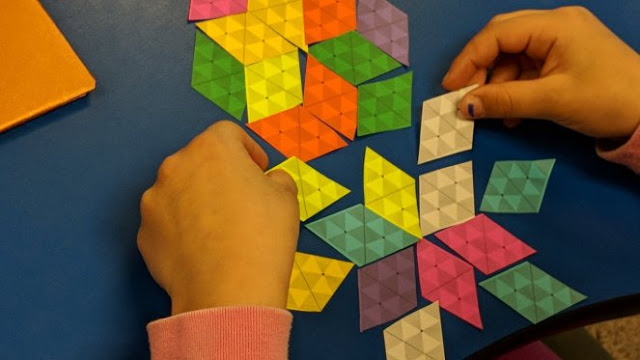
Cover image by Thor/ geishaboy500 via Flickr (CC BY 2.0)

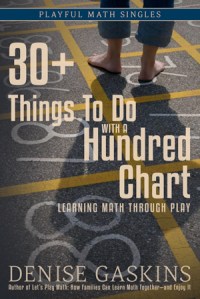
I’ve been working on my next Playful Math Singles book, based on the popular Things to Do with a Hundred Chart post.

My hundred chart list began many years ago as seven ideas for playing with numbers. Over the years, it grew to its current 30+ activities.

Now, in preparing the new book, my list has become a monster. I’ve collected almost 70 ways to play with numbers, shapes, and logic from preschool to middle school. Just yesterday I added activities for fraction and decimal multiplication, and also tips for naming complex fractions. Wow!

Gonna have to edit that cover file…

In the “Advanced Patterns” chapter, I have a section on math debates. The point of a math debate isn’t that one answer is “right” while the other is “wrong.” You can choose either side of the question — the important thing is how well you support your argument.

Here’s activity #69 in the current book draft.

Have a Math Debate: Adding Fractions

When you add fractions, you face a problem that most people never consider. Namely, you have to decide exactly what you are talking about.

For instance, what is one-tenth plus one-tenth?

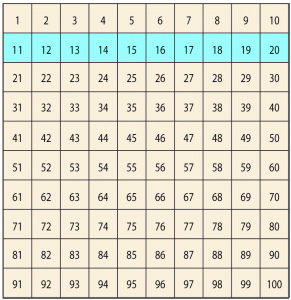
1/10 of 100

Well, you might say that:

\frac{1}{10}  of one hundred chart
+ \frac{1}{10}  of the same chart
= \frac{2}{10}  of that hundred chart

But, you might also say that:

\frac{1}{10}  of one chart
+ \frac{1}{10}  of another chart
= \frac{2}{20}  of the pair of charts

That is, you started off counting on two independent charts. But when you put them together, you ended up with a double chart. Two hundred squares in all. Which made each row in the final set worth \frac{1}{20}  of the whole pair of charts.

So what happens if you see this question on a math test:

\frac{1}{10}  + \frac{1}{10}  = ?

If you write the answer “\frac{2}{20}”, you know the teacher will mark it wrong.

Is that fair? Why, or why not?

CREDITS: Feature photo (above) by Thor/geishaboy500 via Flickr (CC BY 2.0). “One is one … or is it?” video by Christopher Danielson via TED-Ed. This math debate was suggested by Marilyn Burns’s blog post Can 1/3 + 1/3 = 2/6? It seemed so!

Everyone Deserves to Enjoy Math

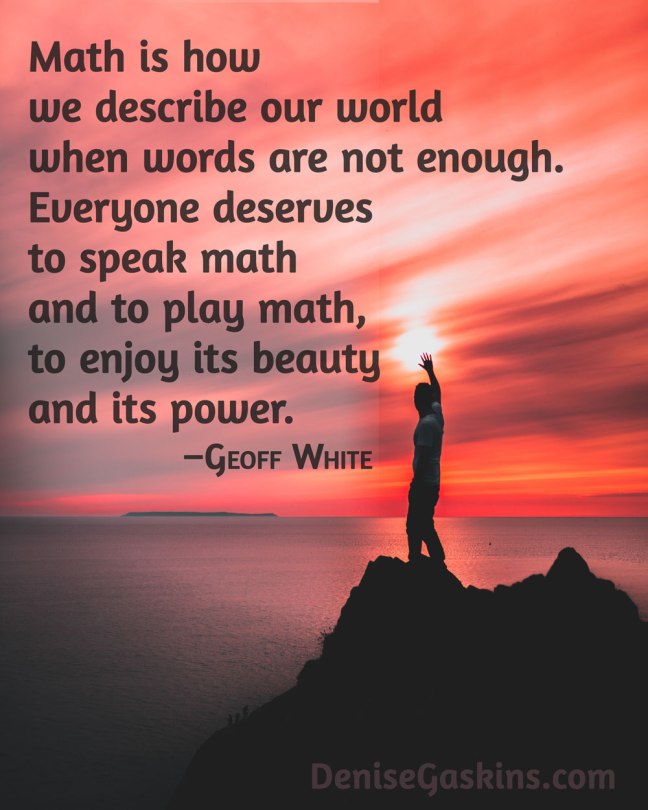
“In 2018, I want to change the world.

I want to make it possible for more children to claim math as their favorite subject.

Math is how we describe our world when words are not enough. Everyone deserves to speak math and to play math, to enjoy its beauty and its power.”

— Geoff White
The Grade 10 Math Crunch, or Hitting the Wall at Grade 10

CREDITS: Background photo by Bobby Johnson on Unsplash.

Quotable: Keith Devlin on Mathematical Thinking

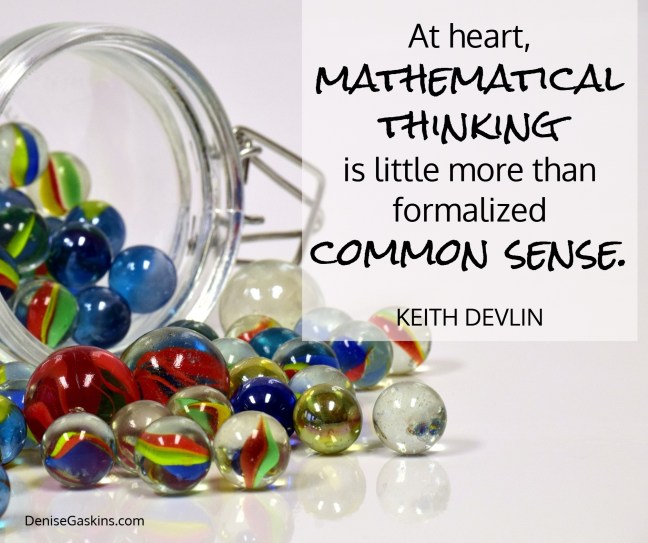
“At heart, mathematical thinking is little more than formalized common sense. It always has been. Which means it is something we can all do.”

— Keith Devlin
How Today’s Pros Solve Math Problems

If you have some time to spend pondering big ideas, dig into Devlin’s entire series of posts about what real-world mathematics looks like and the implications for math education:

And a related series on K–12 school math:

“Make no mistake about it, acquiring that modern-day mathematical skillset definitely requires spending time carrying out the various procedures. Your child or children will still spend time ‘doing math’ in the way you remember.

“But whereas the focus used to be on mastering the skills with the goal of carrying out the procedures accurately — something that, thanks to the learning capacity of the human brain, could be achieved without deep, conceptual understanding — the focus today is on that conceptual understanding.

“That is a very different goal, and quite frankly a much more difficult one to reach.”

— Keith Devlin
All The Mathematical Methods I Learned in My University Math Degree Became Obsolete in My Lifetime

Playful Math Education Carnival 115—Women of Mathematics

Welcome to the 115th edition of the Playful Math Education Blog Carnival — a smorgasbord of links to bloggers all around the internet who have great ideas for learning, teaching, and playing around with math from preschool to pre-college.
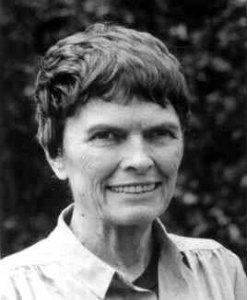
In honor of Women’s History Month, this carnival features quotes from fifteen women mathematicians.

If you would like to jump straight to our featured blog posts, click here to see the Table of Contents.

Let the mathematical fun begin!

The Women of Mathematics

They came from many countries and followed a variety of interests.

They conquered new topics in mathematics and expanded the world’s understanding of old ones.

They wrestled with theorems, raised children, published articles, won awards, faced discrimination, led professional organizations, and kept going through both success and failure.

Some gained international renown, but most enjoyed quiet lives.

They studied, learned, and lived (and some still live) as most of us do — loving their families and friends, joking with colleagues, hoping to influence students.

I think you’ll find their words inspiring.

“What I really am is a mathematician. Rather than being remembered as the first woman this or that, I would prefer to be remembered, as a mathematician should, simply for the theorems I have proved and the problems I have solved.”
Julia Robinson (1919–1985)


“All in all, I have found great delight and pleasure in the pursuit of mathematics. Along the way I have made great friends and worked with a number of creative and interesting people. I have been saved from boredom, dourness, and self-absorption. One cannot ask for more.”
Karen Uhlenbeck (b. 1942)

Continue reading Playful Math Education Carnival 115—Women of Mathematics

Funville Adventures: Blake’s Story

Today we have a guest post — an exclusive tale by Sasha Fradkin and Allison Bishop, authors of the new math storybook Funville Adventures. Enjoy!

Funville Adventures is a math-inspired fantasy that introduces children to the concept of functions, which are personified as magical beings with powers.

Each power corresponds to a transformation such as doubling in size, rotating, copying, or changing color. Some Funvillians have siblings with opposite powers that can reverse the effects and return an object to its original state, but other powers cannot be reversed.

In this way, kids are introduced to the mathematical concepts of invertible and non-invertible functions, domains, ranges, and even functionals, all without mathematical terminology.

We know about Funville because two siblings, Emmy and Leo, were magically transported there after they went down an abandoned slide.

When they came back, Emmy and Leo shared their adventures with their friends and also brought back the following manuscript written by their new friend Blake.

Continue reading Funville Adventures: Blake’s Story

Cultivate Mathematical Curiosity

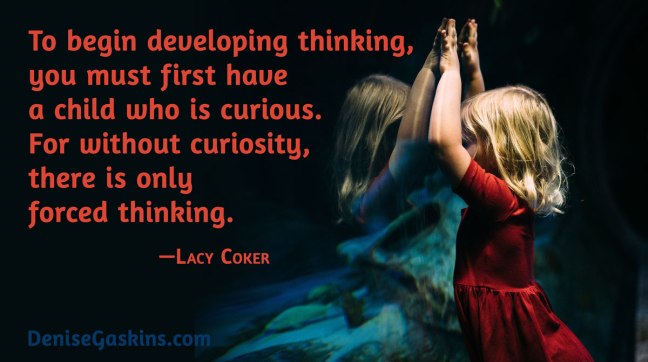
“Cultivating thinking skills is the main reason for teaching math. It is the mind’s perfect playground for shaping up.

To begin developing thinking, you must first have a child who is curious. For without curiosity, there is only forced thinking.

The problem with traditional math is it jumps to the punchline.

Absolutely no mystery or suspense is developed in traditional math books. Why? Apparently, someone thought math was without mystery. That math is a definitive subject of rules and algorithms that all have been discovered.

We must persuade children that math is a worthy pursuit through interesting stories, examining quirky math properties, and asking good questions.”

— Lacy Coker
5 Tips to Cultivate Math Curiosity

The Mind’s Perfect Playground

My K-2nd-grade homeschool co-op math class will be following many of the tips in Lacy’s article.

Our topic is “Math Storytime,” so we’ll be starting with picture books, exploring the ideas they bring up, and finding things to notice and wonder about.

I’m looking forward to it.

But picture books aren’t just for little kids. They can be great discussion-starters at any age. Have you enjoyed math books with your students?

I’d love to hear your suggestions!

CREDITS: Background photo courtesy of Bekah Russom on Unsplash.