From Numberphile: “Sinuosity is a measure of how ‘bendy’ a river is. It is the length of the river divided by the direct route. Featuring Dr. James Grime.”
Update
After posting this video, Dr. Grimes and Lawrence Roberts began collecting and analyzing data about real-world rivers. It turns out the pi theory of sinuosity is too simple. Read about their results:
From Numberphile: “How accurately can we calculate Pi using hundreds of REAL pies? This video features Matt Parker, who believes this is the world’s most accurate pie-based Pi calculation.”
Pi Day is coming soon. Maybe you’d like to try a pi project with your family? Check out my Pi Day Roundup of links.
From Numberphile: “Some stuff about Pi, the ‘celebrity number’. This video features maths-loving author Alex Bellos and Professor Roger Bowley from the University of Nottingham.”
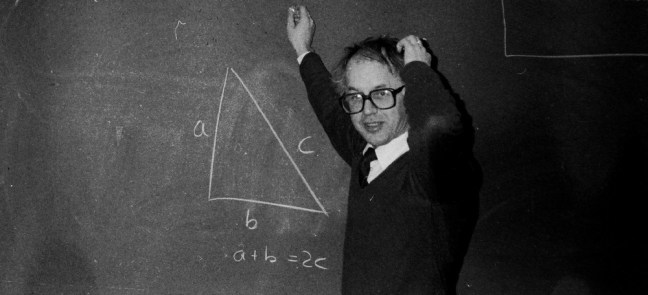
Did you notice the error? It was supposed to be “a”…
The new Math Teachers at Play math education blog carnival is up for your browsing pleasure. Each month, we feature activities, lessons, and games about math topics from preschool through high school. Check it out!
Hello, and welcome to the 83rd Edition of the monthly blog carnival “Math(s) Teachers at Play”.
It is traditional to start with some number facts around the edition number, 83 is pretty cool, as it happens. Its prime, which sets it apart from all those lesser compound numbers. Not only that, its a safe prime, a Chen prime and even a Sophie Germain prime, you can’t get much cool than that can you? Well yes, yes you can, because 83 is also an Eisenstein prime!!!!
Those of you who work in base 36 will know it for its famous appearance in Shakespeare’s Hamlet: “83, or not 83, that is the question…..”
Teachers and other math nerds are preparing to celebrate an epic Pi Day on 3/14/15. Unfortunately, the activities I see on teacher blogs and Pinterest don’t include much actual math. They stress the pi/pie wordplay or memorizing the digits.
With a bit of digging, however, I found a couple of projects that let you sink your metaphorical teeth into real mathematical meat. So I put those in the March “Let’s Play Math” newsletter, which went out this morning to everyone who signed up for Tabletop Academy Press math updates.
If you’re not on the mailing list, you can still join in the fun:
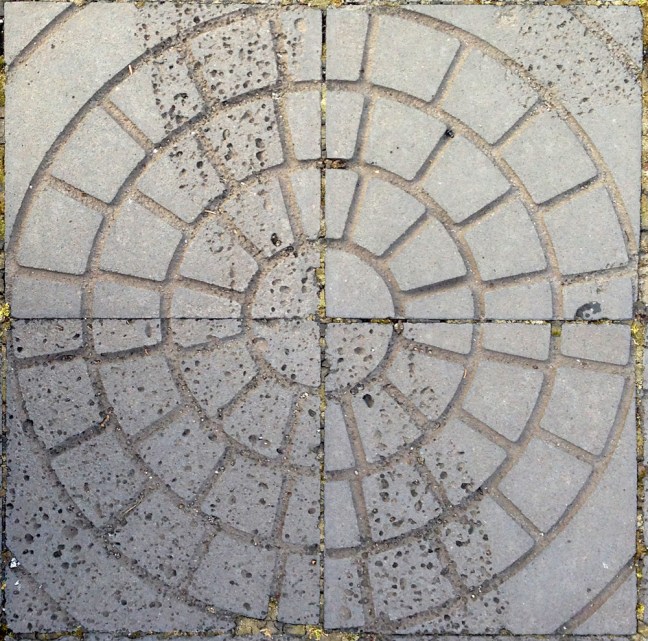
In math, symmetry is beautiful, and the most completely symmetric object in the (Euclidean) mathematical plane is the circle. No matter how you turn it, expand it, or shrink it, the circle remains essentially the same. Every circle you can imagine is the exact image of every other circle there is.
This is not true of other shapes. A rectangle may be short or tall. An ellipse may be fat or slim. A triangle may be squat, or stand up right, or lean off at a drunken angle. But circles are all the same, except for magnification. A circle three inches across is a perfect, point-for-point copy of a circle three miles across, or three millimeters…
Note to Readers: Please help me improve this list! Add your suggestions or additions in the comment section below…
What does it mean to think like a mathematician? From the very beginning of my education, I can do these things to some degree. And I am always learning to do them better.
(1) I can make sense of problems, and I never give up.
I always think about what a math problem means. I consider how the numbers are related, and I imagine what the answer might look like.
I remember similar problems I’ve done before. Or I make up similar problems with smaller numbers or simpler shapes, to see how they work.
I often use a drawing or sketch to help me think about a problem. Sometimes I even build a physical model of the situation.
I like to compare my approach to the problem with other people and hear how they did it differently.