Blog

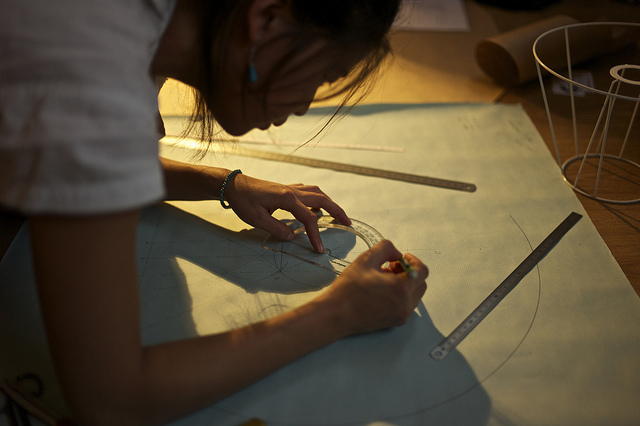
Reblog: Patty Paper Trisection

[Feature photo above by Michael Cory via Flickr (CC BY 2.0).]

trisection2

I hear so many people say they hated geometry because of the proofs, but I’ve always loved a challenging puzzle. I found the following puzzle at a blog carnival during my first year of blogging. Don’t worry about the arbitrary two-column format you learned in high school — just think about what is true and how you know it must be so.

I hope you enjoy this “Throw-back Thursday” blast from the Let’s Play Math! blog archives:


trisection

One of the great unsolved problems of antiquity was to trisect any angle using only the basic tools of Euclidean geometry: an unmarked straight-edge and a compass. Like the alchemist’s dream of turning lead into gold, this proved to be an impossible task. If you want to trisect an angle, you have to “cheat.” A straight-edge and compass can’t do it. You have to use some sort of crutch, just as an alchemist would have to use a particle accelerator or something.

One “cheat” that works is to fold your paper. I will show you how it works, and your job is to show why …

[Click here to go read Puzzle: Patty Paper Trisection.]

Reblog: Solving Complex Story Problems

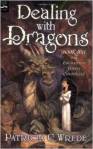
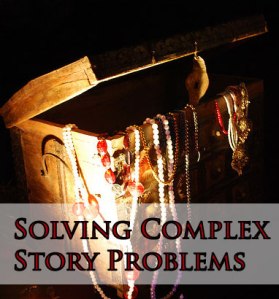
[Dragon photo above by monkeywingand treasure chest by Tom Praison via flickr.]

Dealing with Dragons

Over the years, some of my favorite blog posts have been the Word Problems from Literature, where I make up a story problem set in the world of one of our family’s favorite books and then show how to solve it with bar model diagrams. The following was my first bar diagram post, and I spent an inordinate amount of time trying to decide whether “one fourth was” or “one fourth were.” I’m still not sure I chose right.

I hope you enjoy this “Throw-back Thursday” blast from the Let’s Play Math! blog archives:


Solving-Complex-Story-Problems

Cimorene spent an afternoon cleaning and organizing the dragon’s treasure. One fourth of the items she sorted was jewelry. 60% of the remainder were potions, and the rest were magic swords. If there were 48 magic swords, how many pieces of treasure did she sort in all?

[Problem set in the world of Patricia Wrede’s Enchanted Forest Chronicles. Modified from a story problem in Singapore Primary Math 6B. Think about how you would solve it before reading further.]

How can we teach our students to solve complex, multi-step story problems? Depending on how one counts, the above problem would take four or five steps to solve, and it is relatively easy for a Singapore math word problem. One might approach it with algebra, writing an equation like:

x - \left[\frac{1}{4}x + 0.6\left(\frac{3}{4} \right)x  \right]  = 48

… or something of that sort. But this problem is for students who have not learned algebra yet. Instead, Singapore math teaches students to draw pictures (called bar models or math models or bar diagrams) that make the solution appear almost like magic. It is a trick well worth learning, no matter what math program you use …

[Click here to go read Solving Complex Story Problems.]

Update: My New Book

You can help prevent math anxiety by giving your children the mental tools they need to conquer the toughest story problems.

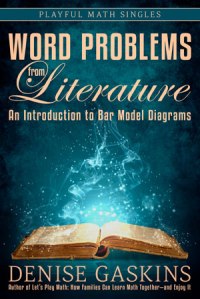
Read Cimorene’s story and many more in Word Problems from Literature: An Introduction to Bar Model Diagrams—now available at all your favorite online bookstores!

And there’s a Student Workbook, too.

Math Teachers at Play #74 via Triumphant Learning

74 by Stephan Mosel
photo by Stephan Mosel (CC BY 2.0)

The new Math Teachers at Play math education blog carnival is up for your browsing pleasure. Each month, we feature activities, lessons, and games about math topics from preschool through high school. Check it out!

Here’s a peek at a few of the entries:

Origami
Learn how to make Origami Stars, Tessellation Stars, and Chaotic Stars at Math Munch. I think once your students or children see this, you will find Transforming Ninja Stars littering your house and classroom!

Pi
Here’s a fun activity to explore other ways to get the number Pi on the calculator from William Wu at Singapore Maths Tuition.

Math Games
Math Hombre shares a coordinate grid game that also calculates area of rectangles. And all you need is some grid paper and dice.

…And much more!

Click here to go read the entire blog carnival.

Would You Like to Host the Carnival?

Hosting the blog carnival can be a lot of work, but it’s fun to “meet” new bloggers through their submissions. And there’s a side-benefit: The carnival usually brings a nice little spike in traffic to your blog. If you think you’d like to join in the fun, read the instructions on our Math Teachers at Play page. Then leave a comment or email me to let me know which month you’d like to take.

More Than One Way To Find the Center of a Circle

[Feature photo above by hom26 via Flickr.]

My free time lately has gone to local events and to book editing. I hope to put up a series of blog posts sometime soon, based on the Homeschool Math FAQs chapter I’m adding to the paperback version of Let’s Play Math. [And of course, I’ll update the ebook whenever I finally publish the paperback, so those of you who already bought a copy should be able to get the new version without paying extra.]

But in the meantime, as I was browsing my blog archives for an interesting “Throw-Back Thursday” post, I stumbled across this old geometry puzzle from Dave Marain over at MathNotations blog:

Is it possible that AB is a chord but NOT a diameter? That is, could circle ABC have a center that is NOT point O?

Jake shows Jack a piece of wood he cut out in the machine shop: a circular arc bounded by a chord. Jake claimed that the arc was not a semicircle. In fact, he claimed it was shorter than a semicircle, i.e., segment AB was not a diameter and arc ACB was less than 180 degrees.

Jack knew this was impossible and argued: “Don’t you see, Jake, that O must be the center of the circle and that OA, OB and OC are radii.”

Jake wasn’t buying this, since he had measured everything precisely. He argued that just because they could be radii didn’t prove they had to be.

Which boy do you agree with?

  • Pick one side of the debate, and try to find at least three different ways to prove your point.

If you have a student in geometry or higher math, print out the original post (but not the comments — it’s no fun when someone gives you the answer!) and see what he or she can do with it.

Dave offers many other puzzles to challenge your math students. While you are at his blog, do take some time to browse past articles.

Math Teachers at Play #73 via Singapore Maths Tuition

Maze photo by woodleywonderworks (CC BY 2.0)
woodleywonderworks (CC BY 2.0)

The monthly math education blog carnival Math Teachers at Play features games, lessons, puzzles, activities, and teaching tips from classroom teachers, homeschoolers, and self-educated learners around the Internet world. Check out the 15 posts of mathematical fun in April’s edition:

Here’s a peek at a few of the entries:

Check out the following awesome blogs!

Math Strategies
There is such an emphasis on learning math facts that our children do not spend enough time learning strategies that will help them solve math problems. Read about two types of strategies for solving math problems—working left to right and regrouping into what you know.
– Crystal Wagner

Nim Games
This is a game that is generally used to show how math can be involved in game play. I explain the rules of the game as well as the mathematical strategy involved. There is also a script where users can compete against the computer
– Aftermath

Day 85 – Related Rates
Two separate trucks carrying a very long wind turbine blade need to turn the corner. Describe how their speeds vary throughout the turn. The blog is dedicated to these types of discussion starters, at all levels.
– Curmudgeon

Click here to go read the entire blog carnival!

Would You Like to Host the Carnival?

Hosting the blog carnival can be a lot of work, but it’s fun to “meet” new bloggers through their submissions. And there’s a side-benefit: The carnival usually brings a nice little spike in traffic to your blog. If you think you’d like to join in the fun, read the instructions on our Math Teachers at Play page. Then leave a comment or email me to let me know which month you’d like to take.

Reblog: Putting Bill Gates in Proportion

[Feature photo above by Baluart.net.]

Seven years ago, one of my math club students was preparing for a speech contest. His mother emailed me to check some figures, which led to a couple of blog posts on solving proportion problems.

I hope you enjoy this “Throw-back Thursday” blast from the Let’s Play Math! blog archives:


Putting Bill Gates in Proportion

A friend gave me permission to turn our email discussion into an article…

Can you help us figure out how to figure out this problem? I think we have all the information we need, but I’m not sure:

The average household income in the United States is $60,000/year. And a man’s annual income is $56 billion. Is there a way to figure out what this man’s value of $1mil is, compared to the person who earns $60,000/year? In other words, I would like to say — $1,000,000 to us is like 10 cents to Bill Gates.

Let the Reader Beware

When I looked up Bill Gates at Wikipedia, I found out that $56 billion is his net worth, not his income. His salary is $966,667. Even assuming he has significant investment income, as he surely does, that is still a difference of several orders of magnitude.

But I didn’t research the details before answering my email — and besides, it is a lot more fun to play with the really big numbers. Therefore, the following discussion will assume my friend’s data are accurate…

[Click here to go read Putting Bill Gates in Proportion.]


Bill Gates Proportions II

Another look at the Bill Gates proportion… Even though I couldn’t find any data on his real income, I did discover that the median American family’s net worth was $93,100 in 2004 (most of that is home equity) and that the figure has gone up a bit since then. This gives me another chance to play around with proportions.

So I wrote a sample problem for my Advanced Math Monsters workshop at the APACHE homeschool conference:

The median American family has a net worth of about $100 thousand. Bill Gates has a net worth of $56 billion. If Average Jane Homeschooler spends $100 in the vendor hall, what would be the equivalent expense for Gates?

Continue reading Reblog: Putting Bill Gates in Proportion

Reblog: The Handshake Problem

[Feature photo above by Tobias Wolter (CC-BY-SA-3.0) via Wikimedia Commons.]

Seven years ago, our homeschool co-op held an end-of-semester assembly. Each class was supposed to demonstrate something they had learned. I threatened to hand out a ten question pop quiz on integer arithmetic, but instead my pre-algebra students voted to perform a skit.

I hope you enjoy this “Throw-back Thursday” blast from the Let’s Play Math! blog archives:


If seven people meet at a party, and each person shakes the hand of everyone else exactly once, how many handshakes are there in all?

In general, if n people meet and shake hands all around, how many handshakes will there be?

Cast

1-3 narrators
7 friends (non-speaking parts, adjust to fit your group)

Props

Each friend will need a sheet of paper with a number written on it big and bold enough to be read by the audience. The numbers needed are 0, 1, 2, 3, … up to one less than the number of friends. Each friend keeps his paper in a pocket until needed.

[Click here to go read Skit: The Handshake Problem.]

Reblog: In Honor of the Standardized Testing Season

TakingTest

[Feature photo above by Alberto G. Photo right by Renato Ganoza. Both (CC-BY-SA-2.0) via flickr.]

Quotations and comments about the perils of standardized testing, now part of my book Let’s Play Math.

I hope you enjoy this “Throw-back Thursday” blast from the Let’s Play Math! blog archives:


The school experience makes a tremendous difference in a child’s learning. Which of the following students would you rather be?

I continued to do arithmetic with my father, passing proudly through fractions to decimals. I eventually arrived at the point where so many cows ate so much grass, and tanks filled with water in so many hours. I found it quite enthralling.

— Agatha Christie
An Autobiography

…or…

“Can you do Addition?” the White Queen asked. “What’s one and one and one and one and one and one and one and one and one and one?”

“I don’t know,” said Alice. “I lost count.”

“She can’t do Addition,” the Red Queen interrupted. “Can you do Subtraction? Take nine from eight.”

“Nine from eight I can’t, you know,” Alice replied very readily: “but—”

“She can’t do Subtraction,” said the White Queen. “Can you do Division? Divide a loaf by a knife — what’s the answer to that?”

[Click here to go read In Honor of the Standardized Testing Season.]

Math Teachers at Play #72 via Christy’s Houseful of Chaos

mathteachersplay72

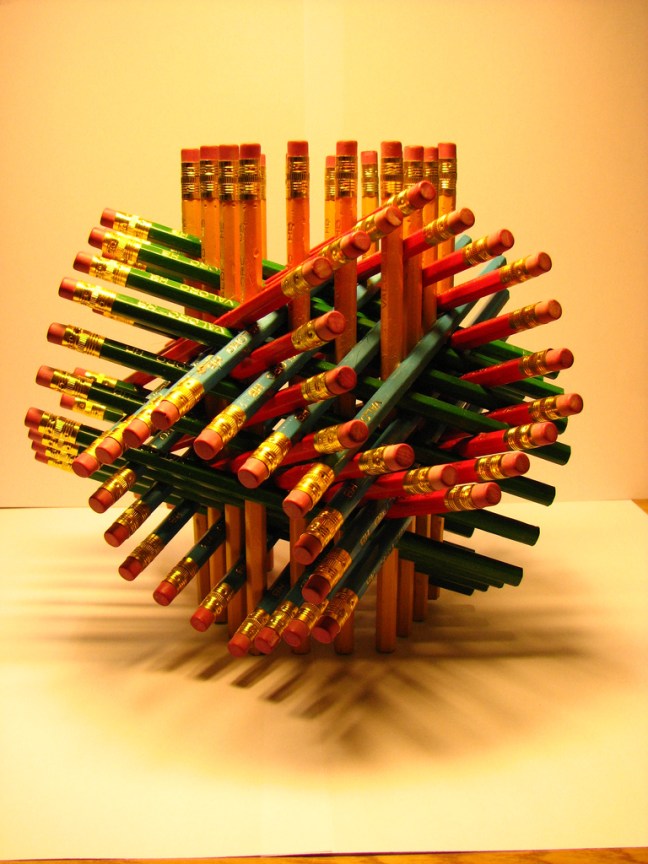
[Feature photo above is 72 Pencils by fdecomite via flickr.]

Math Teachers at Play is a traveling blog carnival. It moves around from month to month, and the March edition is now posted at Christy’s Houseful of Chaos. What a fun list of math posts to browse!

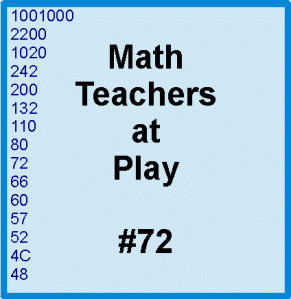
This is the 72nd Edition of the Math Teachers at Play (MTaP) blog carnival!

The number 72 is a Harshad number in number bases from binary up to but excluding base 13. Harshad numbers are numbers that are divisible by the sum of their numbers. They are base-dependant. In binary 72 is expressed 1001000. Add the digits together to get 2, one of the factors of 72. With a base of 5, 72 is expressed 242. With base 6 it is expressed 200. You can play around checking the bases of different numbers with an online calculator.

Now on to the math posts….

Click here to go read the whole carnival.

Natural Math Multiplication Course

NaturalMathMultiplication

This April, the creative people at Moebius Noodles are inviting parents, teachers, playgroup hosts, and math circle leaders to join an open online course about multiplication. My preschool-2nd grade homeschool math group is eager to start!

Each week there will be five activities to help kids learn multiplication by exploring patterns and structure, with adaptations for ages 2-12.

The course starts April 6 and runs for four weeks.

Preliminary Syllabus

Week 1: Introduction.
What is multiplication? Hidden dangers and precursors of math difficulties. From open play to patterns: make your own math. 60 ways to stay creative in math. Our mathematical worries and dreams.

Week 2: Inspired by calculus.
Tree fractals. Substitution fractals. Multiplication towers. Doubling and halving games. Zoom and powers of the Universe.

Week 3: Inspired by algebra.
Factorization diagrams. Mirror books and snowflakes. Combination and chimeras. Spirolaterals and Waldorf stars: drafting by the numbers. MathLexicon.

Week 4: Times tables.
Coloring the monster table. Scavenger hunt: multiplication models and intrinsic facts. Cuisenaire, Montessori, and other arrays. The hidden and exotic patterns. Healthy memorizing.

Sounds like lots of fun!