Thinking Thursday: John von Neumann

Thinking Thursday math journal prompt

Writing to Learn Math: What did the author mean? Put the thought in your own words. Do you agree or disagree? Why?

Do you want your children to develop the ability to reason creatively and figure out things on their own?

Help kids practice slowing down and taking the time to fully comprehend a math topic or problem-solving situation with these classic tools of learning: Notice. Wonder. Create.

Continue reading Thinking Thursday: John von Neumann

The Mathematical Adventures of Alexandria Jones

girl on a summer day

“Using mathematics to tell stories and using stories to explain mathematics are two sides of the same coin. They join what should never have separated: the scientist’s and the artist’s ways of uncovering truths about the world.”
—William Frucht

It began with some 4th-8th grade friends who met in my dining room to work math puzzles and play games. At first, a few of the kids wondered how anyone could have fun with math. But we did enjoy ourselves, and Math Club grew until we couldn’t fit anyone else around the table.

When one girl had to move away, I thought, “Why not send Math Club with her?” Thus was born Math Club by Mail newsletter (later renamed Mathematical Adventures), a 4-year snail-mail newsletter that brought puzzles, strategy games, art projects, historical tidbits, and more to readers as far away as Hawaii.

Never very many readers, I admit—certainly never enough to make a profit—but it was a blast while it lasted.

So I thought you might like to read Alex’s story from the beginning, as my original math club kids did. The stories will appear sporadically, scattered between my more typical math-activity and teaching tip posts.

I hope you will have as much fun reading these adventures as I had writing them.

Continue reading The Mathematical Adventures of Alexandria Jones

Math Game Monday: Walter Joris’s Sequencium

Learn a new game with Math Game Monday

This game takes strategic thinking and planning ahead, and it makes a great journaling prompt, too.

Many parents remember struggling to learn math. We hope to provide a better experience for our children. And one of the best ways for children to enjoy learning is through hands-on play.

So what are you waiting for? Let’s play some math!

Walter Joris’s Sequencium

Math Concepts: strategic thinking.

Players: two players or two teams.

Equipment: blank paper, colored pencils or markers.

Continue reading Math Game Monday: Walter Joris’s Sequencium

Thinking Thursday: Counting Puzzles

Thinking Thursday math journal prompt

Writing to Learn Math: When students create their own math, they forge a personal connection to mathematical concepts and relationships. And it’s fun!

Do you want your children to develop the ability to reason creatively and figure out things on their own?

Help kids practice slowing down and taking the time to fully comprehend a math topic or problem-solving situation with these classic tools of learning: Notice. Wonder. Create.

Continue reading Thinking Thursday: Counting Puzzles

The Problem with Socratic Questions

Statue of Socrates.

“I cannot teach anybody anything, I can only make them think.”

—Socrates

“There is no education but self-education and only as the young student works with his own mind is anything effected.”

—Charlotte Mason

Two great teachers of the past agree that a child’s mind is no bucket. We cannot shovel in whatever information we please and call that “learning.”

So how can we get children to think, to work with their own minds, to build their own relationships with knowledge?

Charlotte Mason's Living Math book by Denise Gaskins, hardcoverI try to answer that question, at least for math, in my new book Charlotte Mason’s Living Math, which is now available exclusively on my Playful Math Store.

As I was finishing up the final bits of indexing and formatting the book for publication, I continued to tweak the manuscript. This ability to tinker endlessly is both a benefit and curse of indie publishing. For example, I added four new pages to explain my quibble with Socrates.

You see, Socratic questions are very much a case of “Do what I say, not what I do.”

Continue reading The Problem with Socratic Questions

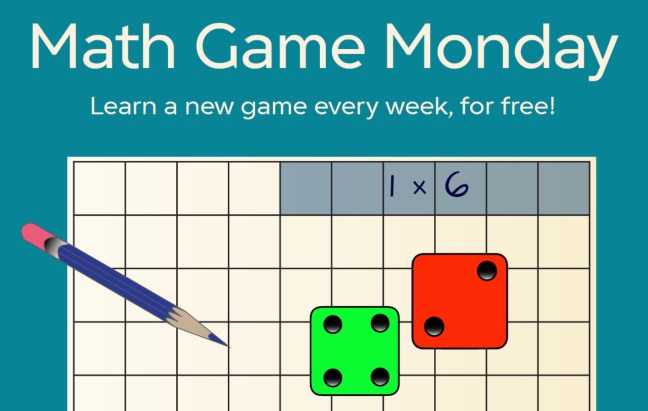
Math Game Monday: Symmetry Challenge

Learn a new game with Math Game Monday

This game builds visual thinking skills.

Many parents remember struggling to learn math. We hope to provide a better experience for our children. And one of the best ways for children to enjoy learning is through hands-on play.

So what are you waiting for? Let’s play some math!

Symmetry Challenge

Math Concepts: symmetry, geometry.

Players: only two.

Equipment: graph paper or blank hundred chart, colored pencils or markers.

Continue reading Math Game Monday: Symmetry Challenge

Thinking Thursday: Words Help Us Think

Thinking Thursday math journal prompt

Writing to Learn Math: Writing helps students stretch their thinking and make sense of new ideas.

Do you want your children to develop the ability to reason creatively and figure out things on their own?

Help kids practice slowing down and taking the time to fully comprehend a math topic or problem-solving situation with these classic tools of learning: Notice. Wonder. Create.

Continue reading Thinking Thursday: Words Help Us Think

Introduction to the Science of Counting

fantasy elf archer

One of my favorite rabbit-trails to explore in middle school math is the science of counting and probability.

It’s a great topic because the calculations are relatively easy, mostly multiplication and division. But there’s a lot of thinking that goes into figuring out just what calculations we need to do.

Counting is not only for little kids! It’s part of discrete mathematics, which means the study of things that are not continuous—things that come in discrete chunks—and it’s important in game design, computer programing, and cryptography.

Prealgebra and Geometry games book

This post is a section of my Prealgebra & Geometry Games book where my daughter and I explore the fundamental counting principle, the key to solving many counting and probability puzzles.

Continue reading Introduction to the Science of Counting

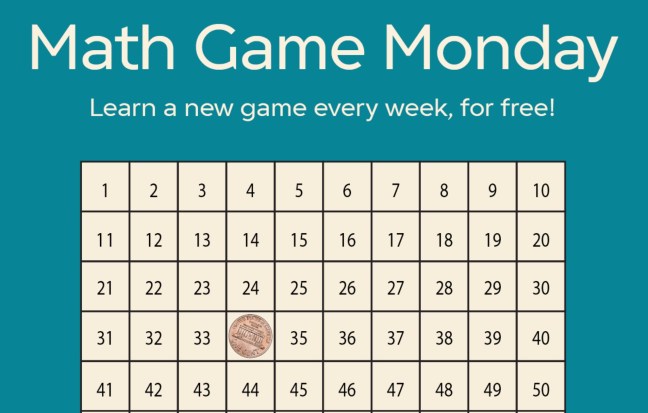
Math Game Monday: Decimal Product Game

Learn a new math game every week, for free

This game builds understanding of decimals, and also of the inverse relationship between multiplication and division.

Many parents remember struggling to learn math. We hope to provide a better experience for our children. And one of the best ways for children to enjoy learning is through hands-on play.

So what are you waiting for? Let’s play some math!

Decimal Product Game

Math Concepts: multiplying decimals, decimal place value.

Players: two players or two teams.

Equipment: printed game board, colored markers or a set of matching tokens for each player, two paperclips or other small tokens to mark the factors.

Continue reading Math Game Monday: Decimal Product Game

Thinking Thursday: Pentagram

Thinking Thursday math journal prompt

Writing to Learn Math: At its heart, geometry is all about seeing connections and relationships.

Do you want your children to develop the ability to reason creatively and figure out things on their own?

Help kids practice slowing down and taking the time to fully comprehend a math topic or problem-solving situation with these classic tools of learning: Notice. Wonder. Create.

Continue reading Thinking Thursday: Pentagram