Notice, Wonder, Create

Many homeschooling parents dream of a mathematical magic bullet — a game, app, or book that will help their children learn math and enjoy it.

As in life, so also in math, there is no magic solution.

Do you want your children to learn math and enjoy it? Teach them to be Math Makers.

When they create their own math, students build deep, personal connections to math concepts. They think about the relationships between numbers, shapes, and patterns. Math becomes personal.

Toys, hobbies, favorite stories — all can be fodder for math creation.

Where Do Math Makers Get Ideas?

Let the child choose something to think about.

Make an “I Notice” list. How does that item relate to math? What patterns or shapes can you see?

Or how would the story characters use numbers in their daily lives? Would they cook, or go shopping? Might they build something? Would they decorate it with a design? What would they count or measure?

Make an “I Wonder” list. How many different ways might you turn the things you noticed into questions? What else might you ask?

Then turn one of your noticings or wonderings into a math story, poem, puzzle, drawing, or game. Create your own math. Share your creation with family and friends.

Now Get Published

Join the Student Math Makers team. We’d love to add your math creation to our collection and share it with viewers all around the world!

Download a Math Makers Invitation and Submission Form below:

 
* * *

This blog is reader-supported.

If you’d like to help fund the blog on an on-going basis, then please join me on Patreon for mathy inspiration, tips, and an ever-growing archive of printable activities.

If you liked this post, and want to show your one-time appreciation, the place to do that is PayPal: paypal.me/DeniseGaskinsMath. If you go that route, please include your email address in the notes section, so I can say thank you.

Which I am going to say right now. Thank you!

“Notice, Wonder, Create” copyright © 2021 by Denise Gaskins. Feature photo (top) by MI PHAM via Unsplash.com.

Math Makers: Write a Poem

Last week, I mentioned my new project, the Student Math Makers Gallery where children and teens can share their original math creations with the world.

So this week, I’m offering inspiration to get your children’s creative juices flowing.

Let’s Write Math Poetry

April is National Poetry Month, and it’s also Mathematics and Statistics Awareness Month.

What better way to celebrate than writing math poetry?

  • Write a poem about a math concept or idea, using your favorite style of verse.
  • Or write a poem about any subject, using a mathematical constraint.
  • Or both: write a poem about math, constrained by math.

Here are some examples…

Continue reading Math Makers: Write a Poem

New! Your Student Can Be a Math Maker

When children create their own math, they build a deep understanding of mathematical concepts and relationships.

And it’s fun!

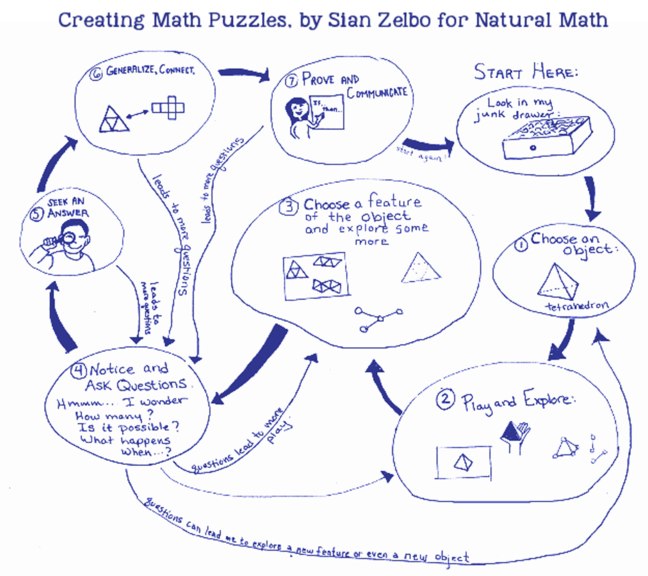
So take a break from your normal math program to play with creative math. Students can:

Check Out the Gallery

We have a few entries already in the Student Math Makers Gallery.

Click Here To Visit the Gallery

Join the Student Math Makers

We’d love to add your students’ math to our collection and share it with viewers all around the world!

To submit a math creation, download a Math Makers Invitation and Submission Form below:

 
* * *

This blog is reader-supported.

If you’d like to help fund the blog on an on-going basis, then please head to my Patreon page.

If you liked this post, and want to show your one-time appreciation, the place to do that is PayPal: paypal.me/DeniseGaskinsMath. If you go that route, please include your email address in the notes section, so I can say thank you.

Which I am going to say right now. Thank you!

“New! Your Student Can Be a Math Maker” copyright © 2021 by Denise Gaskins. “Creating Math Puzzles by Sian Zelbo, the author of Camp Logic, via NaturalMath.com.

Final (?) Lockdown Ebook Sale

Would anyone have guessed we’d still be under pandemic social restrictions after a year?

Certainly not me!

And now that spring is in the air … Well, at least it is in the northern hemisphere. Would that be called “Up Yonder,” as opposed to “Down Under”? … Anyway, whatever you call it, everyone is getting antsy. We’re all ready to be set free, whenever our governments give in.

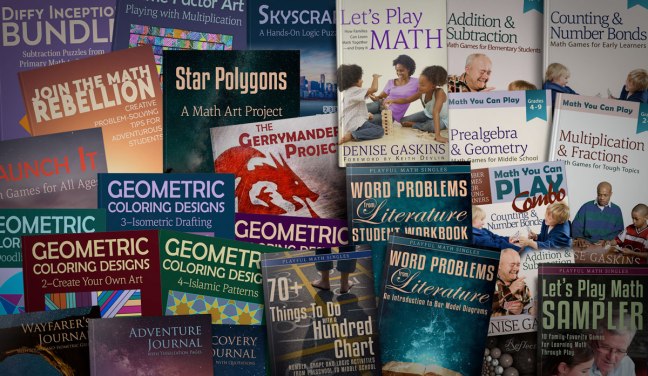
To help your family keep busy through the final (we hope!) lockdowns, my publisher is offering a 30% discount coupon on everything at our Tabletop Academy Press online store.

That includes all my math books and playful activity guides, plus my daughter’s fantasy fiction epic, The Riddled Stone.

Enter STAYSAFE2021 at checkout.
(Expires March 31, 2021.)

Shop Now

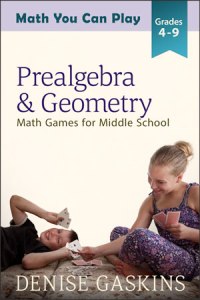
Prealgebra & Geometry Games Now Available

Publication Day!

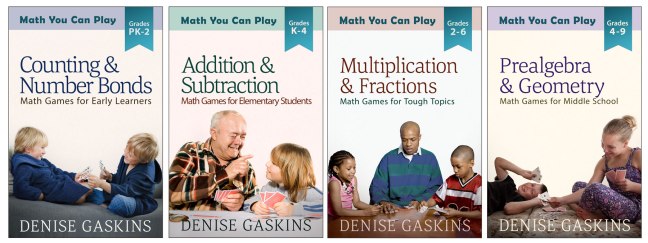
Prealgebra & Geometry: Math Games for Middle School hits the online bookstores today.

Check Your Favorite Store

You can prepare your children for high school math by playing with positive and negative integers, number properties, mixed operations, algebraic functions, coordinate geometry, and more. Prealgebra & Geometry features 41 kid-tested games, offering a variety of challenges for students in 4–9th grades and beyond.

A true understanding of mathematics requires more than the ability to memorize procedures. This book helps your children learn to think mathematically, giving them a strong foundation for future learning.

And don’t worry if you’ve forgotten all the math you learned in school. I’ve included plenty of definitions and explanations throughout the book. It’s like having a painless math refresher course as you play.

Continue reading Prealgebra & Geometry Games Now Available

Math Puzzle from the Ancient Kingdom of Cats

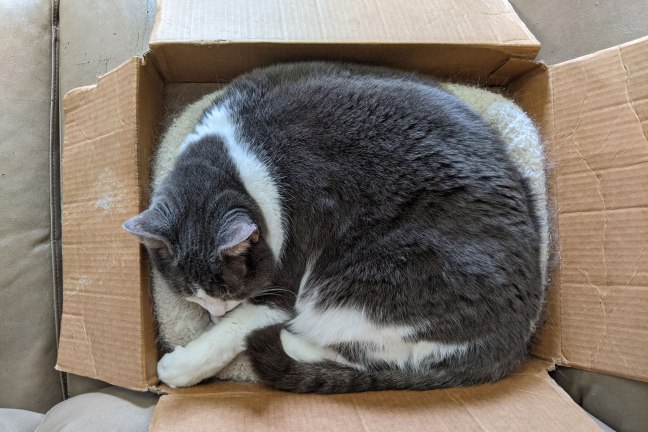
It may look like Cimorene has lain down on the job, but don’t be fooled! She’s hard at work, creating a math investigation for your students to explore.

Cats know how important it can be for students to experiment with math and try new things. Playing with ideas is how kittens (and humans!) learn.

Cimorene wants you to know that the Make 100 Math Rebels Kickstarter offers a great way for human children to learn math through play. She encourages you to go watch the video and read all about the project.

Too often, school math can seem stiff and rigid. To children, it can feel like “Do what I say, whether it makes sense or not.” But cats know that kids are like kittens — they can make sense of ideas just fine if we give them time to play around.

So Cimorene says you should download the free sample journaling pages from the Math Rebels Kickstarter page. The beautiful parchment design makes doing math an adventure.
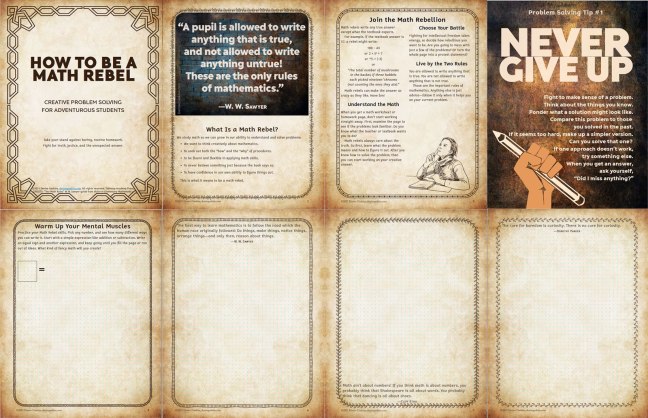

[The free download will always be there, even after the Kickstarter project ends.]
Make 100 Math Rebels Kickstarter

Cimorene’s Puzzle Challenge

Cimorene’s math puzzle is a classic geometry problem from the ancient Kingdom of Cats: Squaring the Circle.

Draw a circle on your journal page. Can you draw a square (or rectangle) that has the same area?

How would you even begin such a task?

Notice Cimorene’s hint in the photo above: Try drawing the square that just touches the edges of your circle. (We call those just-touching lines “tangents” to the circle.)

  • What do you notice? Do the square and the circle have the same area? How close are they?

The tangent square sets an upper limit on the area of the circle. You can see that any square that exactly matches the circle would have to be smaller than the tangent square.

  • Can you find a square that sets a lower limit on the area of the circle? That is, a square that must have less area than the circle?
  • What’s the biggest square you can draw inside your circle? Can you find a square that has all four corners on the circle?

We call that biggest-inside square “inscribed” in the circle. Any polygon whose corners all sit on the circle is an inscribed polygon.

  • Play around with circles and squares. How close can you get to matching their size?

Further Exploration

After you have explored for awhile on your own, Cimorene has one more twist in her puzzle.

In the ancient Kingdom of Cats, the wise ones estimated the area of a circle this way:

Divide the width of the circle in thirds, and then in thirds again. (That is, cut the diameter into nine parts.) Draw a square with sides measured by eight such parts.

You can try this on your journaling page by drawing a circle that is nine squares wide. Then draw a square overlapping it, with sides that are eight squares in length.

  • How closely do the areas match?

Playing with Pi

Here’s a surprise: Cimorene’s puzzle isn’t really about squares, but about calculus.

The problem of Squaring the Circle is really a much bigger question: Finding the area of a square, rectangle, or other polygon is relatively easy, but how can we discover the area of a curved shape?

For a circle, the area is related to the number pi, which is the number of times you would have to walk across the circle to equal the distance of one time walking around it.
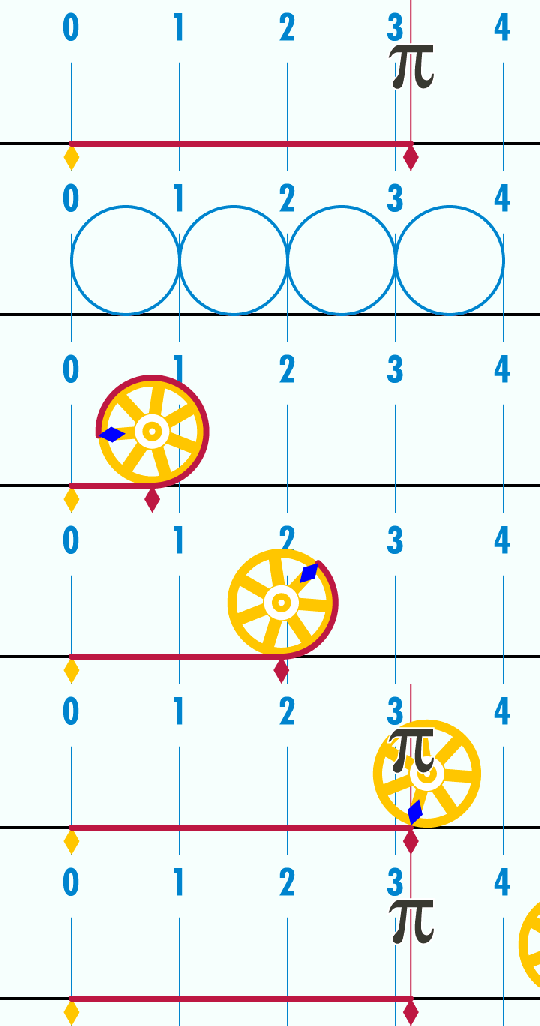
graphic by John Reid (cc by-sa 3.0)

graphic by John Reid (cc by-sa 3.0)
So the problem of Squaring the Circle is really the same as asking, “What is the value of pi?”

  • Can you figure out what approximate value for pi matches the 8/9 square used in the ancient Kingdom of Cats?

If you’d like to learn more about pi, get ready for a celebration: Pi Day is coming soon! Every year, millions of children celebrate math on March 14th, because if you write the date as 3/14, it’s the same as the first three digits of pi.

Find out more about playing with pi in my Pi Day Round-Up post.

You may also enjoy:

Share Your Stories

Cimorene would love to hear about your children’s experiences playing with math! Please share your story in the comments below.

 
* * *

This blog is reader-supported.

If you’d like to help fund the blog on an on-going basis, then please head to my Patreon page.

If you liked this post, and want to show your one-time appreciation, the place to do that is PayPal: paypal.me/DeniseGaskinsMath. If you go that route, please include your email address in the notes section, so I can say thank you.

Which I am going to say right now. Thank you!

“Math Puzzle from the Ancient Kingdom of Cats” copyright © 2021by Denise Gaskins. Image at the top of the post copyright © Denise Gaskins.

Did You Get Your Playful Math?

Mary Everest Boole first wrote about string art in 1904.
Mary Everest Boole first wrote about string art in her 1904 book, The preparation of the child for science.

My February playful math newsletter went out yesterday morning to all subscribers.

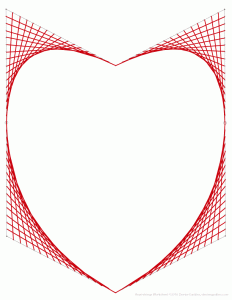
This month’s issue featured a couple of string art projects for Valentine’s Day, the cardioid curve, make-your-own math art, and the link between string art and calculus.

If you didn’t see it, check your Updates or Promotions tab (in Gmail) or your Spam folder. And to make sure you get all the future newsletters, add denise (dot) gaskins (at) tabletopacademypress (dotcom) to your contacts or address book.

Click to View the Newsletter

Not a subscriber? Don’t miss next month’s playful math activities! Click the link below to sign up today, and we’ll send you our free math and writing booklets, too.

As a Bonus: You’ll receive my 8-week email series “Playful Math for Families” and be one of the first to hear about any new books, revisions, and sales or other promotions

Math Journals: Save the Cat!

Puck is concerned that some people don’t understand the idea behind the Math Rebel journals. He decided to create a journaling prompt so your children can experience the joy of creative reasoning (and save cats from their mortal enemy!)

Journaling is a great way to help children learn to see with mathematical eyes. Not just to remember what we tell them, but to create their own math.

Many people know it’s important for students to do hands-on experiments in science. But Puck realized that most adults don’t know how to do a math experiment.

So Puck created this Cat Escape puzzle…

Continue reading Math Journals: Save the Cat!

Math Journals and Creative Reasoning

Learning math requires more than mastering number facts and memorizing rules. At its heart, math is a way of thinking.

So more than anything else, we need to teach our kids to think mathematically. To make sense of math concepts and persevere in figuring things out. To notice the numbers, shapes, and patterns all around. To wonder about big ideas.

Journaling is a great way to help children learn to see with mathematical eyes. Not just to remember what we tell them, but to create their own math.

Get started with creative math journaling today. Visit the Make 100 Math Rebels Kickstarter page to download the free “How To Be a Math Rebel” sampler pictured above, which contains one of my all-time favorite math prompts.

Make 100 Math Rebels

It doesn’t matter whether your students are homeschooled or in a classroom, distance learning or in person. Everyone can enjoy the experience of playing around with math.

Puzzle from the free Math Rebel Sampler.

Continue reading Math Journals and Creative Reasoning