Sample The Moscow Puzzles

Dover Publications is offering a free sample chapter from The Moscow Puzzles.

Cat and Mice
Purrer has decided to take a nap. He dreams he is encircle by 13 mice: 12 gray and 1 white. He hears his owner saying: “Purrer, you are to eat each thirteenth mouse, keeping the same direction. The last mouse you eat must be the white one.”

Download the sample chapter from The Moscow Puzzles.

More Free Math from Dover Publications

Olympic Logic

I love logic puzzles! Nrich Maths offers four fun Olympics Logic puzzles. And be sure to check out the rest of their Nrich Olympics Math as well.

Medals Count

Given the following clues, can you work out the number of gold, silver and bronze medals that France, Italy and Japan got in this international sports competition?

  • Japan has 1 more gold medal, but 3 fewer silver medals, than Italy.
  • France has the most bronze medals (18), but fewest gold medals (7).
  • Each country has at least 6 medals of each type.
  • Italy has 27 medals in total.
  • Italy has 2 more bronze medals than gold medals.
  • The three countries have 38 bronze medals in total.
  • France has twice as many silver medals as Italy has gold medals.

Go to Nrich Maths and try all four puzzles!

Skit: Knights and Knaves Logic Puzzles

photo by puuikibeach via flickr

Our homeschool co-op held an end-of-semester assembly. Each class was supposed to demonstrate something they had learned. I planned to set up a static display showing some of our projects, like the fractal pop-up card and the game of Nim, but the students voted to do a skit based on the logic puzzles of Raymond Smullyan.

We had a small class (only four students), but you can easily divide up the lines make room for more players. We created signs from half-sheets of poster board with each native’s line on front and whether she was a knight or knave on the flip side. In the course of a skit, there isn’t enough time to really think through the puzzles, so the audience had to vote based on first impressions — which gave us a fair showing of all opinions on each puzzle.

Continue reading Skit: Knights and Knaves Logic Puzzles

Raymond Smullyan Excerpts at Dover Publications

To celebrate their re-release of his classic puzzle books, the Dover Math and Science Newsletter featured an interview with Raymond Smullyan, as well as several extended excerpts from his books. (For my math club students: Professor Smullyan invented the Knights and Knaves puzzles.) Enjoy!

2012 Mathematics Game

photo by Creativity103 via flickr

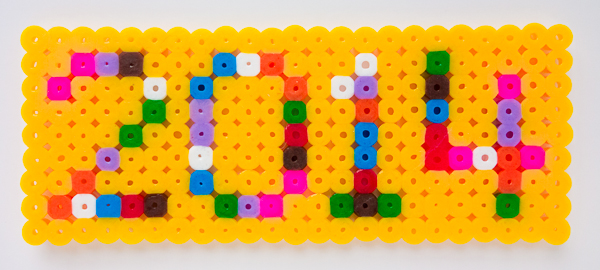
For our homeschool, January is the time to assess our progress and make a few New Semester’s Resolutions. This year, we resolve to challenge ourselves to more math puzzles. Would you like to join us? Pump up your mental muscles with the 2012 Mathematics Game!

Rules of the Game

Use the digits in the year 2012 to write mathematical expressions for the counting numbers 1 through 100.

Bonus Rules
You may use the overhead-bar (vinculum), dots, or brackets to mark a repeating decimal.

You may use multifactorials:

  • n!! = a double factorial = the product of all integers from 1 to n that have the same parity (odd or even) as n.
  • n!!! = a triple factorial = the product of all integers from 1 to n that are equal to n mod 3

[Note to teachers: Math Forum modified their rules to allow double factorials, but as far as I know, they do not allow repeating decimals or triple factorials.]

Continue reading 2012 Mathematics Game

Giveaway: Hexa-Trex Puzzle Book

Bogusia Gierus, host of this month’s Math Teachers at Play blog carnival, is offering to give away her First Book of Hexa-Trex Puzzles for just the cost of shipping. How generous!

My math club had fun with several of these puzzles a few years ago, and the “Easy” ones (like the sample shown here) were just right for my 4th-5th grade students. One girl enjoyed them enough that she took home extra copies to share with her father.

It’s a thin book, just the right size for a stocking-stuffer. To see the full range of difficulty levels, look over the puzzles on Bogusia’s Daily Hexa-Trex page. To get your own copy of the book, read the giveaway instructions on Bogusia’s blog.

Object of the Puzzle

The object of the puzzle is to find the equation pathway that leads through ALL the tiles.

Forming Equations

  • Two or three (or four or five etc.) digit numbers are made up of the individual tiles in the particular order as the equation is read. For example 5 x 5 = 2 5 is correct, but read backwards 5 2 = 5 x 5 is incorrect.
  • The equation must be continuous (no jumping over tiles or empty spaces).
  • Each tile can be used ONLY ONCE.
  • Order of operations is followed. Multiplication and division comes before addition and subtraction.
  • The tile “-” can be used as both a subtraction operation or a negative sign in front of a digit, making it a negative number.

What to Do with a Hundred Chart #27

[Photo by geishaboy500.]

It began with a humble list of 7 things to do with a hundred chart in one of my out-of-print books about teaching home school math. Over the years I added a few new ideas, and online friends contributed still more, so the list grew to its current length of 26. Recently, thanks to several fans at pinterest, it has become the most popular post on my blog:

Now I am working several hours a day revising my old math books, in preparation for publishing new, much-expanded editions. And as I typed in all the new things to do with a hundred chart, I thought of one more to add to the list:

(27) How many numbers are there from 11 to 25? Are you sure? What does it mean to count from one number to another? When you count, do you include the first number, or the last one, or both, or neither? Talk about inclusive and exclusive counting, and then make up counting puzzles for each other.

Share Your Ideas

Can you think of anything else we might do with a hundred chart? Add your ideas in the Comments section below, and I’ll add the best ones to our master list.

More Than One Way to Solve It, Again

photo by Annie Pilon via flickr

We continue with our counting lessons — and once again, Kitten proves that she doesn’t think the same way I do. In fact, her solution is so elegant that I think she could have a future as a mathematician. After all, every aspiring novelist needs a day job, right?

If only I could get her to give up the idea that she hates math…

Permutations with Complications

How many of the possible distinct arrangements of 1-6 have 1 to the left of 2?

Competition Math for Middle School, by J. Batterson

Continue reading More Than One Way to Solve It, Again

More Than One Way to Solve It

More-Than-One-Way

Photo by Eirik Newth via flickr.

In a lazy, I-don’t-want-to-do-school mood, Princess Kitten was ready to stop after three math problems. We had gotten two of them correct, but the last one was counting the ways to paint a cube in black and white, and we forgot to count the solid-color options.

For my perfectionist daughter, one mistake was excuse enough to quit. She leaned her head against me as we sat together on the couch and said, “We’re done. Done, done, done.” If she could, she would have started purring — one of the most manipulative noises known to humankind. I’m a soft touch. Who can work on math when there’s a kitten to cuddle?

by tanjila ahmed via flickr

Still, I managed to squeeze in one more puzzle. I picked up my whiteboard marker and started writing:

DONE
DOEN
DNOE
DENO
DNEO
ONED
ODNE

Continue reading More Than One Way to Solve It

The (Mathematical) Trouble with Pizza

Photo by George Parrilla via flickr.

Kitten complained that some math programs keep repeating the same kind of problems over and over, with bigger numbers: “They don’t get any harder, they just get longer. It’s boring!”

So we pulled out the Counting lessons in Competition Math for Middle School. [Highly recommended book!] Kitten doesn’t like to compete, but she enjoys learning new ideas, and Batterson’s book gives her plenty of those, well organized and clearly explained.

Today’s topic was the Fundamental Counting Principle. It was review, easy-peasy. The problems were too simple, until…

Pizzas at Mario’s come in three sizes, and you have your choice of 10 toppings to add to the pizza. You may order a pizza with any number of toppings (up to 10), including zero. How many choices of pizza are there at Mario’s?

[The book said 9 toppings, but I was skimming/paraphrasing aloud and misread.]

  • Can you figure out the answer?

Continue reading The (Mathematical) Trouble with Pizza