My algebra students could stand to hear this, too:
(2)(-4x2)n is not equal to (-8 )nx2n.
AAAAAARRRRGGGHH!!!!
From Secret Message to My Calculus Students at Learning Curves blog.
My algebra students could stand to hear this, too:
(2)(-4x2)n is not equal to (-8 )nx2n.
AAAAAARRRRGGGHH!!!!
From Secret Message to My Calculus Students at Learning Curves blog.

[Feature photo above by Tobias Wolter (CC-BY-SA-3.0) via Wikimedia Commons.]
If seven people meet at a party, and each person shakes the hand of everyone else exactly once, how many handshakes are there in all?
In general, if n people meet and shake hands all around, how many handshakes will there be?
Our homeschool co-op held an end-of-semester assembly. Each class was supposed to demonstrate something they had learned. I threatened to hand out a ten question pop quiz on integer arithmetic, but instead my pre-algebra students presented this skit. You may adjust the script to fit the available number of players.
Does this proof at squareCircleZ blog mean that, if I get nothing done today, I can cross off everything on my list?
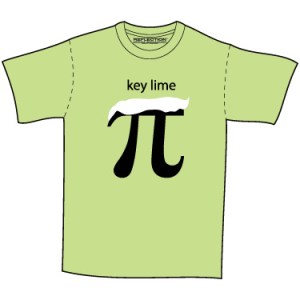
Here are two poems in honor of pi, from the Mathematical Poetry site:

[Feature photo above by Carla216 via flickr (CC BY 2.0). This post was rescued from my old blog.]
I love story problems. Like a detective, I enjoy sifting out clues and solving the mystery. But what do you do when you come across a real stumper? Acting out story problems could make a one-page assignment take all week.
You don’t have to bake a pie to study fractions or jump off a cliff to learn gravity. Use your imagination instead. The following suggestions will help you find the clues you need to solve the case.
[Rescued from my old blog.]
Once again, Rudbeckia Hirta brings us some funny-but-sad mathematics. The test question was:
Without factoring it, explain how the number
N = (1 x 2 x 3 x 4 x 5 x 6 x 7 x 8 x 9 x 10 x 11) + 1
can be used to argue that there is a prime number larger than 11.
I found two helpful articles at squareCircleZ.
Ten Ways to Survive the Math Blues
General tips on how to learn as much as possible from any math course.The need for further exploration
What to do after you find the answer to a math problem.
One more quote from W. W. Sawyer’s Mathematician’s Delight before I have to return the book to the library:
If you cannot see what the exact speed is, begin to ask questions. Silly ones are the best to begin with. Is the speed a million miles an hour? Or one inch a century? Somewhere between these limits. Good. We now know something about the speed. Begin to bring the limits in, and see how close together they can be brought. Study your own methods of thought. How do you know that the speed is less than a million miles an hour? What method, in fact, are you unconsciously using to estimate speed? Can this method be applied to get closer estimates?
You know what speed is. You would not believe a man who claimed to walk at 5 miles an hour, but took 3 hours to walk 6 miles. You have only to apply the same common sense to stones rolling down hillsides, and the calculus is at your command.
Well, the new year has come, and it’s time to start gathering up receipts and thinking about tax forms.
Would you like to know that our tax dollars are doing good in the world? The National Science Foundation has spent many millions developing and promoting “reform” math textbooks, with encouragement from the U.S. Department of Education. Surely our public schools will now rise out of the doldrums and surge ahead in mathematical achievement, right?
Try for yourself this problem from one of the more famous/infamous of the reform math textbooks:
Can you find the slope and y-intercept of this equation?
10 = x – 2.5
And then check out this editorial[editorial has disappeared] at edspresso.com. You’ll be amazed at the answer!
Update: Checking on back-links, I discovered that this page had gone AWOL, so I’ll give you the “answer” from the teacher’s manual. The “slope” is 1 and the “y-intercept” is -2.5, according to Connected Math. Unfortunately, this equation actually describes a vertical line (undefined slope) at x=12.5 (never touches the y-axis).
Doesn’t bode well for “CMP helps students and teachers develop understanding of important mathematical concepts…”

[Rescued from my old blog.]
What teacher hasn’t heard a student complain, “When am I ever going to have to use this?” Didn’t most of us ask it ourselves, once upon a time? And unless we choose a math-intensive career like engineering, the truth is that after we leave school, most of us will never again use most of the math we learned. But if math beyond arithmetic isn’t all that useful, then what’s the point?
If you or your student is singing the Higher Math Blues, here are some quotations that may cheer you up — or at least give you the strength of vision to keep on slogging.
We study mathematics…
 Denise Gaskins' Let's Play Math
