Just as I was looking for a creative Valentine’s craft for Kitten, this showed up in my inbox:
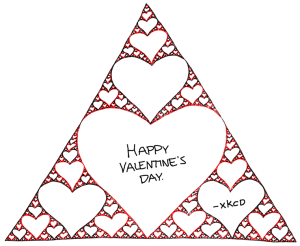
Xi at 360 provides step-by-step instructions, with photos:
And for more Valentine’s Day fun:
Just as I was looking for a creative Valentine’s craft for Kitten, this showed up in my inbox:
Xi at 360 provides step-by-step instructions, with photos:
And for more Valentine’s Day fun:

<a href="http://www.flickr.com/photos/goetter/2352128932/"Photo by Raphael Goetter via Flickr
Alex and Leon enjoyed their baby sister, but they were amazed at how much work taking care of a baby could be. One particularly colicky night, everyone in the family took turns holding the baby, rocking the baby, patting her back, and walking her around before she finally succumbed to sleep.
Then Alex collapsed on the couch, and Leon sank into the recliner. They teased each other with these story problems.
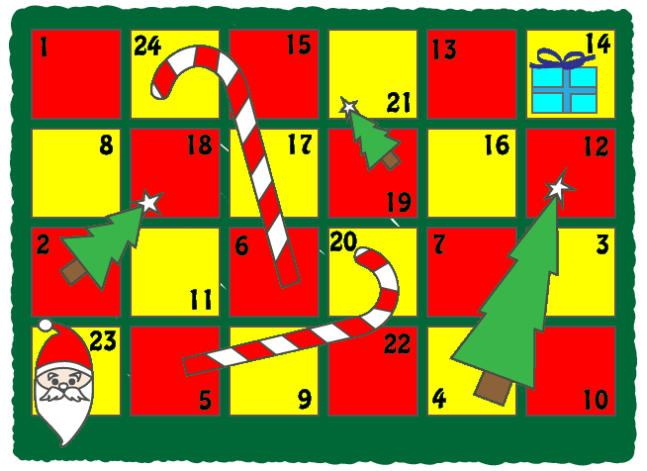
Homeschoolers, you can have your math and enjoy it, too! Play a mathematics game every day until Christmas at nrich.maths.org:
I have been enjoying James Tanton’s website. In this video, Tanton explains a foolproof method for creating Egyptian fractions:
See more posts on Egyptian math.

[Photo by pfala.]
Thanks to John Cook’s article about factorials in the recent Mathematics and Multimedia Carnival, we’re adding new rules to the 2010 Mathematics Game.
Let’s play with multifactorials!

Symbolic Logic Part I was published in 1896. When Lewis Carroll (Charles Lutwidge Dodgson) died two years later, Part II was lost. Because they couldn’t find the manuscript, many people doubted that he ever wrote Part II. But almost eighty years after his death, portions of Part II were recovered and finally published. The following puzzles are from the combined volume, Lewis Carroll’s Symbolic Logic, edited by William Warren Bartley, III.
These puzzles are called soriteses or polysyllogisms. Carroll began with a series of “if this, then that” statements. He rewrote them to make them more confusing, and then he mixed up the order to create a challenging puzzle.
Given each set of premises, what conclusion can you reach?
To find the latitude of your position:
To convert your latitude to a distance measurement:
[I will also add these to the original post.]

As I was preparing for Wednesday’s Homeschool Math Club Games & Activities meeting, I remembered my old math calendars and thought, that would be a fun activity to offer. So I pulled up the files and discovered that the days of the week matched perfectly. What a cool coincidence!
So in case you missed the math calendars last year, or in case it’s been long enough that your children have forgotten, here are the “new” versions:
Umm Ahmad created an easier version for young students:
 Denise Gaskins' Let's Play Math