The Value of Math Games

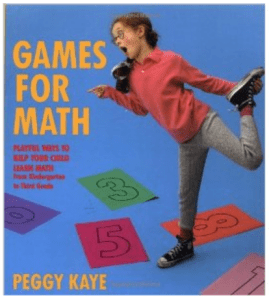
From Peggy Kaye’s classic book Games for Math:

Kaye-Games4Math

“Games put children in exactly the right frame of mind for learning difficult things.

“Children relax when they play — and they concentrate. They don’t mind repeating certain facts or procedures over and over, if repetition is part of the game.

“Children throw themselves into playing games the way they never throw themselves into filling out workbook pages.

“The games solidify the achievements of children who are already good at math, and they shore up children who need shoring up. They teach or reinforce many of the skills that a formal curriculum teaches, plus one skill that formal teaching sometimes leaves out — the skill of having fun with math, of thinking hard and enjoying it.

“If you play these games and your child learns only that hard mental effort can be fun, you will have taught something invaluable.”

Peggy Kaye
Games for Math

Sample Peggy’s Games for Math

 
* * *

This blog is reader-supported.

If you’d like to help fund the blog on an on-going basis, then please join me on Patreon for mathy inspiration, tips, and an ever-growing archive of printable activities.

If you liked this post, and want to show your one-time appreciation, the place to do that is PayPal: paypal.me/DeniseGaskinsMath. If you go that route, please include your email address in the notes section, so I can say thank you.

Which I am going to say right now. Thank you!

“The Value of Math Games” copyright © 2016 by Denise Gaskins.

Making Sense of Arithmetic

Homeschoolers have an advantage in teaching math: As our students grow, our own understanding of math grows with them because we see how the ideas build on each other.

This is especially true for those of us with large families. We pass through the progression of concepts with each student, and every pass lays down another layer in our own minds.

If you’d like to short-cut that process, check out Graham Fletcher’s Making Sense of Elementary Math video series. He’ll walk you through the topics, showing how manipulatives help build early concepts and gradually give way to abstract calculations.

“Understanding the vertical progression of mathematics is really important in the conceptual development of everyone’s understanding. This whole Making Sense Series has truly forced me to be a better teacher.”

— Graham Fletcher

Continue reading Making Sense of Arithmetic

FAQ: He Won’t Stop Finger-Counting

“My oldest son has somehow developed the horrid habit of counting on his fingers. We worked on the math facts all summer. He knows the answers in simple form, such as 9 + 4, but if it’s in a bigger problem like 249 + 54, he counts up to add or counts down to subtract, all using fingers. My younger children have no problem with mental math, but he can’t seem to get it. Are there any tips or tricks to stop this?”

New Crutches

Counting on fingers is not a horrid habit, it is a crutch. Please think for a moment about the purpose of crutches. The blasted things are an uncomfortable nuisance, but there are times when you can’t get anywhere without them. And if you need them, it does you no good for a friend to insist you should crawl along on your own.

That is how your son feels right now about his fingers. He is struggling with something his younger siblings find easy, and he can tell that you are frustrated. His confidence is broken, in a cast, and needs time for healing. So he falls back on what he knows he can do, counting up the answer.

Think positive: this means he still believes that math ought to make sense — that to understand what he is doing is more important than to guess at an answer. You want him to value sense-making, because otherwise he will try to memorize his way through middle school and high school math. That is the road to disaster.

Continue reading FAQ: He Won’t Stop Finger-Counting

New Book: Avoid Hard Work

I’ve loved James Tanton’s How to Be a Math Genius videos for years. He offers great problem-solving tips like:

  • Visualize: think of a picture.
  • Use common sense to avoid grungy work.
  • Engage in intellectual play.
  • Think relationally: understanding trumps memorization.
  • Be clear on what you don’t know — and comfortable enough to admit it.

Seriously, those are wonderful videos. If you haven’t seen them before, go check them out. Be sure to come back, though, because I’ve just heard some great news.

Natural Problem-Solving Skills

Avoid Hard WorkTanton has joined up with the NaturalMath.com team of Maria Droujkova, Yelena McManaman, and Ever Salazar to put together a book for parents, teachers, math circle leaders, and anyone else who works with children ages 3–10.

It’s called Avoid Hard Work, and it takes a playful look at ten powerful problem-solving techniques.

Join the Crowdfunding Campaign

For more details about Avoid Hard Work, including a 7-page pdf sample with tips and puzzles to enjoy, check out the crowdfunding page at Natural Math:

Read the questions and answers. Try the activities with your children. And donate to support playful math education!

Playful Math Education Carnival 97

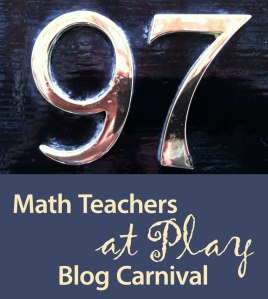
Did you know 97 is an emirp?
Did you know 97 is an emirp? It’s prime both forward and backward! What other emirps can you find?

Welcome to the 97th edition of the Math Teachers At Play math education blog carnival: a monthly smorgasbord of links to bloggers all around the internet who have great ideas for learning, teaching, and playing around with math from preschool to pre-college.

A few articles were submitted by their authors, but most were drawn from the immense backlog in my rss reader. If you’d like to see your blog post featured next month, be sure to send it in yourself. Our hosts are busy parents and teachers who have limited time to scour the Internet for goodies.

To add a bit of color, I’ve thrown in several favorites from my newly updated Math with Living Books pages. Some (affiliate) links go to Amazon.com, where you can read descriptions and reviews — but there’s no need to buy. Most of these books should be available through your local library.

Table of Contents

If you’d like to skip directly to your area of interest, click here:

Please: If you enjoy the carnival, would you consider volunteering to host sometime this year? Classroom teachers, homeschoolers, unschoolers, or anyone who likes to play around with math (even if the only person you “teach” is yourself) — if you would like to take a turn, please speak up!

And now, let the mathematical fun begin!


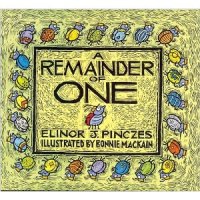
Pinczes-A Remainder of One

When the queen of her bugs demands that her army march in even lines, Private Joe divides the marchers into more and more lines so that he will not be left out of the parade.

Talking Math with Kids

  • Crystal Wagner (@Tri_Learning) shares several Math Games to Play in the Car: “Or maybe you are waiting in line at the grocery store or doctor’s appointment. Turn these times of waiting into learning opportunities.”
  • Christopher Danielson (@Trianglemancsd) shows how The sequence machine can launch math conversations with older students: “Now you can generate number sequences, without being distracted by the multiplication facts.”

richman-bykids

Help inspire your kids to try writing their own unique problems. Includes a wide range of math topics and concepts: money and time, fractions, percentages, geometry, logic, and multi-step problem solving.

[Back to top.]
[Back to Table of Contents.]

Continue reading Playful Math Education Carnival 97

FAQ: Lifelong Learning for Parents

“I’m so tired of being ignorant about math. I can memorize rules and do calculations, but if I miss a step the numbers make no sense at all, and I can’t spot what went wrong. Another struggle I have is keeping everything organized in my mind. When I learn a new concept or strategy, I easily forget it. My son is only a toddler now, but as he grows up, I don’t want to burden him with my own failures. Where should I start?”

As a first step, convince yourself that math is interesting enough to learn on its own merits, because parental guilt will only carry you so far. Start with Steven Strogatz’s “Elements of Math” series from The New York Times, or pick up his book The Joy of x.
Continue reading FAQ: Lifelong Learning for Parents

Multiplication Is Not Repeated Addition: Update

Multiplication Is Not Repeated Addition: Update[Photo “Micah and Multiplication” by notnef via Flickr (CC BY 2.0, text added).]

Some Internet topics are evergreen. I noticed that my old Multiplication Is Not Repeated Addition post has been getting new traffic lately, so I read through the article again. And realized that, even after all those words, I still had more to say.

So I added the following update to clarify what seemed to me the most important point.

I’d love to hear your thoughts! The comment section is open down below . . .


Language Does Matter

Addition: addend + addend = sum. The addends are interchangeable. This is represented by the fact that they have the same name.

Multiplication: multiplier × multiplicand = product. The multiplier and multiplicand have different names, even though many of us have trouble remembering which is which.

  • multiplier = “how many or how much”
  • multiplicand = the size of the “unit” or “group”

Different names indicate a difference in function. The multiplier and the multiplicand are not conceptually interchangeable. It is true that multiplication is commutative, but (2 rows × 3 chairs/row) is not the same as (3 rows × 2 chairs/row), even though both sets contain 6 chairs.

A New Type of Number

In multiplication, we introduce a totally new type of number: the multiplicand. A strange, new concept sits at the heart of multiplication, something students have never seen before.

The multiplicand is a this-per-that ratio.

A ratio is a not a counting number, but something new, much more abstract than anything the students have seen up to this point.

A ratio is a relationship number.

In addition and subtraction, numbers count how much stuff you have. If you get more stuff, the numbers get bigger. If you lose some of the stuff, the numbers get smaller. Numbers measure the amount of cookies, horses, dollars, gasoline, or whatever.

The multiplicand doesn’t count the number of dollars or measure the volume of gasoline. It tells the relationship between them, the dollars per gallon, which stays the same whether you buy a lot or a little.

By telling our students that “multiplication is repeated addition,” we dismiss the importance of the multiplicand. But until our students wrestle with and come to understand the concept of ratio, they can never fully understand multiplication.

For Further Investigation

nunes-doingmathIf you’re interested in digging deeper into how children learn addition and multiplication, I highly recommend Terezina Nunes and Peter Bryant’s book Children Doing Mathematics.

To learn about modeling multiplication problems with bar diagrams, check out the Mad Scientist’s Ray Gun model of multiplication:

And here is an example of the multiplication bar diagram in action:

Quotable: On Teaching

classroom scene

[Photo by City of Boston Archives via Flickr (CC BY 2.0).]

I’ve started collecting quotes about teaching math for the chapter pages in my next Math You Can Play book. Here are a couple snippets that don’t fit the theme of “Multiplication & Fractions,” but they struck my fancy anyway:

If teachers would only encourage guessing. I remember so many of my math teachers telling me that if you guess, it shows that you don’t know. But in fact there is no way to really proceed in mathematics without guessing. You have to guess! You have to have intuitive judgment as to the way it might go. But then you must be willing to check your guess. You have to know that simply thinking it may be right doesn’t make it right.

teaching

[Photo by Nathan Russell via Flickr (CC BY 2.0).]

One of the big misapprehensions about mathematics that we perpetrate in our classrooms is that the teacher always seems to know the answer to any problem that is discussed. This gives students the idea that there is a book somewhere with all the right answers to all of the interesting questions, and that teachers know those answers. And if one could get hold of the book, one would have everything settled. That’s so unlike the true nature of mathematics.

Leon Henkin
from “Round and Round at the Round Table”
Teaching Teachers, Teaching Students: Reflections on Mathematical Education

What Are Your Favorite Quotes?

Do you have some favorite quotes on math and teaching? I’d love to hear them! Please share in the Comments section below.

Understanding Math: Conclusion

Click to read the earlier posts in this series: Understanding Math, Part 1: A Cultural Problem; Understanding Math, Part 2: What Is Your Worldview?; Understanding Math, Part 3: Is There Really a Difference?; Understanding Math, Part 4: Area of a Rectangle; Understanding Math, Part 5: Multiplying Fractions; and Understanding Math, Part 6: Algebraic Multiplication.

Understanding-Math-Conclusion

Earlier in this blog post series, I gave you three middle-school math rules. But by exploring the concept of rectangular area as a model of multiplication, we discovered that in a way they were all the same.

The rules are not arbitrary, handed down from a mathematical Mount Olympus. They are three expressions of a single basic question: what does it mean to measure area?

There was only one rule, one foundational pattern that tied all these topics together in a mathematical web.

What Is Your Worldview?

Many children want to learn math instrumentally, as a tool for getting answers. They prefer the simplicity of memorizing rules to the more difficult task of making sense of new ideas. Being young, they are by nature short-term thinkers. They beg, “Just tell me what to do.”

But if we want our children to truly understand mathematics, we need to resist such shortcuts. We must take time to explore mathematics as a world of ideas that connect and relate to each other in many ways. And we need to show children how to reason about these interconnected concepts, so they can use them to think their way through an ever-expanding variety of problems.

Our kids can only see the short term. If we adults hope to help them learn math, our primary challenge is to guard against viewing the mastery of facts and procedures as an end in itself. We must never fall into thinking that the point of studying something is just to get the right answers.

We understand this in other school subjects. Nobody imagines that the point of reading is to answer comprehension questions. Back to SchoolWe know that there is more to learning history than winning a game of Trivial Pursuit. But when it comes to math, too many parents (and far too many politicians) act as though the goal of our children’s education is to produce high scores on a standardized test.

What If I Don’t Understand Math?

If you grew up (as I did) thinking of math as a tool, the instrumental approach may feel natural to you. The idea of math as a cohesive system may feel intimidating. How can we parents help our children learn math, if we never understood it this way ourselves?

Don’t panic. Changing our worldview is never easy, yet even parents who suffer from math anxiety can learn to enjoy math with their children. All it takes is a bit of self-discipline and the willingness to try.

You don’t have to know all the answers. In fact, many people have found the same thing that Christopher Danielson described in his blog post “Let the children play” — the more we adults tell about a topic, the less our children learn. With the best of intentions we provide information, but we unwittingly kill their curiosity.

  • If you’re afraid of math, be careful to never let a discouraging word pass your lips. Try calling upon your acting skills to pretend that math is the most exciting topic in the world.
  • Encourage your children to notice the math all around them.
  • Search out opportunities to discuss numbers, shapes, symmetry, and patterns with your kids.
  • Investigate, experiment, estimate, explore, measure — and talk about it all.

The Science of Patterns

Patterns are so important that American mathematician Lynn Arthur Steen defined mathematics as the science of patterns.

As biology is the science of life and physics the science of energy and matter, so mathematics is the science of patterns. We live in an environment steeped in patterns — patterns of numbers and space, of science and art, of computation and imagination. Patterns permeate the learning of mathematics, beginning when children learn the rhythm of counting and continuing through times tables all the way to fractals and binomial coefficients.

— Lynn Arthur Steen, 1998
Reflections on Mathematical Patterns, Relationships, and Functions

If you are intimidated by numbers, you can look for patterns of shape and color. Pay attention to how they grow, and talk about what your children notice. For example, some patterns repeat exactly, while other patterns change as they go (small, smaller, smallest, or loud, louder, loudest).

Nature often forms fractal-like patterns: the puffy round-upon-roundness of cumulus clouds or broccoli, or the branch-upon-branchiness of a shrub or river delta. Children can learn to recognize these, not as a homework exercise but because they are interesting.

Math the Mathematician’s Way

Here is the secret solution to the crisis of math education: we adults need to learn how to think like mathematicians.

For more on what it means to think about math the mathematician’s way, check out my Homeschooling with Math Anxiety blog post series:

As we cultivate these characteristics, we will help our children to recognize and learn true mathematics.

MathPractices1

CREDITS: “Frabjous 01” photo (top, text added) by Windell Oskay and “Back to School” photo (middle) by Phil Roeder via Flicker (CC BY 2.0). “I Can Solve Problems” poster by Nicole Ricca via Teachers Pay Teachers. LPM-ebook-300This is the final post in my Understanding Math series, adapted from my book Let’s Play Math: How Families Can Learn Math Together—and Enjoy It, available at your favorite online book dealer.

Understanding Math: Algebraic Multiplication

Click to read the earlier posts in this series: Understanding Math, Part 1: A Cultural Problem; Understanding Math, Part 2: What Is Your Worldview?; Understanding Math, Part 3: Is There Really a Difference?; Understanding Math, Part 4: Area of a Rectangle; and Understanding Math, Part 5: Multiplying Fractions.

Understanding-AlgebraWe’ve examined how our vision of mathematical success shapes our children’s learning. Do we think math is primarily a tool for solving problems? Or do we see math as a web of interrelated concepts?

Instrumental understanding views math as a tool. Relational understanding views math as an interconnected system of ideas. Our worldview influences the way we present math topics to our kids. And our children’s worldview determines what they remember.

In the past two posts, we looked at different ways to understand and teach rectangular area and fraction multiplication. But how about algebra? Many children (and adults) believe “math with letters” is a jumble of abstract nonsense, with too many formulas and rules that have to be memorized if you want to pass a test.

Which of the following sounds the most like your experience of school math? And which type of math are your children learning?

Instrumental Understanding: FOIL

Every mathematical procedure we learn is an instrument or tool for solving a certain kind of problem. To understand math means to know which tool we are supposed to use for each type of problem and how to use that tool — how to categorize the problem, remember the formula, plug in the numbers, and do the calculation.

When you need to multiply algebra expressions, remember to FOIL: multiply the First terms in each parenthesis, and then the Outer, Inner, and Last pairs, and finally add all those answers together.

The FOIL method for multiplying two binomials.

Relational Understanding: The Area Model

Each mathematical concept is part of a web of interrelated ideas. To understand mathematics means to see at least some of this web and to use the connections we see to make sense of new ideas.

The concept of rectangular area has helped us understand fractions. Let’s extend it even farther. In the connected system of mathematics, almost any type of multiplication can be imagined as a rectangular area. We don’t even have to know the size of our rectangle. It could be anything, such as subdividing a plot of land or designing a section of crisscrossed colors on plaid fabric.

We can imagine a rectangle with each side made up of two unknown lengths. One side has some length a attached to another length b. The other side is x units long, with an extra amount y stuck to its end.

We don’t know which side is the “length” and which is the “width” because we don’t know which numbers the letters represent. But multiplication works in any order, so it doesn’t matter which side is longer. Using the rectangle model of multiplication, we can see that this whole shape represents the area \left ( a+b \right )\left ( x+y \right ) .

An algebraic rectangle: each side is composed of two unknown lengths joined together.

But since the sides are measured in pieces, we can also imagine cutting up the big rectangle. The large, original rectangle covers the same amount of area as the four smaller rectangular pieces added together, and thus we can show that \left ( a+b \right )\left ( x+y \right )=ax+ay+bx+by .

Four algebraic rectangles: the whole thing is equal to the sum of its parts.

With the FOIL formula mentioned earlier, our students may get a correct answer quickly, but it’s a dead end. FOIL doesn’t connect to any other math concepts, not even other forms of algebraic multiplication. But the rectangular area model will help our kids multiply more complicated algebraic expressions such as \left ( a+b+c \right )\left ( w+x+y+z \right ) .

The rectangle model of multiplication helps students keep track of all the pieces in a complex algebraic calculation.

Not only that, but the rectangle model gives students a tool for making sense of later topics such as polynomial division. And it is fundamental to understanding integral calculus.

In calculus, students use the rectangle model of multiplication to find irregular areas. The narrower the rectangles, the more accurate the calculation, so we imagine shrinking the widths until they are infinitely thin.

To be continued. Next up, Understanding Math Part 7: The Conclusion…

CREDITS: “Math Workshop Portland” photo (top) by US Department of Education via Flicker (CC BY 2.0, text added). LPM-ebook-300This is the sixth post in my Understanding Math series, adapted from my book Let’s Play Math: How Families Can Learn Math Together—and Enjoy It, available at your favorite online book dealer.