One of the best ways we can help our children learn mathematics (or anything else) is to be lifelong learners ourselves.
Here are a few stories to read as you sip your morning brew. . .

One of the best ways we can help our children learn mathematics (or anything else) is to be lifelong learners ourselves.
Here are a few stories to read as you sip your morning brew. . .
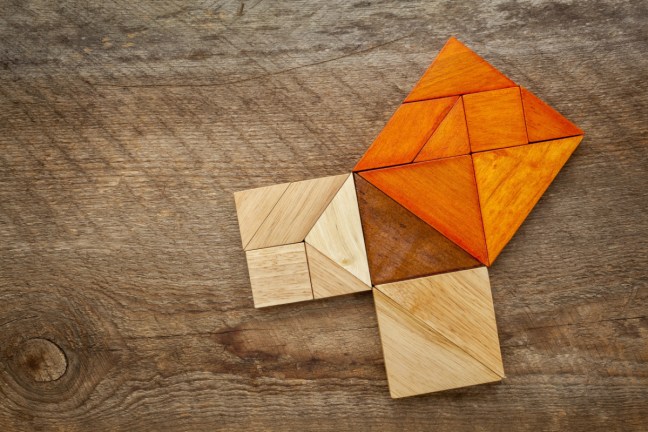
Thursday is Pythagorean Triple Day, one of the rarest math holidays.
The numbers of Thursday’s date: 7/24/25 or 24/7/25, fit the pattern of the Pythagorean Theorem: 7 squared + 24 squared = 25 squared.
Any three numbers that fit the a2 + b2 = c2 pattern form a Pythagorean Triple.

Sue VanHattum and I were chatting about her young adult math books.
[Sue would love to get your help with beta-reading her books. Scroll down to the bottom of this post for details.]
In the first book of the series, Althea and the Mystery of the Imaginary Numbers, Althea learns that Tartaglia came up with a formula to solve cubic equations and wrote about it in a poem.
Sue had discovered an English translation of that poem and shared it with me. (You can read it on JoAnne Growney’s blog.) Then we wondered whether we could come up with a simpler poem, something an algebra student might be able to follow.
Perhaps you and your kids would enjoy making up poems, too. An algebra proof-poem might be too difficult for now, but check out my blog for math poetry ideas.
“Play and rigor support each other.
“When students are invited to play with math, they learn more deeply, more robustly, and remember more consistently.
“Play is promoted as something that can engage kids and give them a more positive attitude about school, but it’s easy to assume that it’s not useful for learning, when in reality the opposite is true:
“The student who is playing tends to be the student who is learning most deeply.”
—Dan Finkel, Math for Love newsletter

“We know that algorithms are amazing human achievements, but they are not good teaching tools because mimicking step-by-step procedures can actually trap students into using less sophisticated reasoning than the problems are intended to develop.”
— Pam Harris, Math Is Figure-Out-Able Podcast
Whether you work with a math curriculum or take a less-traditional route to learning, do not be satisfied with mere pencil-and-paper competence. Instead, work on building your children’s mental math skills, because mental calculation forces a child to understand arithmetic at a much deeper level than is required by traditional pencil-and-paper methods.
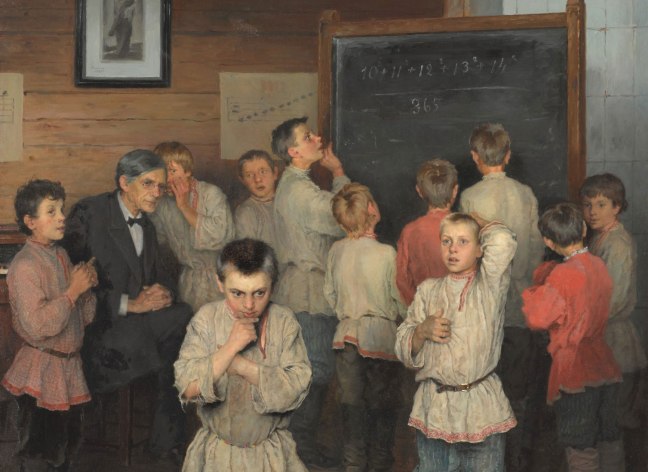
“If you stay with meaningful mental arithmetic longer, you will find that your child, if she is average, can do problems much more advanced than the level listed for her grade. You will find that she likes arithmetic more.
“And when she does get to abstractions, she will understand them better.
“She will not need two or three years of work in primary grades to learn how to write out something like a subtraction problem with two-digit numbers. She can learn that in a few moments of time, if you just wait.”
—Ruth Beechick, An Easy Start in Arithmetic

We were eclectic homeschoolers back in the Dark Ages before there was an internet. Our primary curriculum was the public library.
As we went along, I noticed how many of our homeschooling friends felt uncomfortable with math, and even hated or feared the subject.
Math anxiety runs rampant in Western culture. By one researcher’s estimate, more than 90% of adults experience some level of math anxiety — that is, discomfort, avoidance, and even emotional pain when faced with a math calculation.
So I became a sort of “math evangelist” in the homeschooling community, spreading the news that we can find beauty and fun even in math.
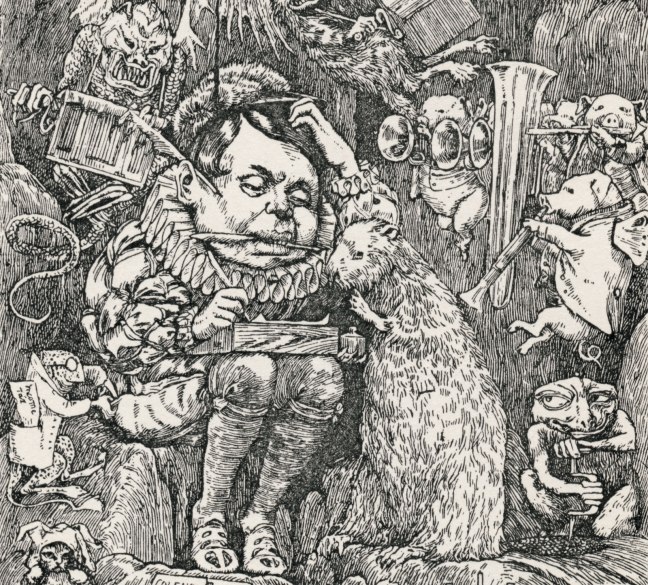
On a friend’s blog, I found this delightful letter written by Charles Lutwidge Dodgson to a young man named Wilton Cox.
The pseudonym Lewis Carroll comes from an alteration of the Latinized name Carolus (for Charles) and the replacement of Lutwidge with Lewis.
One of the best ways we can help our children learn mathematics (or anything else) is to be lifelong learners ourselves.
Here are a few stories to read as you sip your morning brew. . .

When I was in school, math was something each person did on their own for homework, quizzes or tests.
Even when the teacher sent us to work on the chalkboard, each person did their own problem. We would never think to collaborate on math.
To look at someone else’s answer was considered cheating.

