One of the best ways we can help our children learn mathematics (or anything else) is to be lifelong learners ourselves.
Here are a few stories to read as you sip your morning brew:
- Download your printable Morning Coffee journal.

One of the best ways we can help our children learn mathematics (or anything else) is to be lifelong learners ourselves.
Here are a few stories to read as you sip your morning brew:

Mary Everest Boole, wife of English mathematician George Boole, once described algebra as “thinking logically about the fact of our own ignorance.”
This definition made me chuckle. Like any human being, I am ignorant on many things, but I usually avoid thinking about that.
So I wondered what would happen if I took Mrs. Boole’s advice and tried thinking logically about my ignorance.
How far could I go?
Perhaps you’d like to try this experiment with your children. All you need is a pen and paper or a whiteboard and markers and a bit of curiosity.
 And if you enjoy this exploration, check out my Math Journaling Adventures project to discover how playful writing activities can help your students learn mathematics. Preorder your books today!
Continue reading Math Journal: Playing with My Own Ignorance
One of the best ways we can help our children learn mathematics (or anything else) is to be lifelong learners ourselves.
Here are a few stories to read as you sip your morning brew. . .
Download your printable Morning Coffee journal
Continue reading Morning Coffee: When Math Makes You Feel Stupid

My Math Journaling Adventures Series is now available on Kickstarter.
I love these books!
Writing is one of the best ways to learn math deeply, because wrestling our thoughts into words forces us to figure out what we really believe.
It’s the natural, no-stress way to build our children’s understanding and confidence.
Hit the button to visit the campaign and order your books:
Math Journaling Adventures Kickstarter ❯
Continue reading Why I Love the Math Journaling Adventures Series
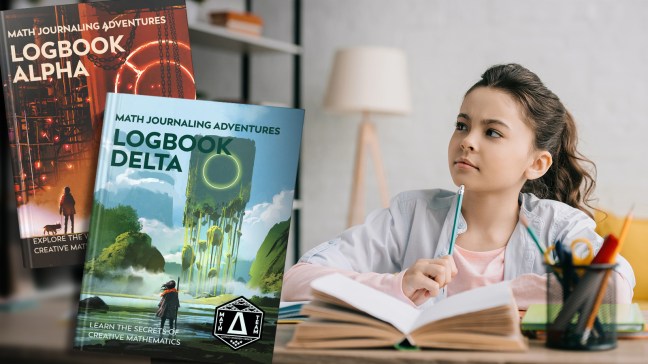
And so it begins: the Math Journaling Adventures is LIVE on Kickstarter!
⭐ Don’t delay! First-day backers get the best deals. Choose one of the Earlybird rewards:
To have a successful campaign, we need plenty of people to back the project early. The more supporters we get in these early days, the more likely the Kickstarter platform folks will help spread the news for us.
Continue reading Math Journaling Adventures Launched: Order Your Copy Today

I have a new podcast interview, and I think you’ll enjoy it!
Check out Pam Barnhill’s Homeschool Better Together on your favorite podcast app, or listen on the website:
Here’s an excerpt…
Lately, I’ve spent most of my writing time thinking about the value of narration—the Charlotte Mason approach to teaching by getting kids to put ideas in their own words.
For students, I’m writing a new series of Math Adventure Journals to get them thinking about math and putting those thoughts into words. If you’re interested, sign up to be notified when the Kickstarter goes live.
But we parents can harness the value of narration in our own learning. After all, one of the best ways we can help our children learn mathematics (or anything else) is to be lifelong learners ourselves.
To that end, I’ve decided to relaunch my “Morning Coffee” series of professional development posts for homeschooling parents.

I recently listened to you on Cindy Rollins’ podcast, and I was captivated by your perspective on math. It was exciting, freeing, and wonder-filled. I would absolutely love to be able to teach in the ways you described.
We use early-elementary Saxon Math right now, which is thorough, but has SO MUCH to do that I’ve always struggled to do it all. Then I feel like I’m missing things, and I never know quite what is important. And yet, the actual lessons move so slowly that my kids get bored with the repetition.
I use a published curriculum because I have no idea of an appropriate scope and sequence, or similar flow of learning. With your playful approach to math, how do I know where to start, and what to do each day?
Do you have a suggested order to approach your books to have a full math approach? A sort of curriculum, per se, using your books.
[For those who missed my chat with Cindy Rollins about a Charlotte Mason approach to math, you can listen to it here.]
Continue reading FAQ: Can I Use Your Books as a Math Curriculum?
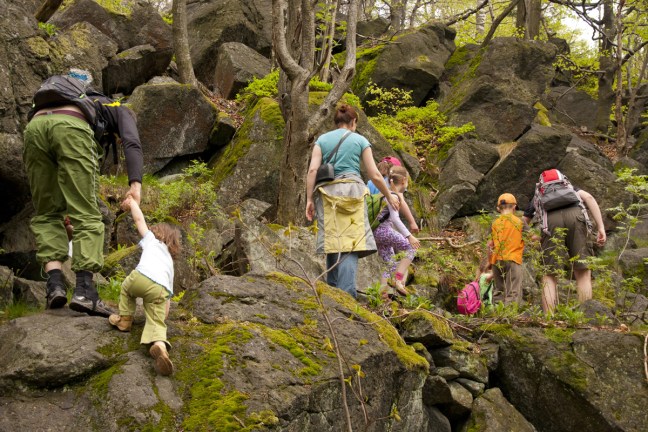
“I love your image of math as a nature walk. My children are ready to start their homeschooling journey, and I want to put them on the right track from the beginning. How can I help them think about math and problem-solving without using a textbook?”
The most difficult part of teaching our children real math is to change our own way of thinking about the subject you’ve already taken that step, so it looks like your family’s learning journey is off to a great start.
[For readers who are wondering what I mean by math as a nature walk, check out this post. You may also enjoy my article on natural learning: Math with Young Children.]

Correct answers are important, of course, but as children explain their thinking, they will often catch and fix mistakes on their own.
“Two and two make four and cannot by any possibility that the universe affords be made to make five or three. From this point of view, of immutable law, children should approach Mathematics; they should see how impressive is Euclid’s ‘Which is absurd,’ just as absurd as would be the statements of a man who said that his apples always fell upwards, and for the same reason.”
— Charlotte Mason, Towards a Philosophy of Education
“Most remarks made by children consist of correct ideas badly expressed. A good teacher will be wary of saying ‘No, that’s wrong.’ Rather, he will try to discover the correct idea behind the inadequate expression. This is one of the most important principles in the whole of the art of teaching.”
— W. W. Sawyer, Vision in Elementary Mathematics
Continue reading Charlotte Mason Math: Practical Tips for a Living Math Education

