A Revolutionary New Approach to Homeschool Math

There’s a great new homeschool math program that can radically transform your children’s experience of math, building understanding through creative exploration.

First, a bit of history…

What Is Algebra Before Arithmetic?

Back when I was still homeschooling, I read a couple of articles by Keith Devlin about the benefits of teaching children algebra, even before they study numbers.

As a homeschooler leaning toward Charlotte Mason-style education, I found the notion of algebra-first math intriguing. What if we could introduce students to the big ideas of math, the foundational concepts that explain how numbers relate, before they get distracted by details like math facts and memorized rules?

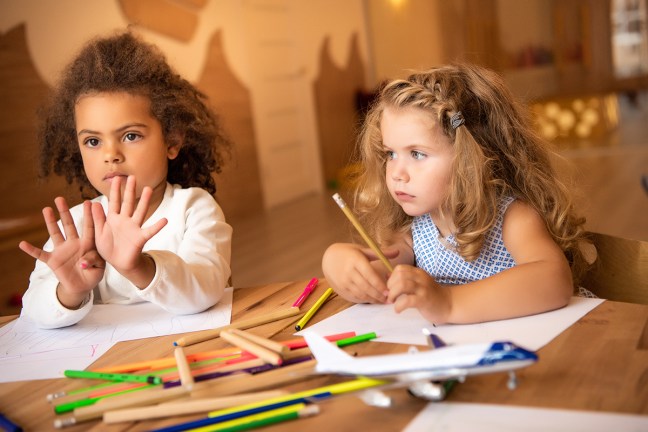
Continue reading A Revolutionary New Approach to Homeschool Math

Podcast: Cultivating Math Curiosity and Reasoning in Kids

I have a new podcast interview, and I think you’ll enjoy it!

Check out Learning Is Disruptable on your favorite podcast app, or listen on the website:

Go to the podcast ❱

Here’s an excerpt…

“I think the most important thing that we need to change…we need to radically change what our idea is of what it means to learn math.

    “Our biggest failure, both in the classroom and in homeschool settings, is that we’ve given our children a totally wrong idea of what math is all about.

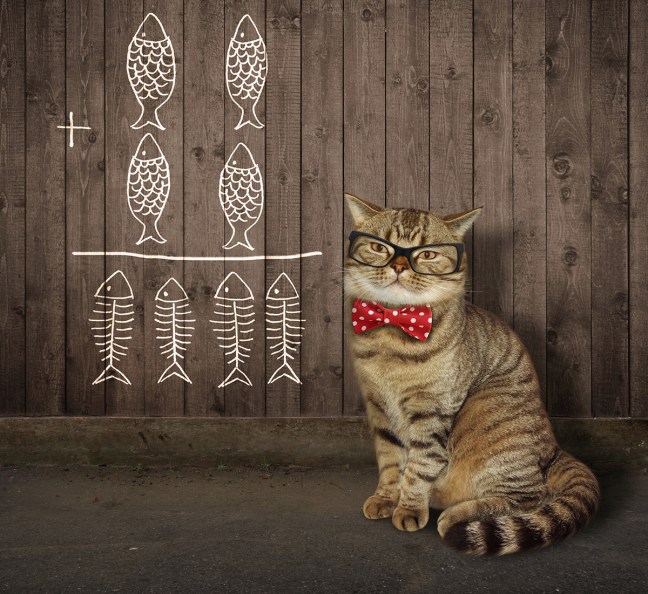
    Continue reading Podcast: Cultivating Math Curiosity and Reasoning in Kids

    Playful Math Education 162: The Math Games Carnival

    Welcome to the 162nd edition of the Playful Math Education Blog Carnival — a smorgasbord of delectable tidbits of mathy fun. It’s like a free online magazine devoted to learning, teaching, and playing around with math from preschool to high school.

    Bookmark this post, so you can take your time browsing.

    There’s so much playful math to enjoy!

    By tradition, we start the carnival with a puzzle/activity in honor of our 162nd edition. But if you’d rather jump straight to our featured blog posts, click here to see the Table of Contents.

    Try This Puzzle/Activity

    The number 162 is a palindromic product:

    162 = 3 x 3 x 2 x 3 x 3
    and 162 = 9 x 2 x 9

    • How would you define palindromic products?
    • What other numbers can you find that are palindromic products?
    • What do you notice about palindromic products?
    • What questions can you ask?

    Make a conjecture about palindromic products. (A conjecture is a statement you think might be true.)

    Make another conjecture. How many can you make? Can you think of a way to investigate whether your conjectures are true or false?

    Click here for all the mathy goodness!

    The Colors-of-Fall Carnival: Playful Math #160

    Welcome to the 160th edition of the Playful Math Education Blog Carnival — a smorgasbord of delectable tidbits of mathy fun. It’s like a free online magazine devoted to learning, teaching, and playing around with math from preschool to high school.

    Bookmark this post, so you can take your time browsing.

    There’s so much playful math to enjoy!

    By tradition, we start the carnival with a puzzle/activity in honor of our 160th edition. But if you’d rather jump straight to our featured blog posts, click here to see the Table of Contents.

    Try This Puzzle/Activity

    Appropriately for an October carnival, 160 is an evil number.

    A number is evil if it has an even number of ones in binary form. Can you find the binary version of 160? (Hint: Exploding Dots.)

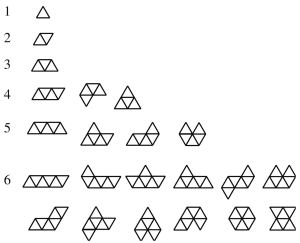
    160 is also a polyiamond number. If you connect 9 equilateral triangles side-to-side, a complete set of 9-iamond shapes would have 160 pieces.

    But sets that large can be overwhelming. Try playing with smaller sets of polyiamonds. Download some triangle-dot graph paper and see how many different polyiamond shapes you can make.

    What do you notice? Does it make you wonder?

    What designs can you create with your polyiamonds?


    Photo by Daiga Ellaby on Unsplash

    Click here for all the mathy goodness!

    Limited Time Book Deals

    Do you want to help your children master problem-solving skills?

    Check out my temporary online store for anyone who missed the Kickstarter.

    Through the end of September, you can place a preorder for the early-release edition of Word Problems from Literature, along with the Word Problems Student Workbook and exclusive Audio Commentary (or any of my other books or printable math activity guides).

    I’ll lock down the preorder store when I’m ready to send the Kickstarter order to my printer.

    Books will be delivered with the Kickstarter orders: Digital items in October, physical books by the end of December.

    Shop Now ❯

    Playful Math: Getting Students To Write Their Own

    To wrap up our week of exploring the resources from Word Problems from Literature, let’s talk about getting students to write their own math.

    Check in on the Kickstarter

    First up, I’m sharing an excerpt from the Word Problems Student Workbook. The “Story Problem Challenge” is one of my favorite math club activities.

    Following that, you’ll find an amazing online mathemagical adventure for middle school: The Arithmetiquities. It’s great fun, and a great inspiration for students to create their own math stories.

    Have fun writing math with your kids!

    The Story Problem Challenge

    What do you get when you cross a library book or favorite movie with a math worksheet? A great alternative to math homework!

    The rules are simple:

    (1) Choose a worksheet calculation to be the basis for your word problem.

    (2) Solve the calculation.

    (3) Consider where these numbers could make sense in your book or movie universe. How might the characters use math? What sort of things would they count or measure? Do they use money? Do they build things, or cook meals, or make crafts? Do they need to keep track of how far they have traveled? Or how long it takes to get there?

    (4) Write your story problem.

    To make the game easier, you may change the numbers to make a more realistic problem. But you must keep the same type of calculation. For example, if your worksheet problem was 18÷3, you could change it to 18÷6 or 24÷3 or even 119÷17 to fit your story, but you can’t make it something like 18−3.

    Remember that some quantities are discrete and countable, such as hobbits and fireworks. Other quantities are continuous, such as a barrel of wine or a length of fabric. Be sure to consider both types when you are deciding what to use in your problem.

    Then share your problem with friends, and you try their problems. Can you stump each other?

    A Note about Copyright and Trademarks

    Old books are in the public domain, so you can always use characters like Robin Hood, Sherlock Holmes, or Winnie-the-Pooh (but not the newer Disney version with the red jacket). But most books and movies are the protected intellectual property of their authors or estates, or of the company who bought those rights.

    When you write problems for your own private use, feel free to use your favorite characters from any story. That’s like fan fiction, secret, just for your own pleasure.

    But if you decide to share your creation beyond your own home or classroom, then be sure to “genericize” it first. Change or remove the proper names, using general descriptions instead.

    For example, if you love the Harry Potter series, you might want to use Harry or Hermione in your story problems. Instead, write about “the boy wizard destined to fight an evil sorcerer.” Or “the bright young witch who can master any spell.”

    Or if you like the Star Wars movies, you might write about “an interstellar justice warrior with an energy sword.” Or “an alien master of martial arts training a cocky but inexperienced apprentice.”

    We’d love to add your story to the Student Math Makers Gallery.

    The Arithmetiquities
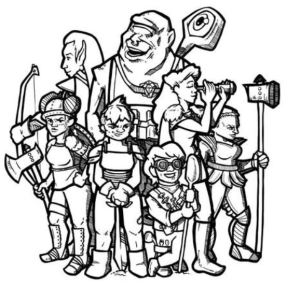
    When the world of Sfera is threatened by the machinations of a malevolent sorcerer, it will be up to a band of unlikely heroes to become the brightest light in the darkness.

    The adventurers fan out across the land to find and retrieve the Arithmetiquities, a set of ancient mathemagical artifacts.

    The Arithmetiquities is a fantasy adventure story told through a sequence of 36 mathematical puzzles.

    Join the Adventure

    “Though it is still before sunrise, Lumparland Harbor is already bustling. Sailing ships moor at the misty docks, bringing travelers and goods to the seaside town. Three dwarves disembark from different ships, each adventurer returning home from some faraway locale. The three women gather at the end of the pier.

      “The strangers discover that they all live along the main road that leads from the harbor, so they decide to split the cost of a wagon. Egga lives 10 miles away, Floora lives 20 miles away, and Greeta lives 30 miles away. The wagon ride costs $1.50 per mile regardless of the number of passengers.

        “How much should each of the adventurers pay so that each one has a fair fare?”

        —Jason Ermer, “Lumparland Harbor,” The Arithmetiquities Chapter I

         
        * * *

        This blog is reader-supported.

        If you’d like to help fund the blog on an on-going basis, then please head to my Patreon page.

        If you liked this post, and want to show your one-time appreciation, the place to do that is PayPal: paypal.me/DeniseGaskinsMath. If you go that route, please include your email address in the notes section, so I can say thank you.

        Which I am going to say right now. Thank you!

        “Playful Math: Getting Students To Write Their Own” copyright © 2022 by Denise Gaskins. Image at the top of the post copyright © Hannah Olinger via Unsplash.com.
        Numberless Word Problems

        As I mentioned yesterday, my new book includes links to online resources to help you play with word problems. So this week, I’m sharing a few of my favorites.

        Visit the Kickstarter

        Today we examine a time-tested method to help kids reason about math: Leave out the numbers.

        First up, there’s Brian Bushart’s numberless problem bank for young students. Then we’ll look at Farrar Williams’s modern revision of a math teaching classic with problems for upper-elementary and middle school students.

        Have fun thinking math with your kids!

        Word Problem Bank

        Word problems are commonplace in mathematics classrooms, and yet they regularly confound students and lead to frustrated teachers saying things like:

        • “They just add all the numbers! It doesn’t matter what the problem says.”
        • “They don’t stop to think! They just start computing as soon as they’re done reading the problem.”

        Brian Bushart offers a collection of ready-to-go slide presentations that walk through the steps of making a word problem make sense.

        Visit the Site

        Math With No Numbers

        Discover Farrar Williams’s book Numberless Math Problems: A Modern Update of S.Y. Gillian’s Classic Problems Without Figures, available in ebook or paperback.

        Williams writes: “In order to answer the question, they’ll have to explain it, because the problem doesn’t give you anything to calculate with. The only way to answer is by explaining your process. See how sneaky a numberless problem is? It makes students really think about the process of solving the problem.”

        Find Out More

        “When students face a word problem, they often revert to pulling all the numbers out and “doing something” to them. They want to add, subtract, multiply, or divide them, without really considering which operation is the right one to perform or why.

          “When you don’t have numbers, it sidesteps that problem.

            “For students who freeze up when they see the numbers, this can be a really good way to get them to think about their process with math.”

            —Farrar Williams, Math With No Numbers

            CREDITS: Feature photo (top) by saeed karimi via Unsplash.com.

            Problem Solving with James Tanton

            At the back of my new Word Problems from Literature book, I’ve included an appendix with links to recommended online resources.

            Check in on the Kickstarter

            So I thought this week, I’d share some of my favorites with you. First up: Problem Solving Tips from James Tanton.

            You may know Tanton from the popular Exploding Dots and other activities at the Global Math Project website. But he’s been busy for decades sharing the delight and the beauty of the subject. He currently serves as the Mathematician-at-Large for the Mathematical Association of America.

            Read on to discover several of Tanton’s best problem-solving tips for middle school and older students.

            Have fun exploring math with your kids!

            How to Think like a School Math Genius

            In this 4-video series, Tanton presents five key principles for brilliant mathematical thinking, along with loads and loads of examples to explain what he means by each of them. A call for parents and teachers to be mindful of the life thinking we should foster, encourage, promote, embrace and reward — even in a math class!

            Watch the Videos

            Two Key — but Ignored —Steps to Solving Any Math Problem

            How many degrees in a Martian circle?
            Every challenge or problem we encounter in mathematics (or life!) elicits a human response. The dryness of textbooks and worksheets in the school world might suggest otherwise, but connecting with one’s emotions is fundamental and vital for success — and of course, joy — in doing mathematics.

            Read the Article

            MAA AMC Curriculum Inspirations

            Essays and videos showing how to approach math puzzles in a way that a) is relevant and connected to the curriculum, and b) revels in deep, joyous, mulling and flailing, reflection, intellectual play and extension, insight, and grand mathematical delight.

            Scroll down and start with the Ten Problem-Solving Strategies.

            Download the Puzzles

            Think Puzzles and Think Cool Math

            Here are some essays illustrating astounding tidbits of mathematical delight. And here are some purely visual puzzles to surprise.

            Explore and Enjoy

            “The true joy in mathematics, the true hook that compels mathematicians to devote their careers to the subject, comes from a sense of boundless wonder induced by the subject.

              “There is transcendental beauty, there are deep and intriguing connections, there are surprises and rewards, and there is play and creativity.

                “Mathematics has very little to do with crunching numbers. Mathematics is a landscape of ideas and wonders.”

                —James Tanton

                CREDITS: Feature photo (top) by Ian Stauffer via Unsplash.com.

                Why Word Problems?

                Wow! My Word Problems from Literature Kickstarter is just barreling along. I love seeing how many people are interested in a playful approach to teaching math.

                Check It Out

                But you might wonder: Why do I care so much about word problems?

                In many textbooks, word problems are an afterthought tacked on to the end of a math lesson.

                For me, it’s just the opposite. Word problems are the key part of a lesson, because that’s where children come face-to-face with the meanings of math concepts.

                The Key to Learning Math

                If we want our children to learn real math, we need to offer them plenty of problems to solve. A child may work through several pages of number calculations by rote, following memorized steps, but a good problem demands more thought.

                A story problem puts flesh on the abstract bones of arithmetic. Word problems encourage children to ponder what it means for one thing to be bigger than another, or smaller, or faster, or slower, or made up of several parts.

                Word Problems from Literature will feed your child’s mathematical imagination with story problems inspired by classic books, from 2nd-grade stories based on Mr. Popper’s Penguins to prealgebra stumpers inspired by The Lord of the Rings.

                And when you finish my puzzles, I’ll show you how to create your own word problems from literature, using your children’s favorite story worlds.

                The Trouble with Word Problems

                Most young children solve math problems by the flash-of-insight method: They hear the problem, and they know by instinct how to solve it.

                This is fine for simple problems like “Four kittens played with a yarn ball. Two more kittens came to join the fun. Then how many kittens were playing with the yarn ball?”

                When problems grow more difficult, however, that flash of insight becomes less reliable, so we find our children fidgeting with their paper or staring out the window. They complain, “I don’t know what to do. It’s too hard.”

                Too often, the frustrated child concludes, “I’m just not good at math.”

                But the truth is that nobody is good at math, if you define “good at math” to mean they can see the answer instantly. Here’s a more useful definition: You’re good at math if you have problem-solving tools and know how to use them.

                And that is something everyone can learn.

                Word Problems from Literature and the Word Problems Student Workbook will show you how. Order your copies today!

                Visit the Kickstarter

                 
                * * *

                This blog is reader-supported.

                If you’d like to help fund the blog on an on-going basis, then please head to my Patreon page.

                If you liked this post, and want to show your one-time appreciation, the place to do that is PayPal: paypal.me/DeniseGaskinsMath. If you go that route, please include your email address in the notes section, so I can say thank you.

                Which I am going to say right now. Thank you!

                “Why Word Problems?” copyright © 2022 by Denise Gaskins. Photos copyright © TarasMalyarevich, ArturVerkhovetskiy, Wavebreakmedia / Depositphotos.

                Sample My New Playful Word Problems Book

                I’m so excited to announce that on August 9th, I’m launching my newest playful math book, Word Problems from Literature (2nd Edition).

                And the prelaunch page is now live! You can sign up to get an email from Kickstarter as soon as the campaign launches.

                Visit the Prelaunch Page
                (free Kickstarter account required)

                This is one of my all-time favorite books, and I’ve had so much fun with this new edition — adding stories, writing make-your-own-problem prompts, sneaking a few teaching tips into the worked-out solutions, creating an almost-magical guide to helping kids reason their way through math problems.

                I’ve put together a free 14-page printable (pdf) “Word Problems Sampler” to give you a taste of things to come, including three ready-to-use student workbook pages.

                Check it out:

                Download the Sample Pages

                Help Your Kids Learn Math the Creative Way

                • Are you a parent trying to help your child learn math?
                • Or a teacher looking for creative ideas for your classroom?
                • Or a homeschooling parent hoping to enrich your student’s understanding?

                Then you’ll love Word Problems from Literature and the Word Problems Student Workbook because they prepare your children for school success, providing the tools they need to solve tough math problems.

                Feed your child’s mathematical imagination with puzzles inspired by classic books, from 2nd-grade stories based on Mr. Popper’s Penguins to prealgebra stumpers inspired by The Lord of the Rings.

                Hit the button to visit the prelaunch page and sign up for notifications:

                Get Notified