Playful Math Education Carnival 147

Welcome to the 147th edition of the Playful Math Education Blog Carnival — a smorgasbord of delectable tidbits of mathy fun. It’s like a free online magazine devoted to learning, teaching, and playing around with math from preschool to high school.
Bookmark this post, so you can take your time browsing. There’s so much playful math to enjoy!

By tradition, we start the carnival with a puzzle in honor of our 147th edition. But if you’d rather jump straight to our featured blog posts, click here to see the Table of Contents.

Continue reading Playful Math Education Carnival 147

Playful Math Carnival 144: Anniversary Edition

Welcome to the 144th edition of the Playful Math Education Blog Carnival — a smorgasbord of delectable tidbits of mathy fun. It’s like a free online magazine devoted to learning, teaching, and playing around with math from preschool to high school.
Bookmark this post, so you can take your time browsing.

There’s so much playful math to enjoy!

By tradition, we would start the carnival with a puzzle/activity in honor of our 144th edition. But this time, I want to take a peek back at the history of our carnival.

But if you’d rather jump straight to our featured blog posts, click here to see the Table of Contents.

Continue reading Playful Math Carnival 144: Anniversary Edition

The Professor of Legend

The traditional mathematics professor of the popular legend is absentminded.

    He usually appears in public with a lost umbrella in each hand.

      He prefers to face the blackboard and to turn his back to the class.

        He writes a, he says b, he means c; but it should be d.

          Some of his sayings are handed down from generation to generation.

            • “In order to solve this differential equation you look at it till a solution occurs to you.”
            • “This principle is so perfectly general that no particular application of it is possible.”
            • “Geometry is the science of correct reasoning on incorrect figures.”
            • “My method to overcome a difficulty is to go round it.”
            • “What is the difference between method and device? A method is a device which you used twice.”

            George Pólya
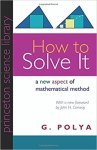
            How To Solve It

            If you’re not familiar with Polya’s work, here’s a 4-page summary of his problem-solving method.

            Or check out David Butler’s wonderful Solving Problems Poster, which encapsulates Pólya’s system in a visual, easy-to-follow way that works with younger students, too.

            4 steps to solving problems

            CREDITS: “Professor” cartoon (top) by André Santana via Pixabay.
            THE FINE PRINT: I am an Amazon affiliate. If you follow the book link above and buy something, I’ll earn a small commission (at no cost to you).

            Math as a Verb

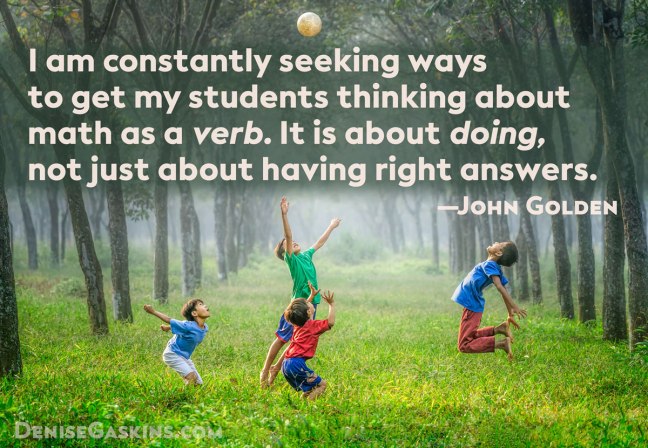
            Here’s the full quote:

            I like to play games. Almost any type of game.

            I also like to play math.

            If you’ve known enough mathematicians, you may have noticed that this isn’t unusual. I’m not sure if a love of games and puzzles among mathematicians exceeds a love of music among mathematicians, but both are strong and intersect.

            Math in play is also a way of teaching mathematics. I think that as a metaphor, it best describes how I want to teach math.

            I am constantly seeking ways to get my students thinking about math as a verb. It is about doing, not just about having right answers or the end product.

            Games help set the culture I want to develop: Teaching students that multiple approaches and strategies are valued; trying is safe; and conversations about why, how, and discovery are the goals.

            —John Golden
            Yes, Playing Around

            CREDITS: “Football outside Jakarta” photo by Robert Collins on Unsplash.

            Playful Math Carnival #142: Math Art Edition

            Welcome to the 142nd edition of the Playful Math Education Blog Carnival — a smorgasbord of delectable tidbits of mathy fun. It’s like a free online magazine devoted to learning, teaching, and playing around with math from preschool to high school.
            Bookmark this post, so you can take your time browsing.

            Seriously, plan on coming back to this post several times. There’s so much playful math to enjoy!

            By tradition, we start the carnival with a puzzle/activity in honor of our 142nd edition. But if you’d rather jump straight to our featured blog posts, click here to see the Table of Contents.

            Activity: Planar Graphs

            According to the OEIS Wiki, 142 is “the number of planar graphs with six vertices.”

            What does that mean?

            And how can our students play with it?

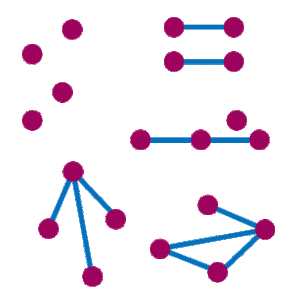
            A planar graph is a set of vertices connected (or not) by edges. Each edge links two vertices, and the edges cannot intersect each other. The graph doesn’t have to be fully connected, and individual vertices may float free.

            Children can model planar graphs with three-dimensional constructions using small balls of playdough (vertices) connected by toothpicks (edges).
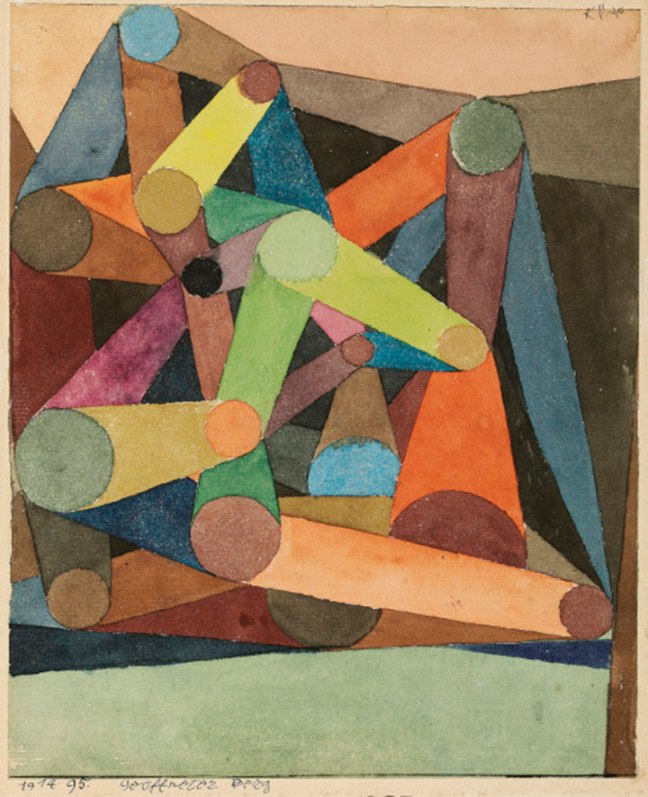


            Let’s start with something smaller than 142. If you roll four balls of playdough, how many different ways can you connect them? The picture shows five possibilities. How many more can you find?

            Sort your planar graphs into categories. How are they similar? How are they different?

            A wise mathematician once said, “Learning is having new questions to ask.” How many different questions can you think of to ask about planar graphs?

            Play the Planarity game to untangle connected planar graphs (or check your phone store for a similar app).

            Or play Sprouts, a pencil-and-paper planar-graph game.

            For deeper study, elementary and middle-school students will enjoy Joel David Hamkins’s Graph coloring & chromatic numbers and Graph theory for kids. Older students can dive into Oscar Levin’s Discrete Mathematics: An Open Introduction. Here’s the section on planar graphs.

            [“Geöffneter Berg” by Paul Klee, 1914.]

            Click here for all the mathy goodness!

            To Badger a Child

            Here’s the full quote:

            Audrey seemed, for once, at a loss for words. She was thinking about the question.

            I try to stay focused on being silent after I ask young children questions, even semi-serious accidental ones. Unlike most adults, they actually take time to think about their answers and that often means waiting for a response, at least if you want an honest answer.

            If you’re only looking for the “right” answer, it’s fairly easy to gently badger a child into it, but I’m not interested in doing that.

            —Thomas Hobson
            Thank You For Teaching Me

            CREDITS: “Pismo Beach, United States” photo by Tim Mossholder on Unsplash.

            How to Homeschool Math

            Far too many people find themselves suddenly, unexpectedly homeschooling their children. This prompts me to consider what advice I might offer after more than three decades of teaching kids at home.

            Through my decades of homeschooling five kids, we lived by two rules:

            Do math. Do reading.

            As long as we hit those two topics each day, I knew the kids would be fine. Do some sort of mathematical game or activity. Read something from that big stack of books we collected at the library.

            Conquer the basics of math and reading, then everything else will fall into place.

            Continue reading How to Homeschool Math

            Morning Coffee – 4 November 2019

            Morning Coffee image

            One of the best ways we can help our children learn mathematics (or anything else) is to always be learning ourselves.

            Here are a few stories to read with your Monday morning coffee:

            “Games aren’t just about practice and fluency. My favorite games create opportunities for learning, too. They spark discourse, promote the use of strategies, and allow students to dig into the mathematics.”

            —Jenna Laib
            The Simple-but-High-Leverage Game Collection: Making Games Routine

            • Have you read Pam Harris’s Development of Mathematical Reasoning series? Check out Part 1, Part 2, and Part 3. Well worth your time!

            “The teacher’s role is to help students change the way they think, in increasingly sophisticated ways. The goal is not answers. The goal is development. We don’t need students who can just answer a multiplication question, we need students who can reason multiplicatively.”

            —Pam Harris
            The Development of Mathematical Reasoning

            CREDITS: Feature photo (top) by Kira auf der Heide via Unsplash. “Morning Coffee” post format inspired by Nate Hoffelder at The Digital Reader.

            Morning Coffee – 28 October 2019

            Morning Coffee image

            One of the best ways we can help our children learn mathematics (or anything else) is to always be learning ourselves.

            Here are a few stories to enjoy with your Monday morning coffee:

            “When you’re working every day, you’re not thinking, ‘What impact is this going to have on the world?’ You’re thinking, ‘I’ve got to get this right.’”

            —Gladys West
            quoted in Dr. Gladys West: The Black Woman Behind GPS Technology

            • I like to keep a quick game in reserve for spare time in my homeschool co-op class. Kent Haines explains Sprouts and suggests ways to launch math discussions.

            “I don’t get irritated by these mistakes. I desperately wait for such mistakes. Yes! Because I think it is a golden opportunity for the teacher to spot a student thinking this way. It presents just the right context and time for driving an enriching mathematical conversation in the whole class.”

            —Rupesh Gesota
            Part-2: Re-learning and Enjoying Polynomial Division with students

            “To teach students SSS congruence without pointing out why this is so interesting is harmful for two reasons. First of all, this is an amazing result. It is the our job to point out amazing results! Triangles are rigid figures in a way that other polygons are not.”

            —Rachel Chou
            Teaching the Distributive Property

            CREDITS: Feature photo (top) by Kira auf der Heide via Unsplash. “Morning Coffee” post format inspired by Nate Hoffelder at The Digital Reader.

            Morning Coffee – 4 October 2019

            Morning Coffee image

            One of the best ways we can help our children learn mathematics (or anything else) is to always be learning ourselves.

            Here are a few stories to read with your Friday morning coffee:

            • In the spirit of cracking eggs to make omelets, Michael Pershan cracks open some of the ideas around Equations and Equivalence and relational thinking.

            “My experience is that when I have vague hope that children will learn something from an activity that is related to the mathematics I want them to learn, they usually don’t.”

            —David Wees
            Hands on or minds on?

            CREDITS: Feature photo (top) by Kira auf der Heide via Unsplash. “Morning Coffee” post format inspired by Nate Hoffelder at The Digital Reader.