30+ Things to Do with a Hundred Chart

[Photo by geishaboy500 via Flickr (CC BY 2.0).]

Are you looking for creative ways to help your children study math? Even without a workbook or teacher’s manual, your kids can learn a lot about numbers. Just spend an afternoon playing around with a hundred chart (also called a hundred board or hundred grid).

My free 50-page PDF Hundred Charts Galore! printables file features 1–100 charts, 0–99 charts, bottom’s-up versions, multiple-chart pages, blank charts, game boards, and more. Everything you need to play the activities below and those in my new 70+ Things to Do with a Hundred Chart book.

Download Free “Hundred Charts Galore!” Printables

Shop for “70+ Things To Do with a Hundred Chart” Book

And now, let’s play…

Continue reading 30+ Things to Do with a Hundred Chart

What’s Wrong with “Repeated Addition”?

[Photo by Alejandra Mavroski.]

Myrtle called it The article that launched a thousand posts…, and counting comments on this and several other blogs, that may not be too much of an exaggeration. Yet the discussion feels incomplete — I have not been able to put into words all that I want to say. Thus, at the risk of once again revealing my mathematical ignorance, I am going to try another response to Keith Devlin’s multiplication articles.

Let me state up front that I speak as a teacher, not as a mathematician. I am not qualified, nor do I intend, to argue about the implications of Peano’s Axioms. My experience lies primarily in teaching K-10, from elementary arithmetic through basic algebra and geometry. I remember only snippets of my college math classes, back in the days when we worried more about nuclear winter than global warming.

I will start with a few things we can all agree on…

Continue reading What’s Wrong with “Repeated Addition”?

Math History on the Internet

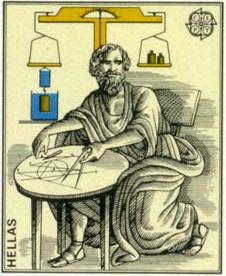
[Image from the MacTutor Archive.]

The story of mathematics is the story of interesting people. What a shame it is that our children see only the dry remains of these people’s passion. By learning math history, our students will see how men and women wrestled with concepts, made mistakes, argued with each other, and gradually developed the knowledge we today take for granted.

In a previous article, I recommended books that you may find at your local library or be able to order through inter-library loan. Now, let me introduce you to the wealth of math history resources on the Internet.

Continue reading Math History on the Internet

Hooray for (Math) History

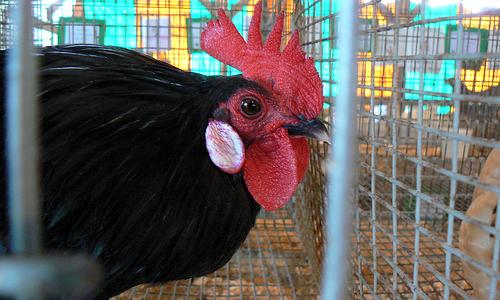
Photo by Benimoto.

John Napier foiled a thief with the aid of logic and a black rooster. For this and other acts of creative problem solving, his servants and neighbors suspected him of witchcraft.

What does this have to do with mathematics?

Math was Napier’s favorite hobby. He invented logarithms to help people handle large numbers easily, and he even created a calculator out of a chessboard. [See how it works: addition, subtraction, multiplication.]

Continue reading Hooray for (Math) History

Quotations XIX: How Do We Learn Math?

He doesn’t learn algebra
in the algebra course;
he learns it in calculus.

I have been catching up on my Bloglines reading [procrastinating blogger at work — I should be going over the MathCounts lesson for Friday’s homeschool co-op class], and found the following quotation at Mathematics under the Microscope [old blog posts are no longer archived].

Continue reading Quotations XIX: How Do We Learn Math?

Word Problems in Russia and America

Andrei Toom calls this an “extended version” of a talk he gave a few years ago at the Swedish Mathematical Society. At 159 pages [2010 updated version is 98 pages], I would call it a book. Whatever you call it, it’s a must-read for math teachers:

Main Thesis: Word problems are very valuable in teaching mathematics not only to master mathematics, but also for general development. Especially valuable are word problems solved with minimal scolarship, without algebra, even sometimes without arithmetics, just by plain common sense. The more naive and ingenuous is solution, the more it provides the child’s contact with abstract reality and independence from authority, the more independent and creative thinker the child becomes.

Continue reading Word Problems in Russia and America

Fraction Models, and a Card Game

Fraction cards

Models give us a way to form and manipulate a mental image of an abstract concept, such as a fraction. There are three basic ways we can imagine a fraction: as partially-filled area or volume, as linear measurement, or as some part of a given set. Teach all three to give your students a well-rounded understanding.

When teaching young students, we use physical models — actual food or cut-up pieces of construction paper. Older students and adults can firm up the foundation of their understanding by drawing many, many pictures. As we move into abstract, numbers-only work, these pictures remain in our minds, an always-ready tool to help us think our way through fraction problems.

Continue reading Fraction Models, and a Card Game

In the News: Teaching Math

Here are a couple of interesting articles about teaching math:

Good Stories, Good Math

Math Trek (Nov. 10, 2007) — Spinning a good yarn may seem to have little to do with mathematics, but a new study suggests otherwise. Preschoolers who tell stories that include many different perspectives do better in math two years later than those who stick to one simple perspective. The researchers believe that the study may highlight a deep connection between mathematical ability and narrative skills… [Hat tip: Wild About Math!]

Gesturing Helps Grade School Children Solve Math Problems

ScienceDaily (Nov. 5, 2007) — Are math problems bugging your kids? Tell them to talk back — using their hands. Psychologists at the University of Chicago report that gesturing can help kids add new and correct problem-solving strategies to their mathematical repertoires. What’s more, when given later instruction, kids who are told to gesture are more likely to succeed on math problems…

Continue reading In the News: Teaching Math

Quiz: Those Frustrating Fractions

[Photo by jimmiehomeschoolmom.]

Fractions confuse almost everybody. In fact, fractions probably cause more math phobia among children (and their parents) than any other topic before algebra. Middle school textbooks devote a tremendous number of pages to teaching fractions, and still many students find fractions impossible to understand. Standardized tests are stacked with fraction questions.

Fractions are a filter, separating the math haves from the luckless have nots. One major source of difficulty with fractions is that the rules do not seem to make sense. Can you explain these to your children?

Start with an easy one…

Question #1

If you need a common denominator to add or subtract fractions…

  • Why don’t you need a common denominator when you multiply?

Continue reading Quiz: Those Frustrating Fractions

Writing to Learn Math

2009 Challenge - Day 72: Pencil
Image by ☼zlady via Flickr

Have you considered experimenting with writing in your math class this year? It seems that math journals are a growing fad, and for good reason:

Writing is how we think our way into a subject and make it our own.

William Zinsser
Writing to Learn

Math journal entries can be as simple as class notes, or they can be research projects that take hours of experimentation and pondering. Students may use the journal to store their thoughts as they work several days to solve a challenge problem of the week, or they might jot down quick reflections about what they learned in today’s math class.

Continue reading Writing to Learn Math