Playful Math for the Summer

playful dog at the beach

I continue to dig myself out of the avalanche of tasks that built up during the years that I spent mostly down south with my mom as she was weakening.

But here are two tidbits of mathy fun that came across my desk recently, which I think you’ll enjoy…

Numberhive Place Value

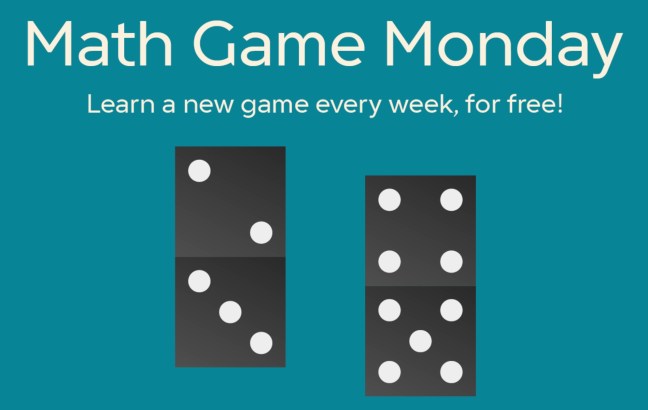
I think I’ve mentioned before how much I love the Numberhive game. They recently posted a series of print-and-play freebies for their new place value variation.

DiceCulus Core Game — Mini PnP

This cool-looking game is in prelaunch on the crowdfunding site Gamefound, but the creator has posted a free Mini Print & Play version you can download now, suitable for prealgebra and up. (The full game will have multiple variations, including a preschool level.)

Math Journaling and Games

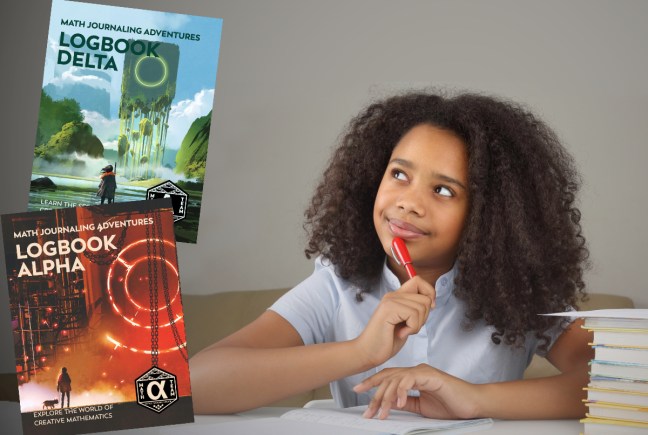
Finally, the Math Journaling Adventures books and kids’ gear are now live in my store, and all my math game books are still on sale through the month of June.

Have fun playing math with your kids!

 
* * *

Are you looking for more creative ways to play math with your kids? Join my free email newsletter.

This blog is reader-supported. If you’d like to help fund the blog on an on-going basis, then please join me on Patreon for mathy inspiration, tips, and an ever-growing archive of printable activities.

“Playful Math for the Summer” copyright © 2025 by Denise Gaskins. Image at the top of the post copyright © damedeeso / Depositphotos.

Musings: Mental Math Is the Key to Algebra

Painting by Nikolay Bogdanov-Belsky, public domain

“If you stay with meaningful mental arithmetic longer, you will find that your child, if she is average, can do problems much more advanced than the level listed for her grade. You will find that she likes arithmetic more.

    “And when she does get to abstractions, she will understand them better.

      “She will not need two or three years of work in primary grades to learn how to write out something like a subtraction problem with two-digit numbers. She can learn that in a few moments of time, if you just wait.”

      —Ruth Beechick, An Easy Start in Arithmetic

      What Do You Mean by Mental Math?

      Mental math is doing calculations in your head, with perhaps the aid of scratch paper or a whiteboard to jot down notes along the way.

      But you cannot simply transfer the standard pencil-and-paper calculations to a mental chalkboard. That’s far too complicated.

      Continue reading Musings: Mental Math Is the Key to Algebra

      Musings: Mathematical Beauty

      photo of child making footprints on the beach

      Memories…

      We were eclectic homeschoolers back in the Dark Ages before there was an internet. Our primary curriculum was the public library.

      As we went along, I noticed how many of our homeschooling friends felt uncomfortable with math, and even hated or feared the subject.

      Math anxiety runs rampant in Western culture. By one researcher’s estimate, more than 90% of adults experience some level of math anxiety — that is, discomfort, avoidance, and even emotional pain when faced with a math calculation.

      So I became a sort of “math evangelist” in the homeschooling community, spreading the news that we can find beauty and fun even in math.

      Continue reading Musings: Mathematical Beauty

      Playful Math Carnival 180 via Math Hombre

      carnival party banner

      If you’re into math education — or just curious about how learning math could possibly be fun — you’ll definitely want to check out the latest edition of the Playful Math Carnival.

      It’s a collection of awesome blog posts curated by John Golden and published on the Math Hombre website:

      The whole point of the carnival is to show that math doesn’t have to be tedious or repetitive. Through a bunch of fun and engaging posts, we celebrate math that’s playful, creative, and totally relevant to everyday life.

      Because what could be more relevant than having fun while we learn?

      In this edition, you’ll find everything from math puzzles and games to humor and much more — even an interesting math art game.

      So if you want to mix up your math teaching and make it more enjoyable for your students (and for yourself), definitely check out the Playful Math Carnival. Happy reading!

      Go Visit the Carnival

      Continue reading Playful Math Carnival 180 via Math Hombre

      Morning Coffee: What Is Mathematics?

      Morning Coffee Lifelong Learning for Parents

      One of the best ways we can help our children learn mathematics (or anything else) is to be lifelong learners ourselves.

      Here are a few stories to read as you sip your morning brew. . .

      Download your printable Morning Coffee journal

      This week’s rabbit hole started with a thought-provoking blog post by Sara Van Der Werf…

      “We are all mathematicians. We all have the power to notice, describe, and generalize patterns. You have all had this ability since birth.

        “If we believe this then every day we must plan lessons that allow students to act as mathematicians. We must put something in front of our students to notice. We must put something in front of our students to describe, to generalize.”

        —Sara Van Der Werf

        Read more about how to develop mathematical thinking in this fourth installment of professional development for homeschooling parents.

         
        * * *

        Are you looking for more creative ways to play math with your kids? Check out all my books, printable activities, and cool mathy merch at Denise Gaskins’ Playful Math Store. Or join my email newsletter.

        This blog is reader-supported. If you’d like to help fund the blog on an on-going basis, then please join me on Patreon for mathy inspiration, tips, and an ever-growing archive of printable activities.

        “Morning Coffee: What Is Mathematics?” copyright © 2025 by Denise Gaskins. Image at the top of post copyright © Kira auf der Heide / Unsplash.

        Monday is Square Root Day

        square tree with roots

        On May 5, we celebrate one of the rarest math holidays: Square Root Day, 5/5/25.

        Here are a few ideas for playing math with squares and roots.

        What is a Square Root?

        Five is the square root of twenty-five, which means it is the number we can “square” (multiply times itself) to get 25.

        The root is the base number from which the square grows. In physical terms, it is the side of the square.

        Imagine a straight segment of length 5, perhaps a stick or a piece of chalk. Now lay that segment down and slide it sideways for a distance equal to its length. Drag the stick across sand, or pull the chalk across paper or a slate.

        Notice how this sideways motion transforms the one-dimensional length into a two-dimensional shape, a square.

        The area of this shape is the square of its root: 5 × 5 = 25.

        What do you think would happen if you could drag the square through a third dimension, or drag that resulting shape through a fourth dimension?
        How many shapes do you suppose might grow from that original root of 5?

        Continue reading Monday is Square Root Day

        Skit: The Handshake Problem

        The handshake problem

        If seven people meet at a party, and each person shakes the hand of everyone else exactly once, how many handshakes are there in all?

        Our homeschool co-op held an end-of-semester assembly. Each class was supposed to demonstrate something they had learned.

        I threatened to hand out a ten question pop quiz on integer arithmetic, but instead my pre-algebra students presented this skit.

        Download a Printable Script

        Cast

        1-3 narrators (or more, if you have a large group)
        7 friends (non-speaking parts, adjust to fit your group)

        Props

        Each friend will need a sheet of paper with a number written on it big and bold enough to be read by the audience. The numbers needed are 0, 1, 2, 3, … up to one less than the number of friends. Each friend keeps his paper in a pocket until needed.

        Continue reading Skit: The Handshake Problem

        Charlotte Mason Math: Living Books

        “The Reading Lesson” painting by Jonathan Pratt, public domain

        [An addendum to my earlier Charlotte Mason Math series.]

        “Our business is to give [children] mind-stuff, and both quality and quantity are essential. Naturally, each of us possesses this mind-stuff only in limited measure, but we know where to procure it; for the best thought the world possesses is stored in books; we must open books to children, the best books; our own concern is abundant provision and orderly serving.”

        — Charlotte Mason, Toward A Philosophy of Education

        Most homeschool teachers, whatever our curriculum or schooling approach, understand the importance of teaching with living books. We read aloud biographies, historical fiction, or the classics of literature. We scour library shelves for the most creative presentations of scientific topics that interest our children, and encourage our high school students to go back to the original documents whenever possible.

        And we teach math with a textbook.

        Not that textbooks are inherently bad, because math is an abstract science. We need to meet the ideas  — the “mind-stuff” — of math on their own terms, and textbooks can help with that.

        But it’s not enough.

        Continue reading Charlotte Mason Math: Living Books