Build Mathematical Skills by Delaying Arithmetic, Part 1

To my fellow homeschoolers,

It’s counter-intuitive, but true: Our children will do better in math if we delay teaching them formal arithmetic skills. In the early years, we need to focus on conversation and reasoning — talking to them about numbers, bugs, patterns, cooking, shapes, dinosaurs, logic, science, gardening, knights, princesses, and whatever else they are interested in.

In the fall of 1929 I made up my mind to try the experiment of abandoning all formal instruction in arithmetic below the seventh grade and concentrating on teaching the children to read, to reason, and to recite — my new Three R’s. And by reciting I did not mean giving back, verbatim, the words of the teacher or of the textbook. I meant speaking the English language.

— L. P. Benezet
The Teaching of Arithmetic I: The Story of an experiment

Continue reading Build Mathematical Skills by Delaying Arithmetic, Part 1

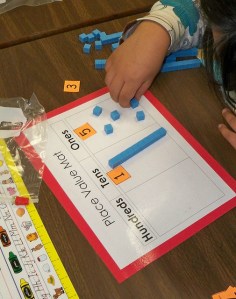
PUFM 1.2 Place Value

Photo by Chrissy Johnson1 via flickr. In this Homeschooling Math with Profound Understanding (PUFM) Series, we are studying Elementary Mathematics for Teachers and applying its lessons to home education.

Our decimal system of recording numbers is ingenious. Once learned, it is a simple, versatile, and efficient way of writing numbers. … But the system is not obvious nor easily learned. The use of place value is subtle, and mastering it is the single most challenging aspect of elementary school mathematics.

Ironically, these challenges are largely invisible to untrained parents and teachers — place value is so ingrained in adults’ minds that it is difficult to appreciate how important it is and how hard it is to learn.

— Thomas H. Parker & Scott J. Baldridge
Elementary Mathematics for Teachers

In other words, we take place value for granted. I know this was true of me when I started teaching my kids. Every year, their textbooks would start with the obligatory chapters on place value, which seemed to me just busywork. I began to appreciate the vital importance of place value when I read Liping Ma’s book and saw how the American teachers were unable to properly explain subtraction or multi-digit multiplication.

Place value is the heart of our number system, the foundation on which all the rest of arithmetic must be built. Because of place value, “The simplest schoolboy is now familiar with facts for which Archimedes would have sacrificed his life.”

Continue reading PUFM 1.2 Place Value

Update: My Math Books

photo by goXunuReviews via Flickr

Are you a homeschooler? Are you happy with your current curriculum, or would you like to break out of the textbook mold and explore math through “living” books and activities? Whether you hope to replace your math program or just to supplement it, I can show you ways to turn math into a learning adventure for the whole family. Your children will build a stronger foundation of understanding when you teach math as a game, playing with ideas.

Nearly a year ago, I wrote:

This blog originally grew out of my books, and now it’s coming full circle: New, expanded editions of my long-out-of-print books are ripening on the vine, growing out of the blog. To bring them to harvest, I’m going to need your help.

It has taken much longer than I had hoped to whip the manuscripts into form. My new goal is to publish ebook editions, since I will be able to sell them for about half what the original books cost twelve years ago. I’m hoping that I can finish at least a couple of the ebooks by mid-summer.

Continue reading Update: My Math Books

PUFM 1.1 Counting

Photo by Iain Watson via flickr. In this Homeschooling Math with Profound Understanding (PUFM) Series, we are studying Elementary Mathematics for Teachers and applying its lessons to home education.

Many things in mathematics need to be understood relationally — that is, in relationship to other concepts. But some things just need to be memorized. How do you know which is which? A homeschooling friend pointed out that one thing children definitely need to memorize is the counting sequence from 1-100 and beyond. While there are some patterns that make counting easier, one does just have to memorize which “nonsense sounds” we have attached to each number.

Another sort-of counting that young students should master is subitizing — recognizing at a glance how many items are in a small group. Children do this instinctively, but we can help them develop the skill by playing subitizing games.

[Aside: In writing this blog post, I ran into some nostalgia. Back when we first did these PUFM lessons, my daughter Kitten was only a toddler. I wrote, “I’ve tried to do lots of counting with my youngest, who hasn’t quite gotten beyond, ‘…eleven, twelve, firteen, firteen, nineteen, seven,…’ The numbers tend to start appearing randomly after she gets past 10.” Ah, memories.]

Continue reading PUFM 1.1 Counting

Free Math from Dover Publications

I love Dover books, don’t you? They publish so-o-o-o-o many interesting titles at reasonable prices. I always have several Dover books on my wishlist, waiting for my next bit of extra cash.

But you don’t have to wait to enjoy free math from Dover books. Sign up for the Dover Sampler, and each week they will send an email with links to content from all sorts of books. Or try the Dover Children’s Sampler and Dover Teacher’s Sampler for coloring books, mazes, literature, and more. All the Dover samplers are completely free, and you can cancel at any time.

From Last Week’s Sampler

Last week’s email included a section on “Exploring Mathematics”:

And that’s only the beginning. Below, I’ve listed a wide variety of math-related links collected from past samplers. Though be warned: Dover does change its website from time to time, so these pages may disappear without notice.

Download, print, enjoy!

Continue reading Free Math from Dover Publications

Working on My Let’s Play Math! Books

Workplace stress caused by an unsuitable work ...
Image via Wikipedia

This blog originally grew out of my books, and now it’s coming full circle: New, expanded editions of my long-out-of-print books are ripening on the vine, growing out of the blog. To bring them to harvest, I’m going to need your help.

The Books

I’m working on the games books first because I think they will be the most helpful supplements to any math program.

  • Let’s Play Math! Number Games for All Ages
    This book will include games like Tens Concentration and Hit Me, as well as tips for teaching negative numbers, the times table, and more. Never before published, because it was planned as the fifth book in my earlier how-to-teach-homeschool-math series, but my self-publishing experiment ended after book four.
  • Others to be announced, if I ever get the first two done…

Continue reading Working on My Let’s Play Math! Books

Good News for a Change

As I was checking through archive posts and clearing out the dead links, I found a couple of links that I thought would be dead but which are still good. So I am re-posting them here, for your browsing pleasure:

Free Shakespeare for Fun and Copywork

CurrClick (which carries the Math Mammoth workbook series) is offering Quotations from Shakespeare’s Plays as a free download. This ebook includes copywork tips from Charlotte Mason and about 30 pages of passages from Macbeth, King Lear, Much Ado About Nothing, etc.

[And if you are planning a study of the Bard, you won’t want to miss the many other Internet resources in my original post.]

Great Leaders in a Crisis: Lincoln, Churchill

What does it take to lead your nation through a crisis? Character, determination, wisdom, the courage of your convictions. What can we learn about leadership from those who have been there, done that?

Abraham Lincoln and Winston Churchill are two of these great leaders — men whose courage and conviction took their nations through challenging moments and forever altered the course of Western civilization…

The Teaching Company (one of my favorite resources for homeschooling high school) is offering two free lectures for the downloading: Great Leaders: Abraham Lincoln and Winston Churchill.

[More details in my original post.]

Old Dogs, New Math

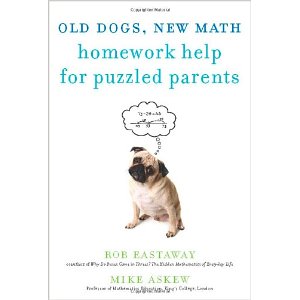
Thanks to the generosity of The Experiment, a nonfiction publisher in New York City, I have one copy of Old Dogs, New Math: Homework Help for Puzzled Parents to give away, which will be mailed directly to the winner AT A U.S. ADDRESS.

You can see the publisher’s description of the book and read an excerpt here.

They also sent me a review copy, which I hope to write a blog post about sometime soon — though with our schedule this semester, I can make no promises. But from a quick flip through the book, I’ll give it a definite thumbs-up!

How to Enter the Giveaway

Remember, the book must be mailed to a U.S. address. If you live in the U.S., you have two ways to enter the contest:

  1. Leave a comment on this post answering the question: What part of math do you find the hardest to understand or to explain to your children?
  2. Post about the contest on your own blog (or on a homeschooling or parenting forum, if you don’t have a blog), then come here and add a comment with the link to your post.

You may do both, to double your chances — but please make sure your link is in a separate comment from your answer to the question, or I may forget to count it separately.

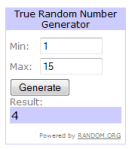
I will accept entries for a week and a half, through Friday, October 8th Monday, October 11th. (Extended due to family issues that made the weekend too busy!) After that, I will count up all the entries (numbered in order of their appearance in the comment section) and go to RANDOM.ORG to generate the winning number. I will email the winner to get your address, which I’ll then pass on to the publisher so they can send you your book.

Update

And the winner is . . . Lakshmi. Congratulations!

Thank you to everyone who participated in the giveaway. I enjoyed reading your comments, and you’ve given me several ideas for future blog posts.

Pirate Treasure: Free Elementary Math

CurrClick is running a Talk Like a Pirate Sale through Wednesday, October 22, and they hid 20 virtual treasure chests around their website — each with a free e-book inside. I haven’t found them all, but here are a couple of preschool and early-elementary treats:

Who knows what else may be hiding in those CurrClick treasure chests? Have fun exploring!

Planning a New Math Club

[Photo by Waponi.]

A few years ago, I had several (potentially) future engineers in our homeschool math club, and we enjoyed the challenge of MathCounts and AMC puzzles — but the current crop of local homeschool students is another story.

Last year’s contest-based club meetings dwindled to one student. Even before the recent MathCounts rule changes, I knew I needed a new plan. The final straw was Kitten, whose moaning complaint that she “hates math” has begun to drive me crazy.

So, what’s a homeschool math teacher to do?

Continue reading Planning a New Math Club