I am delighted to be hosting March’s MTaP Carnival! It’s late because I had the flu for 10 days – sorry for the delay, I know that we all look forward to reading the contributors’ posts each month. Without further delay, then, here are the great reads you won’t want to miss….
The most effective and powerful way I’ve found to commit math facts to memory is to try to understand why they’re true in as many ways as possible. It’s a very slow process, but the fact becomes permanently lodged, and I usually learn a lot of surrounding information as well that helps me use it more effectively.
…
Actually, a close friend of mine describes this same experience: he couldn’t learn his times tables in elementary school and used to think he was dumb. Meanwhile, he was forced to rely on actually thinking about number relationships and properties of operations in order to do his schoolwork. (E.g. I can’t remember 9×5, but I know 8×5 is half of 8×10, which is 80, so 8×5 must be 40, and 9×5 is one more 5, so 45. This is how he got through school.) Later, he figured out that all this hard work had actually given him a leg up because he understood numbers better than other folks. He majored in math in college and is now a cancer researcher who deals with a lot of statistics.
I’ve started collecting quotes about teaching math for the chapter pages in my next Math You Can Play book. Here are a couple snippets that don’t fit the theme of “Multiplication & Fractions,” but they struck my fancy anyway:
If teachers would only encourage guessing. I remember so many of my math teachers telling me that if you guess, it shows that you don’t know. But in fact there is no way to really proceed in mathematics without guessing. You have to guess! You have to have intuitive judgment as to the way it might go. But then you must be willing to check your guess. You have to know that simply thinking it may be right doesn’t make it right.
One of the big misapprehensions about mathematics that we perpetrate in our classrooms is that the teacher always seems to know the answer to any problem that is discussed. This gives students the idea that there is a book somewhere with all the right answers to all of the interesting questions, and that teachers know those answers. And if one could get hold of the book, one would have everything settled. That’s so unlike the true nature of mathematics.
My March “Let’s Play Math” newsletter went out early this morning to everyone who signed up for Tabletop Academy Press math updates. This month’s issue focused on math history stories and puzzles, and it also included links to my newly expanded Math with Living Books pages:
Picture Books and Early Readers
From counting books to math history, picture books offer a gentle introduction to a variety of topics. Elementary and middle school students will also enjoy many of these.
Elementary and Middle School
Patterns, puzzles, games, and activities — here are plenty of ideas to get your children playing around with math.
Problem Solving and Math Circles
From the elementary puzzles to Olympiad-level stumpers, the problems in these books will intrigue and challenge your students.
High School and Beyond
These histories, biographies, and explanations of mathematical concepts are written for an adult general audience, so most of them assume no mathematical knowledge beyond a vague memory of high school.
If you’re a subscriber but didn’t see your newsletter, check your Updates or Promotions tab (in Gmail) or your Spam folder. And to make sure you get all the future newsletters, add “Denise at Tabletop Academy Press” [Tabletop Academy Press @ gmail.com, without spaces] to your contacts or address book.
If you missed this month’s edition, no worries—there will be more playful math snacks coming soon. Click the link below to sign up today!
You could say that Tessalation is a book about tessellations (repeating tiled patterns), but it is really a children’s picture book about discovering order in a chaotic world.
— Emily Grosvenor
Seeing Math in the World
In taking a playful approach to mathematics, I hope to open children’s eyes to math in their world. Schooly math lessons have led many of my math group kids to think a “pattern” has to be a strictly repeating (and rather boring) series of shapes or colors.
But in the real world, patterns are so important that American mathematician Lynn Arthur Steen defined mathematics as the science of patterns.
“As biology is the science of life and physics the science of energy and matter, so mathematics is the science of patterns,” Steen wrote. “We live in an environment steeped in patterns — patterns of numbers and space, of science and art, of computation and imagination. Patterns permeate the learning of mathematics, beginning when children learn the rhythm of counting and continuing through times tables all the way to fractals and binomial coefficients.”
Tessa Truman-Ling’s delight in patterns is contagious. And it will provide a wonderful jumping-off point for a variety of math activities.
Visit Grosvenor’s Kickstarter page to find out more about her lovely book:
Check out the new playful math education carnival at Life Through A Mathematician’s Eyes. Parabolas, fractions, numbers square puzzles, edible math manipulatives, and all sorts of mathy fun:
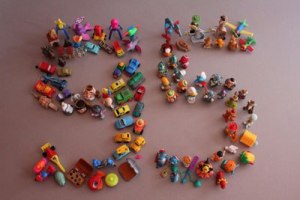
Excitement!! The MTaP Math Educational Blog Carnival is at its 95 issue and I am extremely excited to host it. Moreover, February is one of my favorite months so I am extra excited for the opportunity.
First thing, let us think a little about the interesting properties of the number 95…
Here on the Range, I’m determined to establish an environment where math is not just numbers and answers. I firmly believe my children can learn all the math they want, when they’re ready, as long as they don’t convince themselves they can’t learn it, they don’t like it, or that it’s too hard. To reach this goal, math must be a regular part of our lives in a way that encourages conversation and exploration.
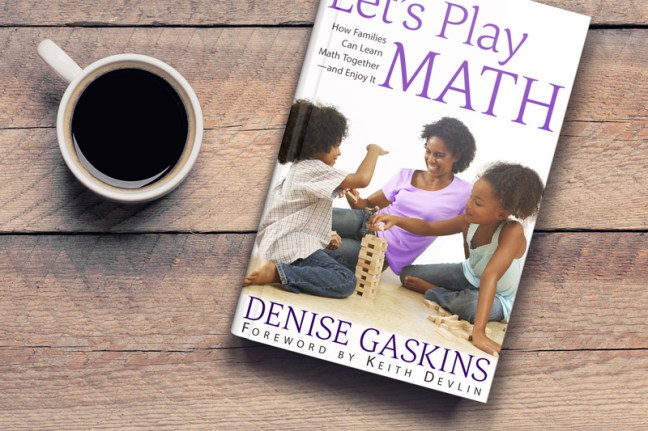
Let’s Play Math could be the very introduction a young family needs as they contemplate the first few years of homeschooling. First Son’s early years may have been completely different if I had read this book when he was five.
It could be a fantastic book for a family with a child that’s struggling (in homeschool or otherwise) with math. A few years ago, when First Son first showed signs of a potentially life-long hatred of all things numerical, reading this book may have helped me adapt the curriculum we were then using to meet his needs and enrich him. (We ended up switching and I’m happy with that, but I could have avoided quite a bit of angst.)
This book would be perfect for a parent who has always struggled with inadequacies in math or for someone like me, who always did just fine in math but never understood the claims of math’s beauty or fascination. I find myself excited to explore some of the resources the author has gathered together for my own growth and new challenges.
Want to help your kids with math? Don’t help with the homework. Get them to engage with math by doing things together — many of which don’t even look like math. Let’s Play Math is charming, intelligent, and practical; full of family fun and sound advice.
A crash course in how to enjoy math with your children! Denise Gaskins uses her years of experience to show parents how to teach math with games, stories, puzzles, manipulatives, and living books. Full of useful advice and pedagogical insight, this book is a treasure trove for parents who want to help their children appreciate the beauty, history, and fun of math but don’t know where to start.

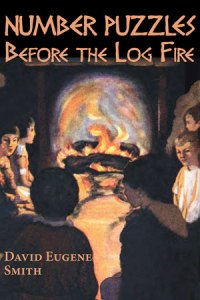 My March “Let’s Play Math” newsletter went out early this morning to everyone who signed up for Tabletop Academy Press math updates. This month’s issue focused on math history stories and puzzles, and it also included links to my newly expanded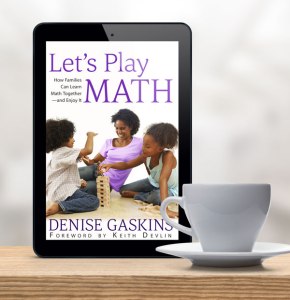
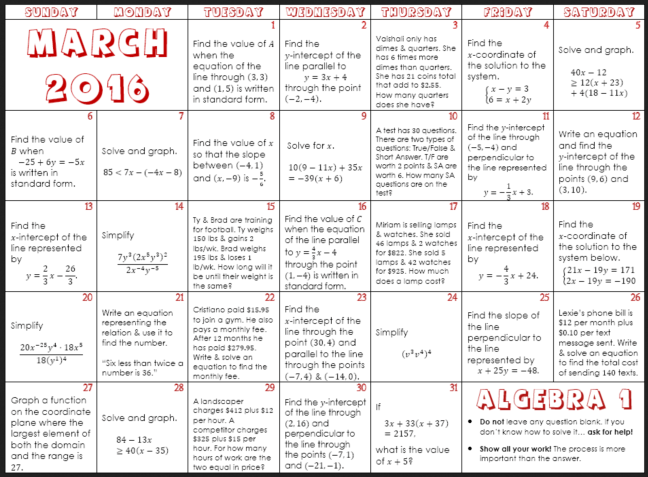
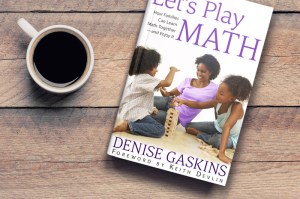 There’s still time to enter the book giveaway at Our Home on the Range blog: