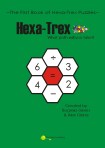
My math club had fun with several of these puzzles a few years ago, and the “Easy” ones (like the sample shown here) were just right for my 4th-5th grade students. One girl enjoyed them enough that she took home extra copies to share with her father.
It’s a thin book, just the right size for a stocking-stuffer. To see the full range of difficulty levels, look over the puzzles on Bogusia’s Daily Hexa-Trex page. To get your own copy of the book, read the giveaway instructions on Bogusia’s blog.
Object of the Puzzle
The object of the puzzle is to find the equation pathway that leads through ALL the tiles.
Forming Equations
Two or three (or four or five etc.) digit numbers are made up of the individual tiles in the particular order as the equation is read. For example 5 x 5 = 2 5 is correct, but read backwards 5 2 = 5 x 5 is incorrect.
The equation must be continuous (no jumping over tiles or empty spaces).
Each tile can be used ONLY ONCE.
Order of operations is followed. Multiplication and division comes before addition and subtraction.
The tile “-” can be used as both a subtraction operation or a negative sign in front of a digit, making it a negative number.
Kitten complained that some math programs keep repeating the same kind of problems over and over, with bigger numbers: “They don’t get any harder, they just get longer. It’s boring!”
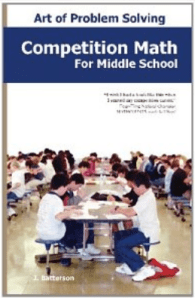
So we pulled out the Counting lessons in Competition Math for Middle School. [Highly recommended book!] Kitten doesn’t like to compete, but she enjoys learning new ideas, and Batterson’s book gives her plenty of those, well organized and clearly explained.
Pizzas at Mario’s come in three sizes, and you have your choice of 10 toppings to add to the pizza. You may order a pizza with any number of toppings (up to 10), including zero. How many choices of pizza are there at Mario’s?
[The book said 9 toppings, but I was skimming/paraphrasing aloud and misread.]
Update: Giveaways are over. Congratulations to the winners!
What Leonardo did was every bit as revolutionary as the personal computer pioneers who in the 1980s took computing from a small group of “computer types” and made computers available to, and usable by, anyone. Like them, most of the credit for inventing and developing the methods Leonardo described in Liber Abbaci* goes to others, in particular Indian and Arabic scholars over many centuries. Leonardo’s role was to “package” and “sell” the new methods to the world.
The appearance of Leonardo’s book not only prepared the stage for the development of modern (symbolic) algebra, and hence modern mathematics, it also marked the beginning of the modern financial system and the way of doing business that depends on sophisticated banking methods.
* Leonardo of Pisa, also known as Fibonacci, used two b’s in the word “calculation” (abbaci) to distinguish his methods from the use of an abacus.
Can You Solve This Fibonacci Puzzle?
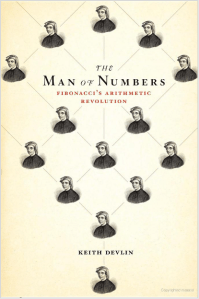
If you want a chance to win a personally signed copy of The Man of Numbers: Fibonacci’s Arithmetic Revolution, all you have to do is solve this riddle.
The Fibonacci sequence arises in the solution to a problem about a breeding rabbit population that Leonardo gave in Liber Abbaci.
But there is evidence that in another book he gave the problem in terms of different creatures.
What were they?
Hint: The answer is in the e-book, Leonardo & Steve. But this is a no-purchase-necessary contest: There are at least two places to find the answer online, if you search carefully.
Update: I received a wide variety of answers to the Fibonacci riddle, including sheep, mice, donkeys, kittens, chambered nautilus, spiders, cow, dog, fox, sunflowers, humans, and an amoeba. Honeybees were by far the most popular wrong answer. Seven people managed to discover the correct creature. (No, I’m not telling! The answer is in the e-book, and it’s an interesting story to read.) Our official winner is Ken. Congratulations! I’ve sent you an email.
Math History E-book: Leonardo & Steve
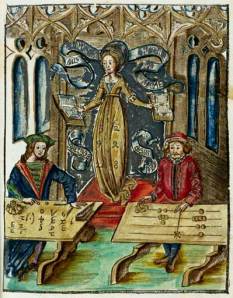
Gregor Reisch: Madame Arithmatica, 1508
When teachers share stories from the history of math, we help students build a mental picture of the ebb and flow of ideas through the centuries: how men and women wrestled with concepts, made mistakes, argued with each other, and gradually developed the knowledge that today we take for granted.
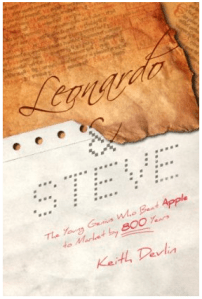
I taught my Math Club to use a medieval counting board, but still I have trouble imagining the historical setting. What was it really like to work and think in Roman numerals, and then to suddenly learn this new way of calculating? In Leonardo & Steve, Keith draws a parallel between Leonardo’s work and the personal computer revolution — and having lived through the latter helps me understand what it was like when the Hindu number system changed the world.
To the reader today, Leonardo’s text describes something we have been familiar with since our early childhood math classes, but at the turn of the thirteenth century, elementary arithmetic was entirely unknown. When Leonardo was writing his mammoth work, the information it contained was as new to him as to his future readers. In many cases he was working out the examples for the first time ever. He was working them out for himself as much as for his later readers.
In addition to the title characters’ stories in Leonardo & Steve, I found the mystery of the abbacus books interesting. These were small math instruction books for the lay reader, like the Treviso Arithmetic. Hundreds, perhaps thousands, of people across Italy published abbacus books (at first handwritten, later printed) in the years after Leonardo wrote Liber Abaci. And then the books disappeared from history, until scholars rediscovered and began to write about them in the 1960s.
The abbacus books were not written by people doing original mathematics, but by people who learned the new way of working with Hindu-Arabic numbers, found it exciting, and wanted to share it with others. [Sort of like math teacher blogs?]
It would have made sense if the abbacus books had been copied from Leonardo’s Liber Abbaci — but they weren’t. So where did this flood of arithmetic books come from? Keith tells a story of historical forensics, as modern-day literary detectives sift clues to find the original source of the abbacus writings.
Despite the fact that medieval authors copied freely from one another all the time, hardly any of the abbacus books contained any passages from Liber Abbaci. The vast majority of abbacus books, including all the known early ones, had almost nothing in common with Leonardo’s masterpiece. Clearly, the authors of those early abbacus books found their material elsewhere than in the dense pages of Liber Abbaci.
For a chance to win a copy of the e-book Leonardo & Steve (in your choice of format), you have two ways to enter the contest:
Scroll down and leave a comment on this post answering one (or both) of these questions: What is your favorite math history resource, or favorite math story?
Do you use math history in your teaching — and if so, how?
Post about this contest on your own blog, tweet about it, or otherwise share the news, and then come here and leave a comment telling me about your link.
You may do both (comment on the questions and link to the giveaway), to double your chances — but please make sure your link is in a separate comment from your answer to the questions, or I may forget to count it separately.
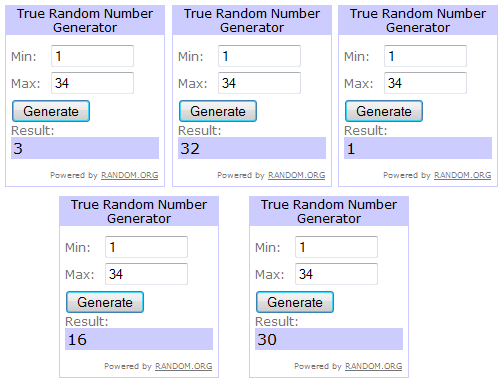
Update: Omitting the comments by Keith Devlin and the blog carnival pingbacks, we had 34 entries in the e-book giveaway. Congratulations to Judy, Katie, Penney, Rachel, and Charlotte. I will forward your email addresses to Keith, and you should be receiving a download code for your e-book soon. Thank you all for participating!
Would You Buy Math History for the Price of a Latte?
If you don’t win the giveaway, Leonardo & Steve is available at Barnes & Noble or Amazon or Smashwords for a mere $2.99. Keith would like to hear your reaction to the book:
As an author, the short, cheap, e-book format is new to me, and I think this is the first ever popular mathematics e-book. So please let me know what you think. In addition to knowing your views of the content, I’m eager to know your reaction to the format and the price. Many fascinating stories about mathematics can be told in 15,000 words, so if authors like myself can get it right, this could be a major part of the future of popular mathematics writing.
I love Dover books, don’t you? They publish so-o-o-o-o many interesting titles at reasonable prices. I always have several Dover books on my wishlist, waiting for my next bit of extra cash.
But you don’t have to wait to enjoy free math from Dover books. Sign up for the Dover Sampler, and each week they will send an email with links to content from all sorts of books. Or try the Dover Children’s Sampler and Dover Teacher’s Sampler for coloring books, mazes, literature, and more. All the Dover samplers are completely free, and you can cancel at any time.
From Last Week’s Sampler
Last week’s email included a section on “Exploring Mathematics”:
And that’s only the beginning. Below, I’ve listed a wide variety of math-related links collected from past samplers. Though be warned: Dover does change its website from time to time, so these pages may disappear without notice.
As I continue to polish the manuscript for my math games book, I’ve been looking for short quotations to put at the beginning of each chapter. I’ve gathered a lot of math quotations over the years, from my own reading and from quote-collection websites. But there’s a problem with using most of these in a book, since to do it right I would have to dig up the original source of each quote and then write a letter to the publisher for permission to use it. And pay a fee that, depending on the publisher’s sense of self-importance, can run into the hundreds of dollars. Bother!
So I went digging around my rss reader to see what sort of inspiration I could find. Bloggers love to be quoted, right? And most of them are happy to give permission via email, which makes my job ever so much easier.
Here are some of the gems I’m considering. I’d love to hear your favorite quotes from math bloggers, too — or favorite passages from your own blog. Please comment!
It’s amazing that this vision of math as “getting to the right answer on your first try” even exists. I have to make, unmake, remake so many mistakes to get where I’m going. I think all mathematicians work that way.
Somehow, a big part of the experience of math is trouble. Frustration is the status quo. But when you get something—the thrill!
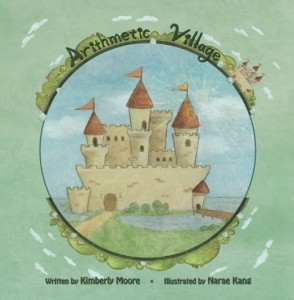
When you think of math do you think of a light-hearted fairy tale?
No? Then come and meet some of the delightful characters who live in Arithmetic Village.
Polly Plus collects jewels slowly and methodically, Linus Minus is carefree and loses his. Tina Times and King David Divide… well you’ll see.
The first book offers the overview of the math concepts. These are then demonstrated through the lives of each character. The books are designed to be supported by a manipulative kit [homemade: see video below] with 100 jewels, 10 golden bags, and a treasure chest…
Visit the Arithmetic Village website to read more about the books and explore the activity pages (links under each topic in the main page menu). Or check out Kim’s YouTube videos for activity ideas.
This blog originally grew out of my books, and now it’s coming full circle: New, expanded editions of my long-out-of-print books are ripening on the vine, growing out of the blog. To bring them to harvest, I’m going to need your help.
The Books
I’m working on the games books first because I think they will be the most helpful supplements to any math program.
Let’s Play Math! Number Games for All Ages
This book will include games like Tens Concentration and Hit Me, as well as tips for teaching negative numbers, the times table, and more. Never before published, because it was planned as the fifth book in my earlier how-to-teach-homeschool-math series, but my self-publishing experiment ended after book four.
Gotcha! Strategy Games for Math and Logic
This will include games like Math Club Nim and Avoid Three, as well as a lesson about logic and some Lewis Carroll puzzles. An earlier edition is currently available on Amazon for such an exorbitant price that I can’t recommend it to anyone.
Others to be announced, if I ever get the first two done…
In the process of updating old book links (and otherwise cleaning up old posts), I’ve been spending more time than normal at the bookstore. I just noticed that Raymond Smullyan’s What Is the Name of This Book? is scheduled to come out this August — and it’s already available for pre-order. WooHoo!
Thanks to our insolvent state government, I need to go back and change all my book links. I never made much from the Amazon affiliate program, but it usually managed to cover Kitten’s school books. Oh, well, at least they haven’t closed the public libraries … yet …
Since I’m changing the old links anyway, I thought I’d give you all a chance to voice your opinions. Shall I continue to reference Amazon.com, or would you rather my book links took you to Barnes & Noble?
P.S.: For my rss subscribers, I apologize for the flood of old posts. Every time I make a change, it seems the feed releases the post anew. I’m afraid this will continue for a few weeks, since I’m using the affiliate mess as an excuse to do other long-neglected blog clean-up tasks as well. With 596 published posts, that will take awhile. I hate housecleaning!
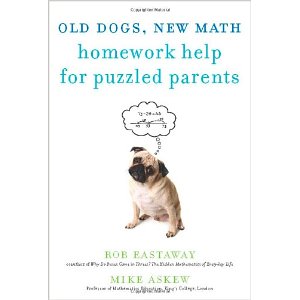
You can see the publisher’s description of the book and read an excerpt here.
They also sent me a review copy, which I hope to write a blog post about sometime soon — though with our schedule this semester, I can make no promises. But from a quick flip through the book, I’ll give it a definite thumbs-up!
How to Enter the Giveaway
Remember, the book must be mailed to a U.S. address. If you live in the U.S., you have two ways to enter the contest:
Leave a comment on this post answering the question: What part of math do you find the hardest to understand or to explain to your children?
Post about the contest on your own blog (or on a homeschooling or parenting forum, if you don’t have a blog), then come here and add a comment with the link to your post.
You may do both, to double your chances — but please make sure your link is in a separate comment from your answer to the question, or I may forget to count it separately.
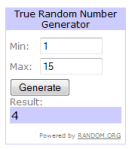
I will accept entries for a week and a half, through Friday, October 8th Monday, October 11th. (Extended due to family issues that made the weekend too busy!) After that, I will count up all the entries (numbered in order of their appearance in the comment section) and go to RANDOM.ORG to generate the winning number. I will email the winner to get your address, which I’ll then pass on to the publisher so they can send you your book.
Update
And the winner is . . . Lakshmi. Congratulations!
Thank you to everyone who participated in the giveaway. I enjoyed reading your comments, and you’ve given me several ideas for future blog posts.

 It’s a thin book, just the right size for a stocking-stuffer. To see the full range of difficulty levels, look over the puzzles on Bogusia’s Daily Hexa-Trex page. To get your own copy of the book, read the giveaway instructions on Bogusia’s blog.


 Denise Gaskins' Let's Play Math