Quotable: Math Connections

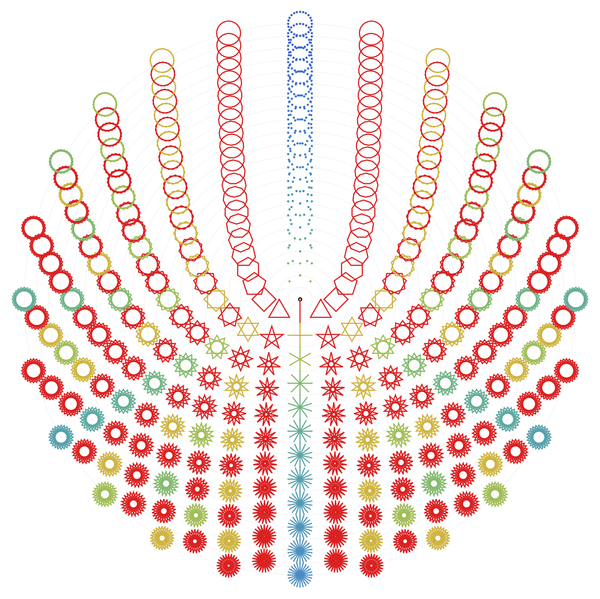
ConnectedGearsJoBoaler

It turns out that the people who do well in math are those who make connections and see math as a connected subject. The people who don’t do well are people who see math as a lot of isolated methods.

— Jo Boaler
Math Connections

If you or your children struggle with math, Boaler’s non-profit YouCubed.org may help you recover your joy in learning.

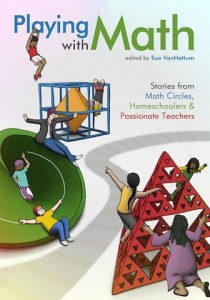
Playing With Math: Stories from Math Circles, Homeschoolers, and Passionate Teachers

body_Book_cover_for_upload

Update: The crowdfunding campaign is now closed and the book is in the final stages. It should be headed to the printer soon. Check the Playing With Math homepage for publication and ordering information.


There’s a problem: Most people don’t like math. Why is that? Perhaps it has something to do with the way math is taught in school. As a teacher to my own kids and mentor to homeschooling parents, I’ve been fighting math anxiety for decades.

This book is one part of the solution.

Playing With Math: Stories from Math Circles, Homeschoolers, and Passionate Teachers features more than thirty authors who tell delightful stories of learning to appreciate math and of sharing their enthusiasm with their communities, families, or students. After every chapter is a puzzle, game, or activity to get you and your kids playing with math, too.

You can read a couple of excerpts at PlayingWithMath.org:

Continue reading Playing With Math: Stories from Math Circles, Homeschoolers, and Passionate Teachers

Reblog: The Handshake Problem

[Feature photo above by Tobias Wolter (CC-BY-SA-3.0) via Wikimedia Commons.]

Seven years ago, our homeschool co-op held an end-of-semester assembly. Each class was supposed to demonstrate something they had learned. I threatened to hand out a ten question pop quiz on integer arithmetic, but instead my pre-algebra students voted to perform a skit.

I hope you enjoy this “Throw-back Thursday” blast from the Let’s Play Math! blog archives:


If seven people meet at a party, and each person shakes the hand of everyone else exactly once, how many handshakes are there in all?

In general, if n people meet and shake hands all around, how many handshakes will there be?

Cast

1-3 narrators
7 friends (non-speaking parts, adjust to fit your group)

Props

Each friend will need a sheet of paper with a number written on it big and bold enough to be read by the audience. The numbers needed are 0, 1, 2, 3, … up to one less than the number of friends. Each friend keeps his paper in a pocket until needed.

[Click here to go read Skit: The Handshake Problem.]

Reblog: In Honor of the Standardized Testing Season

TakingTest

[Feature photo above by Alberto G. Photo right by Renato Ganoza. Both (CC-BY-SA-2.0) via flickr.]

Quotations and comments about the perils of standardized testing, now part of my book Let’s Play Math.

I hope you enjoy this “Throw-back Thursday” blast from the Let’s Play Math! blog archives:


The school experience makes a tremendous difference in a child’s learning. Which of the following students would you rather be?

I continued to do arithmetic with my father, passing proudly through fractions to decimals. I eventually arrived at the point where so many cows ate so much grass, and tanks filled with water in so many hours. I found it quite enthralling.

— Agatha Christie
An Autobiography

…or…

“Can you do Addition?” the White Queen asked. “What’s one and one and one and one and one and one and one and one and one and one?”

“I don’t know,” said Alice. “I lost count.”

“She can’t do Addition,” the Red Queen interrupted. “Can you do Subtraction? Take nine from eight.”

“Nine from eight I can’t, you know,” Alice replied very readily: “but—”

“She can’t do Subtraction,” said the White Queen. “Can you do Division? Divide a loaf by a knife — what’s the answer to that?”

[Click here to go read In Honor of the Standardized Testing Season.]

Pi Day Roundup

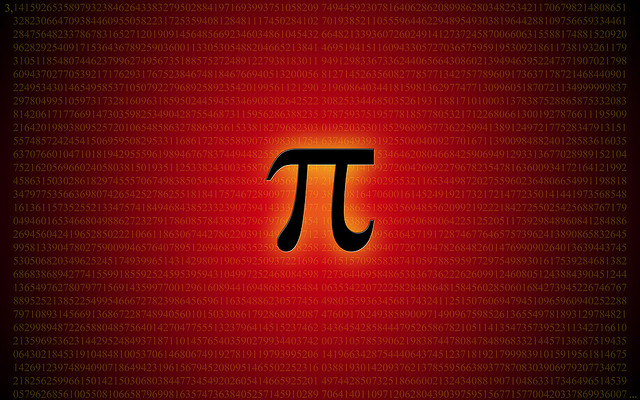
WhyPi

[Feature photo above by Nicolo’ Canali De Rossi.]

Math holiday alert: March 14th is Pi Day. But why limit ourselves to a single day? Playing with math should be a year-round adventure! Here are some ideas to help you celebrate…

Pi Day Posts on Let’s Play Math! Blog

DragonOfPi

Continue reading Pi Day Roundup

Reblog: The Case of the Mysterious Story Problem

[Feature photo above by Carla216 via flickr (CC BY 2.0).]

Seven years ago, I blogged a revision of the first article I ever wrote about homeschooling math. I can’t even remember when the original article was published — years before the original (out of print) editions of my math books.

I hope you enjoy this “Throw-back Thursday” blast from the Let’s Play Math! blog archives:


Case-of-the-Mysterious-Story-Problem
I love story problems. Like a detective, I enjoy sifting out clues and solving the mystery. But what do you do when you come across a real stumper? Acting out story problems could make a one-page assignment take all week.

You don’t have to bake a pie to study fractions or jump off a cliff to learn gravity. Use your imagination instead. The following suggestions will help you find the clues you need to solve the case…

[Click here to go read the original post.]

Playing with Pinterest: New Math Boards

Do you like Pinterest? I’ve enjoyed exploring the site lately, so I set up a few boards where I can pin the goodies I find. It may take awhile before I get all the old games and posts from this blog loaded up, so save the links and come back often…

Playful Math Games & Activities

Middle-High School

As our children (and their parents!) play around with mathematical ideas and the relationships between them, we develop deep understanding that is strong enough to support future learning. Playful math links include math games, activities, and interesting lesson plans.

Math Doodling

Math Doodling

Making abstract math visual: Math doodles let us see and experiment with a wide range of mathematical structures — and even to feel them, if we include hands-on 3D doodles in clay or other media. Links include art projects, geometry constructions, and physical models to explore.

Math Teaching Tips & Resources

Math Teaching Tips

A variety of math teaching ideas for homeschool families or classroom teachers. Learning mathematics is more than just answer-getting: help your students make conceptual connections. These links are more “schooly” than on the other boards, and they include conceptual lessons that build your own understanding of mathematics as well as that of your students. And math notebooking resources, too.

MTaP Math Education Blog Carnival Archive

MTaP archive

Since early 2009, the Math Teachers at Play (MTaP) blog carnival has offered tips, tidbits, games, and activities for students and teachers of preschool through pre-college mathematics. Now published once a month, the carnival welcomes entries from parents, students, teachers, homeschoolers, and just plain folks. If you like to learn new things and play around with ideas, you are sure to find something of interest.

Math-Ed Quotes

Math-Ed Quotes

Inspiration for homeschooling parents and classroom teachers. This is where I’m posting my Wednesday Wisdom quotes.

And that’s the end of my Pinterest boards (so far).

What are some of your favorite Pinterest sites? Please share a link in the comments!

Math Teachers at Play #70

800px-Brauchtum_gesteck_70_1[Feature photo above by David Reimann via Bridges 2013 Gallery. Number 70 (right) from Wikimedia Commons (CC-BY-SA-3.0-2.5-2.0-1.0).]

Do you enjoy math? I hope so! If not, browsing this post just may change your mind.

Welcome to the 70th edition of the Math Teachers At Play math education blog carnival — a smorgasbord of 42+ links to bloggers all around the internet who have great ideas for learning, teaching, and playing around with math from preschool to pre-college. Let the mathematical fun begin!

By tradition, we start the carnival with a puzzle in honor of our 70th edition. But if you would like to jump straight to our featured blog posts, click here to see the Table of Contents.

Click here to continue reading.

Multiplication Models Card Game

multfrac-300Update: An expanded version of this post is featured in my book Multiplication & Fractions: Math Games for Tough Topics, available now at your favorite online book dealer.

Homeschooling parents know that one of the biggest challenges for any middle-elementary math student is to master the multiplication facts. It can seem like an unending task to memorize so many facts and be able to pull them out of mental storage in any order on demand.

Too often, we are tempted to stress the rote aspect of such memory work, which makes our children lose their focus on what multiplication really means. Before practicing the times table facts, make sure your student gets plenty of practice recognizing and using the common models for multiplication.

To help your children see what multiplication looks like in real life, explore the multitude of Multiplication Models collected at the Natural Math website. Or sign up for their Multiplication Explorers Online Course.

You may want to pick up this poster and use it for ideas as you play the Tell Me a (Math) Story game. Word problems are important for children learning any new topic in math, because they give children a mental “hook” on which to hang the abstract number concepts.

And for extra practice, you can play my free card game…

Click here to continue reading.