
[Photo by pfala.]
Thanks to John Cook’s article about factorials in the recent Mathematics and Multimedia Carnival, we’re adding new rules to the 2010 Mathematics Game.
Let’s play with multifactorials!
[Photo by pfala.]
Thanks to John Cook’s article about factorials in the recent Mathematics and Multimedia Carnival, we’re adding new rules to the 2010 Mathematics Game.
Let’s play with multifactorials!
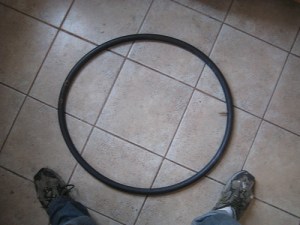 Check out Nick Johnson’s Story of the innertube as a histogram.
Celebrate Math Storytelling Day by making up and sharing math stories. Everyone loves a story, so this is a great way to motivate your children to play around with math. What might a math story involve? Patterns, logic, history, puzzles, relationships, fictional characters, … and yes, even numbers.
What story will you tell?
* * *
Are you looking for more creative ways to play math with your kids? Check out all my books, printable activities, and cool mathy merch at Denise Gaskins’ Playful Math Store. Or join my email newsletter.
This blog is reader-supported. If you’d like to help fund the blog on an ongoing basis, then please join me on Patreon (or choose the paid level on Substack) for mathy inspiration, tips, and an ever-growing archive of printable activities.
“Math Storytelling Day” copyright © 2010 by Denise Gaskins. Image at the top of the post copyright © Nick Johnson via Flickr (CC BY 2.0).
Tomorrow, September 23, is the equinox — when night and day are equally balanced (or would be, if the sun appeared as a point, rather than a disc). If we lived on the equator, the sun would appear directly overhead at noon and would cast no shadow. Therefore, it’s a great day to perform Eratosthenes’ experiment of measuring the earth:
 Maria Jones hung up the phone and collapsed at the kitchen table. She buried her head in her hands and groaned. Alex looked up from her game of Solitaire.
“Let me guess,” she said. “Can’t-Say-No Syndrome, again?”
Mrs. Jones nodded. “This time I volunteered to plan an activity for next month’s homeschool group meeting.”
Leon wandered in and pulled an apple from the fruit bowl. “Ha!” he said. “She means she volunteered us to plan an activity, right?”
Mrs. Jones smiled. “That’s my motto: When in doubt, delegate!”
Continue reading Alexandria Jones and the Mathematical Carnival

As I was preparing for Wednesday’s Homeschool Math Club Games & Activities meeting, I remembered my old math calendars and thought, that would be a fun activity to offer. So I pulled up the files and discovered that the days of the week matched perfectly. What a cool coincidence!
So in case you missed the math calendars last year, or in case it’s been long enough that your children have forgotten, here are the “new” versions:
Umm Ahmad created an easier version for young students:
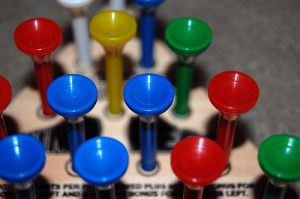 [Photo by Waponi.]
A few years ago, I had several (potentially) future engineers in our homeschool math club, and we enjoyed the challenge of MathCounts and AMC puzzles — but the current crop of local homeschool students is another story.
Last year’s contest-based club meetings dwindled to one student. Even before the recent MathCounts rule changes, I knew I needed a new plan. The final straw was Kitten, whose moaning complaint that she “hates math” has begun to drive me crazy.
So, what’s a homeschool math teacher to do?
Click here for the official update. Small schools are not mentioned, but it seems logical that their existing teams would also be grandfathered in. Maybe? and according to Mathmom’s comment below, small schools are left out in the cold.
… After taking all concerns into account, a compromise was crafted that would grandfather in homeschools and virtual schools that participated in the 2009-2010 program year to allow them to participate on teams in this year’s Competition Program. All new homeschool and virtual school participants must abide by the new eligibility rules that require those participants to register only as individuals. This compromise was brought to the MATHCOUNTS Board of Directors and approved unanimously.
Therefore, for the 2010-2011 school year, all homeschool and virtual school groups that registered for the MATHCOUNTS Competition Program either as teams OR individuals during the 2009-2010 program year will be allowed to register teams or as individuals for the upcoming 2010-2011 program year, following all of the 2009-2010 requirements for participation.
If you’ve heard rumors about the new ruling, here is the official take.
I try to avoid ranting on this blog, but I’m deeply disappointed. My students always enjoyed the team aspect of working/suffering together. I don’t know if any of them will be willing to participate as individuals.
Update: MathCounts: Grandfather Clause for Existing Homeschool Teams

If you’ve been thinking of starting a math club, here’s a good model:
People have this notion that math is about getting a right answer, and the testing really emphasizes that notion. And that’s such a bad way to approach math because it makes it scary.
When you look at little kids, they pose their own questions. They say, “Ooooh, what’s bigger than a million?” And they think about things their own way. At school, the teacher poses the questions, and the students answer their questions. Schooling is not a natural environment for learning.
— Sue VanHattum, Math Mama Writes
Richmond Math Salon: A Sweet Sampling
Continue reading Math Clubs, Math Circles, and the Richmond Math Salon

[Photo by stevendepolo via Flickr (CC BY 2.0).]
Math concepts: addition, subtraction, multiplication, division, powers and roots, factorial, mental math, multi-step thinking
Number of players: any number
Equipment: one deck of playing cards (face cards and jokers removed), pencils and scratch paper, timer (optional)
All players must agree on a Target Number for the game. Try to choose a number that has several factors, which means there will be a variety of ways to make it. Traditionally, I start my math club students with a target of 24.
Shuffle the deck, and deal four cards face down to each player. (For larger target numbers, such as 48 or 100, deal five or six cards to each player.) The players must leave the cards face down until everyone is ready. Set the remainder of the deck to one side.

