Why Word Problems?

Wow! My Word Problems from Literature Kickstarter is just barreling along. I love seeing how many people are interested in a playful approach to teaching math.

Check It Out

But you might wonder: Why do I care so much about word problems?

In many textbooks, word problems are an afterthought tacked on to the end of a math lesson.

For me, it’s just the opposite. Word problems are the key part of a lesson, because that’s where children come face-to-face with the meanings of math concepts.

The Key to Learning Math

If we want our children to learn real math, we need to offer them plenty of problems to solve. A child may work through several pages of number calculations by rote, following memorized steps, but a good problem demands more thought.

A story problem puts flesh on the abstract bones of arithmetic. Word problems encourage children to ponder what it means for one thing to be bigger than another, or smaller, or faster, or slower, or made up of several parts.

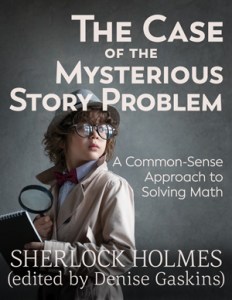
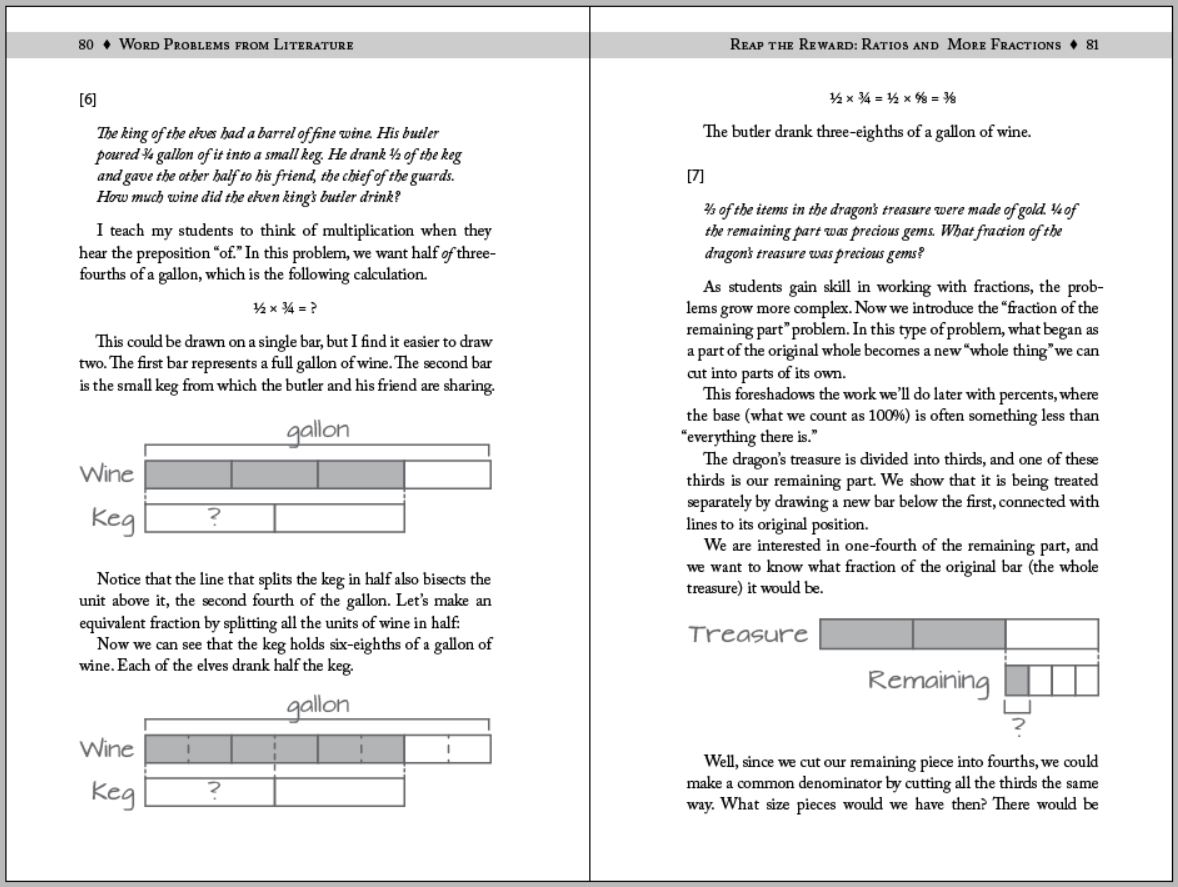
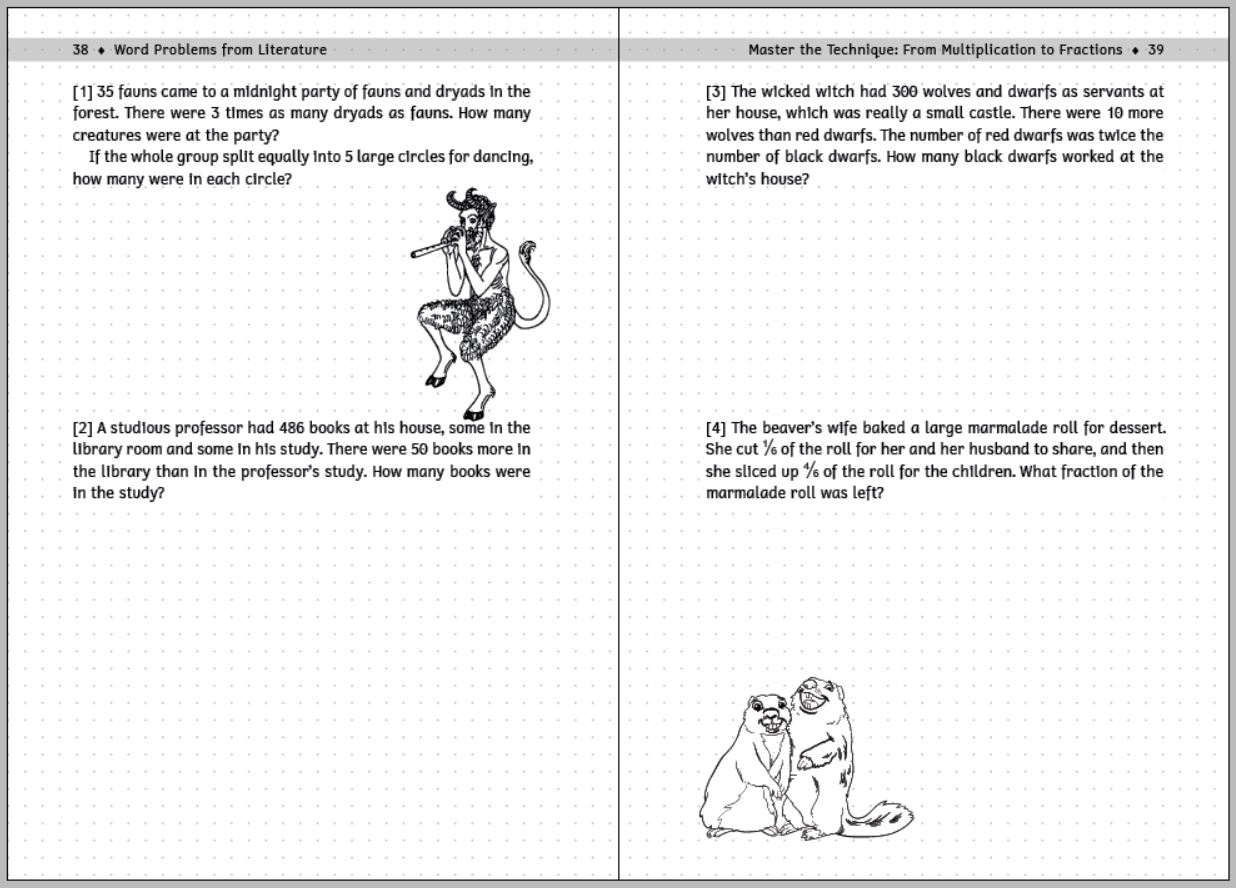
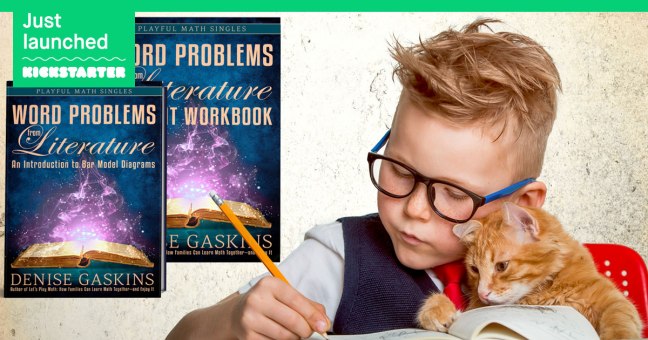
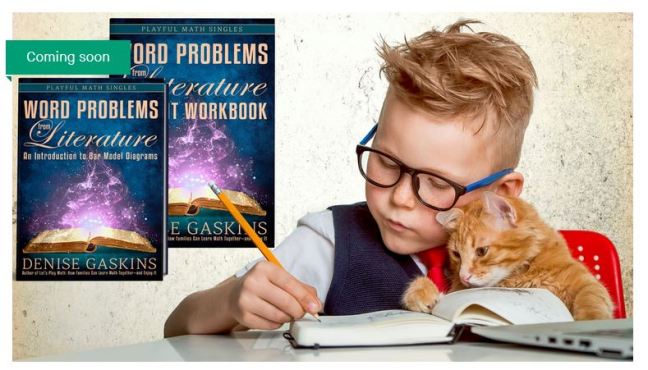
Word Problems from Literature will feed your child’s mathematical imagination with story problems inspired by classic books, from 2nd-grade stories based on Mr. Popper’s Penguins to prealgebra stumpers inspired by The Lord of the Rings.

And when you finish my puzzles, I’ll show you how to create your own word problems from literature, using your children’s favorite story worlds.

The Trouble with Word Problems

Most young children solve math problems by the flash-of-insight method: They hear the problem, and they know by instinct how to solve it.

This is fine for simple problems like “Four kittens played with a yarn ball. Two more kittens came to join the fun. Then how many kittens were playing with the yarn ball?”

When problems grow more difficult, however, that flash of insight becomes less reliable, so we find our children fidgeting with their paper or staring out the window. They complain, “I don’t know what to do. It’s too hard.”

Too often, the frustrated child concludes, “I’m just not good at math.”

But the truth is that nobody is good at math, if you define “good at math” to mean they can see the answer instantly. Here’s a more useful definition: You’re good at math if you have problem-solving tools and know how to use them.

And that is something everyone can learn.

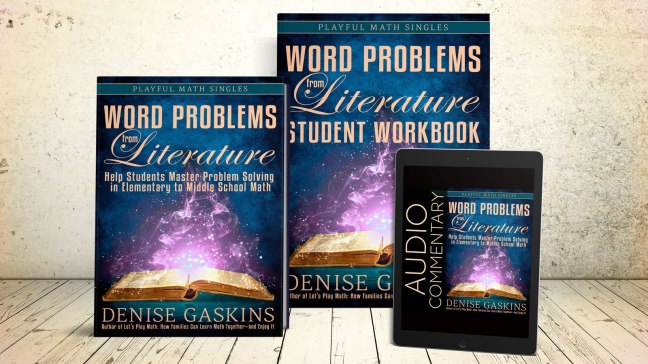
Word Problems from Literature and the Word Problems Student Workbook will show you how. Order your copies today!

Visit the Kickstarter

 
* * *

This blog is reader-supported.

If you’d like to help fund the blog on an on-going basis, then please head to my Patreon page.

If you liked this post, and want to show your one-time appreciation, the place to do that is PayPal: paypal.me/DeniseGaskinsMath. If you go that route, please include your email address in the notes section, so I can say thank you.

Which I am going to say right now. Thank you!

“Why Word Problems?” copyright © 2022 by Denise Gaskins. Photos copyright © TarasMalyarevich, ArturVerkhovetskiy, Wavebreakmedia / Depositphotos.

Kickstarter Loves My New Book!

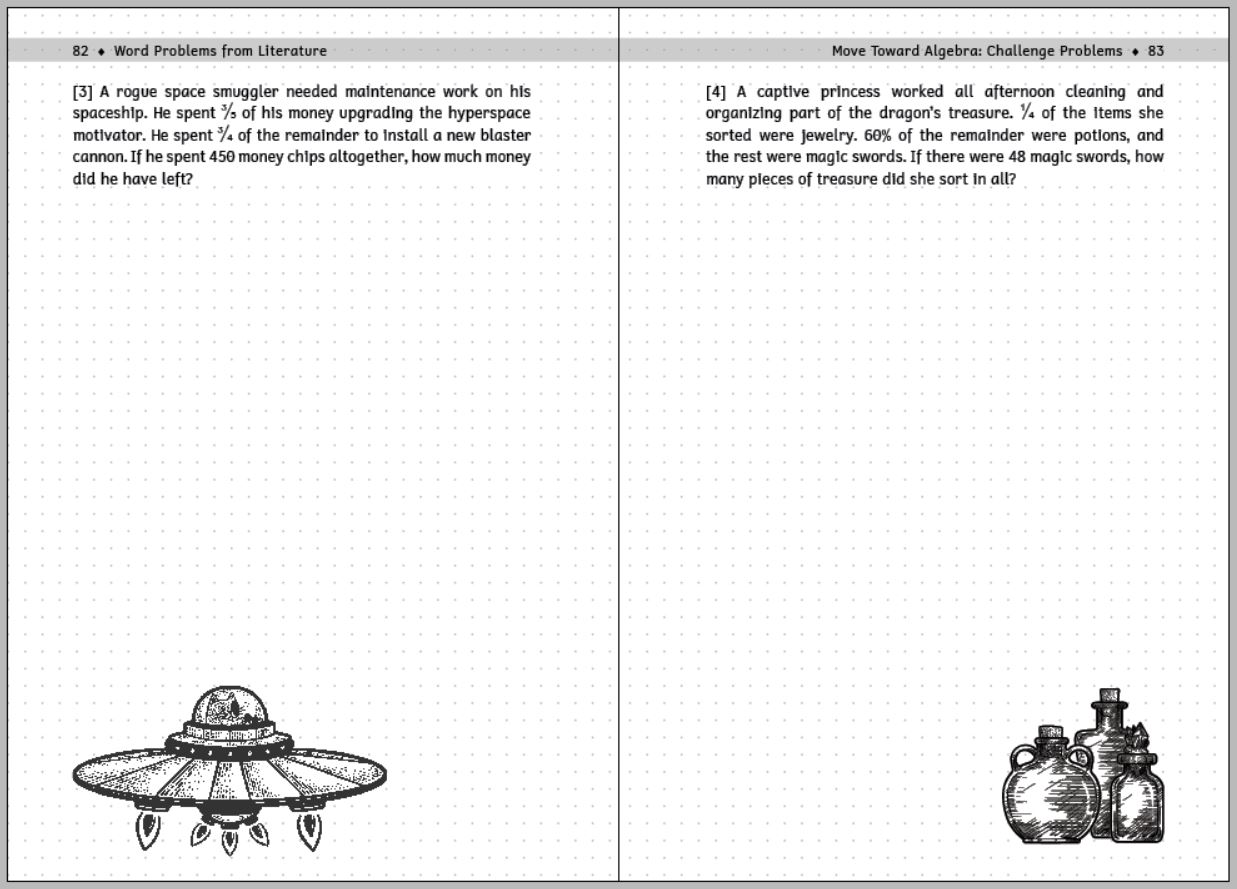
To everyone who has supported my Kickstarter project: thank you ever so much! We funded in only five hours, and the Kickstarter people honored us with a “Projects We Love” tag.

If you haven’t backed the project yet, check out what you’re missing:

Visit the Kickstarter

Now it’s on to the Stretch Goals, where each new level we unlock will pay for a higher-quality book in the end. Your support will bring into reality a “Be a Math Detective” motivational poster for all backers, additional illustrations for the main text and student workbook, and even new chapters on solving problems with decimals, ratios, percents, and more.

It’s a collaborative project — how high can we go?

Share the Word Problems from Literature project with your friends, and let’s spread the joy of learning math the creative way!

Launch Day! Act Now To Get the Earlybird Bonus

And so it begins: Word Problems from Literature is LIVE on Kickstarter…

Check It Out

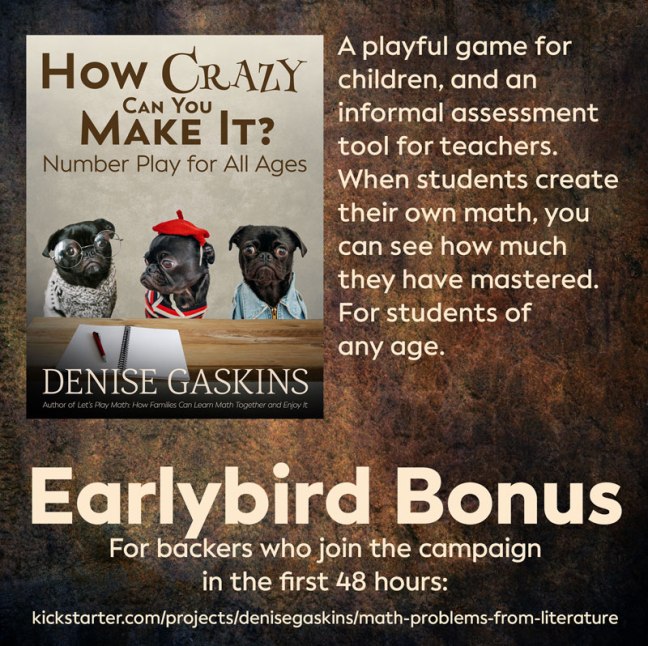
PLUS, for everyone who supports the project today, you get a free bonus book with one of my best-loved playful math activities for all ages: “How Crazy Can You Make It?”

The more backers who join the project early — especially on this first day — the more likely it is that the Kickstarter algorithms will kick in and share the campaign with even more people.

Let’s show the whole world how much fun it can be to play around with math!

Go to the Kickstarter

I’ve Never Done This Before…

My newest playful math book, Word Problems from Literature (2nd Edition) launches next week. I can hardly wait!

Get Notified When We Go Live
(free Kickstarter account required)

This Kickstarter project will be a bit different from the ones I’ve run in the past. Here’s a quick peek at three new things to come.

This is going to be so much fun.

Bonus Book for Early Backers

To have a successful campaign, we need plenty of people to back the project early. The more supporters we get — especially on the first day — the more likely the Kickstarter service folks will help spread the news for us.


So this time around, I’m offering a special bonus math activity guide for everyone who joins the campaign at any pledge level during the first 48 hours.

This is one of my favorite open-ended number play activities, which works with students from elementary to high school. (And aren’t those dogs on the cover just the cutest?)

There will be additional sign-up bonuses each week of the campaign, and early backers get them all. Whether you pledge on day 1 or day 21, your pledge won’t be charged until the end of the campaign, so join early to lock in your bonus perks.

Make Your Child a Character

“Tuckerization” is when a writer names one of the characters in their story after a real person. For the first time ever, I’m offering a tuckerization reward level.

Your child can be a character in one of the prealgebra story problems. I’ve got 4 slots available:

  • rogue space smuggler
  • captive prince/princess (or the dragon, if you prefer)
  • fantasy warrior king/queen
  • a starship captain or the ship’s engineer

The first backer to contact me gets the first choice of character.

Book Club Workshop

Join together with four friends to study playful math. When you buy five (or more) copies of Word Problems from Literature, you can schedule a private, 60- to 90-minute Zoom meeting between me and your group.

We can chat about teaching or about any of my playful math resources. Or you can ask me whatever you like about math or homeschooling. It’ll be a blast!

Sign Up To Get Notified

Can You Help Me?

I’m finishing up my plans for the project and pledge levels for my Word Problems from Literature (2nd Edition) Kickstarter in two weeks. Where did the time go?!

But I need help. Could you please take a few minutes to look over the project page and give me some feedback?

It’s so hard to edit myself because I miss too many mistakes. So having new eyes on the page would be a great help in catching typos and making sure the descriptions make sense and are as clear as possible.

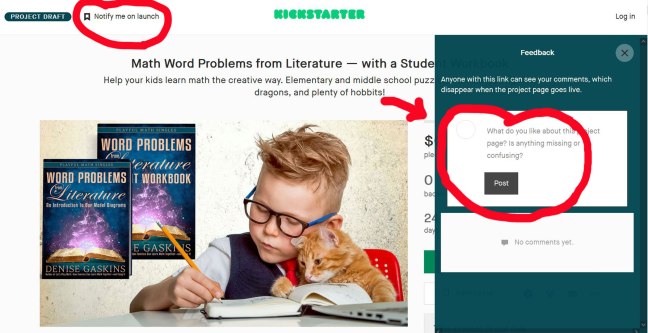
Here’s a screenshot of what you’ll see:

There’s a place to enter comments on the right. Or you can email me directly with anything you want to share.

There’s also a Notification link at the top left corner of the page, for anyone who hasn’t yet signed up for Kickstarter to tell you when the project launches.

Thank you so much for the feedback!

Yes, I’d Love To Help. Let’s Go!

Sample My New Playful Word Problems Book

I’m so excited to announce that on August 9th, I’m launching my newest playful math book, Word Problems from Literature (2nd Edition).

And the prelaunch page is now live! You can sign up to get an email from Kickstarter as soon as the campaign launches.

Visit the Prelaunch Page
(free Kickstarter account required)

This is one of my all-time favorite books, and I’ve had so much fun with this new edition — adding stories, writing make-your-own-problem prompts, sneaking a few teaching tips into the worked-out solutions, creating an almost-magical guide to helping kids reason their way through math problems.

I’ve put together a free 14-page printable (pdf) “Word Problems Sampler” to give you a taste of things to come, including three ready-to-use student workbook pages.

Check it out:

Download the Sample Pages

Help Your Kids Learn Math the Creative Way

  • Are you a parent trying to help your child learn math?
  • Or a teacher looking for creative ideas for your classroom?
  • Or a homeschooling parent hoping to enrich your student’s understanding?

Then you’ll love Word Problems from Literature and the Word Problems Student Workbook because they prepare your children for school success, providing the tools they need to solve tough math problems.

Feed your child’s mathematical imagination with puzzles inspired by classic books, from 2nd-grade stories based on Mr. Popper’s Penguins to prealgebra stumpers inspired by The Lord of the Rings.

Hit the button to visit the prelaunch page and sign up for notifications:

Get Notified

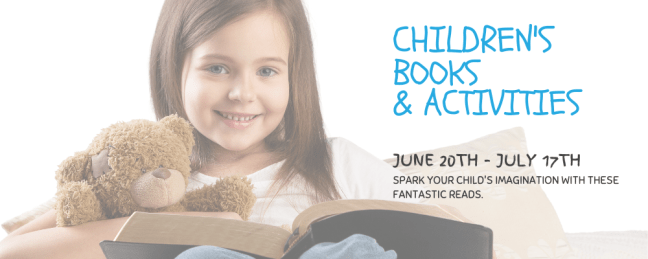
Spark Your Child’s Imagination with Beautiful (& Free) Books for Kids

Several author friends are planning children’s book Kickstarter campaigns this summer. To spread the news, we’re offering a selection of free books for families:

Check out the promotion

You’ll find some delightful titles here, from cute picture books to chapter books for young readers, touching on science, mythology, fantasy, mystery, and more — plus a couple of printable activity books, too.

Don’t delay! This promo ends on July 17th.

If you have children from preschool to upper-elementary age, I think you’ll find one of these books is just right for them.

Have fun reading with your kids!

New to Playful Math? Start Here

Do you want your children to enjoy learning math? Teach them how to play!

After the troubles of recent years, it’s even more important for families to play together. So I’ve made the ebook version of Let’s Play Math Sampler: 10 Family-Favorite Games for Learning Math Through Play permanently free.

What a great way to introduce your child to the joy of learning!

With excerpts taken from my most popular books, the Let’s Play Math Sampler features ten kid-tested games covering math concepts from counting to prealgebra.

Pick up a copy today, and make math a playful family adventure.

Download Your FREE Copy

Or Shop Your Favorite Online Store
… or request a copy from your library or local bookshop.

“Math is so many things — beauty, structure, problem solving, communication, language, creativity — but here’s what I’ve learned as I’ve tried to help my children develop positive relationships with math: It All Begins With Play. Anything by Denise Gaskins is a fantastic place to start. These books are filled with the perfect combination of perspective and practicality.”

—Michele Johnson, Instagram post

 
* * *

This blog is reader-supported.

If you’d like to help fund the blog on an on-going basis, then please join me on Patreon for mathy inspiration, tips, and an ever-growing archive of printable activities.

If you liked this post, and want to show your one-time appreciation, the place to do that is PayPal: paypal.me/DeniseGaskinsMath. If you go that route, please include your email address in the notes section, so I can say thank you.

Which I am going to say right now. Thank you!

“New to Playful Math? Start Here” copyright © 2022 by Denise Gaskins.

A Spring Tradition

Homeschool Memories…

Back when my kids were young, it was a yearly tradition. The big discount catalog came every spring, full of exciting new ideas for homeschooling.

By that time, we would be tired of whatever books we were using and eager for something new.

I sent the children outside to enjoy the spring sunshine, which gave me time to dream over the tiny-print wishbook. Coffee in one hand, pencil in the other, making lists and dog-earing catalog pages.

So many exciting books and curriculum options, it seemed almost impossible to resist going wild beyond our budget.

Continue reading A Spring Tradition

It’s Here! Math Journaling for All Ages

“Denise Gaskins’s work is consistently lovely and playful, so go check it out if you do any journaling or any other sort of mathematical writing with children.”

—Christopher Danielson, author of Which One Doesn’t Belong?

It’s finally here! 312 Things To Do with a Math Journal includes number play prompts, games, math art, story problems, mini-essays, geometry investigations, brainteasers, number patterns, research projects, and much more.

These activities work at any grade level, and most can be enjoyed more than once. It doesn’t matter whether your students are homeschooled or in a classroom, distance-learning, or in person. Everyone can enjoy the experience of playing around with math.

Get It Now in Ebook or Paperback

Get Your Copy Today!