Spent all day fidgeting with the first proof. Already ordered a second version with parchment-colored paper…
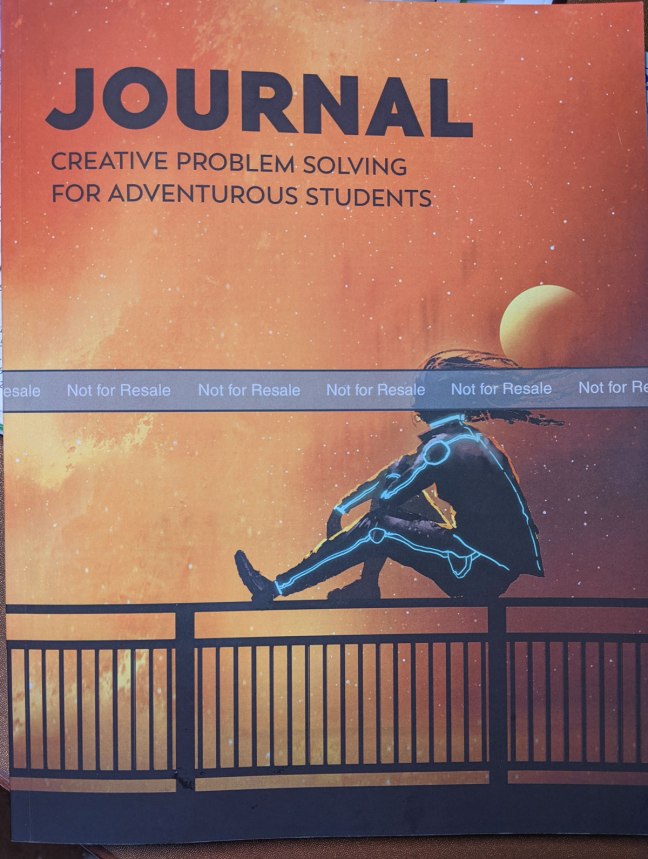
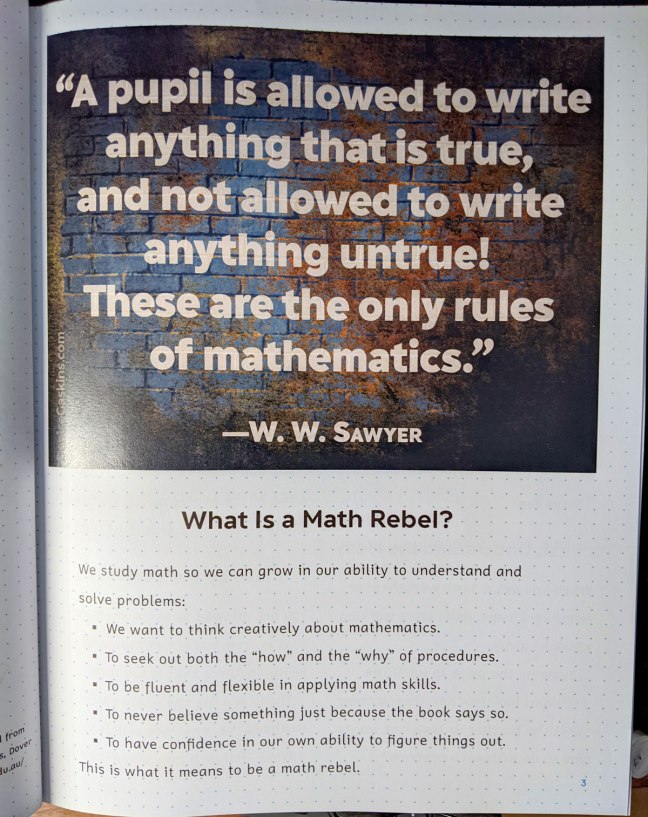
Spent all day fidgeting with the first proof. Already ordered a second version with parchment-colored paper…
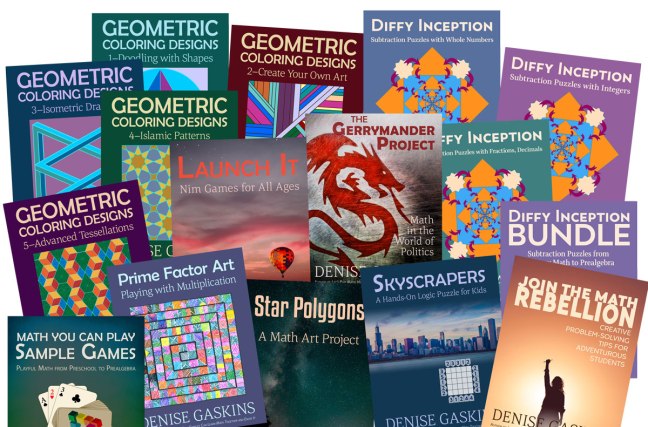
Since my publishing house opened its online store last month, I’ve been busy stocking the shelves with printable math activities for all ages.
It’s a fun collection of low- or no-prep ideas for playing math with your kids.
And it’s still growing. I’m pouring through old notes of my favorite projects from years of playing math with the kids in our math clubs and homeschool co-op enrichment classes, looking for ideas.
We’ve kept our prices as low as possible to fit struggling family budgets — less than a cup of coffee at my favorite cafe, back when we could still go out for a sweet, creamy cuppa.
Just go to our online store and click the “Printable Activity Guides” button to check out all the mathy fun.

Someday, I hope to combine these books into a creative math “uncurriculum” for homeschoolers. Stay tuned to this blog for more news about that. Eventually…
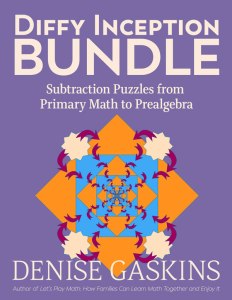 The best way to practice math is to play with it—to use the patterns and connections between math concepts in your pursuit of something fun or beautiful.
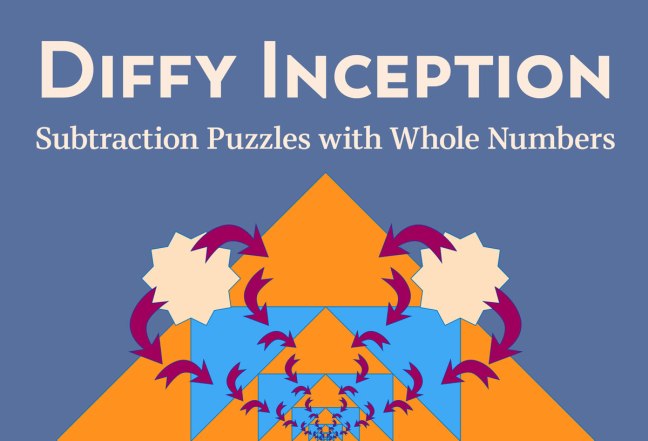
Diffy Inception puzzles have their own symmetric beauty, but mostly they are just plain fun. Students can practice subtraction and look for patterns in the difference layers.
I just published four new activity books to our online store:
Notes to the teacher include puzzle instructions, game variations, journaling prompts, and more. Plus answers for all puzzles.
Available with 8 1/2 by 11 (letter size) or A4 pages.
My publishing company runs this online store, so you can find all my playful math books there — including an exclusive pre-publication ebook edition of my newest title, Prealgebra & Geometry: Math Games for Middle School. Click here to browse the Tabletop Academy Press store.
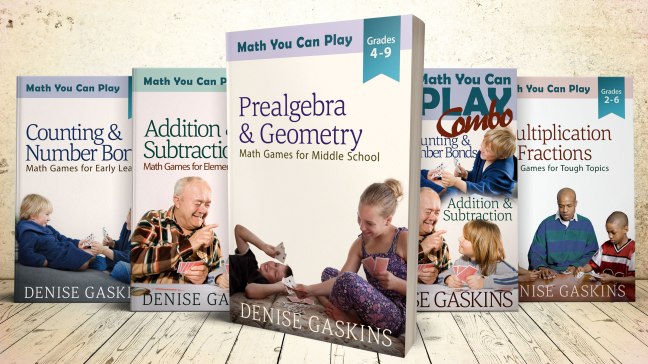
One more time, because I’m still finding people who didn’t get their Kickstarter rewards…
Thank you so much! I’m amazed and awed by how many people from all around the world showed interest in my books. You’re the greatest!
ALL the pledge rewards have now been sent, both digital and physical books.
Everyone should have received two emails:
Even if you ordered paperbacks, you should have gotten the digital book email.
But we’ve had trouble with things getting lost in the tangles of the internet. If you don’t see these emails, check your Spam folder — or if you use Gmail, look in the Promotions or Updates tab.
If you did NOT receive the emails mentioned above, please let me know!!
You can contact me through Kickstarter or use the About/Contact page on this blog to send me a message.
P.S.: There are still two people who ordered (and paid for) paperbacks but haven’t filled out the Kickstarter survey. I can’t mail out your book package until I get an address. If you can’t find the survey email, feel free to message me directly.
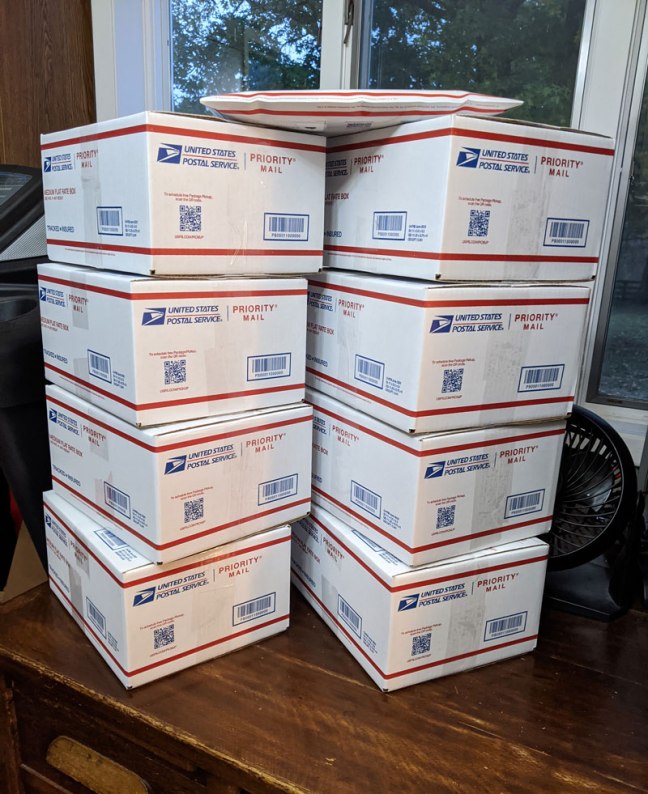
Here’s another round of books for the Math You Can Play Kickstarter. Almost finished.
If you backed the Kickstarter, thank you!
You should have already received the following:
And most of you should have already received your paperbacks in the mail. The packages above are for those who ordered the 9-book paperback set. Hopefully, they’ll get to you sometime next week.
If you did NOT receive the emails mentioned above, please let me know!!
We’ve had some trouble with things getting lost in the tangles of the internet. You can contact me through Kickstarter or use the About/Contact page on this blog to send me a message.
And if you are one of the two people who bought paperbacks but still haven’t filled out the survey, please do that soon. I can’t mail out your book package until I get an address.
 My book Prealgebra & Geometry: Math Games for Middle School is scheduled for release to regular bookstores in February, 2021. Because no publisher wants to send a new book into the world during such hectic, unsettled times as a big election, the winter holidays, or during inauguration season.
But preorder links are beginning to appear at several of the major online booksellers. And more stores will join them, as the information filters through their website systems.
The paperback will also be up for preorder, whenever the sites catch that update.
And remember: If you don’t favor a particular bookstore, you can buy the early-release ebook right now at my publisher’s webstore — and get a 10% discount if you order before 15 October.
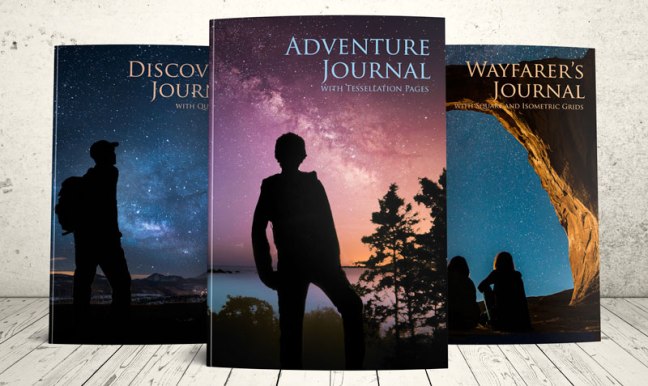
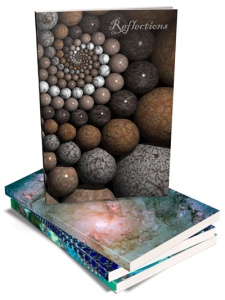 Journaling is a fantastic way to learn and remember any topic — including math. That’s why I created my dot grid journals for kids and adults.
But I just discovered that my printer hates journals and blank books. They refuse to publish them any more.
How frustrating!
So from now on, you can only get my math journals from Amazon. The largest-river-in-the-world store doesn’t mind dot grid pages (so far).
Silver Lining: Because the books aren’t available to regular bookstores, I don’t have to allow for the traditional bookstore discount. Which means I can cut the prices. By a LOT — the new prices are 30% off the original cost of the books!
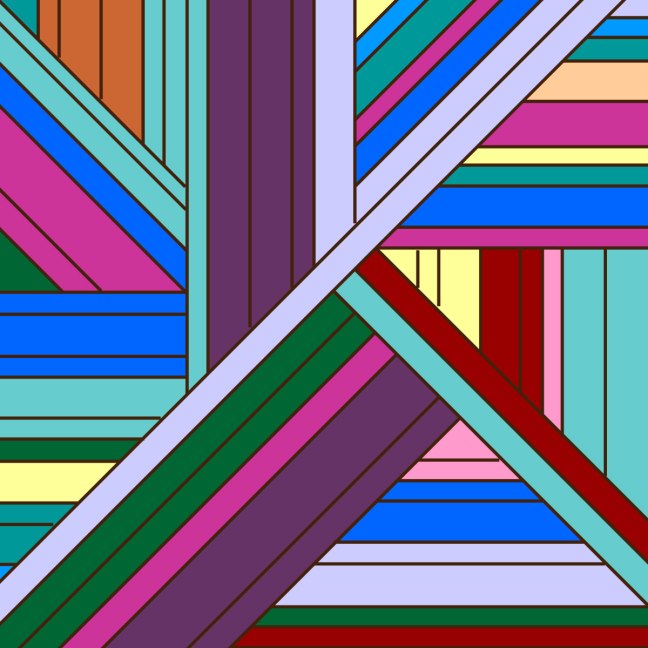
I love this easy-but-beautiful math art project!
1. Print a page of dotty or lined graph paper for each student. You’ll also need a ruler and a large assortment of markers or colored pencils.
2. Students draw a line across the page, lining up their ruler with the grid points. The first line can be vertical, horizontal, or diagonal.
3. Keep drawing lines, but NEVER cross a line you’ve already drawn. Following the grid will create many lines parallel or perpendicular to each other. What angles can you identify?
4. Color as desired. For a stained-glass effect, outline the colored areas with a black Sharpie marker.
Look for more math art ideas in my new book Geometric Coloring Designs 2: Create Your Own Art.
CREDITS: I saw this project at Cindy’s Love2Learn2Day blog. She got the idea from Zachary‘s MathActivities site.
Summer’s gone, and the beautiful, brisk days of harvest season have arrived in all their glory.
Fall is definitely my favorite time of year.
This fall, my publishing company opened a store where you can buy direct from us. When you choose to cut out the middleman, we authors get paid 50% more royalties. Thank you for your support!
You get a bonus, too: When you buy direct from our online store, you get DRM-free ebook files in your choice of format — including printable pdf files not available in bookstores. And if you need help, our friends at BookFunnel will be more than happy to walk you through the steps of transferring ebook files to your phone or device.
 Best of all, you can pick up the exclusive publisher’s-edition ebook of my long-awaited Prealgebra & Geometry: Math Games for Middle School (scheduled for publication to regular bookstores in February 2021).
So even if you missed the Kickstarter, you won’t miss out on playing math with your middle-school kids this fall.
Special Offer: Use the coupon code TBLTOP10 at checkout to save 10% off your purchase. (Expires 15 October 2020.)
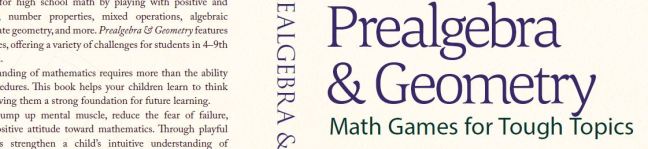
To keep the books in a series looking like they go together, I use each finished book as the starting template for the next one. That way, all my paragraphs use the same fonts, all headings are the same size, and the titles line up on the cover.
It’s a handy publishing trick that saves time and keeps everything looking right.
Until it doesn’t.
 Denise Gaskins' Let's Play Math