A Pretty Math Problem?

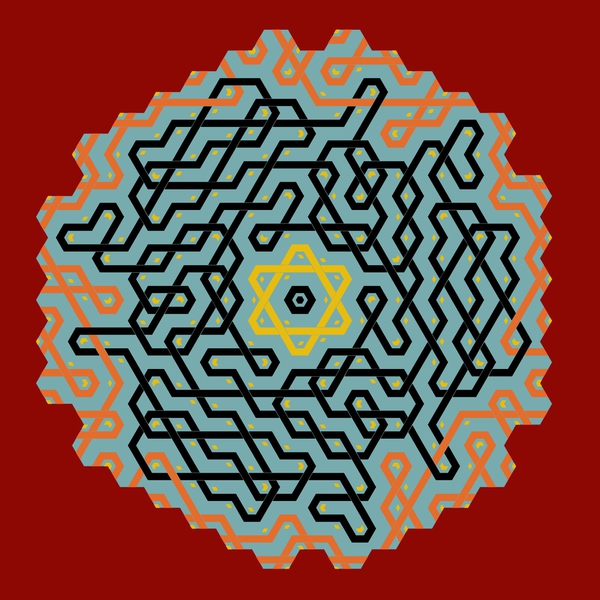
As we were doing Buddy Math (taking turns through the homework exercises) today, my daughter said, “Oooo! I want to do this one. It’s pretty!”

CodeCogsEqn

She has always loved seeing patterns in math. I remember once, years ago, when she insisted that we change the problems on a worksheet to make the answers come out symmetrical. 🙂

Logic Puzzle: Imbalance Problems

Kitten and I have been slogging through the decimals chapter in AoPS Pre-Algebra. She hates arithmetic, so I tried skipping ahead to the algebra puzzle in the exercises, but she refused to be taken in: a decimal problem with an x in it is still a decimal problem.

So I let her off early and pointed her toward these logical “algebra” puzzles instead:

Puzzle by Paul Salomon

Continue reading Logic Puzzle: Imbalance Problems

Quotable: Why Study Algebra?

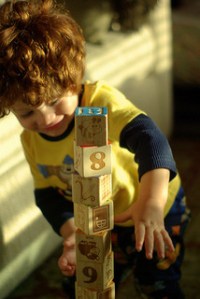
Blocks

[Photo by AlphaTangoBravo / Adam Baker via flickr.]

One reason to study algebra: because it’s a building block. And just as it was really hard at first to get those blocks to do what you wanted them to do, so also it can be really hard at first to get algebra to work. But if you persevere, who knows what you might build someday?

Algebra is the beginning of a journey that gives you the skills to solve more complex problems.

So, try not to think of Algebra as a boring list of rules and procedures to memorize. Consider algebra as a gateway to exploring the world around us all.

— Jason Gibson
Why Study Algebra?

Rate × Time = Distance Problems

I love how Richard Rusczyk explains math problems. It’s a new school year, and that means it’s time for new MathCounts Mini videos. Woohoo!

Continue reading Rate × Time = Distance Problems

Math Teachers at Play #52

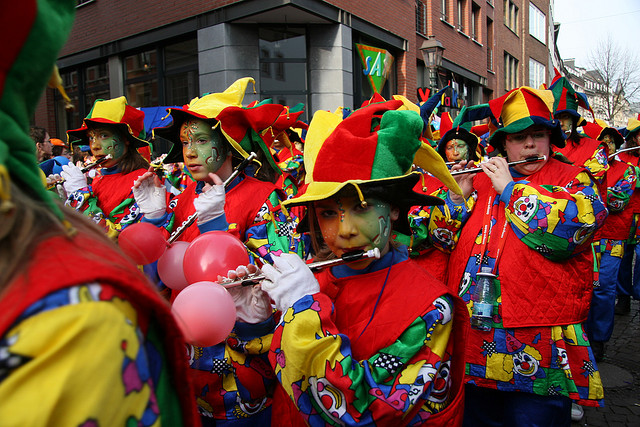
[Photo by bumeister1 via flickr.]

Welcome to the Math Teachers At Play blog carnival — which is not just for math teachers! We have games, lessons, and learning activities from preschool math to calculus. If you like to learn new things and play around with mathematical ideas, you are sure to find something of interest.

Scattered between all the math blog links, I’ve included highlights from the Common Core Standards for Mathematical Practice, which describe the types of expertise that teachers at all levels — whether in traditional, experimental, or home schools — should seek to develop in their math students.

Let the mathematical fun begin…

TRY THESE PUZZLES

By tradition, we start the carnival with a couple of puzzles in honor of our 52nd edition. Since there are 52 playing cards in a standard deck, I chose two card puzzles from the Maths Is Fun Card Puzzles page:

  • A blind-folded man is handed a deck of 52 cards and told that exactly 10 of these cards are facing up. How can he divide the cards into two piles (which may be of different sizes) with each pile having the same number of cards facing up?
  • What is the smallest number of cards you must take from a 52-card deck to be guaranteed at least one four-of-a-kind?

The answers are at Maths Is Fun, but don’t look there. Having someone give you the answer is no fun at all!

Continue reading Math Teachers at Play #52

Math Teachers at Play #46: Living Books for Math

Welcome to the Math Teachers At Play blog carnival — which is not just for math teachers! Here is a smorgasbord of ideas for learning, teaching, and playing around with math from preschool to pre-college. Some articles were submitted by their authors, others were drawn from the immense backlog in my blog reader. If you like to learn new things, you are sure to find something of interest.

Living Books for Math

A child’s intercourse must always be with good books, the best that we can find… We must put into their hands the sources which we must needs use for ourselves, the best books of the best writers.

For the mind is capable of dealing with only one kind of food; it lives, grows and is nourished upon ideas only; mere information is to it as a meal of sawdust to the body.

Charlotte Mason
Toward A Philosophy of Education

Princess Kitten and I took a longer than usual holiday break from homeschooling, but now I’m in plan-for-the-new-semester mode. I hope to include more living math in our schedule, so I decided to illustrate this edition of the MTaP carnival with a few of my favorite living math books. I’d love to hear more living book suggestions in the comments!

If you click on a book cover, the links take you to Amazon.com, where you can read reviews and other details (and where I earn a small affiliate commission if you actually buy the book), but all of these books should be available through your public library or via inter-library loan.

Let the mathematical fun begin…

Continue reading Math Teachers at Play #46: Living Books for Math

Math Teachers at Play #39

Welcome to the Math Teachers At Play blog carnival — which is not just for math teachers! If you like to learn new things and play around with ideas, you are sure to find something of interest.

Several of these articles were submitted by the bloggers; others were drawn from my overflowing blog reader. Don’t try to skim everything all at once, but take the time to enjoy browsing. Savor a few posts today, and then come back for another helping tomorrow or next week.

Most of the photos below are from the 2010 MAA Found Math Gallery; click each image for more details. Quotations are from Mike Cook’s Canonical List of Math Jokes.

Let the mathematical fun begin…

Continue reading Math Teachers at Play #39

Math Teachers at Play #35

35 is a tetrahedral number

Welcome to the Math Teachers At Play blog carnival — which is not just for math teachers.

Do you enjoy math? I hope so! If not, browsing these links just may change your mind. Most of these posts were submitted by the bloggers themselves; others are drawn from my overflowing Google Reader. From preschool to high school, there are plenty of interesting things to learn.

Let the mathematical fun begin…

Continue reading Math Teachers at Play #35