Trouble with Times Tables

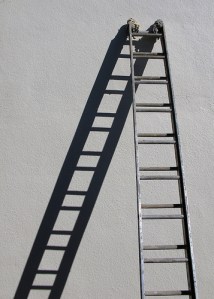
[feature photo above by dsb nola via flickr.]

Food for thought:

Imagine that you wanted your children to learn the names of all their cousins, aunts and uncles. But you never actually let them meet or play with them. You just showed them pictures of them, and told them to memorize their names.

Each day you’d have them recite the names, over and over again. You’d say, “OK, this is a picture of your great-aunt Beatrice. Her husband was your great-uncle Earnie. They had three children, your uncles Harpo, Zeppo, and Gummo. Harpo married your aunt Leonie … yadda, yadda, yadda.

— Brian Foley
Times Tables – The Worst Way to Teach Multiplication

On the other hand, if you want your children to develop relationships with the numbers, to learn the math facts naturally, then be sure to tell lots of math stories. And when you are ready to focus on multiplication, be sure to study the patterns and relationships within the times tables.
Lockhart’s Measurement

After watching the video on the Amazon.com page, this book has jumped to the top of my wish list.

You may have read Paul Lockhart’s earlier piece, A Mathematician’s Lament, which explored the ways that traditional schooling distorts mathematics. In this book, he attempts to share the wonder and beauty of math in a way that anyone can understand.

According to the publisher: “Measurement offers a permanent solution to math phobia by introducing us to mathematics as an artful way of thinking and living. Favoring plain English and pictures over jargon and formulas, Lockhart succeeds in making complex ideas about the mathematics of shape and motion intuitive and graspable.”

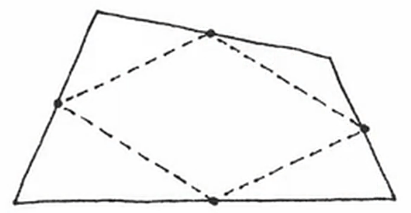
If you take any 4-sided shape at all — make it as awkward and as ridiculous as you want — if you take the middles of the sides and connect them, it always makes a parallelogram. Always! No matter what crazy, kooky thing you started with.

That’s scary to me. That’s a conspiracy.

That’s amazing!

That’s completely unexpected. I would have expected: You make some crazy blob and connect the middles, it’s gonna be another crazy blob. But it isn’t — it’s always a slanted box, beautifully parallel.

WHY is it that?!

The mathematical question is “Why?” It’s always why. And the only way we know how to answer such questions is to come up, from scratch, with these narrative arguments that explain it.

So what I want to do with this book is open up this world of mathematical reality, the creatures that we build there, the questions that we ask there, the ways in which we poke and prod (known as problems), and how we can possibly craft these elegant reason-poems.

— Paul Lockhart
author of Measurement

Quotable: We’ve Been Blind

I finally got around to reading a bit of the backlog in my Google Reader. I love Malke’s blog!

I used to think that math was some kind of inaccessible, abstract magic trick, a sort of in-joke that excluded us common folk, but now I realize that math is completely not that at all. The reality of math as most of us know it is like that story where three men are standing in a dark room touching different parts of an elephant. None of them has the full picture because they’re only perceiving individual elements of the whole animal.

The reality, I’m discovering, is that math is just like that elephant: a large, expansive, three-dimensional, intelligent, sensitive, expressive creature.

The problem is that most of us have been standing around in that dark room since about kindergarten, grasping its tail, thinking “this is what math is and, personally, I don’t think it’s for me.” We’ve been blind to the larger, incredibly beautiful picture that would emerge if only we would turn on the lights and open our eyes.

Malke Rosenfeld
The Elephant in the Room

Abstraction in Language and in Math

photo by Robert Couse-Baker via flickr creative commons

Check out Dan’s interesting semi-philosophical discussion of the meaning and importance of abstraction:

The physical five oranges goes up the ladder to the picture of the five oranges which goes up to the representation of the five oranges as a numeral.

This points in the direction of a definition of abstraction: when we abstract we voluntarily ignore details of a context, so that we can accomplish a goal.

Dan Meyer

Continue reading Abstraction in Language and in Math

Build Mathematical Skills by Delaying Arithmetic, Part 1

To my fellow homeschoolers,

It’s counter-intuitive, but true: Our children will do better in math if we delay teaching them formal arithmetic skills. In the early years, we need to focus on conversation and reasoning — talking to them about numbers, bugs, patterns, cooking, shapes, dinosaurs, logic, science, gardening, knights, princesses, and whatever else they are interested in.

In the fall of 1929 I made up my mind to try the experiment of abandoning all formal instruction in arithmetic below the seventh grade and concentrating on teaching the children to read, to reason, and to recite — my new Three R’s. And by reciting I did not mean giving back, verbatim, the words of the teacher or of the textbook. I meant speaking the English language.

— L. P. Benezet
The Teaching of Arithmetic I: The Story of an experiment

Continue reading Build Mathematical Skills by Delaying Arithmetic, Part 1

Quotable: The Art of Teaching

Most remarks made by children consist of correct ideas very badly expressed. A good teacher will be very wary of saying ‘No, that’s wrong.’ Rather, he will try to discover the correct idea behind the inadequate expression. This is one of the most important principles in the whole of the art of teaching.

W. W. Sawyer
Vision in Elementary Mathematics

Quotations XXVI: On Teaching Math

photo by chrisrobinson1945 via flickr

As I continue to polish the manuscript for my math games book, I’ve been looking for short quotations to put at the beginning of each chapter. I’ve gathered a lot of math quotations over the years, from my own reading and from quote-collection websites. But there’s a problem with using most of these in a book, since to do it right I would have to dig up the original source of each quote and then write a letter to the publisher for permission to use it. And pay a fee that, depending on the publisher’s sense of self-importance, can run into the hundreds of dollars. Bother!

So I went digging around my rss reader to see what sort of inspiration I could find. Bloggers love to be quoted, right? And most of them are happy to give permission via email, which makes my job ever so much easier.

Here are some of the gems I’m considering. I’d love to hear your favorite quotes from math bloggers, too — or favorite passages from your own blog. Please comment!

It’s amazing that this vision of math as “getting to the right answer on your first try” even exists. I have to make, unmake, remake so many mistakes to get where I’m going. I think all mathematicians work that way.

Somehow, a big part of the experience of math is trouble. Frustration is the status quo. But when you get something—the thrill!

Dan Finkel
Good Mistakes, Constant Mistakes

Continue reading Quotations XXVI: On Teaching Math

Quotable: Math vs. Writing

Seen at kitchen table math, the sequel:

I can recall the deep satisfaction I felt on the all-too-rare occasions at school when the concepts or formulas fell into place. It seemed an entirely different discipline from writing, where something arises from a blank page through a combination of hard work and patience, with a sliver of creativity.

With math, the experience is more like discovering something that’s always existed and finally decided to stop playing hard-to-get.

Ralph Gardner
Making Math Fun (Seriously)

Continue reading Quotable: Math vs. Writing